 Get Insights

Why India machinery exporters vary so much on lead time
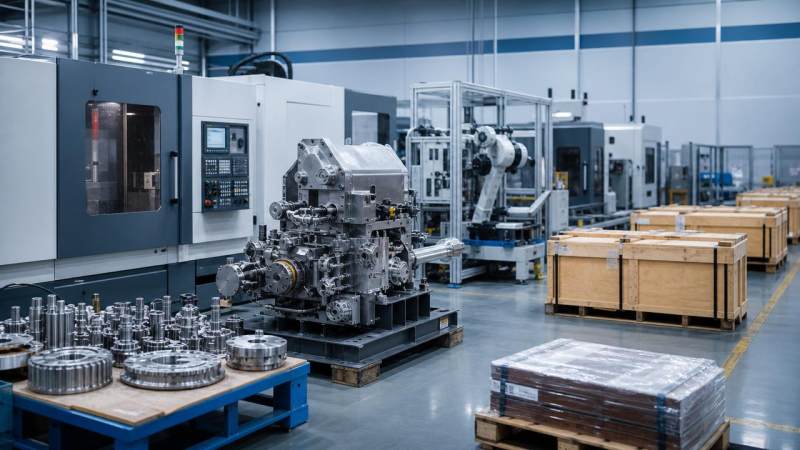
Lead times can differ dramatically when working with an Industrial & Manufacturing machinery exporter in India, and those gaps often reflect more than simple production capacity. For complex equipment programs, delivery timing is shaped by engineering depth, sourcing resilience, documentation discipline, inspection rigor, and the degree of customization requested.
In cross-border projects, a short quote lead time does not always mean a short production lead time. A capable Industrial & Manufacturing machinery exporter in India may move slowly at the front end because drawings, compliance files, and validation steps are handled properly before fabrication begins.
That difference matters across many sectors, including healthcare infrastructure, laboratory build-outs, packaging lines, utility systems, and precision assemblies. When timelines are evaluated by application scenario instead of headline promises, schedule risk becomes easier to control and supplier comparison becomes far more accurate.
Why lead time looks different across real project scenarios
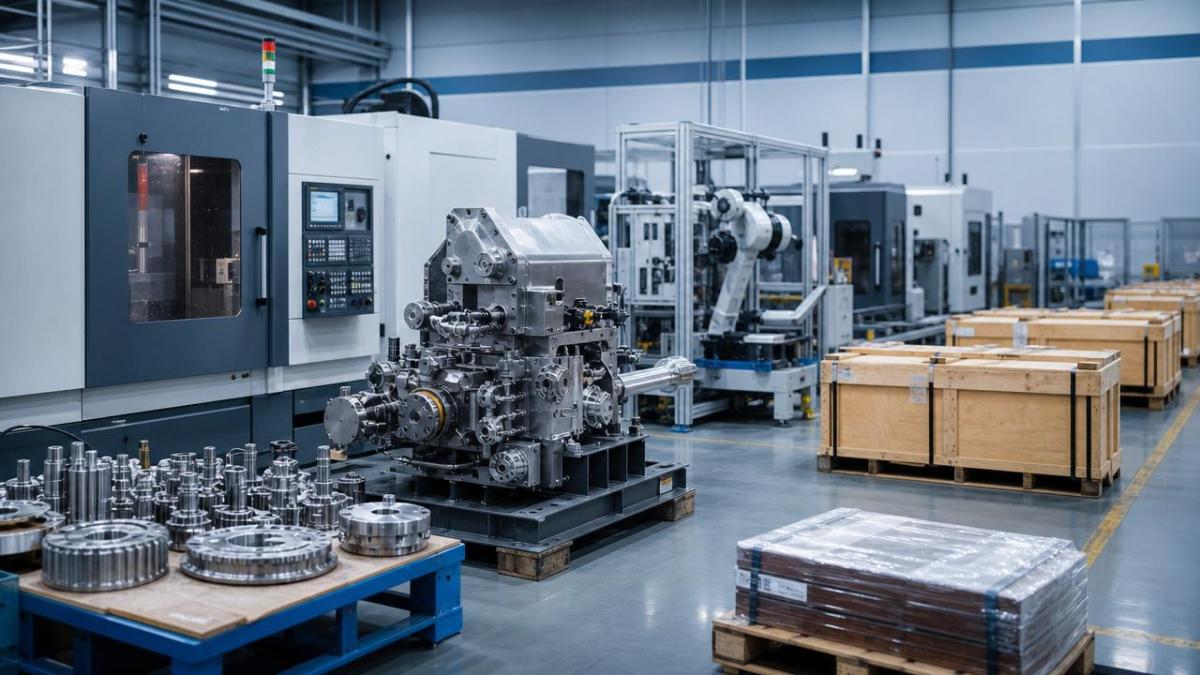
Not every machine order follows the same path. A repeat order for a proven platform moves differently from a first-time build that needs redesign, imported subcomponents, and multi-stage testing.
This is why one Industrial & Manufacturing machinery exporter in India may offer eight weeks, while another needs twenty. The gap often reflects process maturity, not inefficiency.
In regulated or performance-critical environments, disciplined exporters protect long-term reliability by slowing down early milestones. That approach can reduce field failures, rework, and late-stage design changes.
Scenario 1: Standard machinery orders with stable drawings
The shortest lead times usually appear in standard equipment programs. These orders rely on frozen designs, familiar bills of materials, trained shop teams, and predictable quality checkpoints.
A seasoned Industrial & Manufacturing machinery exporter in India can often accelerate these projects through stocked raw materials, fixture reuse, and established vendor relationships. Documentation is also lighter because qualification history already exists.
Core judgment points for this scenario
- Design revision level is fully frozen before PO release.
- Critical components are locally available or prequalified.
- Factory acceptance tests follow a known protocol.
- Export packing and shipping documentation are routine.
Scenario 2: Custom machinery with engineering changes during build
Lead times widen quickly when custom features are introduced. Frame dimensions, control architecture, material selection, software logic, or safety guarding changes can create new dependencies across the build.
An Industrial & Manufacturing machinery exporter in India handling custom work may need more time for design reviews, prototype checks, vendor alignment, and tolerance verification. The visible delay often comes from hidden coordination work.
What usually extends the schedule
- Late changes to layout, utilities, or throughput targets.
- Imported drives, PLCs, sensors, or specialty alloys.
- New validation protocols for performance acceptance.
- Repeated drawing approvals across multiple stakeholders.
Scenario 3: Projects with compliance, traceability, or validation pressure
Some machinery enters environments where documentation quality is as important as hardware quality. Laboratory utilities, clean process equipment, and healthcare-adjacent systems often require deeper traceability.
In these cases, an Industrial & Manufacturing machinery exporter in India may spend additional time generating material certificates, inspection records, calibration logs, FAT evidence, and installation documentation. That work increases credibility and lowers lifecycle risk.
The result is a longer quoted lead time, but often a faster project closeout. Missing documents can delay commissioning more than delayed fabrication.
Scenario 4: High-volume exporters versus specialist engineering shops
Capacity profile also explains variation. A large exporter may process standard orders rapidly because machining centers, weld cells, and assembly stations are optimized for throughput.
A specialist Industrial & Manufacturing machinery exporter in India may be slower but better suited for complex assemblies, unusual materials, or strict test protocols. Choosing between them depends on application fit, not only calendar speed.
Fast does not always mean low risk
Some short lead times rely on subcontracting depth that is not visible at quote stage. If sub-tier control is weak, delays may emerge later through rework, missed tolerances, or shipping reschedules.
How scenario-based needs change the lead time equation
Practical ways to compare exporters by scenario, not promises
A better comparison starts with the application. The right Industrial & Manufacturing machinery exporter in India for a repeat production line may be the wrong fit for a validation-sensitive installation.
- Ask for a milestone schedule, not only a final delivery date.
- Separate engineering release time from fabrication time.
- Identify all imported or single-source components early.
- Confirm FAT scope, rework allowance, and document handover timing.
- Review actual past lead times for similar machine classes.
These actions expose whether the quoted schedule is operationally grounded. They also reduce the chance of treating a commercial estimate as an engineering commitment.
Recommended fit checks before selecting an Industrial & Manufacturing machinery exporter in India
Common misjudgments that create avoidable delay
One common mistake is comparing all exporters using the same delivery benchmark. Lead time should be judged against the complexity of the machine, the documentation burden, and the installation environment.
Another mistake is ignoring pre-production clarification. If specifications remain vague, even a capable Industrial & Manufacturing machinery exporter in India will struggle to hold a reliable schedule.
A third error is treating logistics as separate from manufacturing. Export packaging, customs paperwork, inland transport, and port congestion can add real days or weeks.
Finally, some evaluations focus on price first and schedule second. Yet compressed pricing can weaken supplier buffers, vendor flexibility, and inspection depth, which often lengthens the actual delivery cycle.
A smarter next step for schedule-sensitive sourcing
The best path is to map each order into its real scenario before requesting final timelines. Clarify whether the need is standard, custom, compliance-heavy, urgent, or technically experimental.
Then evaluate each Industrial & Manufacturing machinery exporter in India against the scenario’s true bottlenecks. This method produces more accurate schedules, stronger technical alignment, and fewer downstream surprises.
Where performance certainty matters, evidence-based benchmarking adds another layer of protection. Technical review of drawings, materials, validation logic, and test discipline can reveal whether a longer lead time is a warning sign or a mark of engineering maturity.
In machinery sourcing, time should not be viewed as a single number. It is a result of design control, supplier architecture, quality intent, and deployment context. Understanding that equation leads to better decisions from the start.
Recommended News
- 2026.10.16Wearable Medical Sensors: When Is FDA Clearance or Approval Required?Lydia Vancini (Regulatory Compliance Lead)
- 2026.10.15Medical Packaging Heat Seal Testing: Seal Strength vs. Seal Integrity TestsDr. Julian Rossi (RehabTech Specialist)
- 2026.10.14Clinic Supplier Comparison: Evaluating Cost, Delivery Reliability, and SupportDr. Alistair Thorne (Senior Biomedical Engineer)
The VitalSync Intelligence Brief
Receive daily deep-dives into MedTech innovations and regulatory shifts.