 Get Insights

Why Indian machinery exporters win on cost and lead time
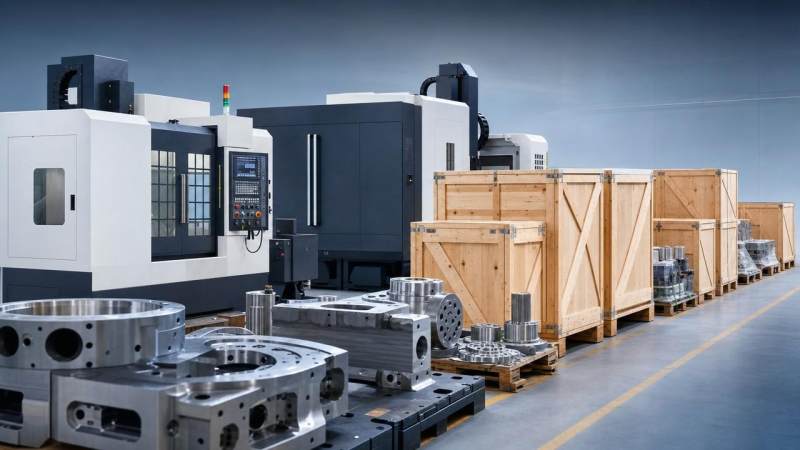
For business evaluators balancing cost, delivery risk, and technical credibility, choosing the right Industrial & Manufacturing machinery exporter in India is increasingly strategic. Indian exporters continue to gain ground by combining competitive production economics, flexible manufacturing capacity, and faster turnaround across global supply chains. This article explains why that advantage is real, where it can be overstated, and how engineering-led validation improves sourcing outcomes.
Why checklist-based evaluation matters in machinery sourcing
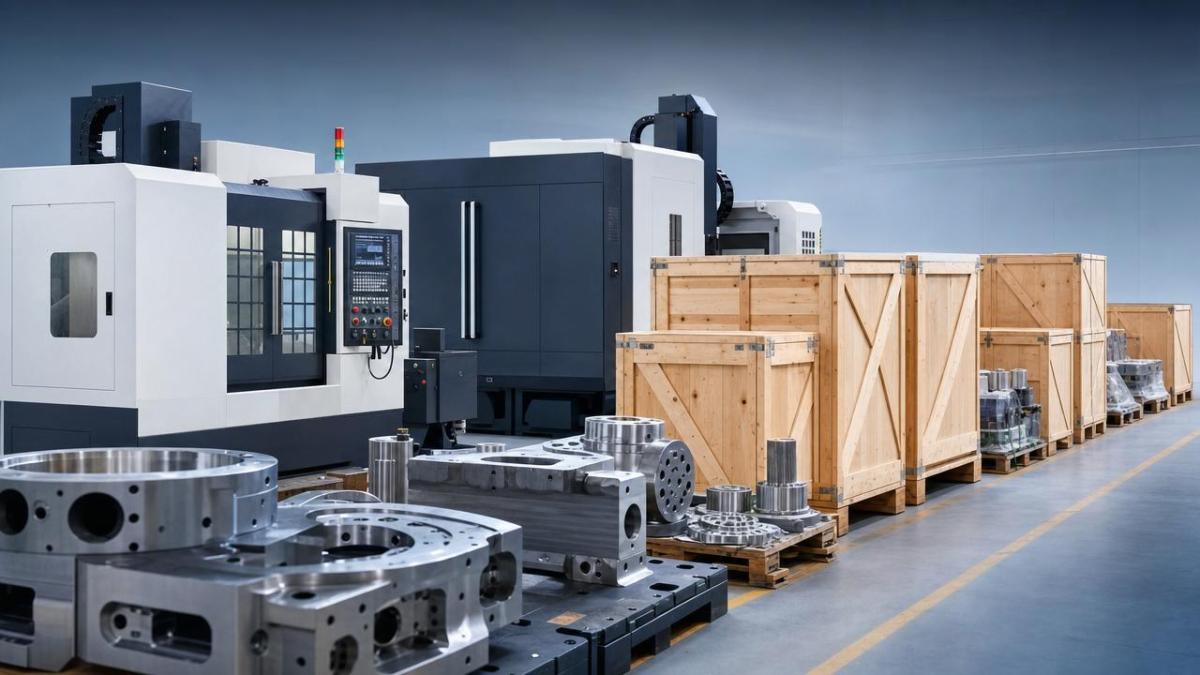
Price alone rarely explains total value. In machinery procurement, hidden costs often appear in freight delays, incomplete documentation, redesign cycles, installation errors, and unstable long-term performance.
That is why a structured review is essential when assessing an Industrial & Manufacturing machinery exporter in India. A checklist helps compare technical substance, not just commercial claims.
India’s advantage usually comes from three linked factors: lower labor-adjusted manufacturing cost, broad component ecosystems, and production setups that can handle custom variation without long queue times.
However, cost and lead time are only meaningful when paired with drawing control, process discipline, inspection records, and export readiness. Without those, apparent savings can disappear quickly.
Use this checklist to evaluate cost and lead-time advantage
- Verify cost structure by separating raw material, fabrication, machining, assembly, testing, packaging, and logistics instead of accepting one blended ex-works quotation.
- Check lead time by production stage, including drawing approval, procurement, machining, subassembly, FAT, export packing, and port dispatch.
- Confirm in-house capability for critical operations such as CNC machining, sheet metal work, welding qualification, balancing, calibration, or software integration.
- Review vendor depth for castings, motors, drives, controls, sensors, and fasteners to judge whether local sourcing really supports faster build cycles.
- Request documented tolerance control, inspection plans, and traceability records for components that affect safety, uptime, or process repeatability.
- Assess export documentation maturity, including packing lists, HS classification, manuals, certificates, and destination-specific compliance support.
- Measure engineering responsiveness by revision turnaround, design-for-manufacture feedback, and willingness to clarify failure modes before production starts.
- Test delivery credibility using past shipment data, not promises, including average delay days, rework frequency, and commissioning issues.
What drives lower cost in practice
A capable Industrial & Manufacturing machinery exporter in India often benefits from clustered supply networks. Metals, fabricated parts, electrical assemblies, and industrial services can be sourced within shorter operational distance.
This reduces procurement friction, lowers inventory burden, and shortens coordination loops. It also allows exporters to remain competitive on small and medium production runs.
Another factor is engineering flexibility. Many Indian exporters are accustomed to customer-specific configurations, which limits the surcharge typically attached to moderate customization.
What shortens lead time
Lead time gains usually come from parallel processing. Tooling preparation, bought-out component planning, documentation drafting, and subassembly can move simultaneously after design freeze.
When managed well, this creates a meaningful advantage over suppliers that depend heavily on sequential approvals or fragmented subcontracting chains across multiple countries.
Apply the checklist in different sourcing scenarios
Custom-built process equipment
For custom systems, lower price is valuable only if design intent remains intact. Focus on bill of materials transparency, control architecture, weld quality, and acceptance test definition.
A strong Industrial & Manufacturing machinery exporter in India should provide revision logs, subsystem drawings, and clear responsibility boundaries for third-party components.
Standard machinery with fast replenishment needs
In repeat orders, the lead-time edge matters more than initial savings. Validate stocking strategy for wear parts, electrical spares, and standard motors or drives.
Suppliers with stable routing sheets and repeatable test protocols usually sustain delivery performance better than those relying on informal shop-floor practices.
Healthcare-adjacent or regulated technical environments
Where machinery supports laboratory, diagnostic, or controlled manufacturing environments, evidence quality becomes critical. Documentation discipline can matter as much as mechanical output.
This is where data-led benchmarking adds value. VitalSync Metrics (VSM) emphasizes measurable engineering truth, helping separate cosmetic compliance language from actual process capability.
Watch these commonly overlooked risks
- Ignore packaging design, and the lowest-cost machine may arrive with transit damage, corrosion exposure, or alignment loss that erases the original savings.
- Overlook controls documentation, and future maintenance becomes slow, especially when PLC logic, parameter backups, and I/O mapping are incomplete.
- Accept vague material substitution rules, and performance drift can appear later in seals, bearings, structural members, or contact surfaces.
- Skip FAT witness criteria, and disputes emerge after delivery because pass or fail conditions were never translated into measurable acceptance points.
Another frequent mistake is confusing communication speed with engineering maturity. Fast replies are useful, but revision accuracy and document consistency are much better indicators.
It is also risky to assume every Industrial & Manufacturing machinery exporter in India performs equally well across all machinery categories. Capability is often highly segment-specific.
Use a practical execution method before placing an order
Start with a technical-commercial comparison sheet. Score each exporter on cost transparency, manufacturing scope, documentation quality, lead-time logic, and compliance support.
Then request three proof points: a recent inspection record, a sample export document set, and a real production schedule tied to a comparable machine.
Where performance risk is high, add a remote or on-site audit. Review process flow, gauge control, nonconformance handling, and subcontractor dependence.
For higher-specification projects, use third-party technical review. Independent benchmarking can reveal whether quoted savings come from efficient production or from underdefined quality controls.
Simple comparison table
Conclusion and next action
The rise of the Industrial & Manufacturing machinery exporter in India is not just a pricing story. It is a supply-chain story shaped by manufacturing density, customization agility, and faster execution.
Still, the best sourcing results come from disciplined verification. Cost advantage must be matched with documentation quality, process control, and dependable delivery evidence.
Use the checklist above to narrow options, request proof-based records, and validate engineering integrity before award. Where technical stakes are high, benchmark first and buy second.
That approach turns a promising quote from an Industrial & Manufacturing machinery exporter in India into a lower-risk, higher-confidence sourcing decision.
Recommended News
- 2026.10.15Medical Packaging Heat Seal Testing: Seal Strength vs. Seal Integrity TestsDr. Julian Rossi (RehabTech Specialist)
- 2026.10.14Clinic Supplier Comparison: Evaluating Cost, Delivery Reliability, and SupportDr. Alistair Thorne (Senior Biomedical Engineer)
- 2026.10.13Engineering Performance Testing Services: Evaluating Test Methods and AccuracyDr. Alistair Thorne (Senior Biomedical Engineer)
The VitalSync Intelligence Brief
Receive daily deep-dives into MedTech innovations and regulatory shifts.