 Get Insights

How smart wheelchair manufacturers handle slope and obstacle safety
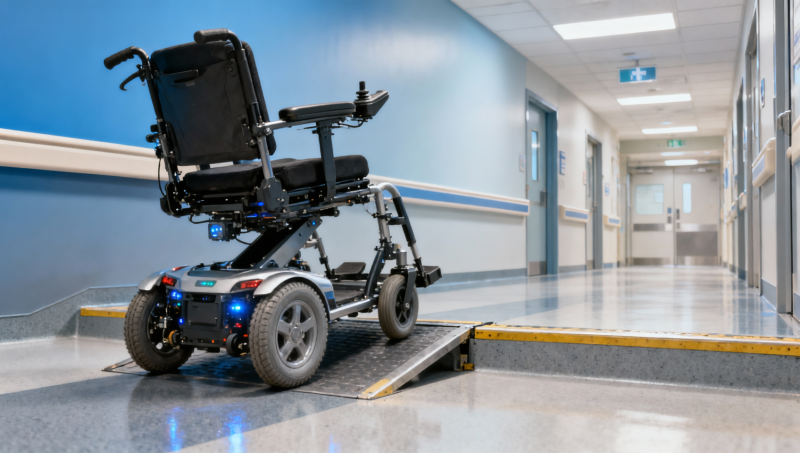
When evaluating how a smart wheelchair manufacturer manages slope and obstacle safety, buyers need more than product claims—they need engineering proof. From lfp battery safety for medical devices to signal to noise ratio in patient monitors, today’s healthcare procurement decisions demand measurable performance, regulatory clarity, and real-world reliability. This article explores the technical benchmarks that help information seekers, operators, and procurement leaders assess safer mobility solutions with confidence.
In the mobility segment, slope handling and obstacle negotiation are not simply comfort features. They directly affect patient safety, caregiver workload, maintenance costs, and procurement risk across hospitals, rehabilitation centers, long-term care facilities, and home-care programs. A smart wheelchair manufacturer that treats these functions as engineering systems rather than marketing claims is easier to evaluate, compare, and qualify.
For B2B buyers, the most useful approach is to examine verifiable inputs: motor control logic, anti-tip geometry, brake response time, battery stability, sensor redundancy, test protocols, and serviceability. VitalSync Metrics (VSM) supports this decision process by translating technical factors into benchmark-oriented questions that help teams distinguish robust products from under-specified offerings.
Why slope and obstacle safety matters in clinical and care environments
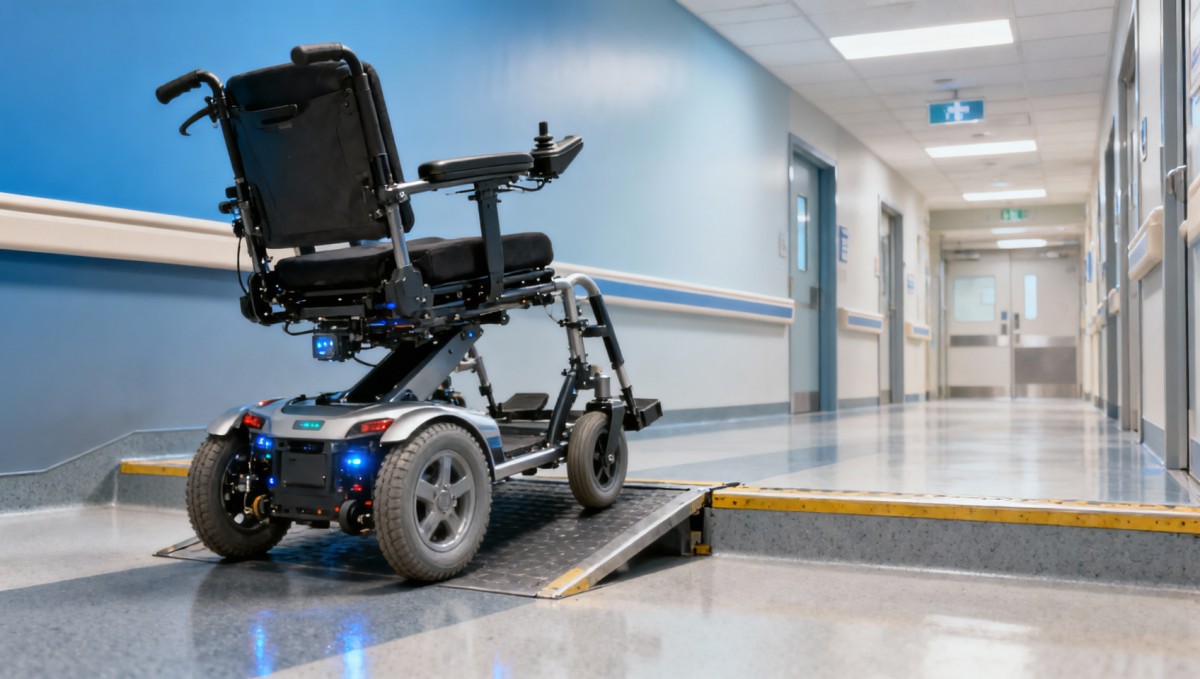
A smart wheelchair often operates in mixed-use environments where ramps, uneven thresholds, elevator gaps, tiled transitions, and outdoor paths appear within a single journey. Even a modest slope of 6° to 10° can alter stopping distance, wheel traction, and battery draw. For users with reduced trunk stability or delayed reaction time, that change can quickly become a safety event if the chair’s control system is poorly tuned.
Obstacle safety is equally important because real-world barriers are rarely dramatic. Many incidents occur at heights of 15 mm to 40 mm, such as door saddles, pavement lips, or cable covers. A wheelchair that clears a showroom demo obstacle may still perform poorly under load, on wet surfaces, or during repeated cycles after component wear. This is why operators and procurement teams should ask for load-conditioned testing rather than isolated demo results.
In healthcare settings, the impact extends beyond the end user. A chair that hesitates on ramps increases manual intervention by caregivers. If each assisted transition adds 20 to 40 seconds and occurs 15 times per day, workflow loss can become significant over a 12-month period. Facilities also face liability exposure when a wheelchair rolls backward unexpectedly, stalls mid-slope, or tips during curb transition.
For this reason, experienced buyers evaluate safety through three lenses: mechanical stability, control intelligence, and repeatable validation. A capable smart wheelchair manufacturer should be prepared to show how these layers interact under gradients, dynamic loading, and surface variation rather than relying on broad statements such as “stable on ramps” or “excellent climbing performance.”
Typical risk points that deserve closer review
- Backward rollback during start-up on a 5° to 8° incline because brake release and torque delivery are not synchronized.
- Front caster instability when crossing thresholds above 20 mm with a heavier user or additional medical accessories.
- Reduced traction on polished indoor flooring, wet concrete, or textured outdoor surfaces.
- Battery voltage sag under climbing load, which can trigger reduced performance near 20% to 30% state of charge.
The engineering controls smart wheelchair manufacturers should document
The first question is how the chair generates and controls traction. Safe slope handling depends on more than motor power. Buyers should look at continuous torque delivery, controller modulation, and the relationship between wheel size, gear ratio, and total system mass. In practice, two chairs with similar top speed may behave very differently on a 7° ramp if one prioritizes smooth low-speed torque while the other is optimized for flat-floor acceleration.
Anti-tip design is another core control. This includes center-of-gravity management, seat position, frame geometry, suspension behavior, and anti-tip wheels or equivalent structural safeguards. A smart wheelchair manufacturer should define the maximum rated gradient under specified conditions, such as a user weight range of 60 kg to 120 kg, tire condition, and battery charge level. Without those conditions, the number has limited procurement value.
Electronic control systems also play a decisive role. Common safety functions include hill-hold assistance, controlled descent speed, traction monitoring, fault detection, and reduced-speed mode during obstacle crossing. The more advanced the product, the more important software verification becomes. Even a 200 to 400 millisecond lag in transition from free movement to brake engagement can influence user confidence and stopping stability on a slope.
Battery behavior must be included in this discussion. LFP battery safety for medical devices matters because chemistry choice affects thermal stability, cycle life, and discharge consistency under climbing load. While battery chemistry alone does not guarantee performance, buyers should verify protection architecture, charging logic, enclosure integrity, and output consistency at low state of charge. Stable power delivery is essential when a chair must restart on an incline after a pause.
Core design elements to verify during technical review
Mechanical and electrical checkpoints
A practical review usually includes at least 6 checkpoints: rated gradient, rollback distance, static and dynamic stability, threshold-climbing height, braking distance, and battery behavior under sustained load. For higher-acuity environments, teams may add ingress protection, controller fault logging, and service access time as secondary criteria.
The table below summarizes what procurement teams should request from a smart wheelchair manufacturer when evaluating slope and obstacle safety.
The key takeaway is that the best technical file is not the one with the longest feature list. It is the one that connects each feature to a measurable safety outcome. Procurement teams should expect objective thresholds, operating conditions, and repeatability criteria before accepting any performance claim.
How to benchmark real-world safety performance before purchase
Bench testing is useful, but purchase decisions improve when the test plan reflects actual use conditions. A credible evaluation should include at least 3 environments: indoor clinical flooring, mixed transition zones with thresholds, and outdoor ramp or path conditions. Testing only on flat, dry surfaces hides the exact problems that later become service calls or user complaints.
Procurement teams should also standardize the load profile. For example, testing at 75 kg, 100 kg, and 120 kg can reveal whether performance changes sharply near upper weight ranges. If the chair supports accessories such as oxygen holders, monitoring mounts, or storage bags, the test should reflect those additions because an extra 5 kg to 12 kg can shift balance and increase power demand during climbing.
Repeat-cycle performance is another overlooked factor. A wheelchair that clears a 25 mm threshold once may perform differently after 200 repeated crossings, particularly if tire pressure, caster alignment, or suspension components drift. For this reason, buyers should ask for durability-oriented evidence, not just first-day demonstration data. This approach mirrors broader healthcare equipment benchmarking, where long-term stability matters as much as peak performance.
Where possible, facilities should align wheelchair evaluation with the same disciplined mindset used in other medical technologies. Just as signal to noise ratio in patient monitors helps buyers assess data quality, slope and obstacle metrics help them assess mobility safety. The goal is not abstract innovation; it is repeatable function under expected duty cycles, environmental variation, and operator realities.
A practical pre-purchase validation framework
- Define use cases across at least 3 settings: ward corridors, entry ramps, and external transitions.
- Test minimum 2 obstacle heights, such as 15 mm and 25 mm, under more than one user load.
- Measure rollback, stopping consistency, and climb behavior at battery levels above 80% and below 30%.
- Review service logs, fault codes, and component replacement intervals with the supplier.
- Run operator feedback sessions over 5 to 10 days instead of relying on a single demo.
The following table can help cross-functional teams compare vendors using measurable criteria rather than generic language.
This type of structured comparison makes internal approvals easier. It also helps clinical engineering, procurement, and operations teams align on measurable acceptance criteria before a contract is signed.
Compliance, documentation, and supplier transparency in a regulated market
For healthcare buyers, slope and obstacle safety should never be separated from documentation quality. A smart wheelchair manufacturer may offer strong engineering, but if technical files are incomplete, change control is weak, or traceability is unclear, procurement risk remains high. In value-based purchasing, documentation quality affects not only compliance review but also long-term service confidence and total cost visibility.
Buyers should look for coherent evidence packages rather than isolated certificates. Useful materials may include risk management summaries, design verification reports, battery protection descriptions, software change records, cleaning and maintenance instructions, and environmental operating limits. If a wheelchair is intended for clinical use, temperature and humidity ranges, charging parameters, and storage guidance should be clearly stated, for example 0°C to 40°C for operation or a defined recharge window after storage.
Transparency also matters when suppliers discuss limitations. A reliable manufacturer should state where performance declines, such as wet slope restrictions, reduced climbing near low battery, or accessory configurations that change tipping behavior. Procurement teams generally benefit more from an honest 8° validated claim with conditions than from a vague “all-terrain” promise with no test context.
This is where independent benchmarking adds value. VSM’s role in the broader MedTech supply chain is to convert engineering language into comparable decision inputs. For mobility products, that means asking whether performance is testable, documented, and stable over time. The same discipline used to examine signal quality, fatigue limits, or electronic reliability in other medical devices should be applied to smart wheelchair safety functions.
Documentation checklist for procurement and technical review
- A clear statement of rated slope and obstacle capability with test conditions and user load assumptions.
- Battery safety information covering chemistry, protection features, charging controls, and replacement guidance.
- Service documentation including preventive maintenance intervals, spare-part availability, and fault diagnosis workflow.
- Revision control for software or firmware affecting drive, braking, or sensor-assisted safety functions.
When these documents are complete, buyers can move from reactive purchasing to evidence-based qualification. That reduces surprises during deployment and creates a stronger basis for vendor accountability over a 3-year to 5-year service horizon.
Selecting the right smart wheelchair partner for long-term operational value
The final procurement decision should balance product capability with implementation readiness. A smart wheelchair manufacturer may present strong safety data, but buyers should still assess training, spare parts, firmware support, and field response. In many organizations, ownership cost over 24 to 60 months is influenced as much by downtime and service friction as by the initial unit price.
Operators need practical confidence. They want to know whether the chair starts smoothly on a ramp, whether threshold crossing feels predictable, and whether controls remain stable after months of use. Procurement teams need different answers: what parts fail most often, how long replacements take, and how performance changes as batteries age. Decision-makers need all of that translated into risk, lifecycle value, and deployment feasibility.
A capable supplier relationship usually includes four elements: benchmark-ready technical evidence, clear operating limits, service responsiveness, and willingness to support validation in the buyer’s own environment. If a manufacturer resists comparative testing or cannot explain how slope and obstacle claims were derived, that is a meaningful signal during vendor selection.
For organizations evaluating smart mobility products, the strongest path is evidence first, contract second. That means turning product claims into testable criteria, documenting acceptance thresholds, and aligning clinical, technical, and purchasing stakeholders before rollout. It is the same disciplined approach that advanced healthcare procurement now applies across devices, sensors, diagnostics, and connected systems.
Questions buyers should ask before final approval
Decision-focused shortlist
- What slope angle and obstacle height were validated, and under what exact load and battery conditions?
- How does the chair prevent rollback, manage descent, and maintain traction across different surfaces?
- What maintenance steps are required every 3, 6, or 12 months to preserve safety performance?
- How quickly can key components such as brakes, controllers, batteries, and caster assemblies be replaced?
- Can the supplier support on-site testing, operator training, and documentation review during qualification?
Smart wheelchair safety is ultimately a systems question, not a brochure question. If you need a more rigorous way to evaluate slope stability, obstacle performance, battery safety, and supplier transparency, VitalSync Metrics can help convert technical detail into procurement-ready benchmarks. Contact us to discuss your evaluation criteria, request a tailored assessment framework, or explore broader healthcare equipment benchmarking solutions.
Recommended News
- 2026.10.15Medical Packaging Heat Seal Testing: Seal Strength vs. Seal Integrity TestsDr. Julian Rossi (RehabTech Specialist)
- 2026.10.14Clinic Supplier Comparison: Evaluating Cost, Delivery Reliability, and SupportDr. Alistair Thorne (Senior Biomedical Engineer)
- 2026.10.13Engineering Performance Testing Services: Evaluating Test Methods and AccuracyDr. Alistair Thorne (Senior Biomedical Engineer)
The VitalSync Intelligence Brief
Receive daily deep-dives into MedTech innovations and regulatory shifts.