 Get Insights

Comparing Medical Extrusion Suppliers: Quality, Capacity and Lead Times
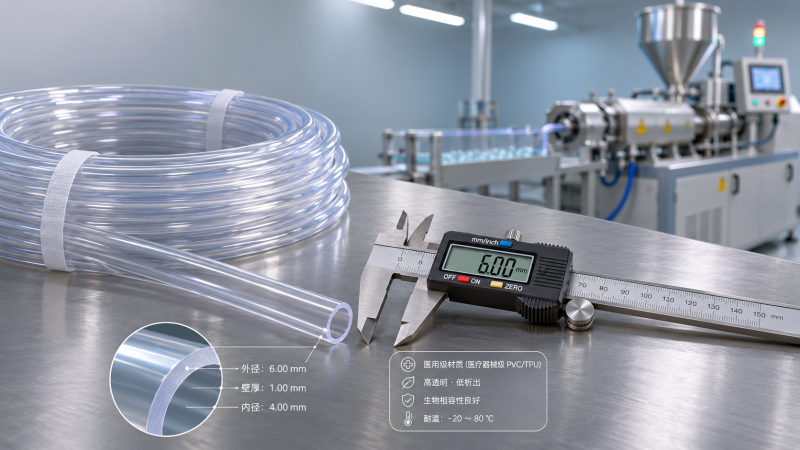
Choosing a medical extrusion partner requires more than comparing prices and promotional claims. Process controls, capacity and lead times can affect quality, regulatory readiness and supply continuity.
The strongest supplier is the one that can demonstrate consistent performance on your specific product, reserve appropriate capacity and substantiate delivery commitments with evidence.
This extrusion medical supplier comparison provides procurement teams with practical questions, document requests and decision criteria for evaluating technical capability, scalability and supply risk.
Start With the Requirements That Could Disqualify a Supplier
Before requesting quotations, define the product requirements that suppliers must meet. An attractive price cannot compensate for an unsuitable process, missing traceability or inadequate capacity.
Document the polymer grade, tubing dimensions, tolerances, length, color and intended application. Include requirements for packaging, cleanliness, sterilization compatibility and any downstream processing.
Identify which characteristics are critical to safety, device performance or subsequent assembly. Explain how each characteristic will be measured and what evidence will be accepted.
Share expected prototype quantities, annual demand, order frequency and anticipated growth. Separate confirmed demand from forecasts so suppliers can make credible capacity commitments.
Finally, specify the destination markets and your quality agreement expectations. The device manufacturer remains responsible for determining applicable regulatory requirements and ensuring appropriate supplier controls.
How Can You Verify Extrusion Quality?
Quality is not simply a certificate or an inspection report. It is the supplier’s ability to maintain agreed product characteristics consistently across lots and over time.
Ask suppliers to describe their controls for incoming resin, drying, extrusion settings, cooling, cutting and packaging. Request examples relevant to the material and geometry under consideration.
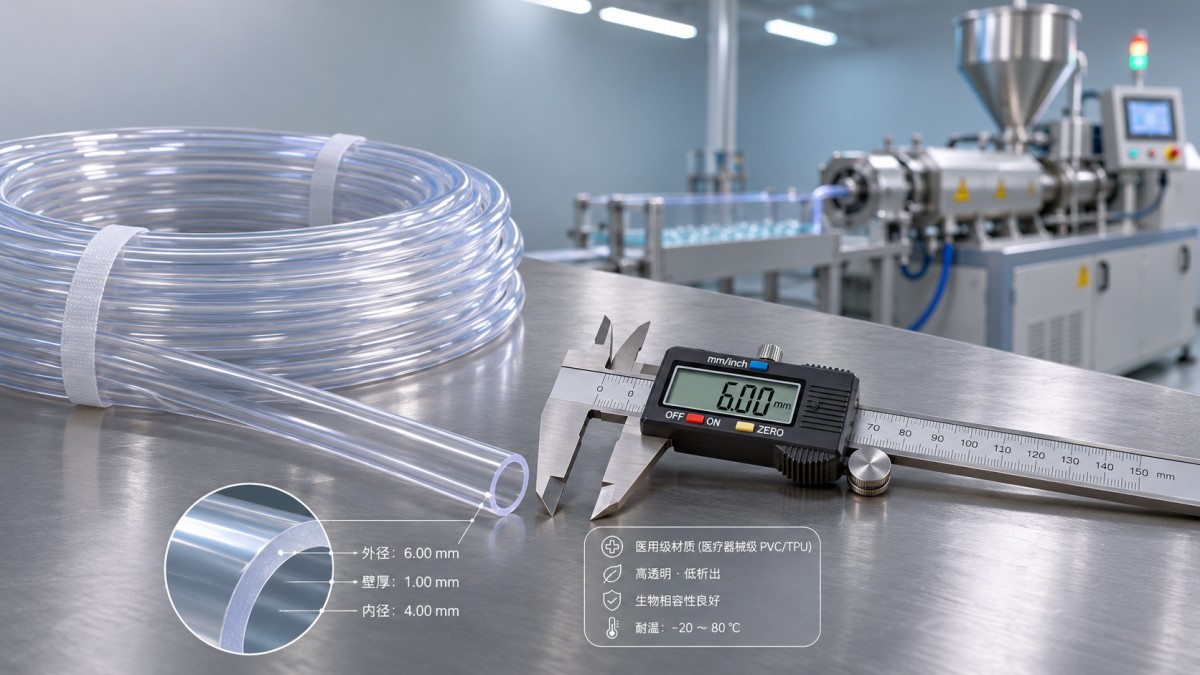
For tight-tolerance tubing, review how the supplier monitors outer diameter, inner diameter and wall thickness. Ask about measurement frequency, calibration and responses to excursions.
For multilumen or complex profiles, examine lumen placement, wall distribution and cross-sectional consistency. Agree on measurement methods because different techniques can produce different results.
Request representative inspection reports with actual measurements, sampling plans and acceptance criteria. A report showing only “pass” may conceal variation close to specification limits.
Where enough stable production data exists, process capability indices such as Cpk can help assess variation against limits. Confirm sample size, measurement reliability and process stability first.
Do not compare capability figures blindly. Different product specifications, measurement methods and production conditions can make two numbers appear comparable when they are not.
Ask how nonconforming material is identified, contained and dispositioned. Review how the supplier investigates recurring defects and verifies that corrective actions remain effective.
For a critical application, request a trial lot or pilot run. Evaluate the resulting tubing in your own assembly and testing processes, not just against dimensional reports.
Which Quality and Regulatory Documents Matter?
Start with the supplier’s quality management system certificate, scope and expiration date. ISO 13485 certification can be useful evidence, but it does not guarantee product compliance.
Confirm that the certified scope covers the relevant activities and manufacturing site. Ask who performs extrusion, inspection and packaging if multiple locations or subcontractors are involved.
Request a sample certificate of conformance, inspection record and lot history. Check whether each document identifies the product, revision, lot and agreed release criteria.
Material traceability should connect finished tubing lots to resin lots and relevant processing records. Clarify whether regrind, additives or colorants are permitted and how they are documented.
For patient-contact applications, identify the information needed to support biological evaluation. Supplier material data can help, but finished-device assessment depends on contact type, duration and processing.
If the product enters the European market, determine whether the Medical Device Regulation or In Vitro Diagnostic Regulation applies to the finished device and your organization’s role.
Do not assume an extrusion supplier must hold a device-specific certification simply because its tubing is used in a regulated product. Define required supplier evidence through your regulatory assessment.
A quality agreement should address responsibilities for specifications, release, deviations, complaints, audits and record retention. It should also define notification requirements and approval rights for changes.
Pay particular attention to changes in resin source, formulation, tooling, equipment, manufacturing site and subcontractors. Decide which changes require advance notice, written approval or requalification.
Does the Supplier Have Capacity for Your Actual Demand?
A supplier’s total number of extrusion lines says little without knowing which lines can run your material, profile and quality requirements at the necessary volumes.
Ask for the qualified equipment, expected output and available production windows for your specific product. Distinguish theoretical line speed from usable output after setup, inspection and scrap.
Discuss competing demand and planned maintenance. A supplier that is technically capable but fully booked may struggle to meet launch quantities or respond to a forecast increase.
For complex tubing, ask whether qualified backup tooling, alternative lines and trained operators are available. Confirm whether switching equipment requires validation or customer approval.
Request a capacity scenario for normal demand, peak demand and a realistic forecast increase. Ask what notice, inventory or commercial commitment each scenario requires.
For example, a supplier may support a moderate increase with existing shifts but need new tooling or additional qualification for a larger increase. Confirm both cost and timing.
If supply continuity is critical, consider whether a second qualified source is feasible. Factor in material equivalence, tooling ownership, validation effort and regulatory change controls.
What Does the Quoted Lead Time Actually Include?
A useful lead time starts and ends at defined events. Ask whether the quoted period runs from purchase order acceptance to shipment, delivery or another milestone.
Separate initial development from repeat production. A first order may include design review, material procurement, tooling, process development, sampling, validation and customer approval.
For repeat orders, ask suppliers to break down resin availability, scheduling, production, inspection, packaging and transportation. Identify which steps depend on your approvals or forecasts.
Confirm whether the quote assumes stocked resin, standard tooling or a minimum order quantity. A short stated lead time may not apply when those assumptions change.
Request historical on-time delivery data for comparable work where available. Define whether performance is measured against the original confirmed date, a revised date or the customer’s requested date.
Review the number of orders behind the percentage and the reporting period. A high rate based on a few shipments is less persuasive than sustained performance across meaningful volume.
Ask how the supplier communicates delays, allocates scarce material and handles expedited orders. Agree on escalation contacts and recovery plans before a disruption occurs.
Where demand is predictable, evaluate scheduled releases, reserved capacity or safety stock. Specify inventory ownership, replenishment triggers, shelf-life controls and liability for obsolete stock.
How Should Procurement Compare Quotes?
Request quotations against the same specification, volumes, delivery terms and documentation requirements. Otherwise, apparent savings may simply reflect differences in scope or quality controls.
Compare unit price alongside tooling, setup, qualification, testing, packaging and freight. Include minimum order quantities and potential charges for engineering changes or expedited production.
Estimate the operational impact of rejected lots, late deliveries and excess inventory. These costs are scenario-dependent, but excluding them can distort the purchasing decision.
For example, a lower unit price may require larger batches and more inventory. Calculate the carrying cost and obsolescence exposure against the expected purchase price savings.
Clarify tooling ownership, maintenance responsibilities and access if the relationship ends. Confirm whether the supplier can transfer tooling and what requalification a transfer could trigger.
Use a Weighted Scorecard After Mandatory Screening
First eliminate suppliers that cannot meet mandatory requirements, such as specified materials, traceability or agreed quality controls. A strong commercial score should not offset a critical failure.
Then weight the remaining criteria according to product risk. The following example provides a starting point for a device manufacturer sourcing production tubing:
- Quality controls and documented performance: 35%.
- Capacity and supply continuity: 25%.
- Lead-time evidence and delivery performance: 20%.
- Total cost and commercial terms: 15%.
- Technical communication and responsiveness: 5%.
Score each category against defined evidence, using the same scale for every supplier. Record uncertainties separately so missing information is not mistaken for poor performance.
Adjust the weights for the application. A development-stage program may prioritize engineering support, while a high-volume established product may place greater emphasis on capacity and continuity.
Before awarding business, review the leading supplier’s evidence with quality, engineering, regulatory and operations teams. Procurement can then negotiate commitments that reflect actual technical risks.
Questions to Ask Before Supplier Selection
Use a focused supplier review to resolve gaps in the quotation and verify that commitments can be incorporated into specifications, purchase terms or a quality agreement.
- Which similar materials and profiles have you produced, and what relevant production data can you share?
- How are critical dimensions measured, and what happens when the process approaches a specification limit?
- Can you trace each finished lot to its resin and relevant processing records?
- Which process, material or site changes require our notification or approval?
- What capacity is available for our forecast, and what happens if demand increases?
- What does your lead time include, and which assumptions could change it?
- How do you measure on-time delivery, and what period and order volume support your figures?
- Who owns the tooling, and what are the conditions for maintenance or transfer?
Ask for supporting records rather than relying solely on verbal answers. Where information is confidential, a controlled audit or redacted example may provide sufficient evidence.
Make the Decision on Evidence, Not Promises
A defensible supplier decision connects product requirements to demonstrated process control, available capacity and realistic delivery commitments. The lowest quote is only one part of that assessment.
Use trial results, representative records, a weighted scorecard and cross-functional review to compare qualified candidates. Document open risks and assign owners before placing production orders.
Finally, revisit supplier performance after launch. Track agreed quality and delivery measures, investigate trends and update capacity assumptions as demand and product requirements change.
Recommended News
- 2026.11.12Home-Care Medical Device Quality Assurance: Testing for Real-World UseDr. Alistair Thorne (Senior Biomedical Engineer)
- 2026.11.11Experts Warn Wellness Claims May Not Shield IVD Tests From FDA OversightDr. Hideo Tanaka (Imaging Systems Analyst)
- 2026.11.11RoHS Compliance for Biosignal Sensors: Scope and Evidence RequirementsLydia Vancini (Regulatory Compliance Lead)
The VitalSync Intelligence Brief
Receive daily deep-dives into MedTech innovations and regulatory shifts.