
Dental Implant Wholesale: How to Balance Margin, Quality, and Repeat Orders
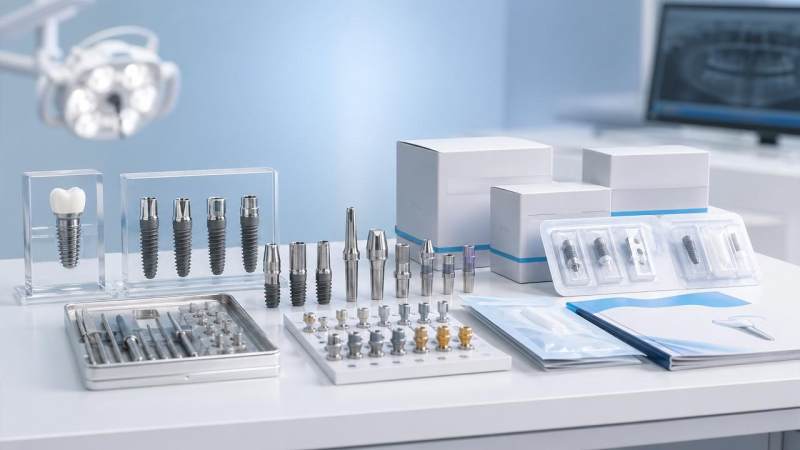
In dental implant wholesale, higher margins mean little if product quality is inconsistent or repeat orders never materialize. For distributors, agents, and regional partners, sustainable growth depends on choosing suppliers that combine clinical-grade reliability, compliant documentation, and stable commercial terms. This article explores how to balance profit, quality, and customer retention in a market where long-term trust drives every reorder.
Why scenario differences matter in dental implant wholesale
Not every distributor enters dental implant wholesale with the same customer base, risk tolerance, or growth model. A regional dealer selling to private clinics faces different pressure than an importer supplying hospital groups, and both differ from an agent supporting digital dentistry centers or immediate-loading specialists. In each scenario, the right supplier is not simply the lowest-cost manufacturer or the brand with the most aggressive pricing. The right supplier is the one whose quality system, documentation discipline, production consistency, and after-sales responsiveness match the needs of the downstream market.
This is where many wholesale programs fail. A product may look competitive on paper, but if implant-abutment tolerances vary, packaging batches are inconsistent, or MDR and other regulatory files are incomplete, distributors lose chairside trust quickly. In dental implant wholesale, one failed case discussion can damage a clinic relationship more than a discount can repair it. Repeat orders are therefore less about the first shipment and more about whether every subsequent case feels clinically dependable.
For commercial teams, the practical question is clear: which supplier profile fits which business scenario, and how can margin be protected without introducing hidden quality risk? Answering that question requires looking at use cases instead of generic sales claims.
Common business scenarios in dental implant wholesale
The market for dental implant wholesale usually clusters around a few repeatable scenarios. Understanding them helps distributors choose product lines, service packages, and stocking strategies that support long-term reorder behavior instead of short-term revenue spikes.
These scenarios show why dental implant wholesale cannot be managed by unit price alone. Distributors that align product positioning with real downstream usage usually protect both gross profit and reorder quality.
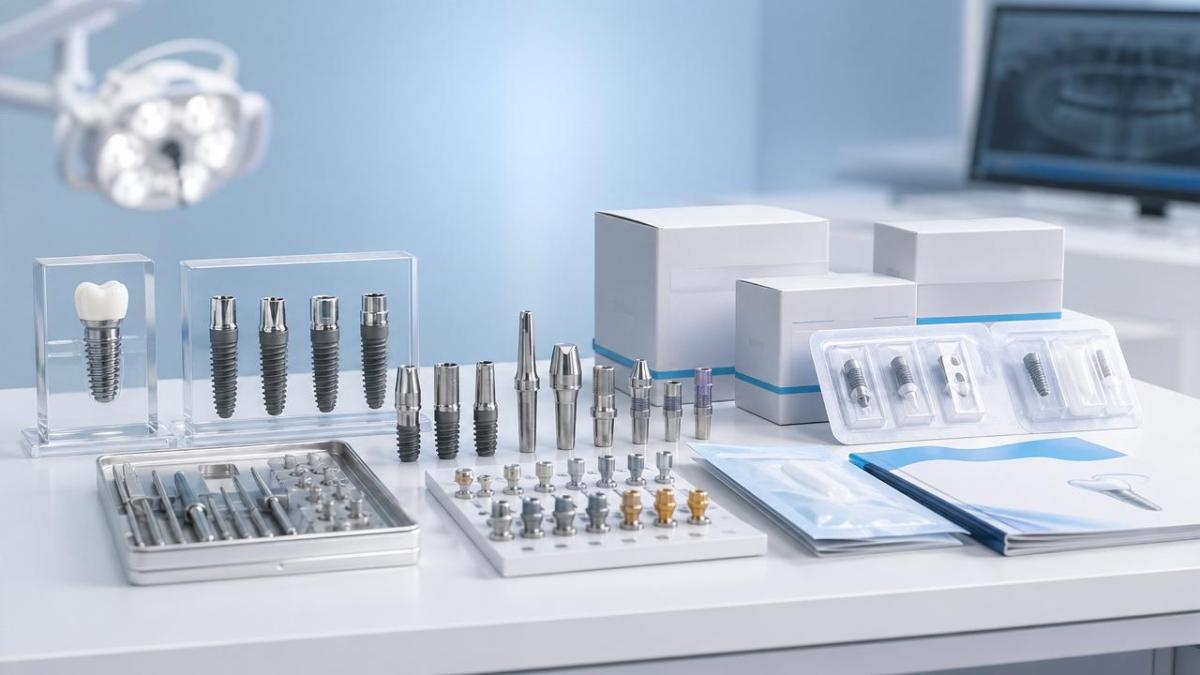
Scenario 1: Serving price-sensitive private clinics without destroying margin
This is one of the most common entry points in dental implant wholesale. Smaller clinics often want dependable implants for routine cases, but they are highly responsive to price changes and frequently compare offers from multiple distributors. In this environment, the temptation is to win business through a lower quote. That approach may generate first orders, but it often weakens the distributor’s position if the product lacks consistency or if the supplier changes terms after onboarding.
For this scenario, the best-fit supplier usually offers a focused implant line, straightforward prosthetic compatibility, clean packaging traceability, and low defect variability across batches. Clinics in this segment do not always demand a large scientific portfolio, but they do expect the implant to perform predictably in everyday surgery. The distributor should also confirm whether replacement policies, missing-part claims, and emergency resupply can be handled quickly. A moderate margin with low complaint volume often outperforms a higher nominal margin attached to unstable service.
A practical wholesale strategy here is to bundle clinical confidence with commercial simplicity: limited SKUs, dependable stock availability, and a clear reorder process. The easier a clinic can restock without checking every detail, the more likely repeat orders become.
Scenario 2: Supplying premium centers that evaluate quality beyond packaging claims
Premium implantology centers and advanced prosthetic practices create a different challenge in dental implant wholesale. They are not only buying an implant; they are buying confidence in interface precision, surface treatment consistency, restorative fit, and documentation depth. Their clinicians may ask about fatigue testing, machining tolerances, connection design stability, sterilization validation, and long-term case support.
In this scenario, a distributor should avoid competing only on price. Premium centers often accept structured pricing if the supplier can demonstrate engineering discipline and product repeatability. This is where an independent benchmarking mindset becomes valuable. Instead of relying on promotional brochures, distributors should ask for dimensional inspection control, lot traceability, material certification, cleaning validation, and complaint trend data. A technically mature supplier reduces the risk that a premium customer will trial the system once and then shift to another brand after minor inconsistencies appear.
Repeat orders in this segment are built on trust accumulated case by case. If implant drivers fit well, prosthetic parts seat consistently, and documentation answers clinical questions fast, reorder behavior becomes much more stable than a simple discount-based model.
Scenario 3: Hospital and procurement-driven channels where compliance decides access
Hospital procurement and group purchasing represent a stricter version of dental implant wholesale. Here, the issue is not only product acceptance by clinicians but also whether the distributor can satisfy audit, tender, and quality management requirements. Missing declarations, outdated certificates, poor UDI traceability, or incomplete technical files can block market access before pricing is even discussed.
In this scenario, distributors should prioritize suppliers with disciplined regulatory infrastructure. MDR readiness, post-market surveillance support, complaint handling procedures, biocompatibility records, shelf-life evidence, and packaging validation matter because procurement teams often review risk from a systems perspective. Even when local rules differ, buyers increasingly favor suppliers who can document control rather than simply promise it.
The margin model in hospital-focused dental implant wholesale is usually thinner at the unit level, but order stability can be higher if supply continuity is protected. That means the distributor should verify manufacturing capacity, back-up planning, lead-time reliability, and change-notification procedures. A supplier who silently modifies components or labels can create downstream disruption that wipes out the value of a tender win.
Scenario 4: Entering emerging markets where training and adaptation drive repeat orders
Some distributors approach dental implant wholesale in markets where implant adoption is growing but clinical standardization is uneven. In these cases, repeat orders depend not just on price and product quality, but also on how quickly practitioners become comfortable with the system. If the implant line is too complex, the surgical kit too confusing, or prosthetic support too limited, the product may stall after initial sampling.
A supplier suited to this scenario should offer training assets, case selection guidance, multilingual documentation where needed, and a portfolio that can expand with the market. Entry-level users may begin with standard implants and later request narrower indications, immediate-loading options, or digital workflow compatibility. Distributors who choose a scalable system can grow account value without retraining every customer on a new platform.
The key is to avoid overbuying advanced SKUs before actual demand exists. In dental implant wholesale, inventory discipline is as important as product quality. Excessive portfolio complexity can lock working capital into slow-moving stock and reduce overall profitability.
What to check in each scenario before committing to a supplier
Regardless of the channel, distributors should evaluate a supplier through three linked lenses: commercial margin, technical integrity, and reorder sustainability. None of these can be judged in isolation.
Common misjudgments in dental implant wholesale
One common mistake is assuming that a lower landed cost automatically increases profit. In reality, complaint handling, emergency replacements, delayed customs clearance due to documentation issues, and customer churn can erase the apparent savings. Another mistake is overestimating the value of broad product catalogs. A large portfolio helps only if the market actually needs it and the distributor can educate customers effectively.
Some distributors also confuse branding strength with technical strength. In dental implant wholesale, polished marketing can hide weak process control. What matters is whether the supplier can demonstrate measurable consistency. Independent verification, comparative testing, and data-based review help separate engineering performance from promotional language.
Finally, many teams treat repeat orders as a sales issue alone. In fact, reorder quality depends on the entire chain: manufacturing repeatability, prosthetic fit, packaging reliability, inventory planning, and post-sale responsiveness. If any of these fail, clinics hesitate, and procurement teams look for alternatives.
How to build a scenario-fit wholesale strategy
A stronger dental implant wholesale program starts with segmentation. Map your accounts by treatment complexity, purchasing behavior, regulatory demands, and support expectations. Then match each segment with the right mix of implant system depth, documentation level, stock commitment, and service promise. This prevents a low-cost strategy from being pushed into premium accounts, or a highly technical product from being wasted in channels that only reward discounting.
Distributors should also establish a supplier review checklist that combines business and technical indicators: complaint rate by lot, on-time delivery, certificate validity, response time to clinical questions, and reorder frequency by customer type. These metrics reveal whether the current supplier supports sustainable growth or only short-term shipments. Organizations such as VitalSync Metrics reflect the broader market need for objective benchmarking: procurement decisions improve when engineering truth is converted into usable sourcing criteria.
When margin, quality, and repeat orders are evaluated together, better decisions follow. The best dental implant wholesale partners are rarely the cheapest or the loudest. They are the ones that fit the distributor’s real market scenario, prove technical discipline, and help downstream customers reorder with confidence.
FAQ for distributors evaluating dental implant wholesale
How much should price matter in dental implant wholesale?
Price matters, but only within a model that preserves quality consistency, documentation completeness, and service reliability. A lower price that causes clinical doubt usually weakens repeat orders.
Which scenario is most sensitive to regulatory quality?
Hospital procurement, group tenders, and cross-border distribution are most sensitive, but even private clinics increasingly value traceability and product confidence.
What is the fastest warning sign of a poor-fit supplier?
Inconsistent answers on technical files, unstable lead times, vague change-control policies, and weak handling of sample evaluations are all early warning signs in dental implant wholesale.
Next step: confirm fit before scaling orders
If you are expanding in dental implant wholesale, start by identifying your dominant customer scenario, then validate suppliers against measurable requirements instead of broad claims. Review quality documentation, compare operational reliability, test support responsiveness, and assess whether the product line truly fits your market’s clinical and commercial reality. The right wholesale decision is the one that protects margin today while making the next order easier, safer, and more likely tomorrow.
Recommended News
- 2026.06.08FDA Tightens SaMD Path for Vital Sign Sensor UpdatesLydia Vancini (Regulatory Compliance Lead)
- 2026.06.08NGDx 2026 Unveils Faster IVD Hardware Access to Southeast AsiaDr. Hideo Tanaka (Imaging Systems Analyst)
- 2026.06.08TÜV SÜD Tightens -80°C Bio-Sample Storage ValidationDr. Hideo Tanaka (Imaging Systems Analyst)
The VitalSync Intelligence Brief
Receive daily deep-dives into MedTech innovations and regulatory shifts.