 Get Insights

How to compare an equipment supplier in Germany
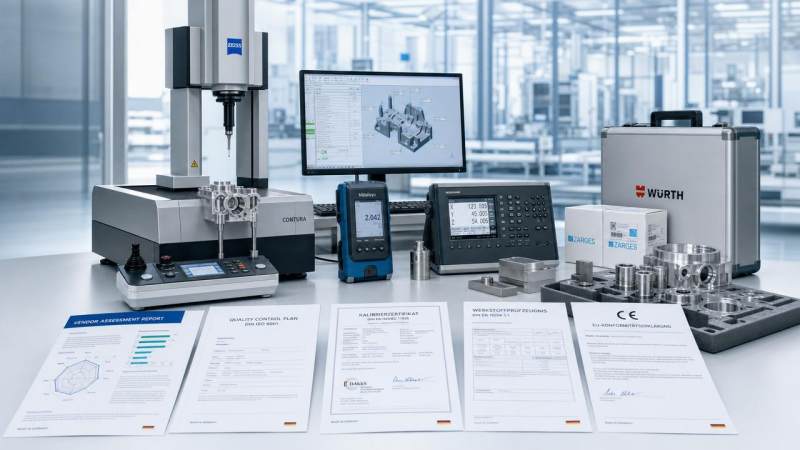
Choosing the right Industrial & Manufacturing equipment supplier in Germany requires more than comparing prices or catalogs. For procurement professionals in healthcare and technical industries, the real challenge is verifying engineering quality, regulatory alignment, production consistency, and long-term service reliability. This guide helps you assess German suppliers with a practical, evidence-based approach so you can reduce sourcing risk and make confident procurement decisions.
What procurement teams really need to compare first
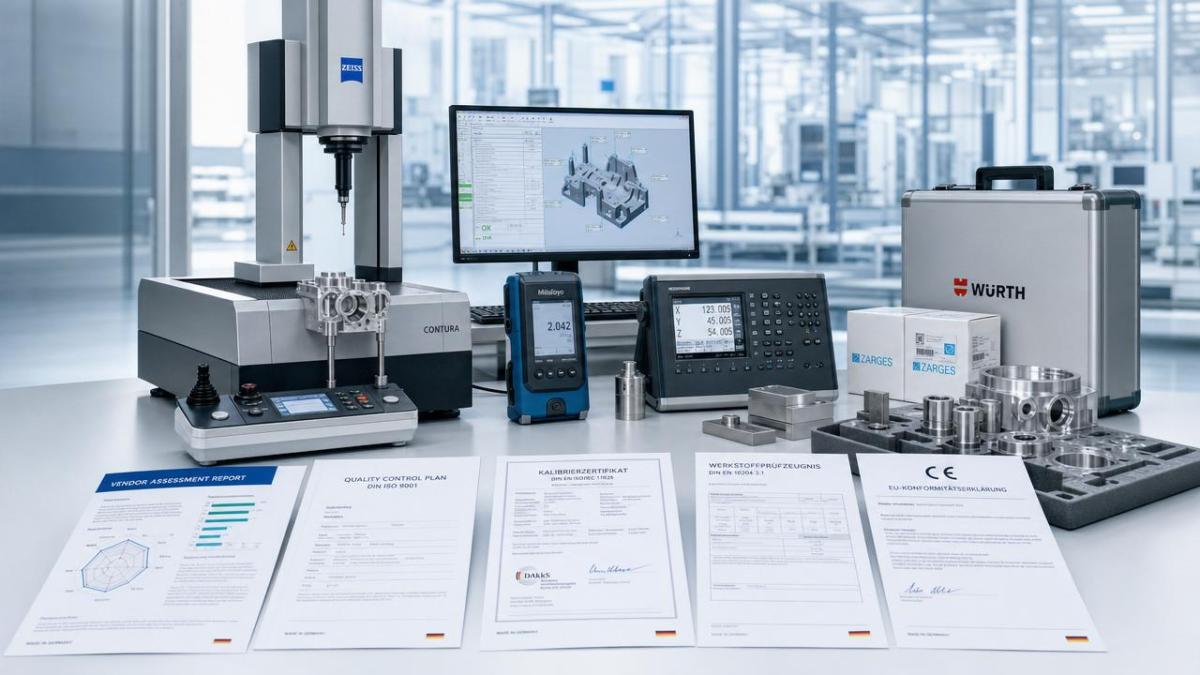
When buyers search for how to compare an equipment supplier in Germany, they usually want a reliable selection framework, not a generic supplier list or country overview.
For procurement teams, the first priority is simple: identify which supplier can deliver compliant, consistent, supportable equipment with the lowest total sourcing risk over time.
That matters even more in healthcare, laboratory, and high-specification manufacturing environments, where equipment failure can delay operations, compromise validation, or increase regulatory exposure.
A strong comparison process therefore starts with evidence. Price, lead time, and catalog breadth matter, but they only become meaningful after technical credibility is confirmed.
If you are evaluating an Industrial & Manufacturing equipment supplier in Germany, compare suppliers across engineering capability, documented quality systems, service infrastructure, traceability, and lifecycle support.
Why Germany is attractive but should not be assumed superior by default
Germany has a strong global reputation in industrial engineering, precision manufacturing, automation, and quality management. That reputation is valuable, but it should never replace supplier-level verification.
Some German suppliers genuinely offer exceptional process discipline, excellent component traceability, and mature after-sales support. Others may rely heavily on branding while outsourcing critical steps with limited visibility.
Procurement professionals should therefore avoid broad assumptions such as “German-made means low risk” or “European suppliers always have better compliance control.”
Instead, treat Germany as a promising sourcing market with high potential, then validate each supplier through technical documents, process audits, references, and measurable performance indicators.
This approach is especially important when sourcing for hospitals, laboratories, diagnostic environments, or MedTech projects where tolerance levels and documentation standards are unforgiving.
Start with the technical fit, not the sales presentation
The most common sourcing mistake is allowing polished sales language to shape early supplier rankings before the technical fit has been tested against actual operating requirements.
Begin with a clear requirement matrix. Define operating conditions, throughput targets, environmental constraints, installation limits, interface needs, and expected maintenance windows before requesting quotations.
For healthcare-linked or laboratory procurement, add validation requirements, calibration expectations, contamination control needs, material compatibility, and data integration standards to the matrix.
Then ask each supplier to respond against the same specification structure. This makes comparison faster and reveals where claims are vague, incomplete, or dependent on optional upgrades.
A capable supplier will answer with engineering detail, limitations, assumptions, and revision control. A weaker supplier will respond with brochures, general promises, and inconsistent technical language.
How to verify manufacturing quality beyond certificates
Certificates are useful, but they are only the starting point. Real manufacturing quality is visible in process discipline, inspection logic, change control, and the supplier’s ability to explain how consistency is maintained.
Ask how critical dimensions are controlled, what in-process inspection methods are used, and how nonconforming parts are identified, segregated, investigated, and corrected.
You should also review batch traceability, calibration status for inspection equipment, supplier qualification procedures for key subcomponents, and document control for design or process changes.
For higher-risk equipment categories, request sample quality records, first article inspection data, process capability evidence, or anonymized corrective action examples.
If a supplier cannot show how quality is engineered into production, then the existence of formal certification alone should not justify procurement confidence.
Regulatory and standards alignment should be checked early
For procurement in healthcare-adjacent sectors, regulatory compatibility is not a final-stage check. It should be addressed early, because nonalignment can disrupt validation, import approvals, or downstream product certification.
Depending on the equipment category, relevant requirements may include MDR, IVDR, CE obligations, electrical safety standards, EMC, RoHS, REACH, pressure equipment rules, or biocompatibility-related material declarations.
Even if the purchased equipment is not itself a medical device, it may support regulated production, testing, sterilization, packaging, or laboratory workflows that demand strict documentation.
Ask suppliers which standards they design to, which test reports are current, which declarations are available, and how they manage updates when regulations change.
A reliable German supplier should be able to explain not only what they comply with, but how compliance is maintained across product revisions and exported configurations.
Compare documentation quality because it predicts future support quality
Documentation quality is often underestimated during supplier selection, yet it is one of the strongest predictors of installation success, operator adoption, and efficient maintenance later.
Review manuals, wiring diagrams, spare parts lists, maintenance schedules, calibration instructions, software documentation, and revision histories before finalizing the purchase decision.
Look for clarity, completeness, language quality, and configuration-specific accuracy. Poor documentation usually signals weak internal control and creates long-term dependence on ad hoc support.
In contrast, suppliers with strong documentation systems tend to perform better in onboarding, troubleshooting, training, audit preparation, and controlled upgrades.
For procurement teams managing multinational sites, confirm whether documents can be delivered in the required languages and whether digital formats integrate with your internal asset systems.
Service capability matters as much as equipment performance
An excellent machine with weak service support can become a costly sourcing failure. Procurement teams should compare service capability with the same seriousness as technical specifications.
Ask where service engineers are located, what response times are contractually available, which spare parts are stocked locally, and whether remote diagnostics are supported.
You should also examine installation support, commissioning protocols, operator training, preventive maintenance options, and escalation paths for critical downtime events.
If the supplier uses third-party service partners, request details on training, certification, territory coverage, and responsibility boundaries. Service complexity often hides behind attractive initial pricing.
For hospitals, labs, and continuous production environments, downtime cost is usually far higher than a modest difference in purchase price, so support resilience must be weighted accordingly.
Total cost of ownership is the right financial comparison model
Many buyers still compare equipment suppliers primarily on unit price, freight, and quoted lead time. That method is fast, but it often produces expensive decisions over the asset lifecycle.
A better model is total cost of ownership. Include installation, validation, training, consumables, maintenance, spare parts, energy use, software licensing, upgrade costs, and expected downtime exposure.
You should also estimate the cost of delayed parts supply, service travel, operator retraining, quality deviations, and internal engineering effort required to keep the equipment running reliably.
German suppliers with higher upfront prices may still deliver better long-term economics if reliability, documentation, support, and process consistency reduce hidden operational losses.
Use a weighted comparison table that combines commercial data with quality, compliance, and support variables. This turns supplier selection into a structured business decision instead of a price negotiation exercise.
Questions that reveal whether a supplier is mature or merely persuasive
Good procurement questions force suppliers to move from claims to evidence. This is often where meaningful differences between shortlisted candidates become visible.
Ask what percentage of key components are manufactured in-house, what lead time variability looked like over the last twelve months, and how engineering changes are communicated to customers.
Request examples of failure analysis, root cause investigations, and preventive actions for recurring technical issues. Mature suppliers discuss problems transparently and explain the controls implemented afterward.
You can also ask how they handle obsolescence, what their standard spare parts availability window is, and how long software or firmware versions are supported.
These questions help procurement teams separate stable manufacturing organizations from sales-led businesses that rely on reactive problem solving after delivery.
How to use audits, samples, and pilot orders to reduce sourcing risk
When the equipment is business-critical, a paper-based comparison is rarely enough. Risk reduction improves significantly when procurement adds structured verification steps before full commitment.
A supplier audit can assess production flow, cleanliness, inspection practice, warehouse control, engineering coordination, and the overall maturity of the quality system.
If a full audit is not practical, request live virtual walkthroughs, document reviews, reference calls, or sample builds tied to your exact performance requirements.
Pilot orders are especially useful when sourcing from a new Industrial & Manufacturing equipment supplier in Germany for long-term programs or regulated applications.
A pilot phase allows you to measure communication quality, adherence to specification, packaging integrity, delivery accuracy, and responsiveness to technical clarifications before scaling volume.
Red flags procurement teams should not ignore
Several warning signs consistently appear when suppliers underperform later. One of the most common is inconsistent answers from sales, engineering, and quality representatives during the evaluation stage.
Other red flags include outdated certificates, missing revision control, reluctance to share test methods, unclear subcontracting arrangements, and vague commitments on service coverage.
Be cautious if lead times seem unusually optimistic, technical tolerances are copied from generic brochures, or compliance statements are provided without supporting reports or declarations.
Another serious concern is weak change notification discipline. If a supplier cannot clearly define when customers are informed about component or process changes, future risk rises sharply.
In procurement, small transparency issues early often become major operational issues later. Treat ambiguity itself as a risk indicator, not merely a communication inconvenience.
A practical supplier scorecard for procurement teams
To compare suppliers consistently, build a scorecard with weighted categories that reflect business impact rather than convenience of measurement.
Typical categories include technical fit, compliance readiness, manufacturing control, documentation quality, service capability, commercial terms, total cost of ownership, and delivery reliability.
For strategic or regulated purchases, assign higher weight to quality evidence, traceability, support resilience, and change control than to minor purchase price differences.
Use a cross-functional review team when possible. Procurement, engineering, quality, maintenance, and end users often identify different risks that a single department may overlook.
This scorecard method creates internal alignment and makes supplier selection easier to justify to management, auditors, and operational stakeholders later.
Conclusion: compare German suppliers by proof, not reputation
Germany remains a strong sourcing market, but the best supplier is not the one with the strongest brand story. It is the one that proves technical fit, process control, compliance discipline, and service reliability.
For procurement professionals, the smartest comparison model combines engineering evidence, quality system maturity, lifecycle economics, and practical support capability.
If you evaluate an Industrial & Manufacturing equipment supplier in Germany through that lens, you will reduce hidden risk, improve sourcing confidence, and make decisions that hold up long after purchase approval.
In complex healthcare and technical environments, disciplined comparison is not an administrative task. It is a critical safeguard for operational continuity, compliance, and long-term value.
Recommended News
- 2026.10.15Medical Packaging Heat Seal Testing: Seal Strength vs. Seal Integrity TestsDr. Julian Rossi (RehabTech Specialist)
- 2026.10.14Clinic Supplier Comparison: Evaluating Cost, Delivery Reliability, and SupportDr. Alistair Thorne (Senior Biomedical Engineer)
- 2026.10.13Engineering Performance Testing Services: Evaluating Test Methods and AccuracyDr. Alistair Thorne (Senior Biomedical Engineer)
The VitalSync Intelligence Brief
Receive daily deep-dives into MedTech innovations and regulatory shifts.