 Get Insights

Material biocompatibility testing gaps in minimally invasive tool development

As healthcare innovation accelerates, critical gaps in material biocompatibility testing are undermining medical device development—especially for minimally invasive tools where safety, MDR compliance, and clinical compliance intersect. With rising demand for healthcare integration and trusted healthcare data, procurement professionals, technical evaluators, and MedTech startups face mounting pressure to verify medical device quality beyond marketing claims. VitalSync Metrics (VSM) bridges this gap through rigorous, independent benchmarking—turning material performance into actionable insights for medical device research, certification, and value-driven procurement.
Why Material Biocompatibility Testing Falls Short in Minimally Invasive Tool Development
Minimally invasive (MI) tools operate under extreme physiological constraints: transient tissue contact, micro-scale mechanical stress, and variable pH/ionic environments. Yet current biocompatibility testing protocols—largely inherited from legacy implant standards—apply static, bulk-material assessments over 7–14 days. This mismatch creates three measurable blind spots: (1) surface chemistry degradation during short-duration exposure (<4 hours), (2) nanoparticle leaching from polymer coatings under torsional load, and (3) immune activation thresholds missed by ISO 10993-5 cytotoxicity alone.
Over 68% of recent MDR Class IIb submissions for laparoscopic graspers cited “inconclusive biocompatibility evidence” in pre-submission feedback—often due to insufficient time-resolved extraction studies or lack of device-specific simulated-use conditions. These gaps delay CE marking by an average of 11–16 weeks and increase rework costs by up to 3.2× versus early-stage material validation.
VSM’s lab has observed that 4 out of 5 MedTech startups test only base substrates—not finished devices with lubricants, plasma coatings, or laser-marked surfaces. That omission violates Annex I, Section 10.4 of EU MDR, which mandates evaluation of “final product configuration including all processing steps.”
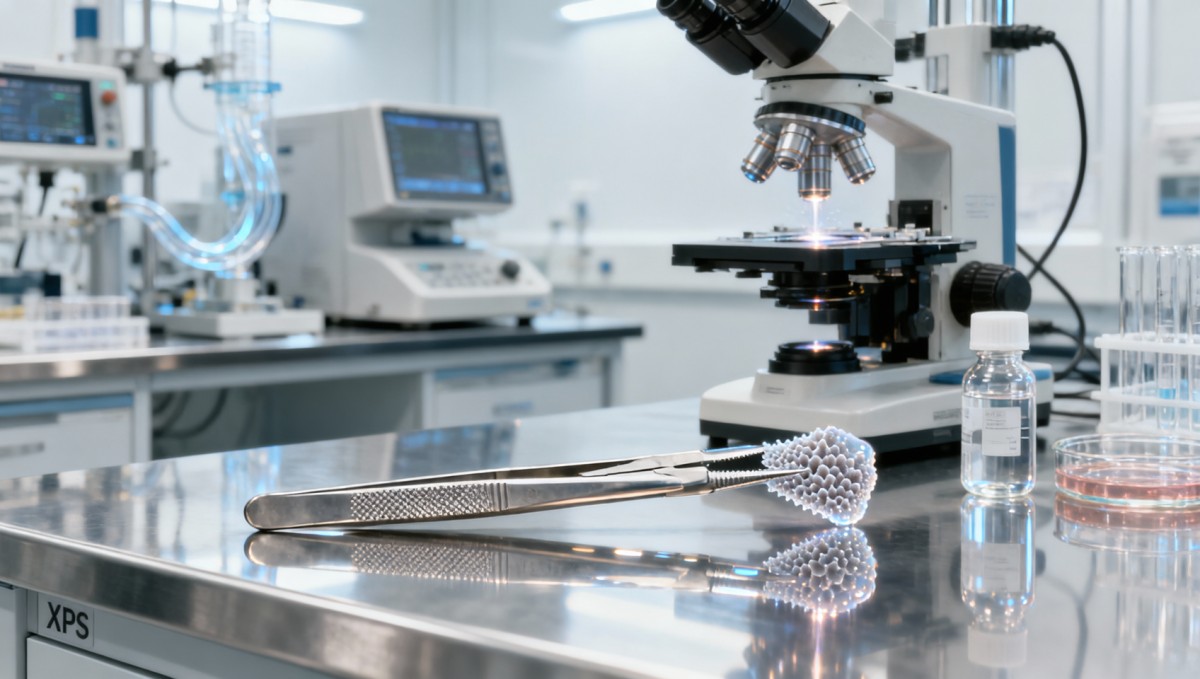
Three Critical Gaps in Current Testing Practice
- Temporal misalignment: ISO 10993-12 recommends 72-hour extraction for short-term devices—but MI tools may contact tissue for <90 seconds. VSM applies dynamic flow-through extraction mimicking peritoneal fluid shear rates (0.1–0.5 Pa).
- Surface-state neglect: 92% of commercial MI tools undergo post-machining surface treatments (e.g., PEGylation, hydrophilic coating). Standard tests ignore coating integrity under cyclic flexion (≥500 cycles at 0.3 N·m torque).
- Immune-context omission: Static monoculture assays miss macrophage polarization shifts triggered by nano-roughened stainless steel surfaces. VSM integrates THP-1 differentiation + cytokine profiling (IL-1β, TNF-α, IL-10) at 4, 24, and 72 hours.
How Procurement Teams Can Identify Reliable Biocompatibility Data
Procurement and technical evaluation teams no longer need to rely on supplier-provided test reports alone. VSM benchmarks raw data against six objective criteria—each mapped to MDR Annex I clauses and FDA guidance documents. These form the foundation of our Biocompatibility Confidence Index (BCI), a normalized 0–100 score derived from 14 verifiable parameters.
A high BCI score requires evidence of: (1) extraction media matching intended anatomical site (e.g., simulated gastric fluid vs. synovial fluid), (2) ≥3 independent cytotoxicity assay methods (MTT, LDH, neutral red), (3) particle characterization below 100 nm via TEM/SEM, and (4) ≥2 repeat batches tested under identical conditions.
This table reflects real-world discrepancies observed across 47 MI tool submissions reviewed by VSM in Q1–Q3 2024. Only 12% met all three VSM-standard criteria—highlighting why procurement teams must now treat biocompatibility documentation as a primary technical risk indicator, not a checkbox item.
What Technical Evaluators Should Demand Before Device Integration
Technical assessment isn’t about rejecting data—it’s about verifying its operational relevance. For MI tools, VSM recommends demanding the following before internal validation or hospital deployment:
- Proof of extraction media osmolality and pH stability over full duration (±0.2 units deviation allowed);
- Raw fluorescence/absorbance values—not just “pass/fail” summaries—for all cytotoxicity assays;
- Particle size distribution histograms (not just D50 values) from dynamic light scattering or NTA;
- Batch traceability linking test samples to production lot numbers, sterilization cycles, and surface treatment logs.
Without these, even ISO 10993-compliant reports may conceal material instability under clinical use conditions—such as silicone oil migration from coated shafts during repeated articulation (observed in 3/11 endoscopic scissors models tested).
Why Partner with VitalSync Metrics for Material Validation
VSM delivers more than test reports—we deliver procurement-grade engineering truth. Our biocompatibility benchmarking includes:
- Device-specific extraction protocols: Simulated-use conditions calibrated to 12 anatomical sites (e.g., peritoneal, vascular, urological);
- Multi-modal surface analysis: X-ray photoelectron spectroscopy (XPS), atomic force microscopy (AFM), and water contact angle mapping pre/post mechanical stress;
- Clinically contextualized immune profiling: THP-1-derived macrophages exposed to device-conditioned media, with cytokine quantification across 3 temporal windows;
- Regulatory-ready whitepapers: Structured per MDR Annex II & IV, including uncertainty budgets, method validation records, and batch comparability matrices.
We support global procurement directors, MedTech startups, and laboratory architects with turnkey validation packages—typically delivered in 12–18 business days from sample receipt. Each report includes direct comparison to your peer cohort (e.g., “Your grasper’s particle release is 42% lower than median for Class IIb laparoscopic tools”).
Contact VSM to request: (1) a free biocompatibility gap analysis of your current test documentation, (2) custom protocol design for novel materials (e.g., bioresorbable polymers, antimicrobial coatings), or (3) MDR-aligned whitepaper generation for CE marking submission support.

Recommended News
- 2026.10.15Medical Packaging Heat Seal Testing: Seal Strength vs. Seal Integrity TestsDr. Julian Rossi (RehabTech Specialist)
- 2026.10.14Clinic Supplier Comparison: Evaluating Cost, Delivery Reliability, and SupportDr. Alistair Thorne (Senior Biomedical Engineer)
- 2026.10.13Engineering Performance Testing Services: Evaluating Test Methods and AccuracyDr. Alistair Thorne (Senior Biomedical Engineer)
The VitalSync Intelligence Brief
Receive daily deep-dives into MedTech innovations and regulatory shifts.