 Get Insights

Medtech Supply Intelligence: How to Identify Supplier Disruption Risks
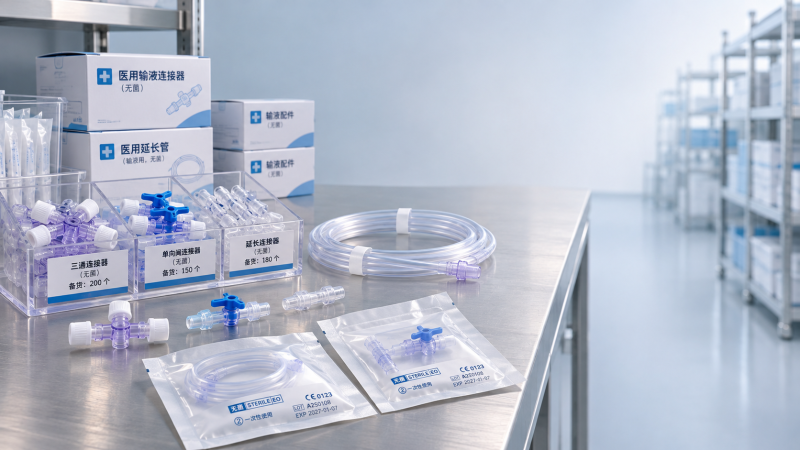
A late shipment is often the first visible sign of a supplier problem, but the underlying risk may have been building for months: a constrained production line, an unapproved component change, or a quality issue at a sub-tier supplier. For medical device procurement teams, the practical question is whether the disruption can interrupt the supply of a clinically important product—and how quickly an acceptable alternative can be put in place.
Medtech supply intelligence turns supplier information into purchasing decisions by connecting operational signals with clinical criticality, regulatory status, inventory and recovery options. The most useful assessment does more than label a supplier high or low risk. It identifies the specific failure that could occur, the evidence behind it and the action available before a shortage reaches the point of care.
Start with the supply paths that can interrupt care
Begin with products and components whose absence would be difficult to manage. A low-cost connector can deserve more attention than a high-value piece of equipment if it is essential to a frequently used device and has no readily acceptable substitute. Consider how the item is used, whether clinicians or laboratories can switch products, and how long existing stock would support normal activity.
Then trace the path from the purchased product to the operations that keep it available. The named supplier may assemble the finished device while relying on separate facilities for a specialized sensor, sterile packaging or sterilization. Two contracted suppliers may appear independent but share one of those critical dependencies.
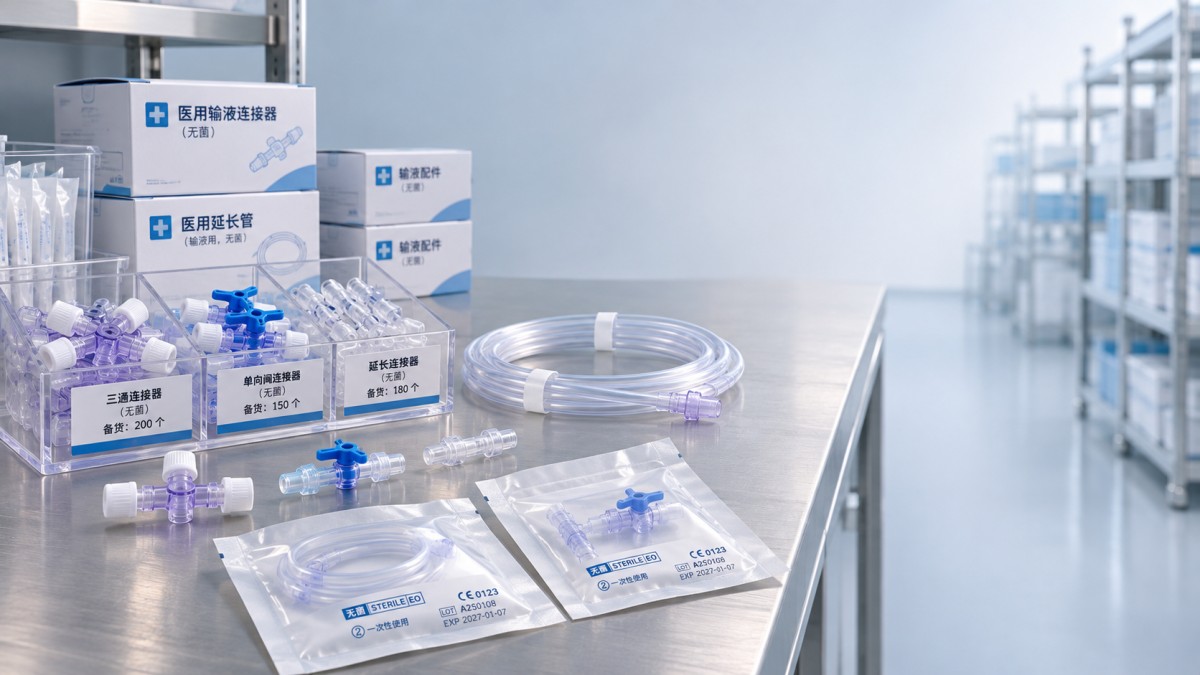
For each priority item, map the direct supplier, manufacturing site, critical components, relevant outsourced processes and delivery route. Record where the information stops. An unknown sub-tier source is not proof of an imminent shortage, but it limits the buyer’s ability to assess the effect of a factory shutdown or component shortage.
Mapping every part in equal detail can consume time without improving decisions. Focus deeper investigation on dependencies that combine a meaningful impact with limited alternatives or a long recovery path. Routine, readily substituted consumables may need a lighter review, provided the substitute is clinically and operationally acceptable.
Read supplier warning signs in context
No single indicator reliably predicts a disruption. A temporary delay can reflect a transport issue that is already resolved, while consistently acceptable delivery can mask a supplier consuming safety stock to compensate for production problems. Assess changes over time and ask what is driving them.
Financial stress, workforce turnover and changes in ownership can also affect continuity, but they should prompt investigation rather than an automatic decision to exit. A financially stable supplier can still have a vulnerable production process; a supplier facing pressure may have a credible recovery plan and protected capacity for critical products.
Look for signals that reinforce one another. Rising lead times paired with increasing quality rejections suggest a different problem from a single delayed shipment. Ask for dated milestones, named responsibilities and evidence of progress. A recovery plan that says only “capacity will improve” does little to support an ordering decision.
Test capacity against the demand you actually need covered
Stated capacity is useful only when its scope is clear. A supplier may report total factory output even though the product you buy depends on a shared bottleneck, a specialist workforce or a single external process. Ask what limits output for the specific item, how capacity is shared and whether the supplier has committed inventory or production slots to your organization.
Compare that information with expected demand, current stock and replenishment time. Include realistic variation: a device used in planned procedures may have a different demand profile from a product needed for urgent care. Stock coverage should account for usable inventory at the point of use, not just material somewhere in the distribution network.
Distinguish capacity from recoverability. A second production line helps only if it can make the required product at the necessary quality and is available when the primary line fails. For regulated products, moving production or changing a critical input may require technical assessment, documented controls or regulatory action before the resulting product can be supplied in the relevant market.
Extra inventory can bridge a short, well-understood interruption. It is less effective when shelf life is limited, storage conditions are demanding, the underlying problem affects multiple lots, or the expected recovery period exceeds the usable stock. In those cases, alternative sourcing and demand-management plans may be more valuable than simply ordering more.
Check regulatory and quality dependencies before they become supply constraints
Regulatory status is a continuity issue as well as a purchasing requirement. A product may be physically available but unavailable for purchase or use in a particular market if required documentation, approvals or conformity arrangements are incomplete or no longer apply to the configuration being supplied.
For devices placed on the European Union market, the applicable Medical Device Regulation (MDR) or In Vitro Diagnostic Medical Devices Regulation (IVDR) may affect the evidence and conformity assessment needed for a product. The relevant obligations depend on the device, its role and the market arrangement. Procurement should work with regulatory and quality colleagues to connect supplier documentation to the exact product, manufacturer and intended market.
Review change notifications with the same care. A substitute material or new manufacturing site may resolve a supplier’s shortage but introduce a qualification issue for the buyer. For example, a changed component could affect device compatibility or require an assessment of whether existing evidence still supports the product configuration. The significance depends on the change; routine administrative updates do not warrant the same response as a change to a critical material or process.
Quality records also need interpretation. A supplier that reports and contains a deviation promptly may be more transparent than one reporting no issues while providing little supporting information. Focus on whether problems are identified, their scope is understood, affected stock is controlled and corrective actions address the cause.
Prioritize risks by impact, exposure and recovery time
A practical risk register should make it possible to compare very different suppliers without reducing the decision to a generic score. For each priority supply path, describe the disruption scenario, its likely operational impact, available stock, alternative supply and the time needed to restore an acceptable flow. Separate evidence from assumptions so that gaps can become specific supplier questions.
Give the highest attention to scenarios where a critical item has both limited cover and a slow or uncertain recovery. A supplier with occasional late deliveries may rank below a reliable single-source supplier whose specialized component cannot be replaced quickly. Delivery history matters, but it does not reveal every dependency that could determine the length of an outage.
A simple assessment can use qualitative ratings such as high, medium and low, as long as the team defines them consistently. For example, “high impact” might mean that a shortage would interrupt a clinically important service without an acceptable substitute. “High recovery difficulty” might mean that a replacement requires substantial qualification or depends on the same constrained sub-tier source. These definitions make the rating actionable; an unexplained red status does not.
Assign an owner and review trigger to each material risk. A change in delivery performance, a quality escalation or a proposed manufacturing change can prompt reassessment before the next scheduled supplier review. Close a risk only when the exposure has changed or the mitigation is in place, not merely when a supplier has submitted a plan.
Build alternatives that can be used in practice
Dual sourcing reduces exposure only when the alternatives are sufficiently independent and usable. Two distributors of the same manufactured product may improve access to local inventory, but they do not remove dependence on the original manufacturer. Similarly, two device suppliers that rely on the same critical component may be vulnerable to the same upstream interruption.
Before treating an alternative as a mitigation, determine whether it meets clinical, technical and regulatory requirements for the intended use. Include compatibility with existing equipment, consumables and workflows. A substitute may also require staff training, revised procedures or changes to laboratory processes. These dependencies can make a technically suitable option slow to deploy during an emergency.
Run the contingency through a realistic scenario: a key component becomes unavailable and the primary supplier cannot give a firm recovery date. Identify who declares the disruption, who approves substitutions, what evidence is needed, how remaining stock is allocated and when affected clinical teams are informed. The exercise exposes decisions that otherwise wait until inventory is already low.
Where qualification is lengthy, procurement can agree on preparatory work before a disruption occurs. That might include reviewing technical documentation, assessing shared dependencies or defining acceptance criteria with clinical and quality teams. The aim is to shorten the decision path while preserving the controls appropriate to the product.
Turn medtech supply intelligence into supplier conversations
Requests for supplier data are most effective when they relate to a defined purchasing decision. Rather than asking for a broad assurance of resilience, explain the product and disruption scenario, then request the evidence needed to assess it. Suppliers may need to protect proprietary information; a useful response can sometimes describe the dependency, controls and recovery approach without disclosing every sub-tier relationship.
- Define the exposure. Identify the product, site or process that could interrupt supply and the services it supports.
- Request relevant evidence. Seek delivery trends, capacity constraints, quality information, change notifications and continuity arrangements appropriate to the risk.
- Challenge the recovery assumption. Ask what must happen before supply can resume, including material availability, production, quality release and distribution.
- Agree on action and timing. Record commitments, milestones, escalation contacts and the information that will show whether the action is working.
- Update the purchasing decision. Adjust inventory, sourcing or contingency plans when the evidence changes.
Independent technical benchmarking can support this process when a purchasing decision depends on engineering evidence, provided the assessment addresses the product and conditions relevant to the intended use. VitalSync Metrics (VSM), for example, describes its work as technical benchmarking and data-driven analysis across the MedTech and life sciences supply chain. Such analysis can inform a review of technical claims; procurement still needs to connect those findings to supplier capacity, regulatory documentation and continuity arrangements.
The strongest signal in a supply risk assessment is often the combination of a serious consequence and an unanswered question. Start with the products that matter most, identify the dependency that could stop them reaching users, and turn each material uncertainty into a specific evidence request or contingency action.
Recommended News
- 2026.11.23FDA Authorizes Virtuoso Robot for Bladder Tumor Removal, Establishes New Device CategoryDr. Alistair Thorne (Senior Biomedical Engineer)
- 2026.11.23Medtech Supply Intelligence: How to Identify Supplier Disruption RisksDr. Alistair Thorne (Senior Biomedical Engineer)
- 2026.11.22MedTech Benchmarking: Which Metrics Reveal Operational Performance?Dr. Alistair Thorne (Senior Biomedical Engineer)
The VitalSync Intelligence Brief
Receive daily deep-dives into MedTech innovations and regulatory shifts.