 Get Insights

Autoclave sterilization validation often fails at this repeatability step
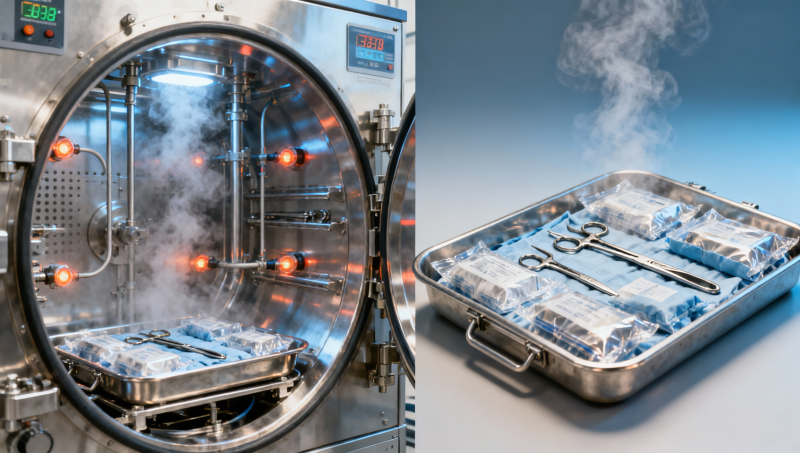
Autoclave sterilization validation does not usually fail in the chamber—it fails at the repeatability step, where inconsistent load patterns, sensor placement, and cycle drift expose hidden process weakness. For procurement teams, operators, and MedTech decision-makers, this is not just a QA issue but a compliance and sourcing risk tied to iso 13485 audit requirements, biocompatibility testing standards, and long-term device reliability.
In practical terms, a sterilization cycle can reach the target temperature of 121°C or 134°C and still fail validation if the process cannot reproduce the same lethality profile across 3 consecutive runs, multiple load configurations, and worst-case packaging conditions. That gap between apparent performance and repeatable performance is where hidden engineering weaknesses surface.
For hospitals, device manufacturers, contract sterilization teams, and lab operators, repeatability determines whether a process is audit-ready, scalable, and commercially reliable. For sourcing and technical due diligence, it is also a strong indicator of whether an autoclave system, validation protocol, and data package can support long-term operational stability rather than a one-time qualification event.
Why repeatability is the real failure point in autoclave sterilization validation
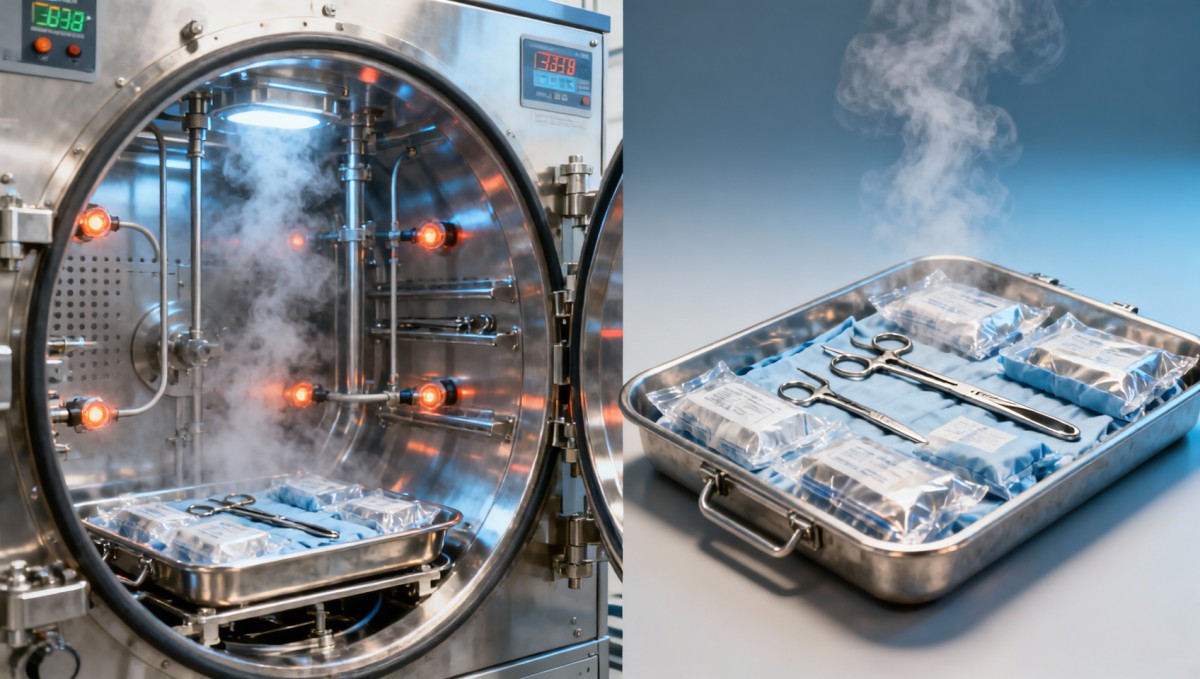
Autoclave sterilization validation is often discussed in terms of chamber pressure, exposure time, and temperature setpoint. However, the most difficult part is proving that the process performs consistently over repeated cycles. A chamber that reaches 121°C for 15–30 minutes may still produce variable results if steam penetration changes from load to load or if the thermal lag differs between test locations.
Repeatability matters because validation is not simply a proof of concept. It is evidence that the process remains under control when operators change trays, packaging density shifts by 10%–20%, sensor probes are repositioned, or utilities fluctuate within normal site limits. Small variations at these points can create meaningful differences in F0 exposure, residual moisture, and material stress.
In regulated healthcare environments, repeatability is also linked to documentation quality. If one cycle passes and the next two show cold spots, incomplete air removal, or drifted come-up time, the issue is no longer technical only. It becomes a deviation management, CAPA, and supplier qualification concern that can delay launch schedules by 2–6 weeks or longer.
For procurement leaders, the implication is clear: an autoclave should not be assessed only by chamber size, throughput, or nominal temperature range. It should be evaluated by how reliably it reproduces validated conditions across the load families that matter most to the business, especially mixed instruments, porous materials, and packaged medical components.
Common reasons the repeatability step fails
Most failures arise from a combination of process design and execution gaps rather than a single catastrophic defect. These gaps are usually visible only when the same validation sequence is repeated under tightly controlled but realistic operating conditions.
- Load pattern inconsistency: tray orientation, wrapped versus unwrapped items, and variable mass distribution can change steam access and condensate behavior.
- Poor sensor placement: if thermocouples are not positioned at true worst-case points, the data may overstate cycle performance.
- Cycle drift over time: vacuum efficiency, steam quality, drain response, and control calibration can shift after 20–50 production cycles.
- Packaging mismatch: sterile barrier systems may behave differently under repeat runs, especially when density, seal geometry, or moisture retention varies.
The technical lesson is that validation must challenge the process with realistic worst-case conditions. If the protocol is too idealized, repeatability problems remain hidden until audit, complaint, or scale-up.
What a stable repeatability profile usually looks like
A repeatable process does not mean every sensor generates identical data to the second. It means the cycle remains within predefined acceptance criteria over repeated runs, with controlled variation that stays inside validated limits. In many facilities, three successful consecutive performance qualification runs are treated as the minimum baseline, but higher-risk products may require broader challenge conditions.
The table below outlines typical repeatability variables that should be reviewed before a validation package is accepted for release, sourcing, or audit defense.
The key conclusion is that repeatability is not a narrow laboratory detail. It is the operational proof that the sterilization process can support routine production, purchasing approval, and regulatory scrutiny without depending on ideal conditions.
How load patterns, probe mapping, and cycle drift create hidden validation risk
Three variables repeatedly drive autoclave sterilization validation failures: inconsistent load patterns, weak thermal mapping strategy, and gradual cycle drift. Each can appear minor in isolation, but together they often explain why a factory acceptance test looks acceptable while on-site repeatability collapses during performance qualification.
Load pattern variation is especially underestimated. A chamber loaded at 70% capacity behaves differently from one loaded at 90%, particularly when porous packs, lumened devices, polymer trays, or dense stainless-steel instruments are mixed. The steam path, condensate drainage, and heat-up lag all change. Even a 1-level shift in tray position can affect local heat transfer at the hardest-to-sterilize point.
Probe mapping errors are another frequent source of false pass results. If temperature sensors are placed where access is convenient rather than where the true challenge condition exists, the recorded data will not represent the worst-case thermal profile. In practice, validation teams should distinguish between chamber mapping points and product/load penetration points, because the latter often reveal the real repeatability problem.
Cycle drift develops more gradually. Over 30, 60, or 90 days, steam quality, door seal condition, vacuum performance, and calibration status can shift enough to change cycle reproducibility. A process that passed qualification in month one may show extended air removal, wetter packs, or temperature lag in month three if preventive maintenance and trend review are weak.
High-risk scenarios operators should actively monitor
Teams responsible for routine operation should treat the following conditions as early warning signs rather than isolated events. These scenarios often appear before a formal validation failure is recorded.
- Mixed load composition changing across shifts, especially when one operator uses tightly packed trays and another uses open spacing.
- Repeated relocation of thermocouples without a controlled mapping template or photographic reference.
- Dryness or wet-pack outcomes varying between morning and afternoon runs, indicating utility or loading inconsistency.
- Routine cycle time extending by 3–5 minutes over baseline without a documented engineering explanation.
From a compliance perspective, these are not minor housekeeping issues. They are signals that the validated state may no longer be fully under control, which can affect batch release logic and audit defensibility.
Operational controls that reduce repeatability failures
A more robust sterilization program standardizes the variables that most influence heat and steam distribution. The objective is not to make every load identical, which is unrealistic, but to define acceptable operating windows and reject conditions that fall outside them.
The table below summarizes practical control points that many healthcare and MedTech facilities use to improve repeatability before requalification or scale-up.
The practical takeaway is that repeatability improves when loading, sensing, and drift monitoring are treated as engineering controls rather than informal operator habits. This is where disciplined validation programs outperform brochure-level equipment claims.
What procurement and quality teams should evaluate before approving an autoclave system
In many organizations, procurement reviews focus on chamber volume, cycle speed, utility demand, and purchase price. Those are relevant, but they do not answer the central question: can the system maintain a validated state repeatedly under routine load conditions? For healthcare buyers and MedTech decision-makers, this question is more valuable than headline throughput alone.
A strong sourcing review should examine not only equipment specifications but also the supplier’s validation support structure, data transparency, and service response model. If repeatability risks emerge after installation, the business may face delayed qualification, extended engineering time, and additional consumable costs. A lower-cost system can become the more expensive option within 6–12 months if these factors are ignored.
Technical and quality teams should also check whether the autoclave is suitable for the actual product family, not just a generic sterilization use case. Device components, biocompatibility-sensitive polymers, textile packs, and metal instruments do not respond identically to steam exposure, drying, and condensate retention. Repeatability should therefore be reviewed against real operating scenarios rather than catalog claims.
A practical due diligence checklist
Before purchase approval or supplier onboarding, the following six checks can materially reduce validation risk and post-installation rework.
- Verify whether the supplier can support IQ, OQ, and PQ documentation with clear acceptance logic and raw data access.
- Review how many standard load types can be validated without major cycle redesign.
- Assess calibration interval expectations, typically every 6–12 months, and the operational burden attached.
- Ask how drift trending is handled and whether alarm history can be exported for review.
- Confirm service response windows, spare part lead time, and whether site downtime could exceed 48–72 hours.
- Evaluate compatibility with the facility’s quality system, including document control and audit traceability.
These checks are especially important for organizations operating under MDR, IVDR, or global hospital procurement frameworks where technical defensibility influences both vendor approval and lifecycle cost.
How independent benchmarking adds value
Independent technical benchmarking is useful when buyers need engineering truth rather than sales positioning. A neutral laboratory perspective helps compare not just nominal specifications but real repeatability behavior, load sensitivity, and documentation maturity. This is increasingly relevant in a market where digital dashboards and marketing claims can overstate process capability.
For organizations such as VitalSync Metrics, the value lies in translating manufacturing and validation variables into decision-ready technical evidence. That can support supplier qualification, facility planning, remediation priorities, and internal business cases for equipment replacement or process redesign.
A repeatability-focused implementation framework for operators, labs, and MedTech manufacturers
A reliable autoclave sterilization validation program is built through controlled implementation, not assumption. The best results usually come from a phased approach that aligns engineering, quality, and operations early, instead of treating validation as a final documentation step just before inspection or commercial release.
In most facilities, a practical framework can be organized into 4 phases over 2–8 weeks, depending on complexity, chamber size, and number of load families. The timeline may extend when packaging studies, material compatibility review, or requalification after engineering changes is required.
Four implementation phases
- Process definition: identify product families, worst-case loads, target cycle parameters, and documentation expectations.
- Mapping and challenge design: position chamber and load probes, define acceptance limits, and verify utility stability.
- Repeatability execution: perform at least 3 consecutive runs under controlled worst-case conditions and compare parameter spread.
- Trend control and release: establish routine monitoring, maintenance linkage, deviation handling, and periodic review intervals.
This framework works because it treats repeatability as a lifecycle control issue. Validation is not finished when the final protocol is signed. It must remain connected to operation, maintenance, and quality review if the validated state is to remain credible.
FAQ: key questions stakeholders often ask
How many repeat runs are usually expected?
Three successful consecutive runs are commonly treated as the minimum baseline for demonstrating repeatability, but higher-risk applications may require more challenge conditions, additional load families, or seasonal utility review.
What is the most overlooked cause of failure?
In many cases, it is not chamber capability but uncontrolled load variation. The same cycle can pass with one tray geometry and fail with another if the worst-case configuration was not properly defined during validation planning.
How often should repeatability risk be reviewed after validation?
A monthly review of 10–20 routine cycles is a practical starting point for many facilities, combined with calibration and maintenance review every 6–12 months or after major repairs, software updates, or utility changes.
Who benefits most from independent technical review?
Procurement teams, laboratory planners, MedTech startups entering regulated markets, and enterprise decision-makers all benefit when they need a neutral view of process capability, repeatability risk, and long-term compliance fit before committing capital or approving vendors.
Autoclave sterilization validation fails most often where process repeatability is weakest, not where the chamber display looks most impressive. Load discipline, probe strategy, and cycle trend control determine whether a process is truly qualification-ready, audit-defensible, and scalable across routine operations.
For organizations navigating healthcare procurement, MedTech manufacturing, or laboratory design, the priority should be evidence-based selection and validation support that can withstand real operating variability. VitalSync Metrics helps decision-makers turn sterilization performance questions into measurable engineering criteria, benchmarked data, and sourcing confidence.
If your team is reviewing autoclave systems, validation protocols, or supplier claims, contact us to get a tailored technical assessment, compare repeatability risk across options, and explore a more reliable path to compliant sterilization performance.
Recommended News
- 2026.10.15Medical Packaging Heat Seal Testing: Seal Strength vs. Seal Integrity TestsDr. Julian Rossi (RehabTech Specialist)
- 2026.10.14Clinic Supplier Comparison: Evaluating Cost, Delivery Reliability, and SupportDr. Alistair Thorne (Senior Biomedical Engineer)
- 2026.10.13Engineering Performance Testing Services: Evaluating Test Methods and AccuracyDr. Alistair Thorne (Senior Biomedical Engineer)
The VitalSync Intelligence Brief
Receive daily deep-dives into MedTech innovations and regulatory shifts.