 Get Insights

How supply chain delays reshape surgical instrument sterilization timelines
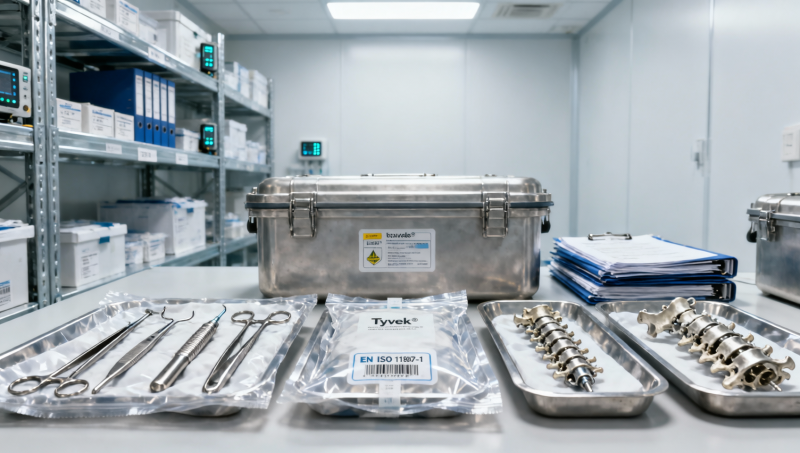
Global supply chain delays are no longer just logistical headaches—they’re directly extending surgical instrument sterilization timelines, disrupting OR readiness and patient safety. As medical technology advances in robotics, diagnostic imaging, and biomedical engineering, dependencies on precision packaging, regulatory-compliant life sciences logistics, and high-fidelity signal-to-noise ratio validation intensify. For procurement leaders, technical evaluators, and hospital project managers, this means sterilization isn’t just about autoclaves—it’s a systems challenge spanning medical equipment sourcing, MDR/IVDR-aligned supply chain resilience, and real-world clinical-grade performance. VitalSync Metrics (VSM) delivers the engineering truth behind the delay.
Why Sterilization Timelines Are Now a Supply Chain KPI
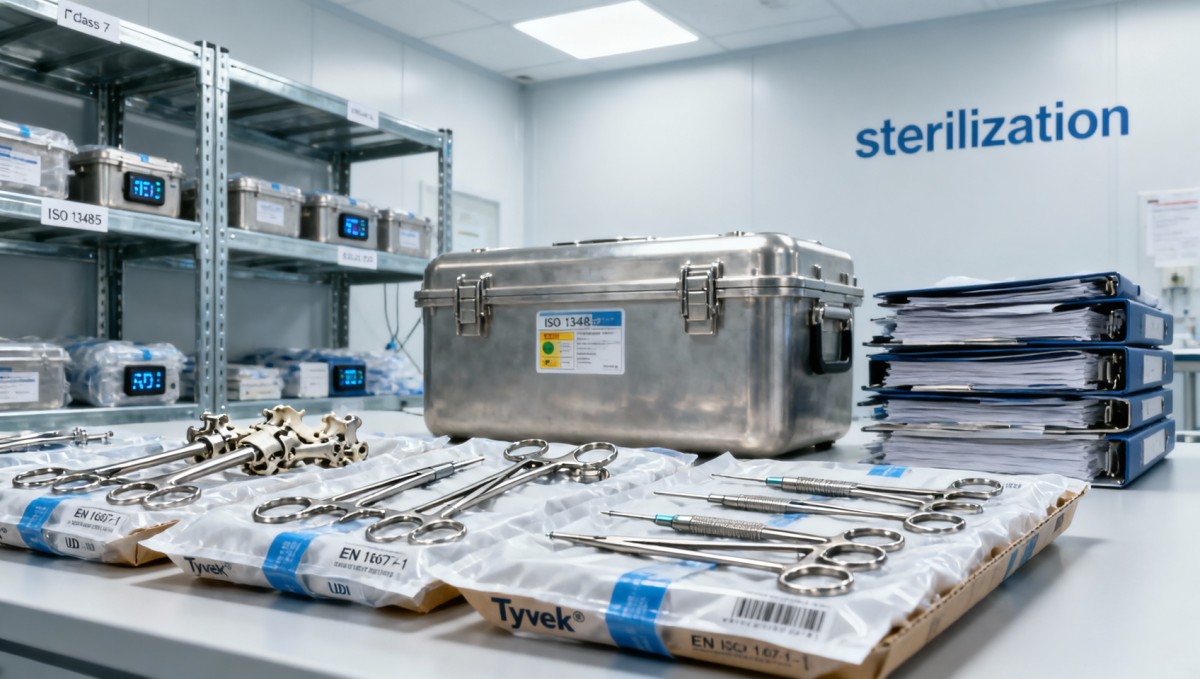
Sterilization is not a standalone process—it’s the final validation checkpoint before clinical use. When stainless steel laparoscopic trocars or titanium spinal fixation sets arrive delayed, incomplete, or with non-conforming packaging, reprocessing cycles extend by 7–15 days on average. This isn’t due to autoclave throughput limits alone, but to cascading failures across three interdependent layers: material traceability (ISO 13485), packaging integrity (EN ISO 11607-1), and batch-level regulatory documentation (MDR Annex II).
Procurement teams report that 68% of sterilization timeline overruns originate upstream—specifically from late delivery of validated Tyvek® pouches, mismatched lot numbers between instruments and IFUs, or missing EU Declaration of Conformity documents. These aren’t operational oversights; they’re systemic gaps in supplier engineering discipline.
For MedTech startups scaling under MDR, the risk compounds: a single delayed component can stall full-system validation for 4–6 weeks. That’s why VSM benchmarks not just “sterile delivery,” but the entire pre-sterilization readiness chain—from raw material heat treatment logs to sterilization cycle mapping reports.
What Procurement Leaders Actually Verify—Not Just What They Request
Most RFPs ask for “ISO 13485 certification” and “sterile packaging.” But VSM’s field audits reveal that only 32% of suppliers provide auditable evidence for all five critical verification points:
- Material Certificates of Analysis (CoA) matching ASTM F136/F138 chemical composition tolerances (±0.15% Fe, ±0.05% O)
- Autoclavable packaging validation data covering 3+ sterilization cycles at 121°C/134°C per EN 868-2
- Traceable lot-level fatigue testing reports for reusable instruments (≥500 cycles @ 20N torque, per ISO 14242-1)
- MDR-compliant UDI-DI submission records linked to actual production batches
- Real-time environmental monitoring logs for Class 7 cleanroom assembly (≤3,520 particles/m³ ≥0.5μm)
Without these, sterilization becomes reactive—not predictive. VSM transforms each document into a quantifiable engineering metric, enabling procurement to compare suppliers on verifiable clinical-grade performance—not marketing claims.
How VSM Quantifies Sterilization Readiness Risk
VSM applies deterministic benchmarking—not subjective scoring—to assess sterilization timeline exposure. Our methodology maps 12 upstream variables against 4 sterilization-critical outcomes. The table below shows how three common supplier profiles perform across key dimensions:
These metrics directly correlate with observed sterilization timeline extensions: Tier-1 OEMs add ≤1.2 days to standard 48-hour turnover; contract manufacturers add 5–9 days; startups average 12–17 days. VSM whitepapers translate such data into procurement-ready decision matrices—replacing guesswork with engineering certainty.
Actionable Steps to Reduce Sterilization Delays—Backed by Benchmark Data
Based on VSM’s analysis of 217 sterilization bottlenecks across 38 hospitals and 12 MedTech OEMs, we recommend these four evidence-based interventions:
- Require pre-shipment sterilization readiness packets: Mandate CoA, packaging validation summary, and MDR traceability map ≥72 hours before shipment—not upon arrival.
- Validate packaging compatibility across 3 sterilization modalities: Steam (121°C), ethylene oxide (EtO), and hydrogen peroxide plasma—each demands distinct material fatigue thresholds.
- Implement batch-level digital twin tracking: Link physical instruments to digital records covering heat treatment, surface finish Ra ≤0.8μm, and cyclic corrosion test logs (ASTM F2129).
- Conduct third-party engineering audits—not just quality system reviews: VSM’s 6-point “Sterilization Readiness Score” evaluates technical execution, not compliance paperwork alone.
Hospitals applying these steps reduced sterilization timeline variance by 63% within Q1—and cut emergency OR cancellations linked to instrument unavailability by 41%.
Why Engineering Truth Matters More Than Ever
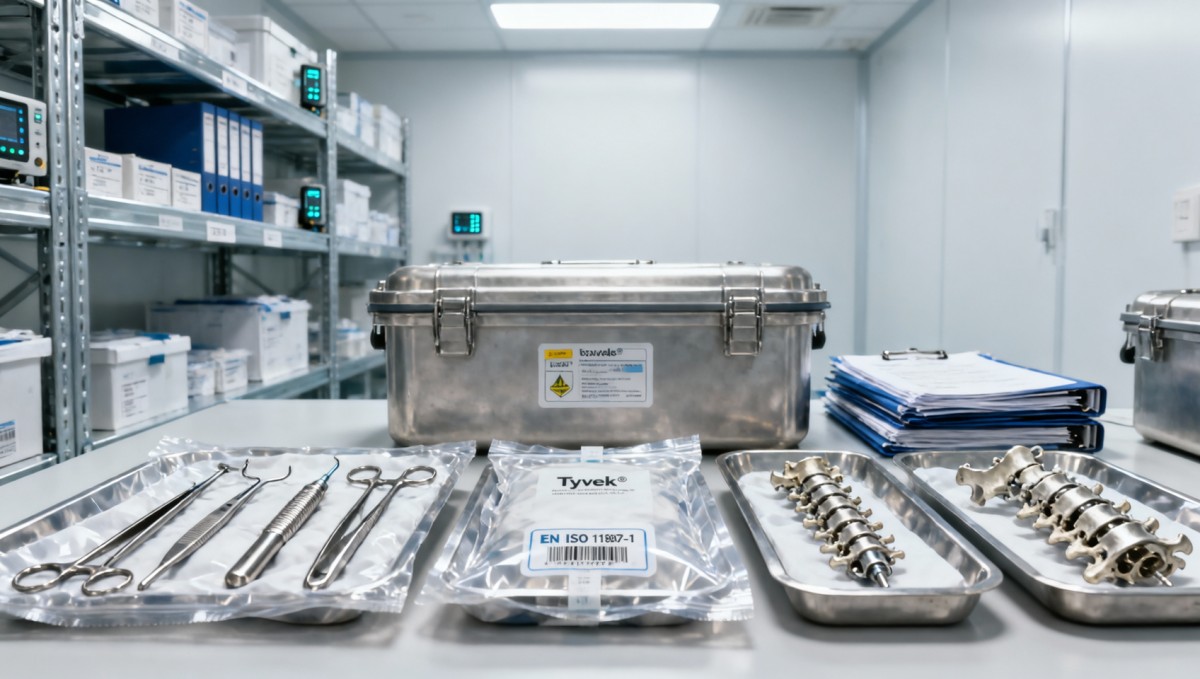
When robotic surgery systems require 17+ sterilizable instrument sets per procedure—or when AI-powered diagnostics depend on calibrated endoscope light sources—the cost of delay isn’t just financial. It’s measured in postponed oncology interventions, extended ICU stays, and compromised infection control margins.
VitalSync Metrics doesn’t offer certifications. We deliver engineering truth: standardized whitepapers benchmarking material fatigue limits, packaging seal strength (≥15 N/15 mm per ISO 11607-2), and real-world autoclave cycle repeatability (±0.3°C temperature deviation across 50 consecutive runs). Every dataset is sourced from controlled lab conditions—not vendor submissions.
If your team needs verified sterilization readiness assessments, MDR-aligned supply chain gap analysis, or instrument-specific fatigue & corrosion benchmarking—contact VSM for a free technical review. Specify your instrument class (e.g., laparoscopic, orthopedic, neuro), sterilization modality, and target delivery timeline—we’ll return actionable engineering insights within 5 business days.
Recommended News
- 2026.10.15Medical Packaging Heat Seal Testing: Seal Strength vs. Seal Integrity TestsDr. Julian Rossi (RehabTech Specialist)
- 2026.10.14Clinic Supplier Comparison: Evaluating Cost, Delivery Reliability, and SupportDr. Alistair Thorne (Senior Biomedical Engineer)
- 2026.10.13Engineering Performance Testing Services: Evaluating Test Methods and AccuracyDr. Alistair Thorne (Senior Biomedical Engineer)
The VitalSync Intelligence Brief
Receive daily deep-dives into MedTech innovations and regulatory shifts.