 Get Insights

ISO 14937:2026 Resets Sterilization Validation Rules
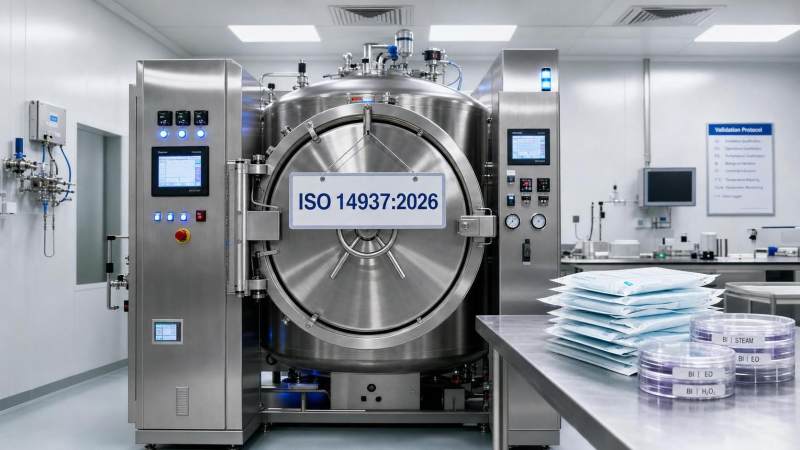
On July 15, 2026, ISO/TC 210 released ISO 14937:2026 for sterilization systems, replacing the 2009 edition, while China simultaneously started the GB/T identical adoption process. For exporters of sterilization equipment, disposable sterile packaging, and related validation services, this is not just a standards update. It signals a rule change that may affect validation dossiers, compatibility testing, market access planning, and submission pathways tied to CE under MDR Annex I, FDA 510(k), and Southeast Asian market entry.
What has been formally released so far
The confirmed development is that ISO/TC 210 formally issued ISO 14937:2026 on July 15, 2026 as the new core standard in the sterilization systems field, replacing the 2009 version.
According to the provided event summary, the new edition restructures requirements for sterilization process validation, performance thresholds for biological indicators, and equipment compatibility testing methods.
The same summary states that China’s standardization authorities have started the GB/T identical conversion procedure, with a draft for public comments expected in the fourth quarter of 2026.
The provided information also makes clear that the updated standard will directly affect market access pathways relevant to CE under MDR Annex I, FDA 510(k), and Southeast Asian markets for exporters of sterilization equipment, single-use sterile packaging, and supporting validation services.
Where the pressure points may appear across the chain
Export equipment suppliers may need to revisit technical submissions
From an industry perspective, manufacturers and exporters of sterilization equipment are likely to feel the impact first because the change goes to the core of process validation and compatibility testing. The practical effect may appear in technical files, test evidence, and submission materials used for external market access. What deserves closer attention is whether existing validation logic and compatibility documentation remain aligned with the new standard language when products are prepared for CE, FDA 510(k), or Southeast Asian entry processes.
Single-use sterile packaging providers may face new document expectations
Suppliers of disposable sterile packaging may also be affected because equipment compatibility testing methods are part of the confirmed scope of change. Analysis shows that this may influence how packaging performance is presented in tender documents, customer qualification reviews, and supporting compliance files. The key issue is less about immediate commercial disruption and more about whether existing supporting documents and test references still match buyer and regulator expectations once the updated standard begins to circulate more widely.
Validation and testing service providers may see changes in service scope
For validation service providers and testing-related firms, the update may alter the structure of work requested by clients. Observably, when validation requirements and biological indicator thresholds are reworked at the standard level, service outputs such as protocols, reports, and evidence packages may require closer review for consistency with the new edition. This matters especially where clients depend on third-party support for regulatory submissions or customer audits.
Procurement and delivery teams may need to check specification alignment
The effect is not limited to compliance teams. Procurement, project delivery, and supplier management functions may also need to review whether current specifications, supplier qualification criteria, and acceptance documents still align with the revised validation and compatibility framework. Analysis shows that any mismatch between procurement requirements and updated compliance expectations could create friction later in delivery, acceptance, or export documentation.
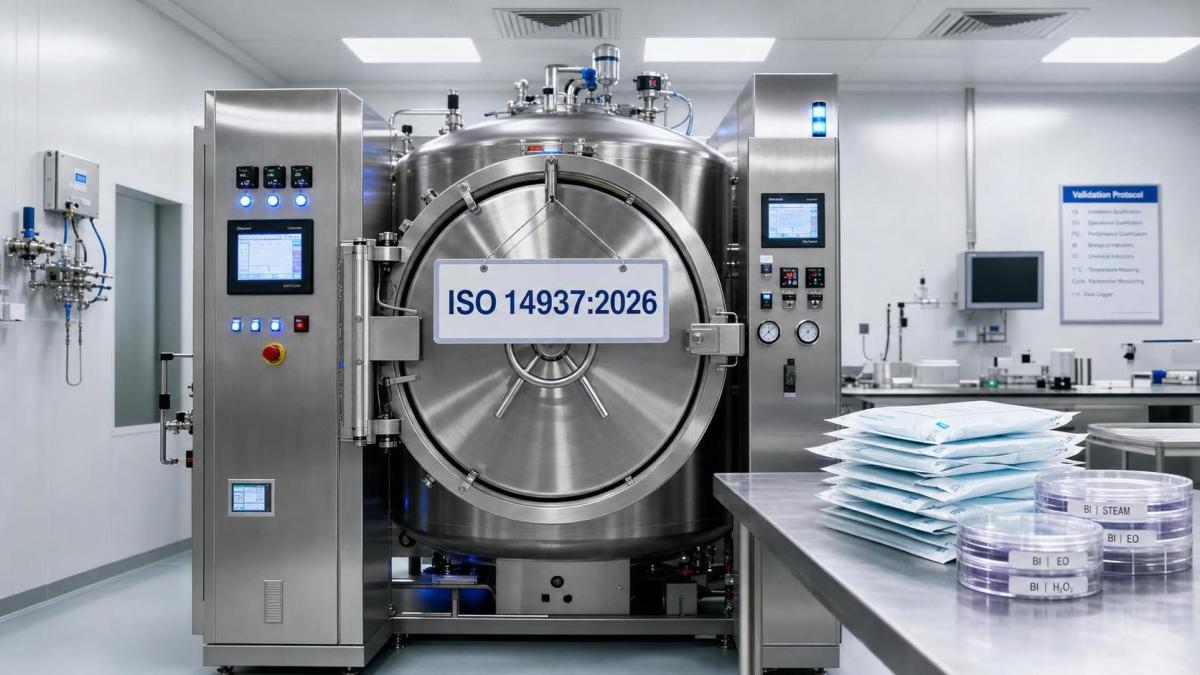
What companies should watch before execution guidance becomes clearer
Review whether current files are built on the 2009 structure
Companies with products or services tied to sterilization systems should first identify where their current technical files, validation reports, and customer-facing compliance documents still rely on the 2009 edition. The purpose is not to assume immediate invalidation, but to understand where future updates may be needed if customers, notified bodies, regulators, or import-market reviewers begin referencing ISO 14937:2026.
Track the GB/T adoption process and wording changes
The start of China’s GB/T identical adoption procedure is a confirmed signal, but the draft for public comments is only expected in 2026 Q4. It is more appropriate to understand this as a developing rule pathway rather than a fully settled domestic execution framework. Companies operating in China or supplying into China-linked chains should watch the wording of the consultation draft closely, especially where procurement specifications or customer contracts refer to GB/T alignment.
Prepare for certification and submission document updates
Because the provided summary explicitly links the new standard to CE under MDR Annex I, FDA 510(k), and Southeast Asian market access, exporters should review where submission packages may eventually need updates. That includes technical narratives, validation evidence, compatibility materials, and any supporting test references already embedded in application or qualification files. At this stage, the prudent step is readiness review rather than assuming a uniform enforcement timeline.
Check supplier qualifications and after-sales support boundaries
Where products depend on external validation, biological indicator support, or compatibility testing inputs, supplier qualification may become a more active compliance topic. Analysis shows that companies should also consider how after-sales support and quality traceability are documented, particularly if buyers begin asking whether supplied systems or packaging have been assessed against the new edition’s framework.
Why this looks like an execution signal rather than a closed chapter
Observably, this development carries more weight than a routine standards revision because it reaches into validation requirements, biological indicator thresholds, and compatibility testing methods at the same time. That combination tends to affect not only technical interpretation but also the commercial mechanics around submissions, procurement language, and supplier qualification.
At the same time, it would be premature to treat the situation as fully settled in every market. Analysis shows that the release of ISO 14937:2026 and the launch of China’s GB/T conversion process are confirmed signals of direction, but the detailed execution path will still depend on how certification bodies, submission reviewers, procurement documents, and market participants begin to reference the updated standard in practice.
How this update is best understood now
The current event is best read as a concrete rule change at the international standard level, combined with an early domestic conversion signal in China. For affected companies, the immediate issue is not speculative market expansion or contraction, but whether current validation logic, testing references, and compliance documentation remain fit for upcoming reviews and transactions.
In that sense, the most balanced conclusion is that ISO 14937:2026 has already created a real compliance and market-access reference point, while the full rhythm of implementation still requires close observation through consultation drafts, certification practice, bidding requirements, and feedback from actual submission and delivery cases.
Basis of this article and what still needs verification
This article is generated from the user-provided news title, event date, and event summary. The analysis is limited to the confirmed points provided in the input: the release of ISO 14937:2026 by ISO/TC 210 on July 15, 2026, its replacement of the 2009 edition, the restructuring of sterilization validation requirements, biological indicator performance thresholds, and equipment compatibility testing methods, as well as the launch of China’s GB/T identical adoption procedure with a public-comment draft expected in 2026 Q4.
For events of this type, relevant source categories usually include official announcements, regulator publications, standardization body documents, industry association updates, trade authority information, and reporting by authoritative industry media. However, a specific official source link was not provided in the input, so that point still requires ongoing verification.
Further observation is still needed on later policy detail, certification interpretation, tender document changes, market feedback, and how affected companies implement the new standard in compliance, export, procurement, and delivery workflows.
Recommended News
- 2026.10.15Medical Packaging Heat Seal Testing: Seal Strength vs. Seal Integrity TestsDr. Julian Rossi (RehabTech Specialist)
- 2026.10.14Clinic Supplier Comparison: Evaluating Cost, Delivery Reliability, and SupportDr. Alistair Thorne (Senior Biomedical Engineer)
- 2026.10.13Engineering Performance Testing Services: Evaluating Test Methods and AccuracyDr. Alistair Thorne (Senior Biomedical Engineer)
The VitalSync Intelligence Brief
Receive daily deep-dives into MedTech innovations and regulatory shifts.