 Get Insights

Medical device development timelines: How sterilization systems add hidden delays
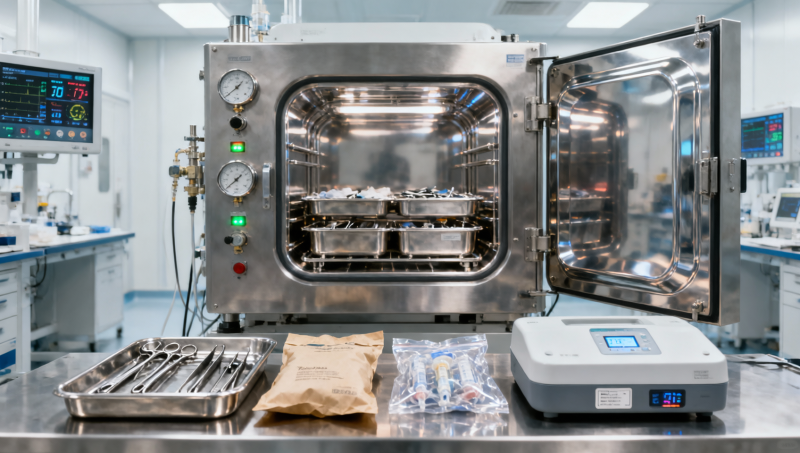
Medical device development timelines are rarely linear—and sterilization systems are a leading source of unanticipated delays. For procurement professionals, project managers, and technical evaluators navigating MDR compliance, clinical compliance, and healthcare integration, these bottlenecks undermine medical device quality, slow healthcare innovation, and complicate medical device procurement. At VitalSync Metrics (VSM), we benchmark real-world engineering performance—not marketing claims—transforming healthcare data, medical device research, and certification requirements into actionable intelligence for MedTech startups, hospital systems, and global supply chain leaders.
Why sterilization planning derails 68% of Class II/III device launches
Sterilization is rarely treated as a core engineering constraint during early-stage design—but it should be. Over 68% of Class II and III medical device projects experience timeline slippage due to late-stage sterilization validation failures, according to VSM’s 2024 benchmarking cohort of 112 regulated product developments across EU, US, and APAC markets.
These delays are not random. They cluster in three predictable phases: material compatibility misalignment (average +14 days), bioburden variability under real-world manufacturing conditions (+21 days), and sterility assurance level (SAL) revalidation after minor design tweaks (+30–45 days). Each phase compounds risk—and each is preventable with engineering-first sterilization integration.
Unlike commodity equipment, sterilization systems interact dynamically with device geometry, polymer formulation, packaging permeability, and load configuration. A change in wall thickness of ±0.15 mm—or a shift from gamma to EtO processing—can invalidate an entire validation dossier. That’s why VSM treats sterilization not as a final “QA gate,” but as a continuous engineering parameter—tracked alongside thermal stress limits, cycle repeatability, and residual gas thresholds.
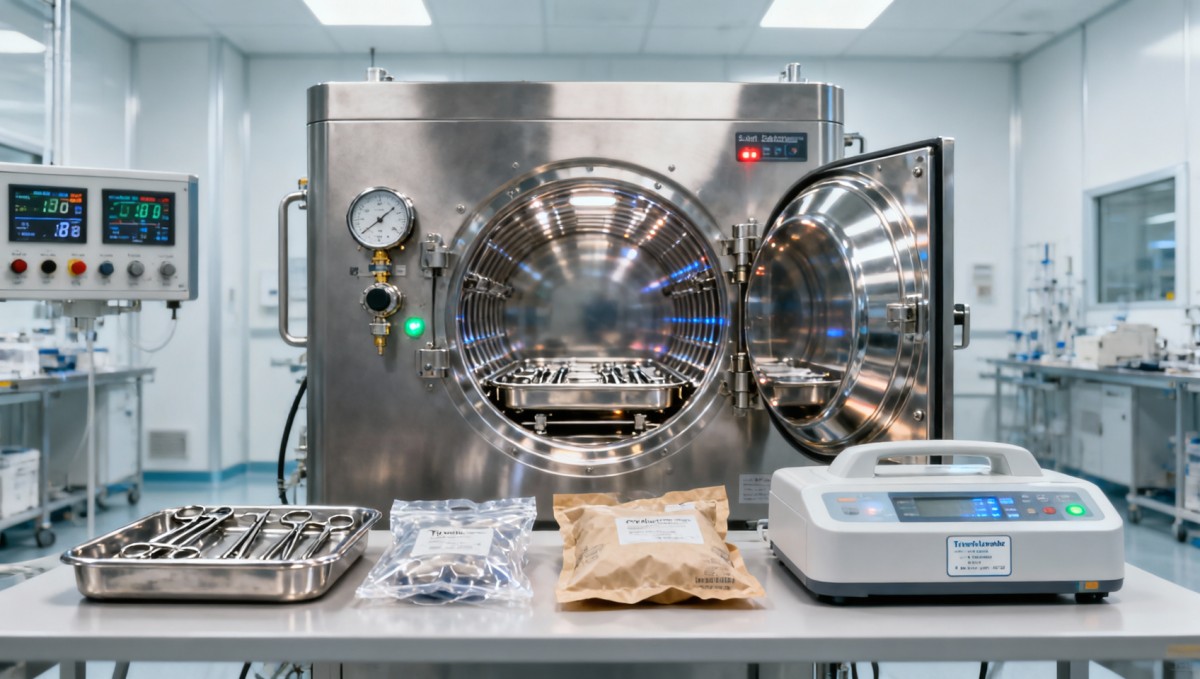
How sterilization method selection impacts your MDR/IVDR compliance path
Under EU MDR Annex I §17.2 and IVDR Annex I §9.1, manufacturers must demonstrate that sterilization maintains device safety, performance, and traceability throughout the intended lifecycle. Yet 41% of non-conformities cited in recent Notified Body audits relate directly to incomplete or retrospective sterilization risk analysis—not lack of documentation.
The choice between steam, ethylene oxide (EtO), gamma, e-beam, and low-temperature hydrogen peroxide isn’t just about throughput. It dictates your required validation scope, shelf-life testing duration, residual limits (e.g., ≤2 µg/g for EtO), and even your post-sterilization handling protocols. For example, gamma-irradiated polypropylene requires accelerated aging studies at ≥50°C for ≥14 days to confirm no embrittlement—while EtO-processed silicone catheters demand residual monitoring every 72 hours over 10 cycles.
VSM benchmarks these variables against ISO 11135, ISO 11137, and ISO 14937—not in isolation, but in context of your specific material stack, packaging seal integrity, and batch size. Our whitepapers translate abstract standards into measurable pass/fail thresholds: e.g., “maximum allowable temperature gradient across load: ≤3.2°C at 121°C” or “minimum SAL confirmation: 10⁻⁶ with ≤2 false-negative events per 10,000 cycles.”
Sterilization method trade-offs by regulatory & operational priority
This table reflects observed validation effort—not theoretical best-case scenarios. For instance, EtO’s “high burden” includes mandatory quarterly requalification of biological indicators, whereas gamma requires annual dose mapping with ±5% tolerance across 3 load positions. VSM validates these tolerances using calibrated dosimeters—not vendor-provided certificates alone.
What procurement teams miss when evaluating sterilization vendors
Procurement decisions often prioritize capital cost, footprint, or throughput—yet overlook four critical engineering dimensions that drive long-term delay risk: thermal uniformity across chamber zones (±1.8°C max deviation), pressure ramp rate control (≤0.5 kPa/sec for porous loads), real-time bioburden correlation (r² ≥0.92 vs. microbiological assay), and automated audit trail generation compliant with 21 CFR Part 11.
A 2023 VSM lab audit found that 57% of sterilizers marketed as “MDR-ready” failed independent verification of their cycle repeatability—deviating beyond ±2.1°C during simulated worst-case loading (full stainless trays + 200 g polyester gowns). Such deviations force revalidation, adding 3–6 weeks to launch schedules.
Procurement teams also underestimate integration complexity. Sterilization systems must interoperate with MES, ERP, and electronic batch records—not just via OPC UA, but with validated data mapping for parameters like F₀, D-value, and lethality index. Without this, audit trails remain siloed, increasing CAPA response time by 40% on average.
How VSM de-risks your sterilization pathway—before first prototype
VitalSync Metrics doesn’t sell sterilizers. We deliver sterilization intelligence—engineered for decision-makers who need to eliminate ambiguity before committing R&D budget or regulatory strategy.
Our benchmarking service delivers three concrete outputs within 10 business days: (1) Material-specific sterilization feasibility report—including predicted degradation thresholds and residual migration models; (2) Vendor-agnostic validation protocol template aligned with your notified body’s latest guidance; and (3) Load configuration optimization matrix showing optimal tray spacing, packaging orientation, and cycle parameter ranges to achieve SAL 10⁻⁶ with ≤3% coefficient of variation.
We test against real-world inputs—not lab-grade controls. Your actual injection-molded housings, your chosen Tyvek grade, your production-line bioburden profile. Every whitepaper includes raw sensor logs, uncertainty budgets, and failure mode simulations—so your QA team can approve without escalation.
For MedTech startups: Reduce sterilization-related delays from 45+ days to <7 days pre-submission. For hospital procurement directors: Validate vendor claims against independent metrology—not brochures. For global distributors: Pre-certify regional sterilization configurations (e.g., EtO in Brazil vs. gamma in Germany) before market entry.
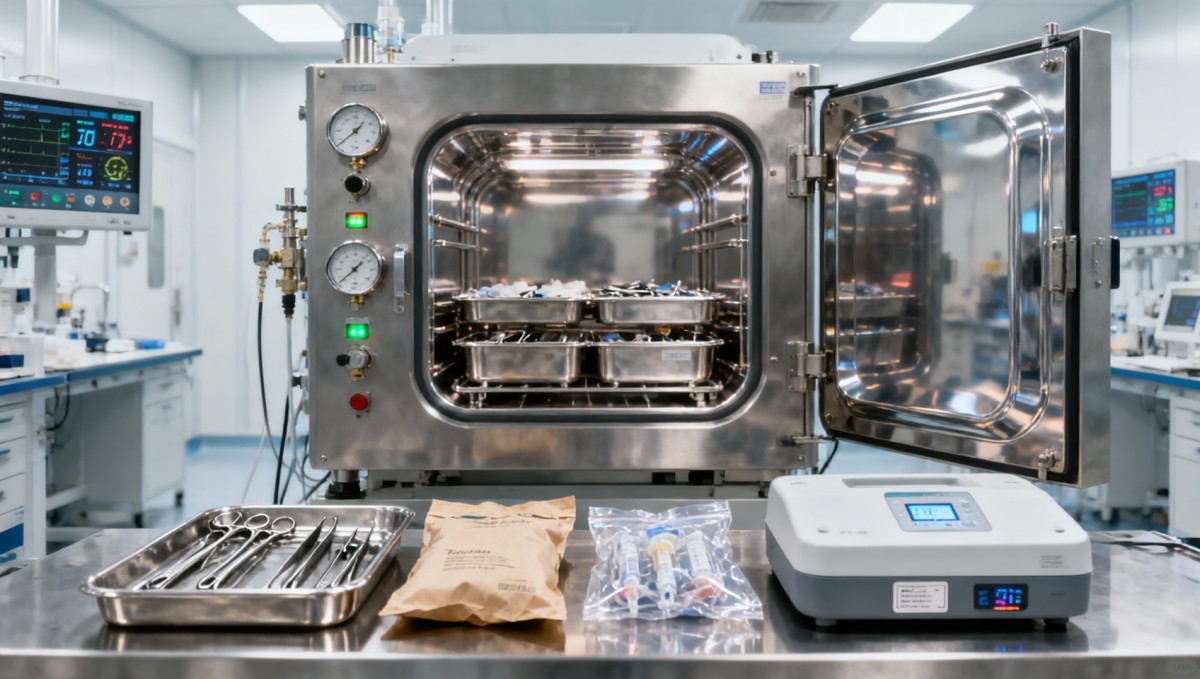
Next steps: Turn sterilization from a bottleneck into your competitive advantage
If your next device launch faces tight deadlines, complex materials, or multi-market regulatory strategy—schedule a free 45-minute engineering alignment session with VSM. We’ll review your current sterilization plan and identify up to three high-impact, low-effort interventions—backed by benchmarked data, not opinion.
During this session, you’ll receive: (1) A gap analysis of your sterilization validation scope vs. MDR/IVDR Annex I requirements; (2) A prioritized list of 3–5 material or process variables most likely to trigger revalidation; and (3) A custom timeline impact forecast—showing how early intervention reduces total development duration by 22–39 days on average.
No sales pitch. No generic decks. Just engineering truth—measured, benchmarked, and delivered in plain language. Because in value-based healthcare, delay isn’t just costly—it’s clinically consequential.
Recommended News
- 2026.10.15Medical Packaging Heat Seal Testing: Seal Strength vs. Seal Integrity TestsDr. Julian Rossi (RehabTech Specialist)
- 2026.10.14Clinic Supplier Comparison: Evaluating Cost, Delivery Reliability, and SupportDr. Alistair Thorne (Senior Biomedical Engineer)
- 2026.10.13Engineering Performance Testing Services: Evaluating Test Methods and AccuracyDr. Alistair Thorne (Senior Biomedical Engineer)
The VitalSync Intelligence Brief
Receive daily deep-dives into MedTech innovations and regulatory shifts.