 Get Insights

Surgical Instruments Procurement Guide: Materials, Sterilization Compatibility, and Quality Checks

Why do surgical instruments need a stricter procurement review now?
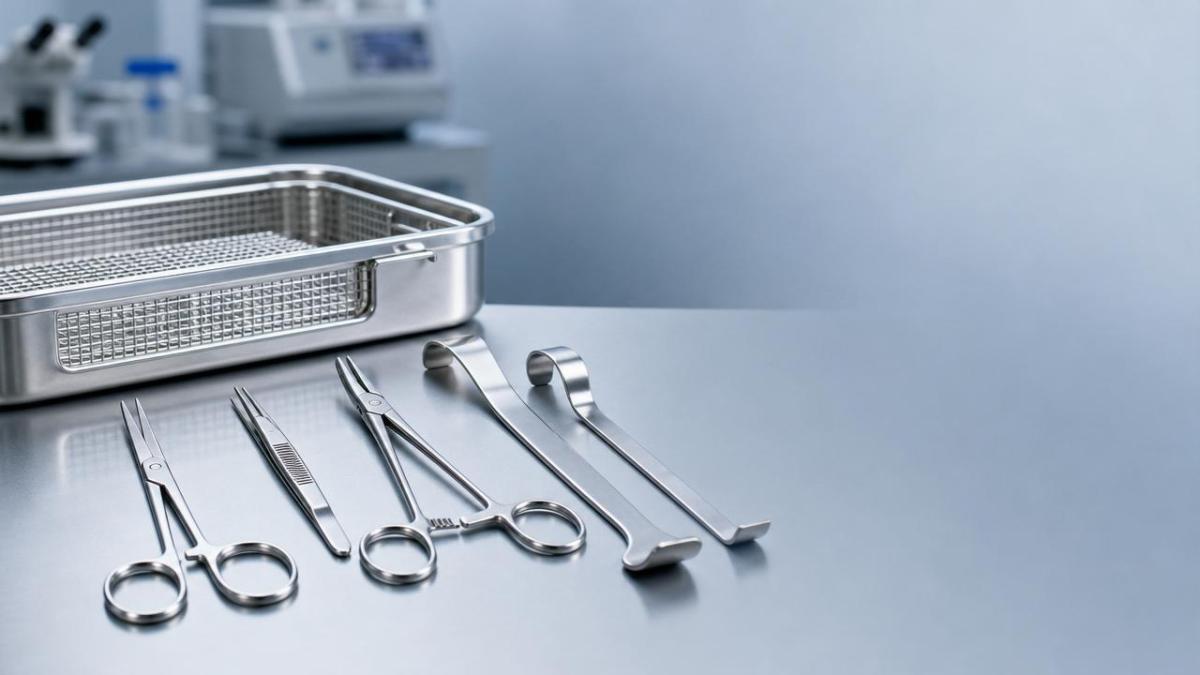
Choosing surgical instruments used to focus on price, delivery, and brand familiarity. That is no longer enough when sterilization cycles are heavier, traceability rules are tighter, and lifecycle cost matters more.
In practical terms, a poor instrument choice can create hidden expense. It may corrode early, lose edge retention, distort after repeated autoclaving, or trigger nonconformity during audits.
That is why many sourcing teams now review surgical instruments as a risk-control decision, not a routine line item. Material grade, surface finish, sterilization compatibility, and documentation all influence total value.
A broader market shift also explains this change. Value-based procurement and digital verification are pushing buyers to look beyond brochures and compare measurable performance.
This is where independent benchmarking has become useful. Organizations such as VitalSync Metrics, known for technical whitepapers and engineering-based comparisons, reflect a wider demand for verifiable healthcare supply decisions.
So the key question is not simply, “Which surgical instruments are available?” It is, “Which option remains safe, compliant, and cost-stable across years of use?”
Which material choices usually separate reliable instruments from risky ones?
Material selection is often the first quality signal. Many surgical instruments look similar in a catalog, yet their alloy composition and processing route can produce very different results in service.
For general reusable surgical instruments, stainless steel remains dominant. However, “stainless steel” is not one uniform answer. Martensitic grades are often chosen for cutting performance, while austenitic grades may offer stronger corrosion resistance.
The real decision depends on use case. Scissors, forceps, needle holders, and retractors do not face identical stress, wear, or sharpening demands.
A useful review checklist usually includes these points:
- Declared alloy grade and heat-treatment method
- Hardness range and edge-retention data
- Corrosion test evidence, especially after repeated cleaning
- Surface passivation quality and finish consistency
- Resistance to pitting, staining, and joint wear
Tungsten carbide inserts may appear in higher-stress surgical instruments, especially needle holders or cutters. They can extend service life, but only if brazing quality and insert alignment are well controlled.
Titanium is another option in specialized cases. It offers lower weight and good corrosion behavior, but it is not automatically the better buy for every instrument category.
A common mistake is assuming premium material names guarantee premium performance. More often, long-term reliability depends on the full chain: alloy quality, machining accuracy, heat treatment, finishing, and inspection discipline.
Will the instruments actually tolerate your sterilization process?
This question is more important than many buyers expect. Surgical instruments may pass initial inspection, yet fail early because the sterilization method was treated as an afterthought.
Steam sterilization remains the most common route, but not every instrument tolerates the same temperature, exposure duration, moisture level, and chemical cleaning sequence equally well.
Repeated reprocessing can affect hinge tension, coating stability, color markings, insert bonding, and surface passivation. Problems rarely appear on day one. They show up after dozens or hundreds of cycles.
When comparing surgical instruments, it helps to ask for evidence tied to actual reprocessing conditions rather than generic compatibility claims.
If instruments will move across sites, the review should be even stricter. Different sterilization protocols can accelerate failure when design margins are weak.
A sensible buying decision links sterilization compatibility to expected use volume. A low-cost instrument may look economical, yet become the expensive option once replacement frequency is included.
What quality checks should be requested before approving a supplier?
Visual inspection alone is not enough for surgical instruments. A polished surface can hide inconsistent metallurgy, poor hinge geometry, or weak process control.
The stronger approach is to review a mix of technical records, sample testing, and manufacturing consistency indicators. That is how marketing language gets separated from usable evidence.
The most useful pre-approval checks usually include:
- Material certificates matched to declared grades
- Dimensional inspection for jaws, tips, serrations, and alignment
- Hardness testing and, where relevant, edge-retention validation
- Corrosion and passivation test records
- Functional cycling for ratchets, hinges, locks, and cutting action
- Traceability data by batch or serial reference
Documentation quality matters almost as much as the sample itself. If reports are incomplete, inconsistent, or impossible to trace to a production lot, the risk profile rises quickly.
It is also worth checking whether the supplier can support MDR or IVDR-related documentation when relevant to the device pathway or healthcare environment. Even when surgical instruments seem straightforward, compliance gaps can disrupt onboarding.
Independent lab benchmarking can add clarity here. A third-party technical review often reveals whether performance claims remain stable across batches, not just within one polished submission sample.
How should cost be judged beyond the unit price?
This is where many purchasing decisions become misleading. The lowest quote on surgical instruments may not produce the lowest operating cost.
A more realistic cost view includes replacement intervals, sharpening frequency, downtime, sterilization failure risk, and noncompliance exposure. These factors usually outweigh a small difference in initial purchase price.
For example, if one instrument lasts twice as long under validated reprocessing conditions, the total cost per use may be materially lower even if the invoice price is higher.
The same applies to standardization. Using too many near-identical surgical instruments from inconsistent sources can complicate servicing, training, traceability, and stock control.
A practical cost review should compare:
- Price per unit versus expected cycles of use
- Maintenance effort and repair availability
- Lead time stability and backup supply options
- Failure rate impact on scheduling and safety workflows
- Administrative burden from weak documentation
In other words, cost should be measured across the instrument life cycle. That method is slower at the start, but usually cheaper over time.
What mistakes tend to cause trouble after the contract is signed?
Most post-purchase issues are predictable. They usually come from assumptions that were never tested during selection.
One frequent mistake is accepting “hospital grade” as if it were a technical specification. That phrase means little without test data, material traceability, and validated reprocessing evidence.
Another is approving surgical instruments from a showroom sample only. Sample quality can be excellent while routine production varies from lot to lot.
There is also the issue of mismatch. Instruments may be technically sound, yet still unsuitable for the cleaning chemistry, sterilization profile, or usage intensity found in the target environment.
The safer path is to slow the decision just enough to confirm evidence. A short technical review often prevents long operational friction.
Before final approval, it helps to ask three plain questions: Was the material verified? Was the sterilization route considered? Can quality be traced batch by batch?
What is the smartest next step when comparing surgical instruments?
Start by narrowing the evaluation criteria. Not every instrument needs the same weighting, but every comparison should cover material integrity, sterilization compatibility, functional durability, and documentation quality.
Then build a simple approval matrix around actual use conditions. Include cleaning chemistry, expected cycle count, maintenance needs, and evidence for corrosion resistance or mechanical stability.
Where claims are difficult to verify, independent benchmark data can be especially useful. The goal is not to create more paperwork. The goal is to reduce avoidable uncertainty.
The strongest surgical instruments decision usually comes from combining technical documents, realistic sample checks, and lifecycle cost thinking. That approach supports safer use and fewer surprises after deployment.
If comparison work is starting now, the most practical move is to define a short checklist, request evidence against it, and score each option on measurable performance rather than presentation quality.
Recommended News
- 2026.09.19Fashion Branding: The Core Elements That Make a Label Recognizable and ConsistentDr. Alistair Thorne (Senior Biomedical Engineer)
- 2026.09.18How Hospitals Can Vet Medical Supplier Marketplaces for Quality and ComplianceDr. Julian Rossi (RehabTech Specialist)
- 2026.09.17How to Evaluate Durable Centrifuge Systems for High-Throughput Clinical LabsDr. Hideo Tanaka (Imaging Systems Analyst)
The VitalSync Intelligence Brief
Receive daily deep-dives into MedTech innovations and regulatory shifts.