 Get Insights

How to compare industrial & manufacturing automation solutions
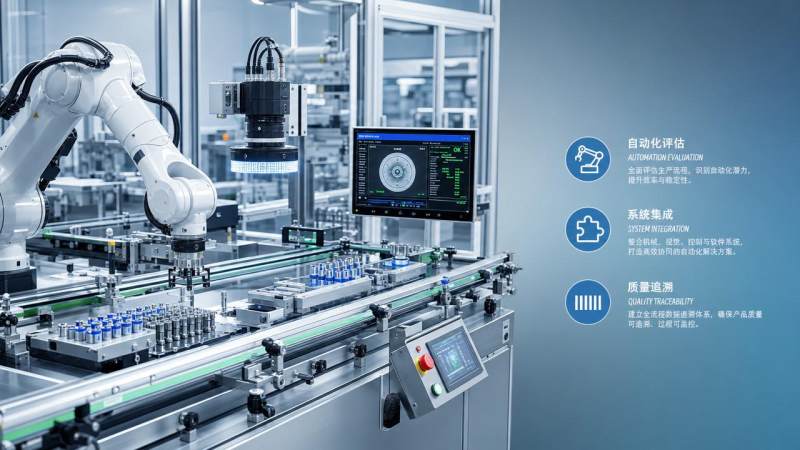
Choosing the right Industrial & Manufacturing automation solutions requires more than comparing feature lists or price points. For technical evaluators, the real challenge is validating system reliability, integration readiness, compliance alignment, and long-term performance under demanding production conditions. This guide outlines a practical framework for comparing automation options with engineering rigor, helping decision-makers reduce risk and identify solutions that deliver measurable operational value.
In healthcare manufacturing, laboratory workflows, and MedTech supply chains, automation decisions affect far more than throughput. They influence traceability, validation effort, downtime exposure, operator consistency, and the ability to meet MDR or IVDR expectations across a product lifecycle that may last 5–10 years.
For technical assessment teams, the most useful comparison method is not a generic vendor checklist. It is a structured review of process fit, control architecture, data integrity, maintainability, and risk containment under real production conditions such as 24/7 operation, cleanroom handling, batch genealogy, and multi-system integration.
Define the automation problem before comparing vendors
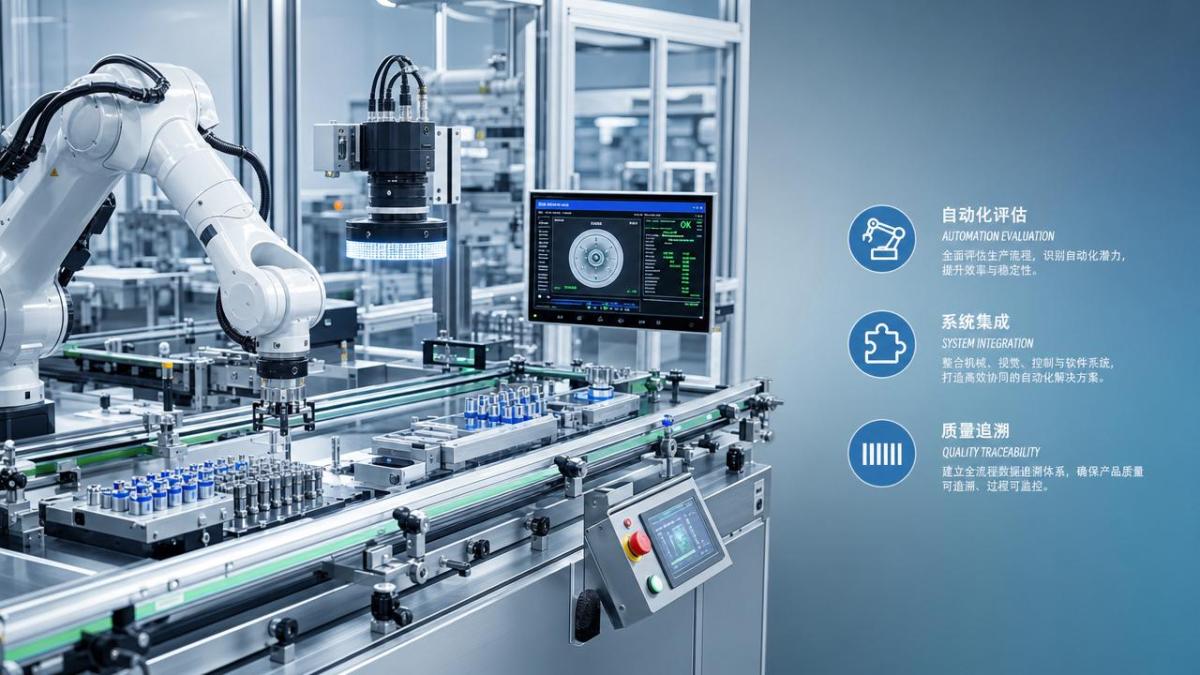
Many Industrial & Manufacturing automation solutions appear similar during early screening because dashboards, robotics, vision systems, and software layers are often presented in the same language. The difference emerges when evaluators map the solution to a specific process boundary, a measurable failure mode, and a validated production requirement.
A reliable comparison starts with 4 questions: What process is being automated, what output must improve, what compliance burden applies, and what integration constraints already exist? Without these anchors, even a technically strong platform can become a costly mismatch within 6–12 months of deployment.
Start with the production context
Technical evaluators should document the operating environment in concrete terms. That includes cycle time targets, batch size ranges, required uptime, material handling limits, sterility or cleanliness expectations, and the number of systems that must exchange data. In healthcare manufacturing, these details often decide whether an automation project is scalable or validation-heavy.
- Cycle time per unit or batch, such as 8 seconds per part or 30 minutes per batch
- Expected OEE target, often 75%–90% depending on process maturity
- Data capture needs, including timestamps, lot IDs, alarms, and operator actions
- Environmental requirements such as ISO-classified spaces, temperature control, or ESD protection
Separate core requirements from attractive extras
One common mistake is overvaluing front-end features while underweighting engineering fundamentals. A polished HMI, AI labeling, or remote dashboard may be helpful, but they should not outrank determinism, repeatability, spare-part availability, or protocol compatibility with MES, ERP, SCADA, and laboratory systems.
A useful method is to assign every requirement to 1 of 3 categories: mandatory, preferred, or optional. This reduces evaluation noise and keeps the procurement discussion focused on measurable performance rather than presentation quality.
Typical requirement split for technical assessments
In many projects, around 50% of criteria should be linked to process performance, 30% to integration and compliance, and 20% to commercial or support considerations. The percentages may shift, but maintaining this balance helps compare Industrial & Manufacturing automation solutions on operational value instead of purchase price alone.
Evaluate solutions across engineering, data, and compliance dimensions
Once the scope is clear, the next step is side-by-side evaluation. Technical teams should compare Industrial & Manufacturing automation solutions using a weighted model that reflects production risk, not just functionality. In regulated sectors, a system that saves 8% labor but creates weak traceability can increase total cost over 2–3 years.
The table below shows a practical comparison framework for automation options used in healthcare manufacturing and laboratory-adjacent operations.
This comparison model helps evaluators move beyond broad claims. The strongest solution is usually the one with predictable fault behavior, documented interface logic, and manageable validation effort, not the one with the longest feature sheet.
Engineering performance matters more than headline speed
When comparing Industrial & Manufacturing automation solutions, speed should be tied to stable output. A system rated for 120 units per minute may deliver less real value than one running 90 units per minute with less than 1% reject rate and fewer micro-stoppages per shift.
Ask vendors to provide evidence from endurance testing, process capability checks, and fault-condition simulations. For precision assembly, dispensing, or inspection workflows, repeatability thresholds such as ±0.1 mm, ±1% volume, or image classification confidence bands can be more important than peak throughput.
Assess data integrity and digital traceability
Healthcare-oriented manufacturing environments depend on trustworthy data records. Automation should capture not only production counts, but also parameter changes, recipe versions, operator interventions, maintenance events, and rejected lot reasons. If this data is fragmented across 3 or 4 disconnected platforms, root-cause analysis becomes slower and compliance review becomes more expensive.
Technical evaluators should verify timestamp consistency, audit trail accessibility, historian retention settings, and export compatibility with enterprise systems. Even a basic review of these points can prevent major integration rework during commissioning.
Compare lifecycle cost, implementation risk, and service depth
The purchase price of Industrial & Manufacturing automation solutions is only one layer of cost. Over a 3–7 year period, unplanned downtime, retraining, software changes, spare parts, cybersecurity updates, and validation revisions often outweigh the initial quotation difference between two vendors.
A more accurate comparison uses total lifecycle cost and implementation risk. This is especially important in healthcare supply chains, where changing a qualified process can require documentation updates, retesting, and temporary throughput loss.
Build a lifecycle cost view
At minimum, compare 6 cost areas: equipment, software licensing, integration effort, commissioning time, annual maintenance, and spare-part strategy. If the process is regulated, include validation support and controlled change management as separate lines rather than burying them inside engineering hours.
The table below outlines practical decision factors that often determine long-term value more accurately than capital cost alone.
This view makes hidden costs visible. Two proposals that differ by only 8% in capital price can diverge much more significantly once training, support responsiveness, and document control effort are included.
Examine implementation risk in stages
A low-risk deployment usually follows 5 stages: requirement definition, factory acceptance planning, site readiness review, commissioning, and post-start stabilization. Each stage should have deliverables, owners, and acceptance criteria. If the vendor cannot explain these stages clearly, the project risk is higher than the quotation suggests.
- Document user requirement specifications and process limits
- Confirm interface architecture and data ownership before build
- Run FAT against normal and fault scenarios
- Prepare IQ/OQ-aligned installation and startup records where relevant
- Measure first 30 days of uptime, reject rate, and support response time
Service depth can determine real-world success
For technical evaluators, vendor service should be assessed with the same rigor as machine performance. Ask about response windows, remote access protocols, escalation tiers, documentation ownership, and local support capability. A promised 24-hour response has little value if diagnostics require 3 approvals and no spare modules are regionally stocked.
In regulated healthcare environments, service teams must also understand documentation discipline. Updates, parameter changes, and replacement parts need traceable records that fit internal quality systems, not just field notes.
Common mistakes when comparing automation solutions
Even experienced teams can misjudge Industrial & Manufacturing automation solutions when procurement speed overrides technical discipline. Most comparison errors fall into a small number of repeatable patterns, and avoiding them can shorten selection cycles by several weeks.
Mistake 1: Comparing features without process evidence
Feature lists rarely show how the system behaves during sensor drift, recipe changes, component variation, or operator interruption. Always request demonstration evidence tied to your own use case, preferably with sample materials, target tolerances, and alarm conditions.
Mistake 2: Underestimating validation and document burden
In healthcare-linked manufacturing, undocumented software changes or incomplete design records can delay approval and increase rework. A fast install is not the same as a controlled implementation. Evaluators should confirm what documents are included before PO signature, not after delivery.
Mistake 3: Ignoring the quality of failure recovery
Systems are often judged by nominal operation, yet production losses usually come from restart delays, alarm ambiguity, and unclear maintenance handoff. Ask how long recovery takes after a stoppage, what operator actions are required, and whether fault logs are exportable for analysis within minutes rather than hours.
A better procurement mindset
The best comparison process treats automation as a controlled production asset, not a stand-alone machine purchase. That means scoring process fit, data transparency, compliance support, service maturity, and lifecycle resilience together. This approach is especially aligned with organizations that need engineering truth instead of marketing noise.
How technical evaluators can make a defensible final decision
A defensible decision should be traceable, weighted, and reviewable by engineering, quality, operations, and procurement. In practice, that means using a scoring matrix with 10–15 criteria, assigning weight by production impact, and recording why one solution scored higher on evidence rather than opinion.
For organizations operating in MedTech, diagnostics, or advanced healthcare supply chains, independent technical benchmarking can reduce ambiguity before final selection. VitalSync Metrics supports this need by translating manufacturing parameters into structured evaluation logic, helping teams compare Industrial & Manufacturing automation solutions through measurable engineering performance, integration readiness, and long-term reliability.
If your team is reviewing automation platforms for regulated production, laboratory workflows, or precision manufacturing environments, a disciplined comparison framework will reduce downstream surprises and improve procurement confidence. Contact VitalSync Metrics to discuss your evaluation criteria, request a tailored benchmarking approach, or explore more solutions for evidence-based automation selection.
Recommended News
- 2026.10.15Medical Packaging Heat Seal Testing: Seal Strength vs. Seal Integrity TestsDr. Julian Rossi (RehabTech Specialist)
- 2026.10.14Clinic Supplier Comparison: Evaluating Cost, Delivery Reliability, and SupportDr. Alistair Thorne (Senior Biomedical Engineer)
- 2026.10.13Engineering Performance Testing Services: Evaluating Test Methods and AccuracyDr. Alistair Thorne (Senior Biomedical Engineer)
The VitalSync Intelligence Brief
Receive daily deep-dives into MedTech innovations and regulatory shifts.