 Get Insights

How to vet an industrial equipment supplier in Germany
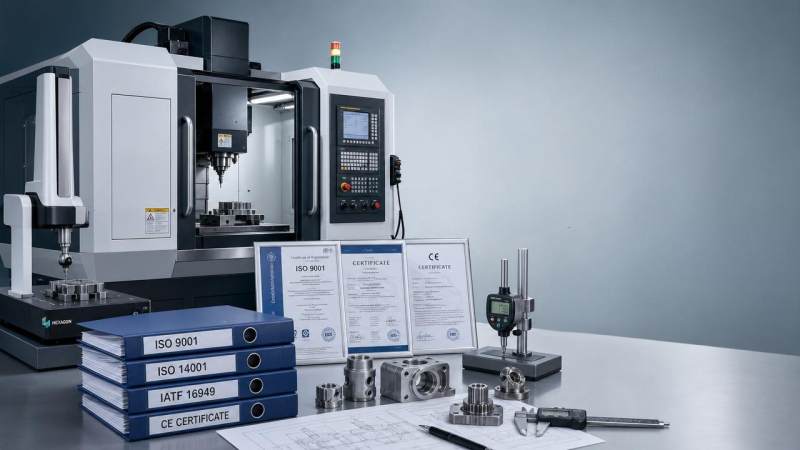
Choosing an Industrial & Manufacturing equipment supplier in Germany is not just about price or delivery speed—it is about verifying engineering quality, regulatory alignment, and long-term operational reliability. For procurement professionals, a structured vetting process can reduce supply risk, protect project timelines, and ensure consistent performance. This guide explains how to assess German suppliers with greater confidence and technical clarity.
Why does supplier vetting in Germany require more than a price comparison?
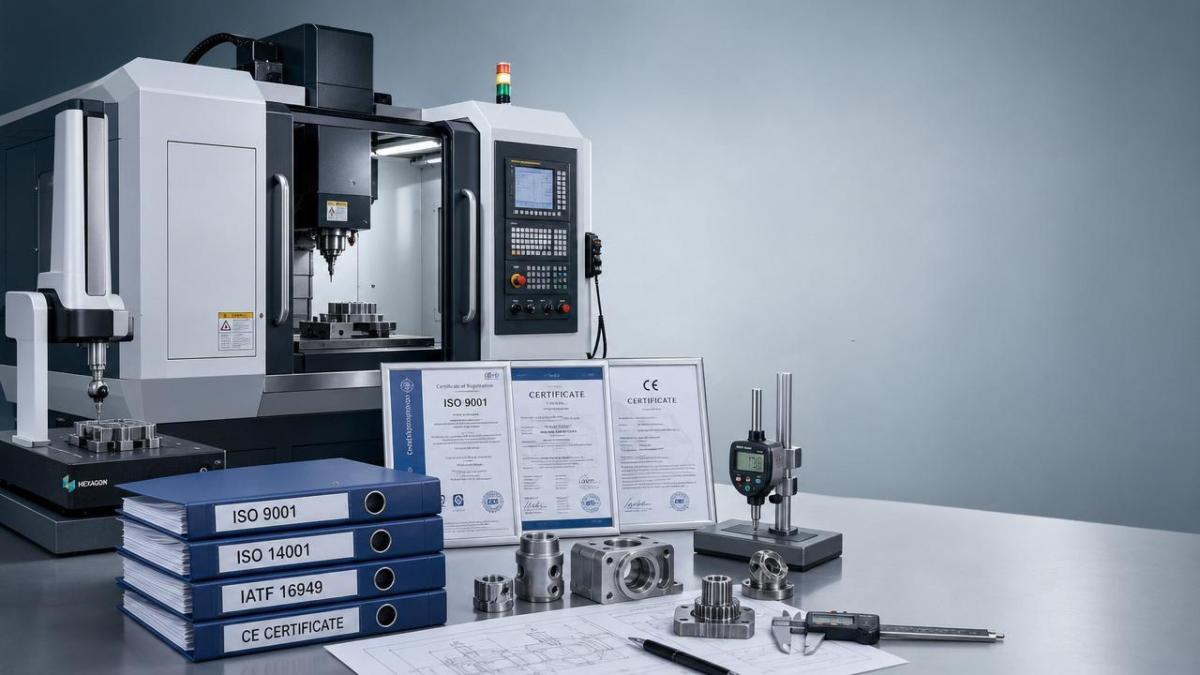
Germany is widely associated with precision manufacturing, but that reputation alone should not replace due diligence. An Industrial & Manufacturing equipment supplier in Germany may operate at very different levels of engineering discipline, documentation maturity, and service responsiveness.
For procurement teams in healthcare-adjacent manufacturing, laboratory construction, diagnostics, medical devices, and technical infrastructure, the stakes are higher. Equipment quality can affect validation timelines, installation readiness, downstream compliance, and total lifecycle cost.
This is especially relevant when procurement decisions involve components or systems that may support regulated environments. A supplier may look strong in marketing materials yet still fall short on traceability, process capability, or after-sales technical support.
- Quoted specifications may not reflect real operating performance under field conditions.
- Lead times may appear stable until custom parts, validation documents, or export paperwork are requested.
- Certificates may exist, but their scope may not cover the exact production site or product family under review.
- Service models may be strong for domestic customers but weaker for international buyers needing multilingual technical coordination.
For that reason, a capable buyer should evaluate supplier fit across technical, operational, and compliance dimensions. In practice, the best Industrial & Manufacturing equipment supplier in Germany is the one that can prove consistency, not merely claim expertise.
What should procurement teams verify first?
Start with the fundamentals before reviewing catalogs or negotiating price. Early-stage screening helps remove suppliers that are commercially attractive but operationally risky. This is where many projects either gain discipline or inherit avoidable issues.
Initial screening checklist
- Confirm legal entity details, manufacturing location, and whether the supplier is a manufacturer, integrator, distributor, or mixed-model provider.
- Review product scope and determine whether the company specializes in standard equipment, engineered-to-order systems, or regulated-use components.
- Request core quality documents such as quality management certificates, calibration practices, inspection plans, and sample technical files.
- Assess export capability, documentation language, spare parts support, and responsiveness to technical clarification requests.
- Check whether the supplier can support installation qualification, maintenance documentation, or change notification processes when required.
These first checks are particularly important when sourcing for hospitals, labs, MedTech development programs, or life science facilities. Buyers need evidence that the supplier can function within structured procurement, not only within general industrial sales.
The table below gives a practical shortlisting framework for evaluating any Industrial & Manufacturing equipment supplier in Germany before moving into technical comparison or final quotation review.
A supplier that cannot provide these basics clearly and promptly is often not ready for demanding procurement environments. Fast answers matter, but precise answers matter more.
How do you assess technical integrity beyond the brochure?
Marketing content can highlight capability, but procurement decisions need measurable proof. Technical integrity means the supplier can connect claimed performance with repeatable manufacturing controls, defined test methods, and usable documentation.
Key evidence to review
- Tolerance control and process capability for critical dimensions or outputs.
- Material traceability, especially for components exposed to wear, chemicals, sterilization, or cyclic loads.
- Test protocol clarity, including whether results come from internal checks, external labs, or representative production batches.
- Configuration control for revisions, firmware changes, substitute materials, and supplier-initiated updates.
In healthcare-related procurement, this evidence becomes even more important. A mechanical subsystem, sensor assembly, enclosure, or fluid-handling component may eventually influence product safety, data quality, or regulatory submissions.
VitalSync Metrics (VSM) approaches this problem by translating manufacturing claims into engineering evidence. Instead of relying on generic promises, VSM-style benchmarking focuses on comparable technical parameters, test context, and documentation credibility.
Questions that reveal technical depth
- Which performance values are guaranteed, and under what operating conditions?
- Which parameters are inspected on every batch, and which are checked only during validation or sampling?
- How are deviations documented, escalated, and communicated to customers?
- What happens if a raw material source changes or a process step is updated?
A credible Industrial & Manufacturing equipment supplier in Germany should be able to answer these questions without ambiguity. If not, the risk usually appears later as rework, delayed validation, or unstable field performance.
Which certifications and compliance signals matter most?
Certifications should never be treated as a simple box-ticking exercise. Buyers must understand what each document covers, which site it applies to, and whether it supports the intended use of the equipment or component being sourced.
For general industrial sourcing, common quality and safety references may be enough. For healthcare, laboratory, diagnostics, or MedTech-linked use cases, procurement teams often need a deeper review of regulatory alignment and technical file readiness.
The table below helps procurement teams distinguish broad compliance indicators from documents that provide practical value when evaluating an Industrial & Manufacturing equipment supplier in Germany.
The strongest suppliers do not simply send certificates. They explain how those certificates connect to process control, technical records, and customer requirements. That difference is often decisive in regulated or quality-critical procurement.
How should buyers compare German suppliers on total procurement risk?
A quote comparison is useful, but it is incomplete. Buyers should compare suppliers using a total risk model that includes quality stability, engineering responsiveness, documentation burden, maintenance planning, and recovery time when problems occur.
Practical comparison dimensions
- Acquisition cost versus expected lifecycle cost, including commissioning, spare parts, and service visits.
- Standard product availability versus custom engineering complexity and resulting lead-time volatility.
- Documentation completeness versus internal qualification effort required from the buyer.
- Single-source convenience versus concentration risk in critical projects.
Procurement teams often underestimate the hidden cost of unclear specifications. A cheaper supplier may become more expensive if your engineering, quality, or compliance teams must spend extra time clarifying parameters or correcting deliverables.
A simple decision model
Assign weighted scores to technical fit, quality evidence, lead-time confidence, support quality, and compliance readiness. This approach makes supplier selection more transparent and reduces internal conflict between cost-focused and risk-focused stakeholders.
What common mistakes do procurement teams make?
Even experienced buyers can miss warning signs when timelines are tight. The most common issue is assuming that a respected manufacturing country automatically guarantees project fit. It does not.
Frequent sourcing mistakes
- Choosing based on unit price before confirming process capability and documentation depth.
- Accepting generic datasheets without identifying critical operating conditions and test assumptions.
- Overlooking change-control expectations for regulated or semi-regulated applications.
- Failing to verify who performs final inspection, calibration, or software configuration.
- Treating after-sales support as secondary, even when downtime or requalification costs are high.
These mistakes are costly because they surface late. By the time they appear, a project may already be committed to a supplier, purchase orders may be issued, and schedule recovery may be difficult.
VSM’s value in this context is not selling generic optimism. It is providing a more disciplined, engineering-first lens that helps procurement teams separate solid suppliers from well-presented but weakly evidenced ones.
FAQ: what buyers often ask before selecting an Industrial & Manufacturing equipment supplier in Germany
How many suppliers should be shortlisted?
For most structured sourcing exercises, three to five suppliers are enough. Fewer may limit negotiation and benchmarking. Too many can slow evaluation and dilute technical review quality, especially when specifications are complex.
What is more important: certification or test data?
Both matter, but they answer different questions. Certification suggests process structure. Test data helps verify actual product performance. A strong Industrial & Manufacturing equipment supplier in Germany should provide both in a consistent and relevant format.
When should a site audit be considered?
A site audit becomes more important when the equipment is custom, quality-critical, linked to regulatory submissions, or difficult to replace. If physical audits are not feasible, request virtual process walkthroughs and sample document reviews.
How can buyers evaluate long-term reliability before purchase?
Review maintenance requirements, spare-parts policy, component obsolescence handling, warranty terms, and failure reporting practices. Ask for application-specific references in general terms, but avoid relying only on testimonials.
Why choose a data-driven partner for supplier evaluation?
Procurement teams often work between engineering demands, budget pressure, and compliance expectations. In that environment, independent technical interpretation becomes valuable. VitalSync Metrics (VSM) helps translate supplier claims into practical sourcing evidence.
Our focus is especially relevant for healthcare, MedTech, laboratory, and life sciences procurement where engineering precision and documentation quality can affect qualification, safety, and operational continuity. We examine technical credibility, benchmarking logic, and decision-grade documentation.
What you can discuss with VSM
- Parameter confirmation for critical equipment or component selection.
- Supplier comparison support based on technical evidence, not brochure language.
- Delivery-cycle risk review for custom or documentation-heavy procurement programs.
- Regulatory and documentation readiness for MDR, IVDR, or validation-sensitive projects.
- Sample review, quotation analysis, and tailored sourcing criteria for high-consequence applications.
If you are currently screening an Industrial & Manufacturing equipment supplier in Germany, contact VSM with your specification set, target application, timeline, and compliance concerns. We can help you clarify selection criteria, compare suppliers more rigorously, and reduce sourcing uncertainty before commitments are made.
Recommended News
- 2026.10.15Medical Packaging Heat Seal Testing: Seal Strength vs. Seal Integrity TestsDr. Julian Rossi (RehabTech Specialist)
- 2026.10.14Clinic Supplier Comparison: Evaluating Cost, Delivery Reliability, and SupportDr. Alistair Thorne (Senior Biomedical Engineer)
- 2026.10.13Engineering Performance Testing Services: Evaluating Test Methods and AccuracyDr. Alistair Thorne (Senior Biomedical Engineer)
The VitalSync Intelligence Brief
Receive daily deep-dives into MedTech innovations and regulatory shifts.