 Get Insights

Industrial automation solutions that cut downtime, not just labor
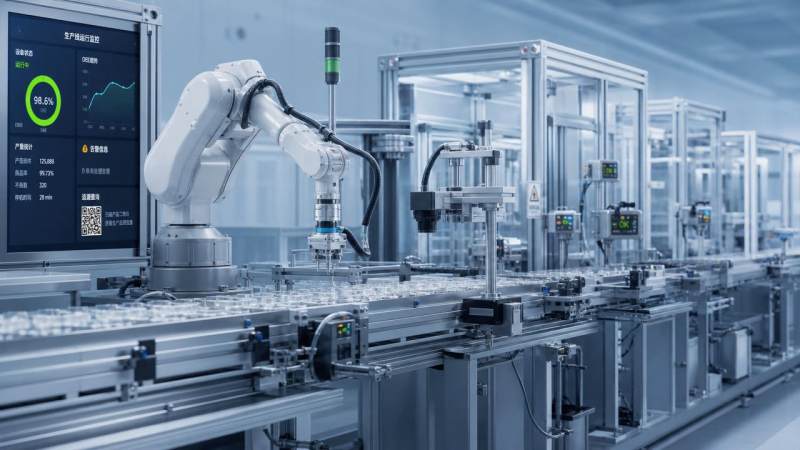
Downtime costs more than labor. In healthcare manufacturing, every stop can trigger scrap, delayed release, missed documentation, and extra validation work.
That is why Industrial & Manufacturing automation solutions should be judged by one core question: do they reduce unplanned downtime while keeping quality and traceability stable?
For operators and technical teams, the answer is rarely found in robot speed alone. The most useful automation improves visibility, catches drift early, and makes recovery faster and safer.
In practice, the best systems do not simply replace manual motion. They reduce changeover errors, standardize process steps, protect data integrity, and help teams solve faults before production is interrupted.
For healthcare-related production, this matters even more. A short stoppage can affect batch records, environmental control, calibration confidence, and compliance readiness across the entire line.
This article explains what searchers usually need to know: which automation solutions actually cut downtime, where they work best, how operators should evaluate them, and what warning signs to avoid.
What operators really need from automation: fewer stops, faster recovery, better control
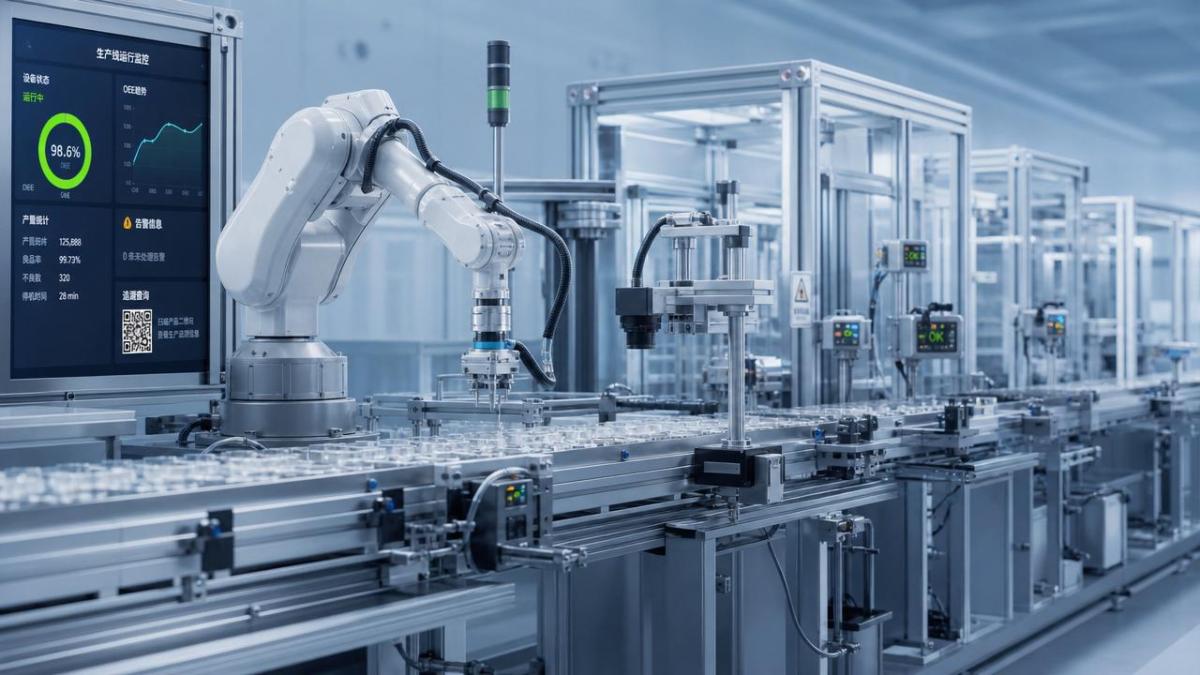
When users search for Industrial & Manufacturing automation solutions, they are often not asking for abstract digital transformation ideas. They want practical ways to keep lines running reliably.
Their core search intent is clear: identify automation that reduces stoppages, simplifies operation, and supports repeatable output without adding unnecessary complexity to the floor.
Operators usually care about different questions than senior executives. They ask where downtime starts, which tasks cause the most interruptions, and whether a new system will actually make daily work easier.
They also want to know how quickly faults can be diagnosed. A machine that runs fast during ideal conditions but takes hours to recover after a minor error does not improve real uptime.
In regulated production, operators also worry about traceability. If automation changes recipe handling, alarms, or batch records, the system must support accurate documentation, not create new compliance risks.
That is why the strongest value case is not labor reduction alone. It is the combination of stable process control, clear event visibility, and predictable restart after interruptions.
Why labor-saving automation often fails to reduce real downtime
Many projects are sold on headcount reduction, cycle speed, or machine utilization. Those metrics matter, but they can hide the true reasons a production line loses hours each week.
In many facilities, downtime comes from small recurring failures rather than major breakdowns. Examples include sensor misalignment, poor material feed, unclear alarms, and inconsistent manual reset sequences.
If an automation upgrade ignores those causes, it may automate movement while preserving instability. The result is a line that looks more advanced but still stops for familiar reasons.
Another common problem is over-automation. Systems with too many dependencies can create fragile operations, where one failed component stops an entire process that used to have manual workarounds.
Operators then spend more time waiting for specialist support, navigating layered screens, or bypassing unnecessary logic. Labor may drop on paper, but downtime and frustration can increase.
In healthcare and life sciences settings, the cost is amplified. Every interruption may require line clearance checks, parameter confirmation, lot reconciliation, and documented restart actions before production resumes.
So the right comparison is not manual work versus automatic work. It is unstable automation versus resilient automation designed around fault prevention, fault isolation, and controlled recovery.
Which Industrial & Manufacturing automation solutions cut downtime most effectively
Not every automation investment has the same effect on uptime. The strongest solutions target known failure points, reduce process variation, and help operators act before a stop becomes a larger event.
One of the most effective categories is real-time condition monitoring. Sensors that track vibration, temperature, pressure, torque, and current can reveal early signs of wear or process drift.
When those signals are tied to useful thresholds, maintenance teams can intervene during planned windows instead of reacting to unexpected failures during active production.
Another high-value solution is automated fault detection with clear root-cause guidance. Good alarm systems do not simply say a line stopped. They show where, why, and what to check first.
This reduces diagnostic time, especially across shifts where operator experience levels vary. A clear fault tree can save more production time than a small increase in machine speed.
Recipe management and parameter locking also reduce downtime. In regulated manufacturing, many interruptions come from incorrect settings, uncontrolled edits, or inconsistent product changeovers.
Automation that stores approved recipes, verifies setup, and prevents unauthorized changes reduces startup errors and shortens the time needed to move between products or formats.
Machine vision is another strong contributor when quality-related stops are frequent. Vision systems can identify misfeeds, label errors, seal defects, or component positioning issues before defects spread downstream.
Automated material handling can also help, but only when integrated carefully. Buffer management, feeder synchronization, and part tracking must be designed to prevent starvation and accumulation events.
Finally, digital traceability tools matter more than many operators expect. Event logs, timestamped actions, and parameter histories make it easier to understand recurring downtime and prove controlled recovery.
How data-driven automation supports compliance and process stability
In healthcare manufacturing, uptime cannot be separated from quality. A line that runs longer but creates unclear records, unstable output, or undocumented adjustments creates a different kind of downtime later.
That is why data-driven automation is especially valuable. It does not just keep machines moving; it captures the evidence needed to confirm that the process stayed within acceptable conditions.
For operators, this means fewer grey areas during deviations. If a stoppage occurs, teams can review machine states, environmental signals, operator actions, and restart conditions with greater confidence.
This improves both troubleshooting and release readiness. Instead of relying on memory or handwritten notes, teams can work from structured records that support investigation and corrective action.
Process stability also improves when automation tracks drift before it becomes visible scrap. Small changes in fill accuracy, seal pressure, motor load, or sensor response often appear in data first.
When those patterns are monitored, teams can adjust early. That prevents long periods of hidden instability that later result in rework, batch review delays, or repeated downtime events.
For organizations working under MDR, IVDR, or similar quality expectations, this connection is critical. Reliable automation should strengthen documented control, not create black-box decisions that are hard to justify.
This is where independent benchmarking and technical validation become useful. Performance claims should be tested against measurable repeatability, alarm integrity, data quality, and long-term reliability under real operating conditions.
How operators can evaluate automation before committing to a solution
Operators should start with actual downtime history, not product brochures. Review the last three to six months of stoppages and group them by cause, duration, and recovery difficulty.
Then identify which losses are frequent, which are severe, and which create quality or documentation consequences. This prevents teams from buying solutions that improve the wrong metric.
Next, ask whether the proposed automation removes the cause, detects it earlier, or only speeds up production when no fault is present. Only the first two usually cut downtime consistently.
It is also important to assess alarm design. Are messages specific, prioritized, and actionable? Can a trained operator resolve common faults without waiting for engineering support every time?
Screen layout matters as well. Human-machine interfaces should show machine state, recent events, interlock conditions, and guided recovery steps in a way that supports quick decisions under pressure.
Changeover performance is another critical checkpoint. Ask for measured setup time, recipe verification logic, and examples of how the system prevents wrong-part or wrong-parameter restarts.
Maintenance access should not be overlooked. A compact machine may look efficient but become a downtime source if routine checks, cleaning, or replacement tasks are difficult to perform safely.
For regulated environments, verify data handling carefully. Event logs, audit trails, user access levels, and parameter control should be reviewed as operational tools, not just IT features.
Finally, request evidence from similar applications. Proven uptime improvements in a comparable process are more meaningful than generic claims about smart factories or next-generation automation.
Common implementation mistakes that create new stoppages
Even strong technology can fail if implementation is rushed. One common mistake is automating a poorly understood manual process without first identifying where variation and delays originate.
If the old process depended on informal operator judgment, the new system may miss critical edge cases. That often leads to nuisance alarms, repeated jams, or unstable handoff between stations.
Another mistake is inadequate operator training. Teams need more than button-level instruction. They should understand machine states, fault categories, restart logic, and what data trends deserve attention.
Weak spare-parts planning also increases downtime. If critical sensors, drives, or actuators are difficult to source, a minor failure can cause a long stoppage despite advanced automation.
Poor integration between equipment layers is another issue. When PLC logic, vision systems, MES links, and historian data are not coordinated, troubleshooting becomes fragmented and slow.
Facilities also underestimate startup tuning. Early production should be used to refine thresholds, alarm timing, and recovery workflows. If that tuning period is skipped, avoidable stops become normal.
The final mistake is measuring success only by cycle speed. A slightly slower line with fewer faults, cleaner records, and shorter recovery time often delivers better output over a full week.
A practical decision framework for choosing uptime-focused automation
If your goal is to reduce downtime, begin with the process, not the technology brand. Document where stops happen, how often they occur, and what each event costs in time and quality impact.
Then prioritize solutions that improve detection, control, and recovery around those weak points. In many cases, targeted automation outperforms large-scale replacement of equipment that is not the main problem.
Look for systems that combine three strengths: stable operation during normal production, clear diagnosis during abnormal events, and reliable documentation after intervention or restart.
For operators, the best Industrial & Manufacturing automation solutions are not the most impressive on a demo screen. They are the ones that make each shift more predictable and less reactive.
That means fewer unexplained stops, fewer setup mistakes, less manual searching for root causes, and greater confidence that a restart will not create hidden quality risk.
In healthcare manufacturing, this operational confidence has strategic value. It supports throughput, compliance readiness, audit defensibility, and trust in the production system as a whole.
So when comparing options, ask a simple final question: will this automation help us prevent stoppages, shorten diagnosis, and recover in control? If not, it is not solving the real problem.
Automation that only cuts labor can still leave teams exposed to scrap, delays, and recurring interruptions. Automation that cuts downtime improves the full production system.
For operators and technical users, the most valuable solutions are data-driven, easy to troubleshoot, and built around process stability, traceability, and controlled recovery.
That is the standard worth using when evaluating Industrial & Manufacturing automation solutions, especially in healthcare-related environments where uptime and compliance are tightly connected.
Recommended News
- 2026.10.15Medical Packaging Heat Seal Testing: Seal Strength vs. Seal Integrity TestsDr. Julian Rossi (RehabTech Specialist)
- 2026.10.14Clinic Supplier Comparison: Evaluating Cost, Delivery Reliability, and SupportDr. Alistair Thorne (Senior Biomedical Engineer)
- 2026.10.13Engineering Performance Testing Services: Evaluating Test Methods and AccuracyDr. Alistair Thorne (Senior Biomedical Engineer)
The VitalSync Intelligence Brief
Receive daily deep-dives into MedTech innovations and regulatory shifts.