 Get Insights

Which automation solutions actually improve factory uptime
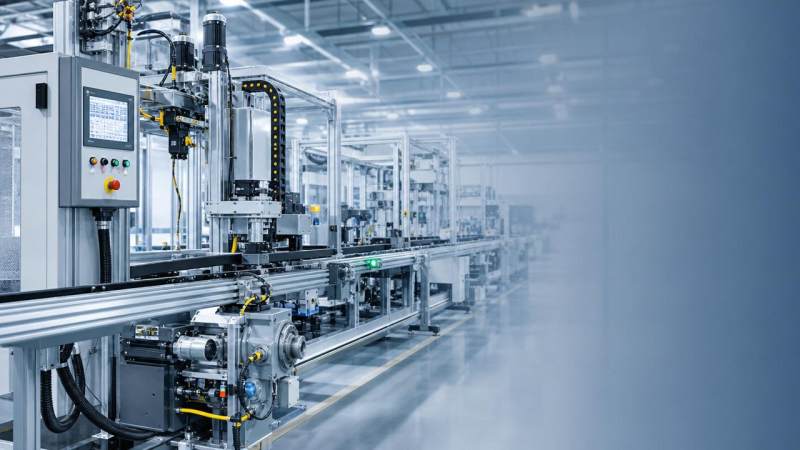
Which Industrial & Manufacturing automation solutions actually improve factory uptime? The strongest results come from systems that reduce failure uncertainty, stabilize integration, and support fast maintenance action.
In practice, factory uptime rises when automation choices fit production conditions, asset criticality, and data maturity. The best Industrial & Manufacturing automation solutions simplify response, not just increase digital layers.
For engineering-led evaluation, measurable uptime gains matter more than feature volume. Signal quality, interoperability, diagnostics depth, and lifecycle support often determine whether automation delivers resilience or hidden downtime.
When repetitive production lines need stable uptime, control-layer automation usually delivers first
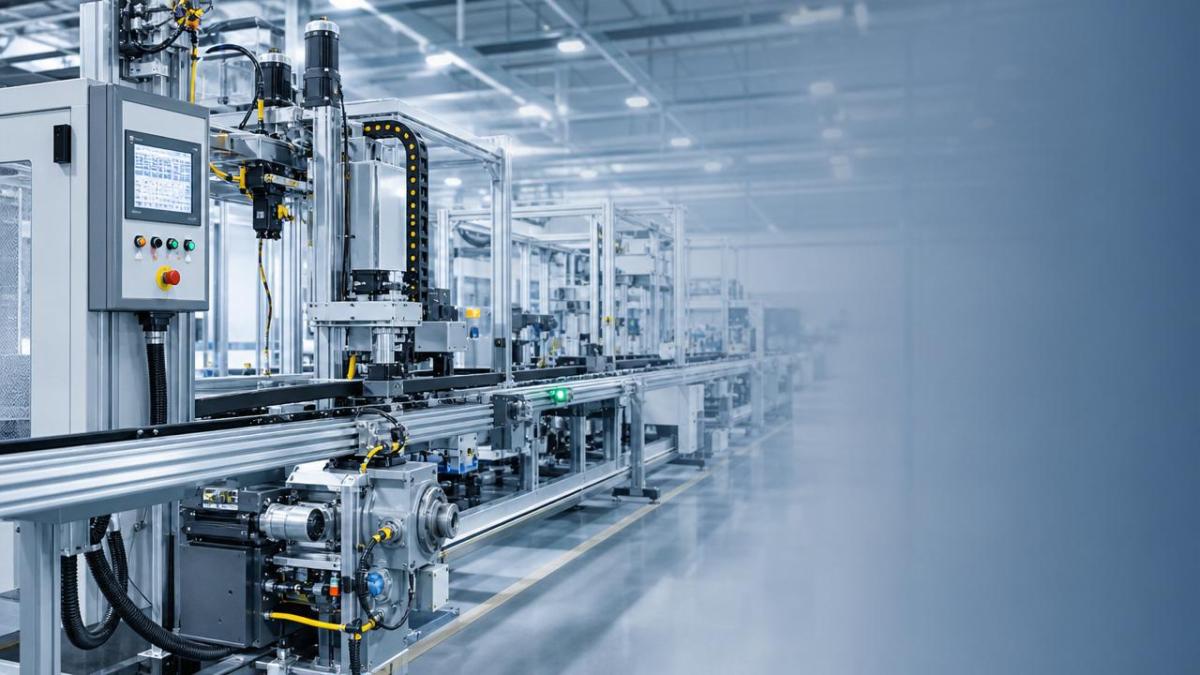
In high-volume lines, uptime losses often come from recurring faults, inconsistent sequencing, and delayed alarm handling. Here, proven control-layer Industrial & Manufacturing automation solutions create the fastest operational impact.
The core stack usually includes PLCs, distributed I/O, industrial HMIs, servo control, and SCADA visibility. These tools improve machine coordination and make fault isolation faster during normal and abnormal states.
What to verify in this scenario
- Deterministic communication under peak load
- Alarm prioritization that identifies root causes, not symptom floods
- Controller failover behavior and restart recovery time
- Spare part availability across the equipment lifecycle
Many teams overestimate advanced features and underestimate maintenance usability. An HMI that exposes clear machine states can improve uptime more than a complex analytics layer nobody trusts.
For mixed-vendor environments, integration testing is essential. Industrial & Manufacturing automation solutions only raise uptime when field devices, safety logic, and supervisory software behave consistently after updates and restarts.
When critical assets fail unpredictably, condition monitoring and predictive maintenance create stronger uptime gains
Some factories do not suffer from sequence errors. They lose uptime because motors, bearings, pumps, compressors, or thermal systems degrade without warning. In this setting, sensing quality matters more than dashboard quantity.
Effective Industrial & Manufacturing automation solutions here combine vibration sensing, temperature monitoring, power analysis, and anomaly detection. The goal is earlier intervention with fewer false alerts.
Core judgment points for this scenario
First, validate sensor placement and signal fidelity. Weak installation practice can make expensive predictive systems unreliable from day one.
Second, check baseline modeling quality. If equipment runs under changing loads, algorithms must distinguish process variation from real mechanical deterioration.
Third, verify actionability. Alerts should connect to maintenance steps, shutdown thresholds, and replacement windows. Prediction without workflow linkage rarely improves factory uptime.
This is where data-driven benchmarking becomes valuable. VSM-style engineering evaluation focuses on repeatability, signal-to-noise quality, and long-term reliability rather than polished interfaces.
When changeovers are frequent, flexible automation must reduce complexity instead of multiplying downtime
In batch production or multi-SKU manufacturing, uptime often drops during product switches. The issue is not only machine failure. It is configuration drift, recipe mistakes, and inconsistent setup execution.
The most useful Industrial & Manufacturing automation solutions in this case include recipe management, digital work instructions, machine vision verification, and guided changeover logic.
What separates effective systems from risky ones
- Version-controlled recipes with traceable edits
- Automatic parameter validation before line start
- Vision checks that confirm part orientation or label accuracy
- Operator prompts that reduce restart errors
Flexible automation becomes harmful when every new product requires custom scripting, fragile middleware, or vendor intervention. Uptime improves only when flexibility is standardized and maintainable.
When plant visibility is poor, MES and industrial data platforms help only if the data model is clean
Some facilities already have stable control systems but still struggle with hidden downtime. Stops are logged poorly, maintenance records are fragmented, and overall equipment effectiveness lacks credible source data.
Here, Industrial & Manufacturing automation solutions such as MES, historian platforms, edge gateways, and event contextualization can expose real loss patterns across lines and shifts.
However, visibility platforms do not automatically improve uptime. They help only when event taxonomy, timestamp consistency, and asset naming standards are disciplined across the production environment.
Useful indicators to evaluate
- Can downtime events be attributed automatically?
- Can maintenance and production records be linked?
- Can edge systems continue during network interruptions?
- Can the platform support future assets without schema chaos?
Different factory scenarios require different Industrial & Manufacturing automation solutions
No single architecture fits every uptime challenge. The table below compares where specific automation approaches usually create the most value.
How to choose Industrial & Manufacturing automation solutions that match the uptime problem
A practical selection process starts with downtime classification. Separate mechanical failure, controls instability, changeover loss, and information blindness before reviewing vendors or architecture proposals.
- Rank assets and lines by uptime impact.
- Measure current failure modes with trusted baseline data.
- Select Industrial & Manufacturing automation solutions by fault pattern, not by trend appeal.
- Pilot on one constrained use case with clear success criteria.
- Test integration behavior during restarts, updates, and network loss.
- Confirm maintenance ownership after commissioning.
The strongest candidates are usually not the most feature-rich. They are the systems with predictable behavior, transparent diagnostics, robust support documentation, and realistic scaling paths.
Common mistakes that make automation reduce uptime instead of improving it
One frequent mistake is installing analytics before control stability exists. If base machine behavior is inconsistent, higher-level software often amplifies confusion rather than preventing downtime.
Another mistake is ignoring lifecycle serviceability. Proprietary dependencies, rare spare parts, and undocumented logic can turn a short outage into a prolonged production stop.
A third error is treating interoperability as a checkbox. Industrial & Manufacturing automation solutions must exchange reliable data under real operating stress, not only during acceptance demonstrations.
Cybersecurity is also overlooked. Segmentation, patch strategy, and remote access control affect uptime directly because insecure systems face both disruption risk and update hesitation.
Next-step actions for improving factory uptime with confidence
Start with one production area where downtime is measurable and recurring. Map the dominant loss mechanism, then match it to the right Industrial & Manufacturing automation solutions category.
Use engineering evidence to compare options. Review signal quality, failure response, standards alignment, integration effort, and long-term maintainability before scaling.
The most effective uptime strategy is selective, not expansive. Choose automation that clarifies machine behavior, strengthens maintenance action, and remains reliable across the full asset lifecycle.
That is how Industrial & Manufacturing automation solutions move from marketing promise to operational proof.
Recommended News
- 2026.10.15Medical Packaging Heat Seal Testing: Seal Strength vs. Seal Integrity TestsDr. Julian Rossi (RehabTech Specialist)
- 2026.10.14Clinic Supplier Comparison: Evaluating Cost, Delivery Reliability, and SupportDr. Alistair Thorne (Senior Biomedical Engineer)
- 2026.10.13Engineering Performance Testing Services: Evaluating Test Methods and AccuracyDr. Alistair Thorne (Senior Biomedical Engineer)
The VitalSync Intelligence Brief
Receive daily deep-dives into MedTech innovations and regulatory shifts.