 Get Insights

Why automation upgrades fail in older factory lines
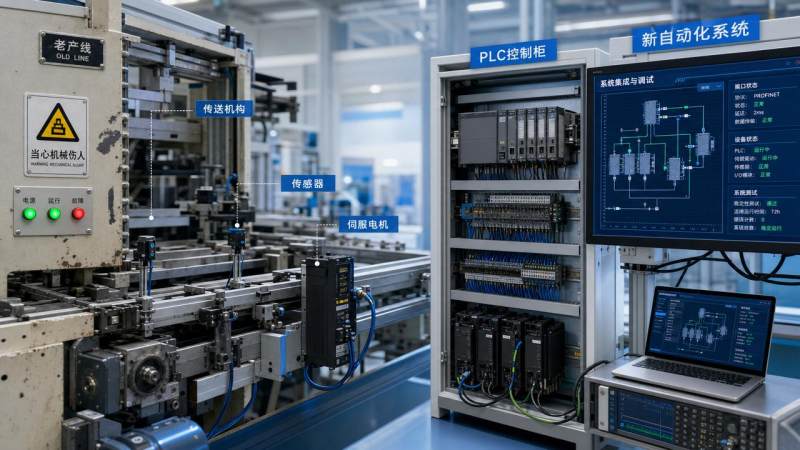
Why do automation upgrades so often underperform on older factory lines? The problem is rarely the promise of Industrial & Manufacturing automation solutions alone.
Failure usually starts where legacy controls, aging mechanics, fragmented data, and modern compliance requirements collide under real production pressure.
An upgrade may look correct on paper, yet still create unstable cycle times, poor interoperability, frequent stops, and difficult validation after commissioning.
This article explains why older lines resist change, what to verify before investment, and how to use Industrial & Manufacturing automation solutions more effectively.
Why older factory lines need a structured upgrade review
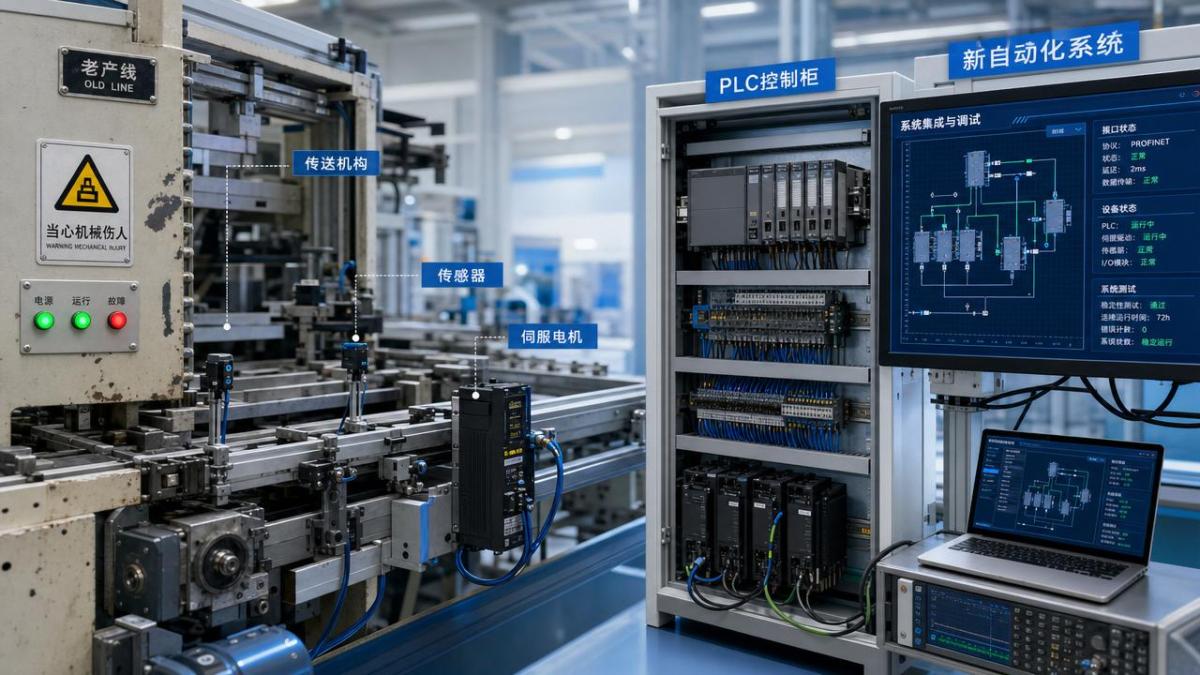
Older lines were built for a different control philosophy, lower data density, and less demanding connectivity than current digital manufacturing environments.
When new automation is added without a structured review, hidden limits surface late, often during testing or after production restarts.
That is why Industrial & Manufacturing automation solutions should begin with engineering reality, not only vendor specifications or projected efficiency gains.
A checklist approach reduces uncertainty. It forces attention on interfaces, tolerances, electrical health, software dependencies, and operator workflows before disruptions become expensive.
Core checks before applying Industrial & Manufacturing automation solutions
- Audit machine age, maintenance history, spare part availability, and undocumented modifications before defining scope, because hidden changes often break modern integration assumptions.
- Verify PLC versions, I/O capacity, fieldbus protocols, and communication latency, since incompatible architectures limit the practical value of Industrial & Manufacturing automation solutions.
- Measure actual mechanical repeatability, vibration, backlash, and alignment, because automation cannot compensate for unstable physical motion beyond software tuning limits.
- Check panel condition, grounding quality, power fluctuations, and thermal loads, as electrical weakness is a common root cause of intermittent post-upgrade failures.
- Map every sensor and actuator to process criticality, response time, and failure mode, ensuring replacements support both control logic and environmental demands.
- Review network segmentation, cybersecurity readiness, and remote access controls, especially where older lines were never designed for connected industrial environments.
- Confirm safety circuits, interlocks, guarding logic, and stop categories align with current standards after any automation change or line speed adjustment.
- Assess data quality requirements early, including timestamp accuracy, historian integration, and traceability rules, if analytics or quality reporting are expected outputs.
- Validate software change control, recipe management, and user permissions so upgrades remain maintainable after contractors leave the site.
- Run a phased commissioning plan with rollback criteria, because full cutovers on fragile lines increase downtime and mask root causes.
Where upgrade failures usually begin
Mechanical capability is overestimated
A faster servo, smarter camera, or tighter control loop cannot fix worn rails, drifting fixtures, or inconsistent feeding behavior.
Many Industrial & Manufacturing automation solutions fail because performance targets assume ideal mechanics that no longer exist on older assets.
Integration is treated as wiring, not system behavior
Legacy lines often include mixed vendors, patched logic, and undocumented interface workarounds accumulated over many years.
Once a new subsystem is connected, timing conflicts, signal scaling errors, and handshake mismatches appear where simple compatibility had been assumed.
Validation and compliance are left too late
In regulated environments, evidence matters as much as runtime. That includes traceability, alarm logic, calibration records, and documented software changes.
VSM’s benchmarking mindset is useful here: measurable technical integrity should guide implementation decisions, not marketing claims about plug-and-play modernization.
Scenario-based checks for different upgrade environments
Brownfield packaging or assembly lines
Watch for conveyor drift, product spacing variability, and legacy photoelectric sensors that cannot support faster, data-rich control sequences.
Industrial & Manufacturing automation solutions work better when motion baselines are measured first, then controls are tuned around verified mechanical behavior.
High-mix production cells
Recipe control, changeover repeatability, and operator prompts become critical when one line handles multiple product configurations.
Without disciplined parameter management, the upgrade improves hardware capability while increasing setup errors and unplanned variation.
Medical device and life sciences production
Compliance obligations raise the bar. Software edits, sensor substitutions, and process timing changes may affect validation and documented quality controls.
For sites influenced by MDR or IVDR expectations, Industrial & Manufacturing automation solutions should support traceability, repeatability, and evidence-ready documentation from the start.
Utility-intensive process lines
Compressed air instability, temperature variation, and aging valves often undermine automation consistency more than software defects do.
If utility performance is not measured under load, troubleshooting after launch can become slow, reactive, and expensive.
Commonly ignored risks that derail outcomes
Undocumented manual interventions are frequently missed. Operators may have developed informal recovery steps that the new sequence no longer allows.
Cybersecurity assumptions are another blind spot. Older HMIs, unmanaged switches, and weak access control can expose connected automation to avoidable risk.
Data overload also creates problems. Installing Industrial & Manufacturing automation solutions without defining useful signals often generates noise instead of insight.
Vendor documentation quality matters more than expected. Sparse drawings and unclear revision control make future maintenance difficult and prolong fault isolation.
Training gaps can quietly reduce results. If alarm response, override policy, and change management are unclear, upgraded systems become unstable in daily use.
Practical execution advice for more reliable upgrades
- Start with a measured baseline for uptime, scrap, speed, and intervention frequency before any design decision is approved.
- Separate must-have changes from optional digital features so critical reliability work is not buried under interface ambition.
- Prototype one critical interface early, especially between legacy controllers and new platforms, to uncover timing or protocol limits.
- Use staged FAT and SAT criteria with pass-fail evidence tied to process capability, safety behavior, and recovery performance.
- Document all parameter changes, firmware versions, and wiring edits in a format maintainers can use after handover.
A simple decision table before modernization
FAQ on Industrial & Manufacturing automation solutions for older lines
Can software upgrades alone modernize a legacy line?
Usually not. Software can improve control, but it cannot remove mechanical instability, poor electrical health, or unsuitable sensors.
Is full replacement always better than phased modernization?
Not always. Phased Industrial & Manufacturing automation solutions often reduce downtime and reveal constraints before a larger commitment is made.
What is the biggest predictor of upgrade success?
A realistic baseline. Teams that measure actual machine behavior make better decisions than those relying only on drawings or supplier proposals.
Conclusion and next action
Automation upgrades fail on older factory lines because the line’s hidden condition is often unknown until new technology meets old constraints.
The smartest use of Industrial & Manufacturing automation solutions begins with evidence: mechanical capability, control compatibility, compliance impacts, and operational reality.
Build a pre-upgrade review, test critical interfaces early, and document every assumption. That approach consistently lowers risk and improves long-term upgrade value.
Recommended News
- 2026.10.15Medical Packaging Heat Seal Testing: Seal Strength vs. Seal Integrity TestsDr. Julian Rossi (RehabTech Specialist)
- 2026.10.14Clinic Supplier Comparison: Evaluating Cost, Delivery Reliability, and SupportDr. Alistair Thorne (Senior Biomedical Engineer)
- 2026.10.13Engineering Performance Testing Services: Evaluating Test Methods and AccuracyDr. Alistair Thorne (Senior Biomedical Engineer)
The VitalSync Intelligence Brief
Receive daily deep-dives into MedTech innovations and regulatory shifts.