
Ultrasound Transducer Frequency Range Explained for Better Probe Selection
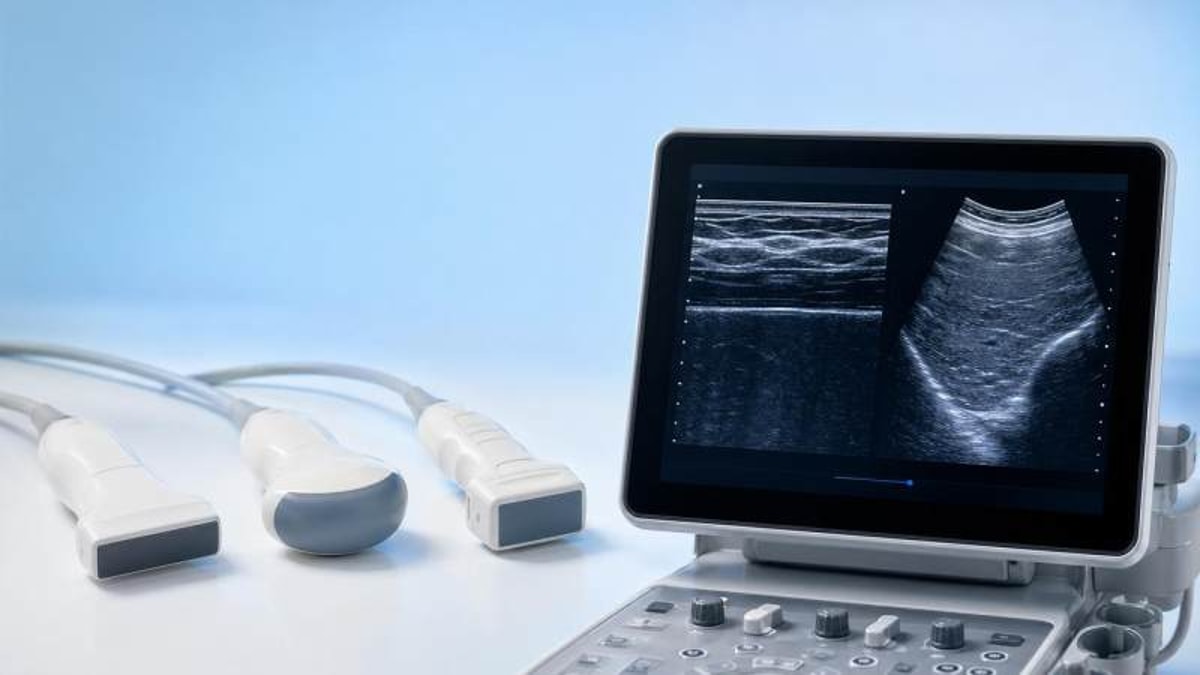
Choosing the right probe starts with understanding the ultrasound transducer frequency range and how it affects image depth, resolution, and clinical usability. For operators who need reliable imaging performance, knowing the trade-offs between low- and high-frequency transducers helps reduce guesswork, improve workflow, and support better exam results. This guide explains the key principles in a clear, practical way for smarter probe selection.
Why does the ultrasound transducer frequency range matter so much in daily scanning?
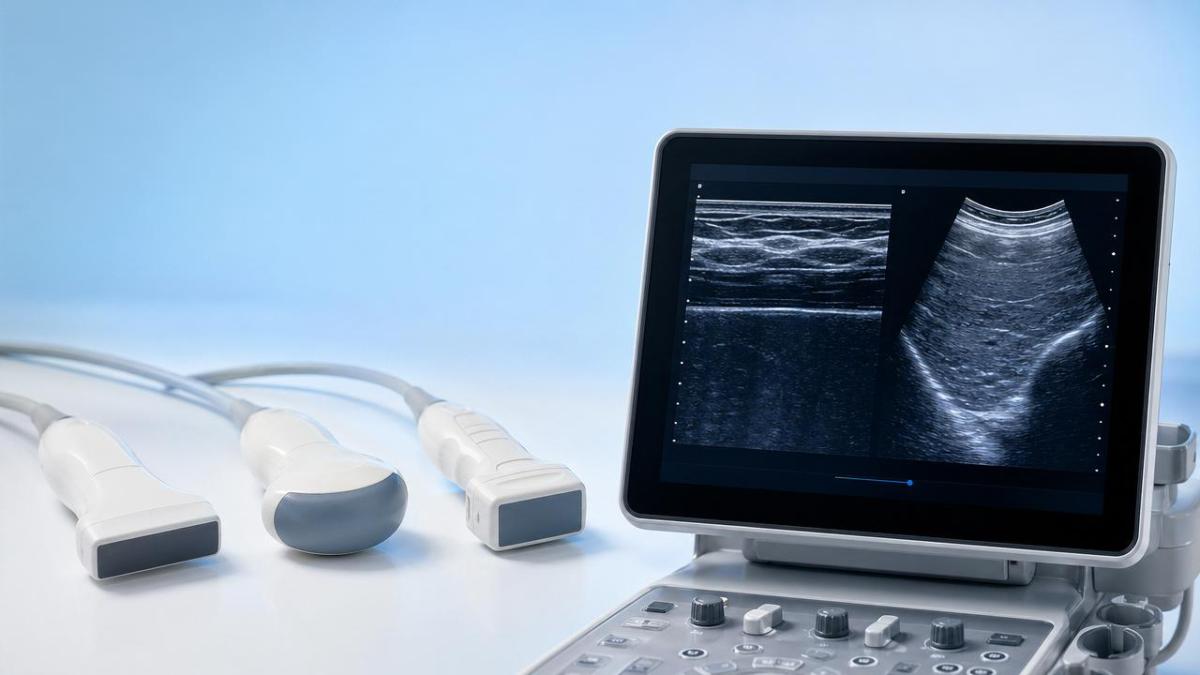
The ultrasound transducer frequency range determines two basic outcomes in almost every exam: how deep the sound can penetrate and how much detail the image can show. In practical terms, lower frequencies such as 2–5 MHz usually reach deeper structures, while higher frequencies such as 7–18 MHz generally deliver better near-field resolution. Operators who select the wrong range often compensate by increasing gain, repeating views, or extending exam time by 5–15 minutes.
This is not just a physics issue. It is a workflow issue, a procurement issue, and in many clinical environments, a quality assurance issue. A probe that looks versatile on paper may underperform in obesity, vascular access, musculoskeletal imaging, or pediatric applications if its usable frequency bandwidth does not match the target anatomy.
For operators, the key is to think beyond the nominal center frequency. The usable ultrasound transducer frequency range also depends on beamforming, backing material, matching layers, cable integrity, and system-side signal processing. Two probes labeled with similar frequency values may still behave differently in edge definition, clutter control, and Doppler sensitivity.
For healthcare buyers and technical teams, this is where independent benchmarking becomes valuable. VitalSync Metrics (VSM) focuses on converting engineering performance into comparable decision data, which helps separate broad marketing claims from measurable probe behavior under repeatable conditions.
What changes when frequency goes up or down?
As frequency increases, axial and lateral resolution usually improve, making tissue interfaces easier to distinguish. However, attenuation also rises, so deep abdominal or obstetric imaging becomes harder. As frequency decreases, penetration improves, but fine superficial detail is reduced. This trade-off is the foundation of probe selection.
- Low-frequency probes, commonly in the 2–5 MHz range, are often chosen for abdomen, deep pelvic views, and some cardiac applications where penetration is the first priority.
- Mid-range probes, often around 4–9 MHz, support general-purpose imaging, selected vascular studies, and mixed-depth use cases where compromise is acceptable.
- High-frequency probes, commonly 7–18 MHz or higher, are preferred for superficial structures, tendons, thyroid, breast, vascular access, and small-parts imaging.
A practical operator rule
Start with anatomy depth, then validate the needed detail level. If the target lies within 1–4 cm of the skin, a higher-frequency linear probe is often the first choice. If the target lies beyond 8–12 cm, lower frequencies usually become necessary. In the middle range, system presets and patient body habitus often decide which probe performs better.
Which ultrasound transducer frequency range fits which application?
Operators often search for a simple answer, but probe selection is really a matching process between anatomy, depth, required resolution, and scanning objective. The table below summarizes common clinical pairings so the ultrasound transducer frequency range can be linked directly to everyday use instead of abstract specification sheets.
The table shows that there is no universal “best” frequency. A probe is only suitable when its frequency bandwidth supports the actual target depth and diagnostic goal. For example, a 12 MHz linear probe may be excellent for tendon detail but unsuitable for a deep abdominal scan in a larger patient.
Scenario-based selection for operators
In multi-department settings, operators often work across 3 common scenarios: high-throughput general imaging, specialty-focused superficial imaging, and mixed portable point-of-care use. Each setting places different demands on the ultrasound transducer frequency range.
- For general imaging rooms, probes with mid-to-wide bandwidth are useful because they reduce probe changes across routine cases.
- For specialty clinics, narrow but optimized frequency performance may be better, especially where detail is more important than versatility.
- For portable systems, the priority is often acceptable image quality across 2–3 common exam types, not perfect performance in every use case.
Why “wideband” should be reviewed carefully
Wideband probes can be helpful, but operators should confirm whether the clinically useful band matches the advertised range. A nominal 3–12 MHz range sounds broad, yet image consistency at the low and high ends may not be equally strong. This is why performance validation matters, especially before larger procurement rounds or cross-site standardization projects.
What technical parameters should you check beyond the frequency label?
The ultrasound transducer frequency range is the starting point, not the full specification story. Operators and technical buyers should review at least 5 additional checkpoints: footprint, array type, bandwidth behavior, Doppler performance, and durability under cleaning cycles. These factors influence how useful a probe remains after 6–12 months of routine operation.
Core technical factors that influence real-world performance
- Footprint and ergonomics affect contact quality, intercostal access, and operator fatigue during repeated exams or procedure guidance.
- Array geometry, such as linear, convex, or phased, changes field of view and determines whether the probe is suitable for superficial, broad, or narrow acoustic windows.
- Bandwidth consistency matters because some probes perform well only in the mid-band, even if the full labeled range appears broad.
- Sensitivity and signal-to-noise behavior influence subtle lesion detection, edge clarity, and low-flow vessel assessment.
- Mechanical durability and cable strain resistance affect lifecycle value, especially in departments with high daily probe turnover.
In procurement reviews, these factors often explain why two probes with a similar ultrasound transducer frequency range deliver different operator satisfaction. One may image acceptably on day one but degrade faster with repeated disinfection, flexing, or transport between carts and bedside units.
A useful parameter review table for faster selection
Use the following table when comparing probes during evaluation, sample testing, or pre-purchase technical review. It turns a frequency-only conversation into a more reliable decision framework.
A disciplined review of these items helps operators avoid overreliance on one number. It also gives procurement teams clearer justification when deciding between standard, premium, or specialty probes in the same tender or replacement cycle.
How should procurement teams and operators choose the right probe with less risk?
Selecting by brand reputation alone is risky, especially when imaging expectations, compliance requirements, and cost pressure all meet in the same purchase process. A lower upfront price can become a higher operating cost if probe durability, consistency, or system compatibility are weak. For this reason, probe selection should follow a 4-step review path.
A 4-step selection process that works in real departments
- Define the primary exam mix. Separate deep imaging, superficial imaging, vascular work, and procedural guidance instead of treating all use cases as one category.
- Set 3–5 measurable acceptance criteria. Examples include target depth visibility, edge clarity, cable handling, Doppler usability, and cleaning compatibility.
- Run a short validation cycle, often 7–14 days, with representative operators and routine patient variability rather than ideal cases only.
- Document outcomes in a comparison sheet so frequency range, image usability, and ownership risk are evaluated together.
This approach is especially important in value-based procurement environments. The question is no longer simply whether the probe can produce an image. The real question is whether the ultrasound transducer frequency range, engineering quality, and expected service life align with operational demand over the full ownership period.
Where VSM adds value during evaluation
VitalSync Metrics (VSM) supports buyers and technical stakeholders by translating engineering parameters into standardized review criteria. In complex MedTech decisions, this reduces dependence on vague product narratives and helps teams focus on measurable issues such as signal behavior, fatigue risk, use-condition consistency, and compliance readiness.
For global hospital groups, startups, and laboratory planners, this type of independent technical framing can shorten internal alignment time. It is particularly useful when a team must compare multiple suppliers, document decision rationale, or prepare for MDR or IVDR-sensitive procurement environments where traceability and technical validation matter.
Common selection mistakes to avoid
- Assuming a wider ultrasound transducer frequency range always means better clinical versatility.
- Testing probes only on ideal body types instead of difficult or average workflow conditions.
- Ignoring cleaning burden, connector wear, or cable stress points during sample evaluation.
- Comparing list price without estimating replacement frequency, downtime, and operator inefficiency.
FAQ: common questions about ultrasound transducer frequency range
Operators and buyers often ask the same questions when they compare probes. The answers below focus on practical decision points rather than generic definitions.
How do I choose between a low-frequency and high-frequency probe?
Choose based on target depth first, then on the amount of detail you need. If the anatomy is deep, such as many abdominal or cardiac views, lower frequencies around 2–5 MHz are usually more suitable. If the anatomy is superficial, such as thyroid, vessels, or tendons within a few centimeters of the surface, higher frequencies around 7–18 MHz generally provide better resolution.
Is a wider ultrasound transducer frequency range always better?
Not always. A wider range can improve flexibility, but only if image quality remains clinically useful across that band. Some probes advertise broad bandwidth yet perform strongest only in a narrower middle zone. That is why hands-on validation and standardized comparison are more reliable than frequency labels alone.
What should operators check during a short trial period?
During a 7–14 day review, check image clarity at intended depths, needle visibility if procedures are involved, cable and grip comfort, Doppler behavior when relevant, and performance consistency after repeated cleaning. If possible, test the probe in at least 3 case types, not just one ideal scenario.
Why can two probes with similar frequency labels behave differently?
Because real performance depends on more than frequency. Matching layers, array design, beamforming, acoustic sensitivity, system presets, and mechanical condition all affect image output. Similar labels do not guarantee equal penetration, edge sharpness, or low-flow response.
What is the safest approach for procurement teams under compliance pressure?
Use a documented comparison process with measurable acceptance criteria, sample testing, and traceable technical review. In regulated healthcare environments, buyers should also confirm compatibility with internal validation practices and relevant regulatory frameworks such as MDR or IVDR when the broader equipment context requires it.
Why choose us when probe selection needs technical clarity?
When teams need more than brochure-level information, VitalSync Metrics (VSM) provides a structured way to evaluate the ultrasound transducer frequency range in the context of actual engineering performance, clinical usability, and procurement risk. Our role is not to amplify marketing language. It is to help decision-makers verify what matters before budget, deployment, and compliance pressures become operational problems.
You can contact VSM for focused support on parameter confirmation, probe selection logic, comparative technical review, expected delivery-cycle questions, custom evaluation criteria, sample assessment planning, and compliance-oriented documentation needs. This is particularly useful if you are comparing multiple suppliers, replacing aging probes across sites, or trying to match imaging performance with value-based procurement goals.
If your team needs a clearer decision path, start with 3 practical inputs: the exam types you run most often, the depth and resolution demands that matter clinically, and the operational constraints that affect ownership cost. From there, a more defensible, evidence-based probe selection process becomes possible.
Recommended News
- 2026.04.30Wholesale Medical Endoscopes China: After-Sales Questions Worth Asking EarlyDr. Alistair Thorne (Senior Biomedical Engineer)
- 2026.04.30Dental Implant Wholesale: How to Balance Margin, Quality, and Repeat OrdersDr. Alistair Thorne (Senior Biomedical Engineer)
- 2026.04.30Surgical Instrument Kits OEM: When Customization Starts Raising RiskDr. Julian Rossi (RehabTech Specialist)
The VitalSync Intelligence Brief
Receive daily deep-dives into MedTech innovations and regulatory shifts.