
Sheet Metal Thickness Tolerance That Causes Fit Problems
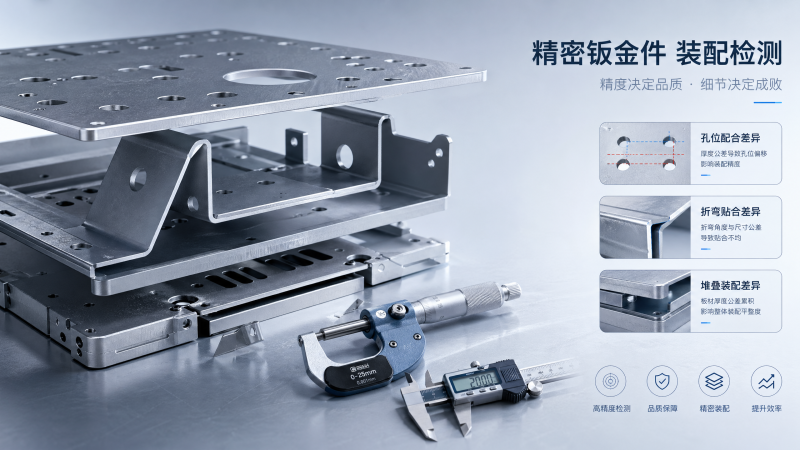
When sheet metal thickness drifts beyond tolerance, fit problems are rarely “minor.” A few tenths of a millimeter can change hole alignment, bend behavior, clamp load, sealing performance, and the way a finished assembly stacks up across multiple parts. For teams working in regulated or high-reliability environments, the issue is not only dimensional accuracy. It is also scrap risk, supplier control, incoming inspection burden, and the possibility that a part passes a drawing review but still fails during real assembly.
For engineers, buyers, operators, and business decision-makers, the practical question is simple: how much thickness variation is enough to create a real fit problem, and how should it be controlled before production disruption appears? The answer depends on material specification, process route, part geometry, tolerance stack-up, and the critical function of the assembly. But one rule holds across industries: if thickness is treated as a background variable instead of a controlled characteristic, fit issues tend to surface late, when the cost of correction is highest.
This article explains the real impact of sheet metal thickness tolerance, where fit failures usually begin, and how to evaluate suppliers and incoming material more intelligently. The goal is not to repeat textbook definitions, but to help readers make better sourcing, design, inspection, and production decisions.
Why sheet metal thickness tolerance creates fit problems faster than many teams expect
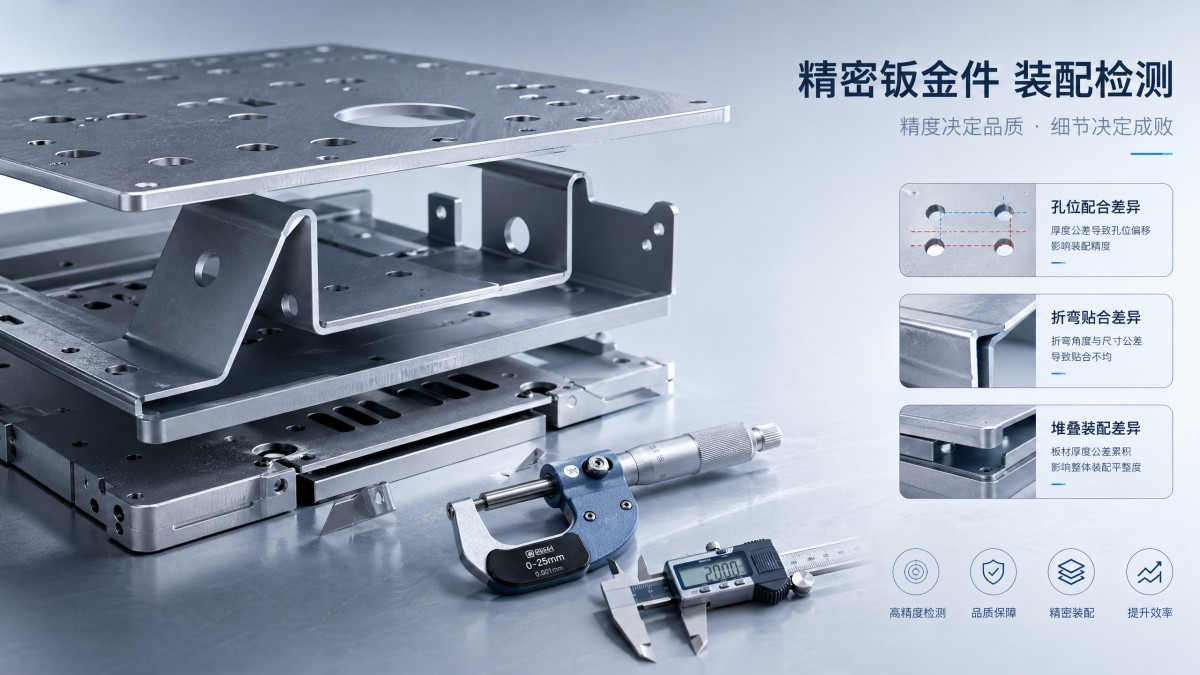
Most teams understand that sheet thickness matters for strength and forming. What gets underestimated is how quickly small variation affects assembly fit. In flat patterns, thickness changes can alter slot-to-tab engagement, fastener grip range, standoff height, edge condition after cutting, and the true relationship between mating parts. In formed parts, the effect becomes even larger because bend deduction, bend allowance, springback, and flange geometry all depend in part on actual material thickness.
That means a part can be “to drawing” in length and width but still behave differently in assembly if the incoming sheet sits at the high or low end of tolerance. A cover may no longer seat flush. A bracket may interfere with a neighboring component. A self-clinching fastener may install poorly because the material is outside the recommended thickness band. A gasketed enclosure may lose compression consistency. These are not theoretical issues. They are common root causes behind rework, line-side adjustments, and recurring supplier disputes.
The problem grows when several thickness-sensitive features combine in one assembly. A single sheet component may seem acceptable by itself, but once multiple parts stack together, their combined variation produces hole mismatch, preload inconsistency, or visible cosmetic gaps. This is the classic stack-up effect. In high-precision systems, even moderate thickness drift can become unacceptable when joined with tight positional tolerances, formed edges, hinge components, or sealing interfaces.
What searchers usually want to know: how much thickness variation is “too much”?
The most common user intent behind this topic is practical, not academic. Searchers want to know when sheet metal thickness tolerance actually starts causing fit issues in production. They want thresholds, warning signs, and a way to judge whether a supplier’s material range is safe for a given design. They also want to know whether the issue should be solved through looser design assumptions, tighter material purchasing controls, added inspection, or a different fabrication method.
There is no universal thickness tolerance that automatically causes failure, because fit sensitivity depends on function. A decorative panel may tolerate visible gap variation that would be unacceptable in a medical equipment housing. A laser-cut bracket with clearance holes may absorb more thickness variation than a bent interlocking assembly with PEM hardware and compression seals. A lab device enclosure that requires repeatable door alignment and EMC shielding has much less tolerance for drift than a simple non-critical support tray.
In practice, thickness variation becomes “too much” when it changes one of four things beyond the design margin: assembly force, positional alignment, functional compression, or installed hardware performance. Once actual thickness starts affecting any of these outputs, the issue is no longer just a raw material characteristic. It becomes a process capability and product reliability concern.
Where fit failures show up first in real assemblies
Thickness-related fit problems usually appear in predictable locations. The first is bent geometry. If actual material thickness differs from the value used in tooling setup or flat-pattern calculation, bend angles, flange lengths, and overall formed dimensions shift. Even a small mismatch can create compounded error across multiple bends, especially in U-channels, box forms, and nested enclosures.
The second common failure point is hardware installation. Self-clinching nuts, studs, and standoffs are highly dependent on material thickness windows. If sheet stock falls outside the hardware manufacturer’s recommended range, insertion can lead to poor retention, distortion, or cosmetic witness marks. Rivets, captive fasteners, and thread-forming features also rely on predictable substrate thickness for proper engagement and pull-out behavior.
The third area is mating and sealing. Covers, access panels, medical carts, instrument housings, and laboratory furniture often depend on stable thickness to maintain flushness, latch performance, and gasket compression. If multiple panels arrive at opposite ends of tolerance, the assembled product may technically close but still fail on feel, appearance, ingress control, or vibration behavior. For decision-makers, this is important because the part may pass dimensional inspection yet still create field complaints.
Why the issue matters more in regulated and high-reliability supply chains
In healthcare, life sciences, and adjacent technical sectors, fit problems are not just a manufacturing annoyance. They can affect validation, serviceability, cleaning performance, traceability, and user perception of quality. A metal enclosure that requires manual adjustment on the assembly line introduces undocumented variation. A fixture that fits tightly only with selected lots can undermine process repeatability. A part that forces technicians to rework mounting features may trigger hidden labor cost and nonconformance records.
For procurement teams, thickness tolerance also becomes a supplier governance issue. Two suppliers may quote the same nominal gauge and similar pricing, but their actual material sourcing discipline, mill certificate quality, lot consistency, and inspection rigor can be very different. If the buyer compares vendors only on nominal thickness and piece-part cost, they may miss the bigger operational risk: unstable incoming variation that shifts burden downstream into fabrication, assembly, and quality control.
For executives and technical leaders, this is where business value enters the picture. Better control of sheet metal thickness tolerance reduces line stoppages, inspection time, fit-related scrap, expedite cost, and supplier conflict. It also improves confidence in scale-up, especially when production moves across regions or contract manufacturing partners. In other words, thickness control is a leverage point for both quality and supply chain resilience.
How to assess whether a thickness tolerance is safe before approving material or production
The first step is to stop evaluating thickness in isolation. Instead, connect it to function. Ask which interfaces are thickness-sensitive: bends, hardware, seals, interlocking tabs, stack-ups, cosmetic gaps, or fastener grip ranges. If the answer includes any critical-to-fit or critical-to-function features, then the allowable material range must be reviewed against those real assembly conditions rather than against a generic material standard alone.
Next, compare four data sources side by side: the drawing assumption, the raw material standard, the supplier’s actual incoming range, and the fabrication process capability. Many teams discover a hidden mismatch here. The CAD model may assume exact nominal thickness, while the purchased stock legally varies within a broader standard, and the forming setup is tuned around a narrower real-world band. That disconnect is a common source of repeatability issues.
A useful screening method is tolerance stack-up review with high and low material conditions. Model what happens if one part arrives near the upper thickness limit and the mating part arrives near the lower limit, then reverse the scenario. If either case threatens assembly effort, gap control, or hardware performance, the design or sourcing strategy needs adjustment. This review is especially valuable before transferring production to a new supplier or region.
What buyers and supplier quality teams should ask vendors
Purchasing teams often ask for nominal gauge and certificate compliance, but that is not enough when fit problems have real cost. A better supplier conversation starts with process reality. Ask what thickness range the supplier actually receives lot to lot, not just what the standard permits. Ask how often they verify thickness across coil width or sheet area. Ask whether they segregate lots for thickness-sensitive parts. Ask how they adjust forming programs when material condition changes.
It is also important to review how suppliers communicate exceptions. If material arrives near the edge of tolerance, do they flag it before cutting? Do they have a formal deviation process? Can they show historical data by material grade and thickness? Mature suppliers treat this as a managed variable, not an afterthought. Their answers often reveal more about long-term fit reliability than a one-time conformance statement.
For supplier quality managers, thickness capability should be tied to incoming inspection plans and first article reviews. If a part family has known sensitivity, thickness readings should be included in launch documentation, not buried in mill paperwork. This supports faster root-cause isolation when fit issues emerge and makes supplier accountability more objective.
What engineers and operators can do to reduce fit risk
Design teams can reduce sensitivity by identifying where exact nominal thickness is unnecessarily assumed. Wider clearances, more forgiving slot geometry, adjusted bend relief, and hardware selected for broader grip ranges can all improve robustness. In some cases, moving a critical interface away from a multi-bend feature or changing the order of joining operations will reduce sensitivity more effectively than tightening raw material tolerance.
On the shop floor, operators should not be left to “make it work” when incoming material shifts. If setup values depend on actual thickness, that dependency should be documented and measured. Brake press programs, punch tooling selection, and hardware insertion settings may all need verification when a new lot starts. The goal is to convert tribal knowledge into controlled process inputs.
Inspection teams can also help by measuring thickness where it matters most. A single reading from one corner of a sheet may not reflect local variation or coating effects. For critical parts, inspection plans should define measurement method, location strategy, and acceptance rules clearly. That is especially important when finish, coating, or laminate layers affect final fit.
Red flags that suggest thickness tolerance is the hidden root cause
Some production symptoms strongly suggest a thickness-related problem even when no one has named it yet. These include intermittent hole alignment issues between lots, unexplained bend variation after setup is “locked,” changing insertion quality for the same hardware, gasket compression inconsistency, and assemblies that fit only after manual persuasion. Another clue is when one supplier’s parts assemble smoothly while another supplier’s visually identical parts create repeated friction.
A second red flag appears in quality data. If dimensions on individual parts look acceptable but finished assemblies show variable flushness, latch feel, or preload, thickness may be influencing the system through stack-up rather than through a single out-of-spec measurement. This is why assembly-level observations matter just as much as piece-part inspection.
Finally, if teams keep adjusting tooling, blaming operator technique, or reworking fixtures without permanent improvement, they should revisit material assumptions. Repeated downstream correction often means the true control point sits upstream in raw material variation.
How to make better decisions: tighten tolerance, redesign, or verify more?
Not every fit issue should be solved by buying tighter sheet metal tolerance. Tighter material controls can raise cost, reduce supplier options, and lengthen lead times. The right decision depends on the economics of the part and the severity of the failure. If the assembly is highly sensitive and production volume is large, tighter incoming control may produce a clear return through lower scrap and fewer delays. If the issue affects only one feature, a local design change may be more efficient.
In many cases, the best answer is a layered strategy: define functional thickness limits, validate with stack-up review, verify incoming material at launch, and redesign only where the current geometry is unnecessarily fragile. This approach avoids overengineering while still protecting fit. For procurement leaders, it also supports fact-based supplier negotiations because the requirement is linked to measurable assembly outcomes.
Independent benchmarking and data-driven verification are especially valuable when claims from suppliers, fabricators, and design teams do not align. Objective analysis of material behavior, process capability, and assembly impact helps organizations separate acceptable commercial variation from true technical risk. That is how thickness tolerance stops being a vague quality complaint and becomes a manageable engineering parameter.
Conclusion: thickness tolerance is a small variable with outsized operational impact
Sheet metal thickness tolerance causes fit problems when actual material variation exceeds the real design margin of the assembly. The danger is that this often becomes visible only after bending, hardware insertion, or final mating, when correction is expensive. Engineers need to connect thickness to function, buyers need to evaluate supplier consistency beyond nominal gauge, and operators need clear process controls when lots change.
The most useful mindset is not to ask whether a sheet meets a generic standard, but whether the delivered thickness range is compatible with the intended assembly performance. That shift leads to better drawings, better sourcing decisions, and fewer unpleasant surprises on the production floor.
For organizations operating in high-trust, high-reliability environments, thickness verification is not a minor detail. It is part of technical due diligence. And when it is managed early, many of the fit, quality, and supply chain problems that seem difficult later become preventable from the start.
Recommended News
- 2026.04.28How to Spot Premium Car Accessories That Are Mostly MarkupDr. Julian Rossi (RehabTech Specialist)
- 2026.04.28What Shortens the Life of Aftermarket Truck Parts FastDr. Hideo Tanaka (Imaging Systems Analyst)
- 2026.04.28Aftermarket Auto Parts for Trucks That Cut Repeat RepairsDr. Hideo Tanaka (Imaging Systems Analyst)
The VitalSync Intelligence Brief
Receive daily deep-dives into MedTech innovations and regulatory shifts.