
Dental implant wholesale: how to compare suppliers?
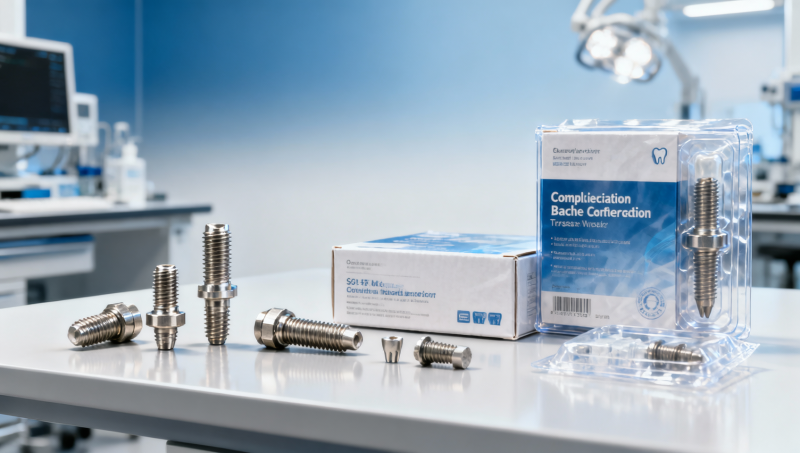
Choosing a partner for dental implant wholesale is no longer just about unit price. For procurement teams, clinicians, and healthcare decision-makers, the smarter comparison starts with one question: can this supplier consistently deliver safe, compliant, and technically reliable products at scale? In practice, the best supplier is rarely the one with the lowest quotation. It is the one that can prove manufacturing control, regulatory readiness, traceability, material quality, and stable after-sales support. If you are comparing dental implant wholesale suppliers, your evaluation should focus on total sourcing risk, long-term reliability, and operational fit—not brochures alone.
For information researchers, users, procurement teams, and business decision-makers, the key is to separate commercial claims from verifiable evidence. A credible supplier should be able to show how its implants are manufactured, how quality is controlled, what certifications apply, how consistency is maintained batch after batch, and how problems are handled if they occur. That is the difference between a low-cost vendor and a dependable procurement partner.
What should you compare first when evaluating a dental implant wholesale supplier?
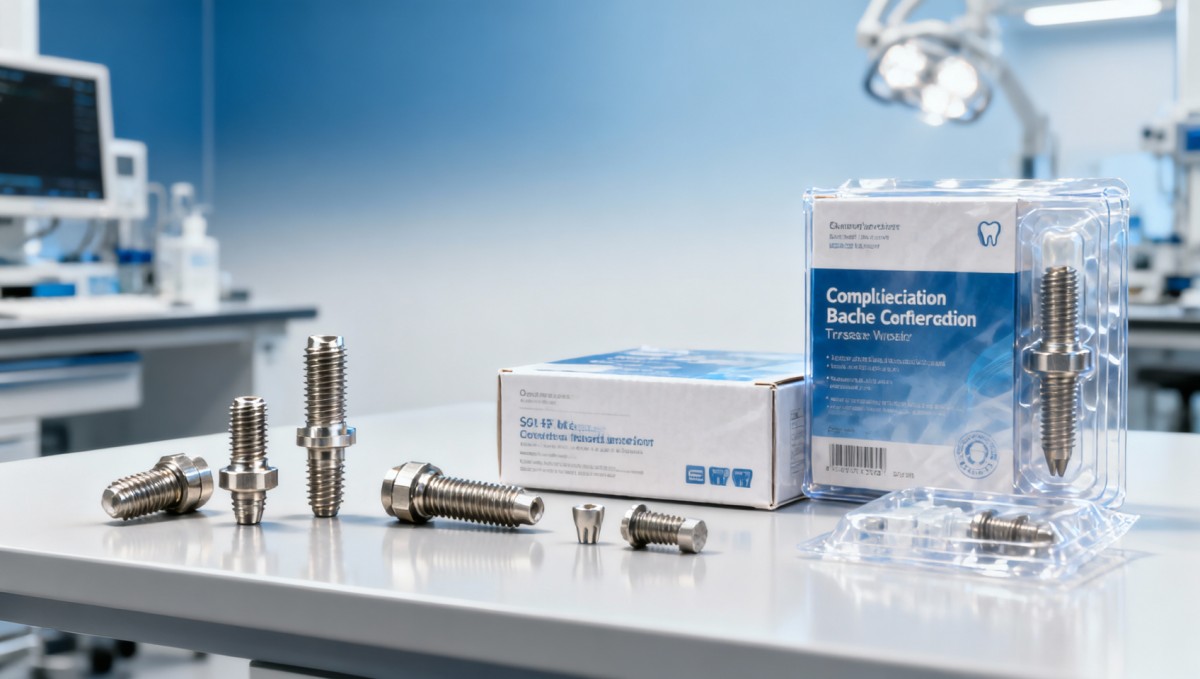
Start with the factors that affect clinical safety, procurement continuity, and business risk. Many buyers make the mistake of comparing catalogs, surface-level pricing, or packaging before checking the fundamentals. A better sequence is:
- Regulatory compliance and documentation: Can the supplier provide valid certifications, technical files, and traceability records?
- Manufacturing consistency: Are production controls standardized and repeatable?
- Material and engineering quality: What evidence supports implant strength, surface treatment quality, and dimensional precision?
- Supply reliability: Can the supplier maintain lead times, inventory stability, and global shipping performance?
- Commercial fit: Do pricing, MOQs, support terms, and customization options match your needs?
This order matters because a supplier that looks attractive on price but fails on compliance or consistency can create far higher downstream costs: delayed procurement, product returns, clinician dissatisfaction, reputational damage, and even legal exposure.
How do you verify whether a supplier is truly compliant, not just well-marketed?
In healthcare procurement, compliance should never be treated as a checkbox. It is part of technical credibility. When assessing a dental implant wholesale supplier, ask for evidence that can be independently reviewed rather than accepting website claims.
Important areas to verify include:
- Quality management system certification, such as ISO 13485, with current validity
- Product registration status for the target market, especially if you operate across multiple countries
- CE marking or equivalent regulatory documentation, where applicable
- Material certificates for titanium or titanium alloy used in implant production
- Batch traceability from raw material to finished product
- Sterilization validation and packaging integrity data, if supplied sterile
- Complaint handling and post-market surveillance processes
For decision-makers working in Europe or with EU-facing distribution, awareness of MDR-related expectations is especially important. While dental implants fall under MDR rather than IVDR, the broader lesson remains the same: suppliers must demonstrate structured regulatory discipline, not vague assurances. A serious manufacturer should be prepared to share a documentation package under appropriate confidentiality terms.
If a supplier avoids technical questions, provides outdated certificates, or cannot explain its quality process clearly, that is a warning sign. Good marketing can be polished. Good compliance leaves a paper trail.
What manufacturing details actually matter for dental implant comparison?
Not every buyer needs to audit a production line in person, but every serious buyer should understand which manufacturing details influence performance and consistency. Dental implant wholesale decisions should include engineering review, not just purchasing review.
Key manufacturing questions include:
- What material grade is used? Ask whether the implant uses commercially pure titanium or titanium alloy, and request specification details.
- How is surface treatment performed? Surface roughness and treatment methods can affect osseointegration and consistency.
- How is dimensional accuracy controlled? Precision matters for implant-abutment fit and restorative compatibility.
- What fatigue or mechanical testing is performed? Reliable suppliers should have test protocols and benchmark data.
- How is contamination risk managed? Cleanliness, handling procedures, and packaging controls are important.
- How stable is the process from batch to batch? Repeatability is more important than one impressive sample.
For procurement professionals, the practical takeaway is simple: do not compare products as if all titanium implants are equivalent. Material composition, machining quality, surface process control, and validation discipline can vary significantly between suppliers. Those differences may not be visible in a brochure, but they directly affect product reliability.
How can buyers assess supplier consistency and reduce sourcing risk?
Consistency is one of the biggest hidden variables in dental implant wholesale. A supplier may provide acceptable samples but still struggle with scale, delivery discipline, or quality uniformity over time. To reduce risk, compare suppliers using a structured qualification process.
A practical evaluation framework may include:
- Request a standardized supplier dossier
Include certifications, product specifications, sterilization data, packaging details, shelf-life data, and traceability policy. - Review sample batches, not just one-off samples
Check whether dimensions, packaging, labeling, and finish remain consistent across units and batches. - Evaluate responsiveness to technical questions
Suppliers with real technical depth usually answer clearly, specifically, and with documentation. - Check supply chain resilience
Ask about lead times, safety stock, second-source raw material planning, and disruption handling. - Audit complaint and return processes
A mature supplier has a defined CAPA process, root-cause analysis workflow, and clear accountability. - Start with a controlled pilot order
Before scaling, validate logistics, documentation accuracy, product acceptance, and post-sale support.
This approach helps both procurement teams and business leaders compare supplier risk on evidence, not assumptions. It also supports internal justification when presenting supplier recommendations to management or clinical stakeholders.
Is the lowest dental implant wholesale price ever the best option?
Usually, no. Low unit cost can look attractive in early sourcing discussions, but total procurement value is broader than price. A cheaper supplier may become more expensive if quality deviations, incomplete documents, delayed shipments, or support failures create operational disruption.
Instead of asking only, “Who offers the lowest price?”, ask:
- What is the total cost of supplier failure?
- How much internal time will be spent resolving documentation or logistics issues?
- Will product inconsistency create clinician complaints or restorative complications?
- Does the supplier support long-term business growth, private labeling, or market expansion?
- Can they maintain quality when order volume increases?
For enterprise decision-makers, this is where ROI thinking becomes important. A supplier with slightly higher pricing but lower compliance risk, better technical transparency, and stronger fulfillment performance often delivers better long-term economics. In healthcare supply chains, reliability is not a premium feature. It is part of cost control.
What questions should you ask before selecting a dental implant wholesale partner?
To make supplier comparison more practical, build your shortlist around questions that reveal operational truth. Here are useful questions to ask during qualification:
- Which certifications and market approvals are currently valid for these products?
- Can you provide material certificates and batch traceability records?
- What mechanical and fatigue tests are performed, and can you share summary results?
- How do you control implant surface treatment consistency?
- What is your average lead time, and how do you handle urgent orders?
- What is your non-conformance and CAPA process?
- Can you support OEM, private label, or customized packaging requirements?
- What documentation is available for import, registration, and distributor review?
- How often are quality audits performed internally and externally?
- Who provides technical support if a clinical or product issue arises?
The goal is not to create friction. It is to identify which suppliers are prepared for serious healthcare procurement relationships and which are only prepared for sales conversations.
How should different buyers make the final decision?
Different stakeholders should weigh suppliers differently:
- Information researchers should focus on collecting comparable evidence, documenting claims, and flagging gaps in compliance or technical transparency.
- Users and operators should care about handling quality, packaging clarity, compatibility, consistency, and support responsiveness.
- Procurement professionals should compare total cost, documentation completeness, supply continuity, service reliability, and contract flexibility.
- Business decision-makers should prioritize long-term partnership fit, regulatory risk, scalability, brand protection, and return on sourcing investment.
A sound final decision usually comes from combining these perspectives rather than allowing price or sales presentation to dominate the process.
Conclusion: what defines a trustworthy dental implant wholesale supplier?
A trustworthy dental implant wholesale supplier is not simply the one with the largest catalog or the lowest quote. It is the one that can demonstrate technical integrity, regulatory discipline, manufacturing consistency, and dependable supply performance over time. For modern healthcare procurement, the most useful supplier comparison is evidence-based.
If you want to compare suppliers effectively, focus on what can be verified: certifications, testing, traceability, production control, fulfillment reliability, and post-sale accountability. That is how procurement teams reduce sourcing risk, how clinicians protect treatment quality, and how healthcare businesses make stronger long-term decisions.
In short, the best way to compare dental implant suppliers is to look beyond promises and assess proof. When you do, the right partner becomes much easier to identify.
Recommended News
- 2026.04.17Hospital equipment standards shaping modern rehab devicesSarah Jenkins (Laboratory Infrastructure Consultant)
- 2026.04.17Laboratory equipment validation errors in sample storageDr. Hideo Tanaka (Imaging Systems Analyst)
- 2026.04.17Medical equipment certification delays in remote monitoringLydia Vancini (Regulatory Compliance Lead)
The VitalSync Intelligence Brief
Receive daily deep-dives into MedTech innovations and regulatory shifts.