
Quick-Dry Swimwear Fabrics That Lose Performance Too Soon
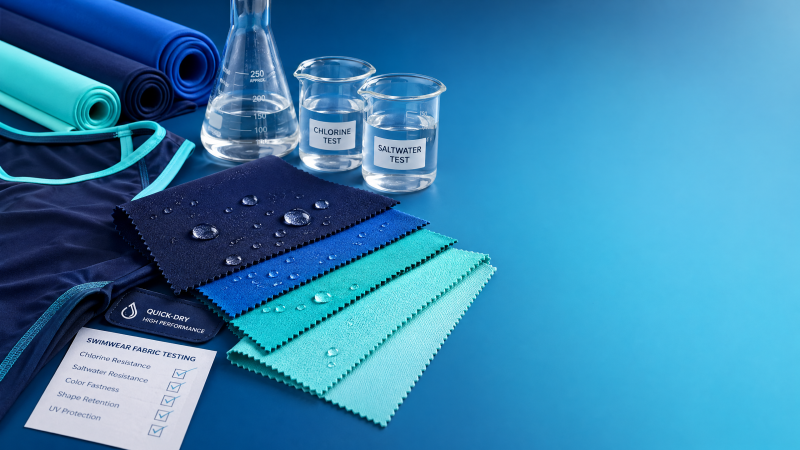
Quick-dry swimwear is often sold as a premium feature, but early loss of performance usually points to a materials and validation problem rather than normal wear alone. In practical terms, when a fabric stops releasing moisture efficiently, loses shape after repeated exposure to chlorine or salt, or becomes rough and slow to dry, the issue is rarely just “bad luck.” It is more often the result of fiber choice, finishing chemistry, knitting structure, dyeing stress, or weak quality control during sourcing.
For information researchers, operators, procurement teams, and business decision-makers, this changes how quick-dry swimwear should be evaluated. The real question is not whether a supplier claims fast drying, but whether that performance remains stable after realistic use cycles. Buyers comparing quick-dry swimwear, swimwear for competitive swimming, or a swimwear wholesale supplier need to look beyond marketing language and focus on measurable retention of stretch, recovery, moisture transport, and surface integrity.
This article examines why quick-dry swimwear fabrics lose performance too soon, what failure modes matter most in the real world, and how structured verification can reduce sourcing risk. The goal is to help readers make better technical and commercial decisions, especially when product reliability affects brand reputation, athlete experience, or large-volume procurement outcomes.
Why “quick-dry” performance disappears earlier than buyers expect
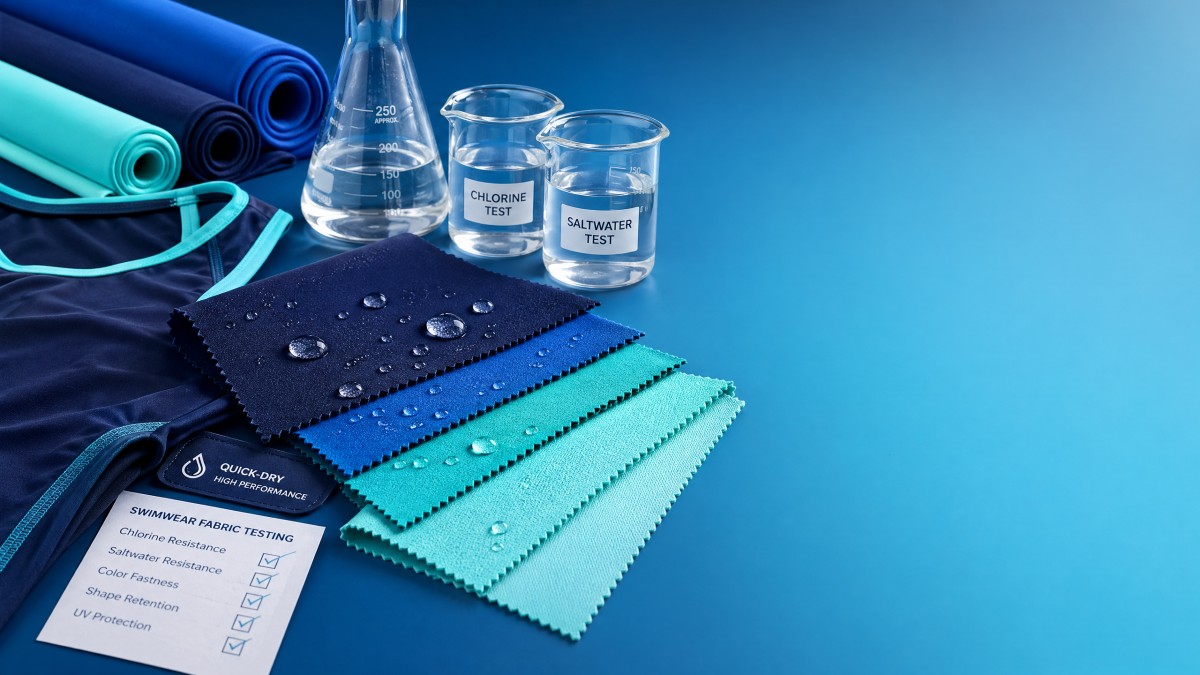
The biggest misconception in this category is that quick-dry behavior is a permanent fabric trait. In reality, it is often the combined effect of fiber hydrophobicity, yarn geometry, knit density, capillary channel behavior, elastane content, and surface finishing. If one of these variables is poorly specified or degrades rapidly in use, drying speed can decline long before the garment reaches the end of its expected service life.
Many low- to mid-tier products rely heavily on topical finishes to create an immediate fast-dry effect. These finishes may perform well in showroom samples or initial wash tests, yet deteriorate quickly after chlorine exposure, sunscreen contact, abrasion, heat, and repeated stretching. Once the finishing layer is weakened, moisture no longer moves through the fabric in the same way, and the garment begins to feel heavier, slower to dry, and less comfortable during repeated use.
Another common issue is imbalance in construction. A fabric can be optimized for softness or compression but not for long-term dimensional stability. In swimwear for competitive swimming or training-intensive use, repeated extension and retraction place constant stress on the knit structure. If the elastane degrades or the structural support from the base yarn is insufficient, recovery drops. At that point, even if the fabric still feels lightweight, its quick-dry and fit performance are already compromised.
What target readers actually need to know before buying or specifying swimwear fabric
Researchers and evaluators typically want clarity on root causes. They are not just asking whether a fabric fails, but why it fails earlier than expected. Is the problem chlorine resistance, poor elastane quality, weak finishing durability, or inconsistent lot-to-lot manufacturing? Without isolating the cause, it is difficult to compare suppliers or judge whether a higher quoted price reflects real engineering value.
Operators and end users care about practical behavior. Does the garment stay supportive after repeated pool sessions? Does it become baggy when wet? Does drying time remain consistent over weeks of use? Does the surface pill, snag, or retain odor? These are not secondary details. They shape user satisfaction, replacement frequency, and overall confidence in the product.
Procurement managers and enterprise decision-makers are usually focused on a different but related question: what creates avoidable sourcing risk? A swimwear wholesale supplier may present attractive pricing and acceptable first-sample appearance, yet hidden performance decay can create return claims, inconsistent customer reviews, and shorter replacement cycles. From a business standpoint, early performance loss is not just a product flaw. It is a cost multiplier across warranty, logistics, reputation, and demand forecasting.
The most common technical reasons quick-dry swimwear underperforms
One major factor is fiber composition. Polyester, polyamide, PBT, and elastane blends all behave differently under moisture, heat, UV exposure, and pool chemicals. A fabric may initially test well for drying speed but still fail in long-term retention if the elastane component is vulnerable to chlorine or if the polyester yarn construction lacks resilience under repeated stretch. Material labels alone are not enough; the quality grade and processing conditions matter just as much.
The second factor is finishing dependency. Some suppliers achieve quick-dry claims through coatings or chemical treatments rather than intrinsic structural design. This is not automatically a problem, but it becomes one when finish durability is not validated under realistic use conditions. A lab result taken before chemical exposure or repeated laundering may overstate true field performance. Buyers should ask whether the quick-dry effect comes from permanent fabric engineering or from a finish with limited life.
Third, knitting and heat-setting quality strongly influence long-term performance. Poor tension control, unstable heat-setting, and inconsistent elastane distribution can lead to deformation after use. The garment may still look acceptable on first inspection, but after cycles of wetting, stretching, and drying, recovery becomes uneven. This affects both fit and water release behavior because moisture transport depends partly on stable pore geometry within the fabric structure.
A fourth issue is chemical exposure compatibility. Swimwear does not face water alone. It encounters chlorine, salt, body oils, sunscreen, detergents, and heat from sun or dryers. A fabric that performs well in simplified moisture tests may degrade rapidly when these combined exposures are present. This is why short-term dry-time data without chemical aging context should not be treated as sufficient procurement evidence.
How early fabric failure shows up in real use, not just in lab language
In practical settings, premature performance loss usually appears in a few repeatable ways. The first is delayed drying after use. Consumers and athletes often notice that a garment which once dried quickly now stays damp longer in the waistband, lining, or high-compression zones. This may indicate finish loss, altered capillary flow, or structural compaction in the knit.
The second visible sign is loss of shape recovery. The suit begins to stretch out at the hips, straps, leg openings, or torso. Even moderate deformation affects how water moves through the fabric and how the garment feels against skin. In competitive or training contexts, this can also reduce confidence, hydrodynamic consistency, and perceived support.
Third, the fabric surface may become harsher, shinier, thinner, or more transparent. These changes often reflect filament damage, abrasion, or degradation of elastane and finish chemistry. While some buyers may treat them as cosmetic issues, they usually signal wider material decline. Once the structure changes enough to affect hand feel and appearance, functional losses have often already started.
Another symptom is inconsistent performance across production lots. One batch dries well and retains fit, while the next batch under the same product name does not. This points to process inconsistency rather than user behavior. For procurement teams, this matters because supplier reliability is not just about passing one sample. It is about maintaining the same technical baseline over repeated production runs.
What to verify when comparing a swimwear wholesale supplier
If a sourcing decision depends on performance rather than price alone, buyers should ask for retention data, not just initial claims. Drying speed should be measured before and after wash cycles, chemical exposure, and stretch fatigue. Stretch recovery should be reported after repeated extension under wet and dry conditions. Chlorine resistance should be assessed with clear test parameters and not presented as a vague “pool safe” statement.
It is also important to verify whether the fabric specification is complete. A serious supplier should be able to define fiber composition by percentage, knit structure, fabric weight, finish type, recommended care conditions, and expected tolerance ranges. If performance language is broad but the technical sheet is thin, that is often a warning sign that the product is being sold on perception rather than engineering consistency.
Procurement teams should also evaluate lot control and traceability. Can the supplier link fabric rolls to production conditions, dye lots, and test records? Are there controls for stretch variance, width stability, and post-finish inspection? In high-volume sourcing, many failures are not caused by wrong design intent but by unstable process execution. Traceable manufacturing discipline is therefore a major part of performance assurance.
Finally, sample strategy matters. One showroom sample is not enough. Buyers should review retained samples after accelerated stress, compare multiple lots when possible, and test finished garments rather than fabric swatches alone. A quick-dry swimwear fabric can behave differently once lined, stitched, bonded, or cut under tension. The garment system should be validated, not just the textile in isolation.
Which tests provide meaningful evidence of long-term performance
Not every test carries equal decision value. For this category, moisture management tests are useful, but they should be interpreted together with durability testing. Initial moisture spread or drying-rate data may look excellent, yet fail to predict real-life decline. More meaningful evidence comes from comparing baseline performance against post-aging performance after chlorine simulation, laundering, UV exposure, and cyclic stretch.
Elastic recovery testing is especially important because fit and drying are closely linked in swimwear. A fabric that loses recovery can trap moisture differently, sit unevenly on the body, and create user dissatisfaction even if basic absorbency numbers still seem acceptable. Testing should include repeated extension cycles and should record permanent set, not just one-time elongation.
Dimensional stability and surface integrity also deserve attention. After repeated wet-dry cycles, does the fabric maintain weight, width, shape, and appearance within acceptable limits? Are there signs of pilling, filament breakage, glazing, or thinning in high-stress areas? These indicators help procurement teams identify whether a claimed performance textile is robust or simply optimized to impress in early-stage evaluation.
For business decision-makers, the most useful framework is comparative benchmarking. Rather than asking whether one material is “good,” compare candidates under the same protocol. This turns product selection from a marketing exercise into a risk-ranked decision. It also creates stronger internal justification when selecting a higher-cost supplier whose data shows better long-term retention and lower failure probability.
How better technical validation reduces commercial risk
Early fabric failure creates costs that are often underestimated during sourcing. There is the obvious cost of replacement or return handling, but there are also indirect losses: lower customer trust, more negative reviews, inconsistent athlete or user experience, and additional pressure on customer service teams. In B2B channels, quality instability can damage distributor relationships and create hesitation around repeat orders.
Stronger validation reduces these risks by making performance claims auditable. When buyers know how a fabric behaves after repeated stress, they can set realistic product positioning, care instructions, warranty expectations, and reorder thresholds. This is especially valuable for organizations managing larger product portfolios, where one weak textile platform can affect multiple SKUs and distort margin assumptions.
For enterprise decision-makers, the return on technical diligence is not abstract. Better material verification improves sourcing confidence, supports more defensible supplier selection, and reduces the chance of false economy. A lower purchase price loses its appeal quickly if the garment fails early and drives replacement demand, reputation damage, or contract friction. In that sense, technical integrity is a financial control as much as a product quality issue.
A practical decision framework for buyers and specifiers
Start by defining the actual use case. Recreational resort swimwear, training suits, and swimwear for competitive swimming do not face the same exposure intensity. A fabric that is adequate for occasional leisure use may fail rapidly in daily chlorinated training conditions. Procurement should therefore classify performance requirements before reviewing supplier offers.
Next, separate initial feel from retained function. Softness, hand feel, and first-wear comfort matter, but they should not overshadow performance retention. Ask what changes after 20, 30, or 50 realistic use cycles. If the supplier cannot answer this with data, the product may still be viable, but it should be treated as a higher-risk sourcing option.
Then assess supplier maturity. Look for complete technical documentation, transparent test methodology, lot consistency controls, and willingness to benchmark against alternatives. The most dependable partners are usually not those making the broadest claims, but those able to explain limitations, tolerances, and expected performance boundaries clearly.
Finally, make the decision with a whole-life perspective. The best quick-dry swimwear fabric is not the one that performs best on day one alone, but the one that delivers stable value across its expected service life. For buyers, operators, and business leaders alike, that is the standard that separates a plausible product promise from verified material performance.
Quick-dry swimwear fabrics that lose performance too soon are rarely a mystery once the right questions are asked. Most failures trace back to material selection, finish durability, structural instability, chemical resistance limits, or inconsistent production control. For anyone evaluating a swimwear wholesale supplier or specifying swimwear for demanding use, the key is to verify retained performance, not just initial appearance or marketing claims.
In short, better sourcing decisions come from engineering evidence. When quick-dry behavior, stretch recovery, and durability are benchmarked under realistic conditions, buyers can reduce procurement risk, improve user outcomes, and make more confident long-term commercial choices.
Recommended News
- 2026.04.28How to Spot Premium Car Accessories That Are Mostly MarkupDr. Julian Rossi (RehabTech Specialist)
- 2026.04.28What Shortens the Life of Aftermarket Truck Parts FastDr. Hideo Tanaka (Imaging Systems Analyst)
- 2026.04.28Aftermarket Auto Parts for Trucks That Cut Repeat RepairsDr. Hideo Tanaka (Imaging Systems Analyst)
The VitalSync Intelligence Brief
Receive daily deep-dives into MedTech innovations and regulatory shifts.