
India machinery exporters: what affects lead time most?
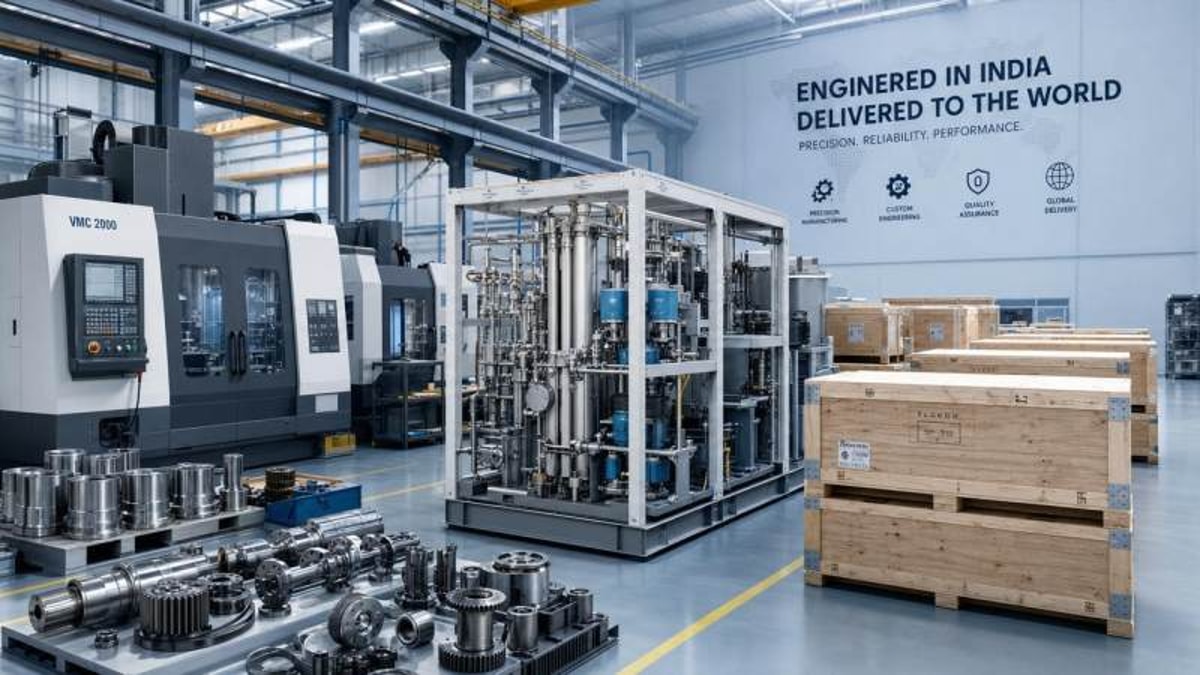
For project managers evaluating an Industrial & Manufacturing machinery exporter in India, lead time is rarely shaped by one factor alone. It is influenced by engineering complexity, raw material availability, production scheduling, quality verification, export documentation, and supplier coordination. Understanding which variables create the biggest delays helps teams reduce project risk, improve procurement planning, and choose partners that can deliver with greater consistency and technical reliability.
What lead time really means in machinery export projects
In industrial projects, lead time is not just the period between placing a purchase order and receiving equipment at site. For an Industrial & Manufacturing machinery exporter in India, lead time usually includes engineering review, drawing approval, procurement of bought-out components, fabrication, machining, assembly, testing, packaging, port handling, customs documentation, and ocean or air transit. For project managers, this broader definition matters because delays often start long before the equipment is physically shipped.
The reason this topic attracts so much attention is simple: machinery is often tied to larger capital schedules. A delayed mixer, packaging line, compressor skid, CNC system, or automated handling unit can hold up civil work, installation, utility commissioning, validation, and final handover. In sectors where technical compliance is critical, such as healthcare manufacturing, laboratory infrastructure, and life sciences production, the cost of a missed delivery date can extend beyond budget and affect regulatory readiness as well.
Why the market focuses on Indian exporters
India has become a major sourcing base for fabricated systems, process equipment, packaging machinery, utility skids, precision components, and custom-built industrial assemblies. Buyers often choose an Industrial & Manufacturing machinery exporter in India for engineering flexibility, competitive pricing, strong fabrication capacity, and the ability to customize machinery for project-specific conditions. However, these same strengths can create lead time variation, especially when orders involve design changes, multiple sourced subassemblies, or international compliance requirements.
For organizations that work in technically demanding environments, including medical device production and laboratory development, supplier evaluation increasingly goes beyond commercial promises. This is where the perspective of data-driven technical benchmarking becomes useful. A project leader must ask not only whether a supplier can quote quickly, but whether the exporter has the process discipline, inspection traceability, and production control needed to keep lead times stable under real operating conditions.
The factors that affect lead time most
Although every project has unique constraints, several variables consistently drive delivery performance for an Industrial & Manufacturing machinery exporter in India. The most influential factor is usually engineering complexity. Standard equipment with approved drawings and repeatable manufacturing steps can move quickly. Custom machines, by contrast, require more design reviews, more cross-functional coordination, and more risk checks before materials are even released to production.
The second major factor is the supply chain for critical materials and components. Lead times can expand when machinery depends on imported bearings, servo systems, PLC hardware, sensors, stainless grades, castings, or specialty motors. Even if a fabricator has in-house capacity, progress slows when one unavailable purchased item blocks assembly or testing. This is particularly true for export projects requiring brand-specific components requested by the end user.
Production loading is another decisive variable. A capable exporter may still face timing pressure if welding bays, machine shops, paint booths, or test facilities are already committed to other projects. In many cases, the issue is not total factory size but the availability of a specific bottleneck resource. A single overloaded machining center or test engineer can affect multiple jobs at once.
Quality verification also has a direct effect on schedules. For project managers, this is not necessarily bad news. Inspection, factory acceptance testing, dimensional checks, balancing, pressure testing, and documentation review protect long-term reliability. The risk comes when quality planning is weak and problems are discovered late. Rework after assembly or failed FAT events can add weeks that were never visible in the original promise.
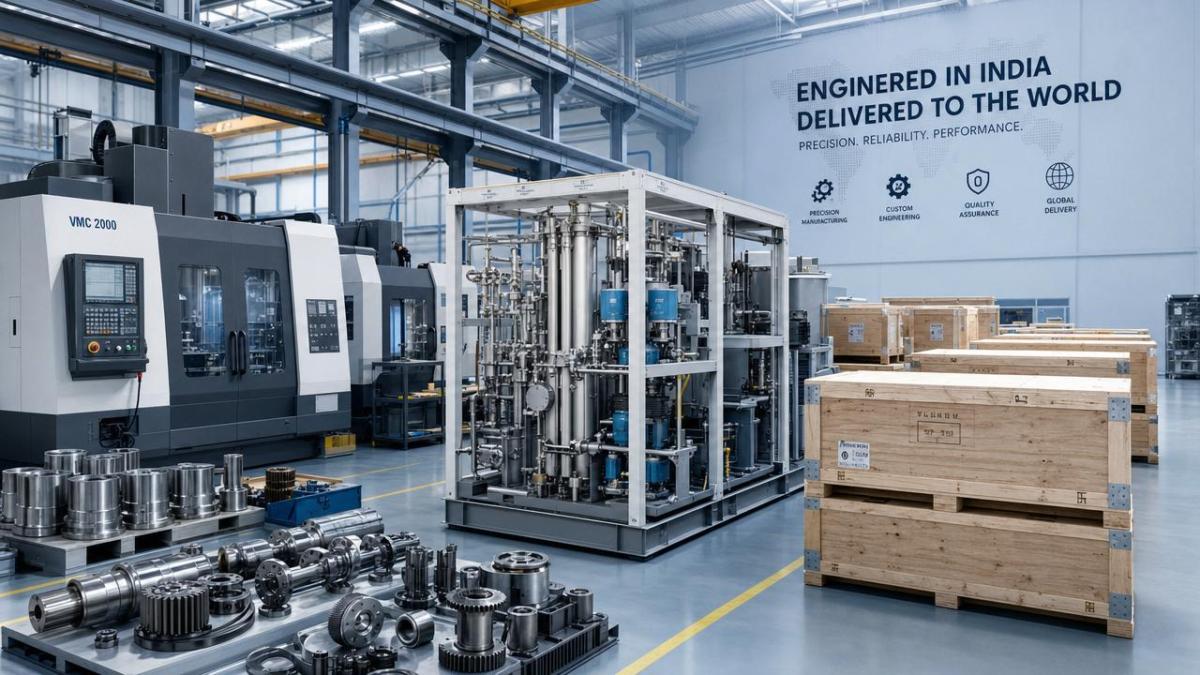
Industry overview: which lead time drivers matter most
The relative weight of each delay factor depends on equipment type and project context. The table below shows how project teams typically experience lead time pressure when working with an Industrial & Manufacturing machinery exporter in India.
Where delays start: not all causes are equally visible
One of the biggest misconceptions is that shipping is the primary problem. In reality, transit may be only the final and most visible portion of delay. The hidden causes usually appear upstream. Incomplete specifications, unclear utility interfaces, late drawing approvals, and changes to scope after procurement release are among the most common schedule disruptors. When working with an Industrial & Manufacturing machinery exporter in India, project teams often underestimate how much internal decision speed on the buyer side influences the supplier’s output.
Another less visible issue is documentation maturity. In complex projects, the exporter may need material test certificates, welding records, calibration reports, inspection checklists, FAT protocols, electrical drawings, software backups, and packaging compliance documents. If documentation is treated as an afterthought instead of an integrated production deliverable, dispatch may be delayed even after the machine is technically complete.
How lead time risk changes by project type
Different projects place different stress on the exporter’s organization. A repeat-order conveyor or utility tank package behaves differently from a cleanroom-compatible process skid or a precision assembly line. For project managers, this means there is no universal lead time benchmark. The right question is whether the exporter’s planning model matches the risk profile of the equipment.
What this means for healthcare and life sciences projects
For teams connected to healthcare manufacturing, diagnostics, and laboratory buildouts, timing risk must be assessed together with technical integrity. A supplier that ships fast but cannot support repeatable validation, material traceability, or stable performance may create larger downstream losses. This is especially relevant in an era shaped by value-based procurement and digital integration, where performance claims must be backed by engineering evidence rather than presentation material.
This is also why independent benchmarking and technical verification matter. When project leaders evaluate an Industrial & Manufacturing machinery exporter in India, they should pay attention to measurable indicators: deviation history, FAT pass rates, component traceability, calibration control, and historical on-time delivery against machine complexity. Reliable lead time is rarely a sales strength alone; it is a consequence of disciplined engineering and manufacturing systems.
Practical ways project managers can reduce lead time uncertainty
The best way to control lead time is to treat it as a technical management issue rather than a purely commercial one. First, freeze key specifications early. Even a strong Industrial & Manufacturing machinery exporter in India will struggle to protect schedule when dimensions, utilities, automation logic, or compliance expectations remain open too long.
Second, separate promised lead time from risk-adjusted lead time. Ask which components have the longest procurement cycle, which manufacturing stages are capacity-constrained, and what percentage of the schedule depends on third parties. A transparent supplier should be able to show this without relying on vague assurances.
Third, build milestone visibility. Instead of following only the final dispatch date, monitor engineering release, long-lead item ordering, fabrication completion, assembly readiness, FAT, document closure, and shipment booking. This allows corrective action while there is still time to recover.
Fourth, evaluate quality planning as a schedule tool. Predefined inspection points, approved test protocols, and document templates reduce surprise delays. In many export projects, schedule confidence improves not when inspection is reduced, but when it is designed into the timeline from the beginning.
Choosing a more dependable exporter
A dependable Industrial & Manufacturing machinery exporter in India usually shows several characteristics. The company can explain its real production sequence, identify bottlenecks honestly, and provide evidence of supplier management discipline. It understands how engineering changes affect procurement and how documentation affects shipping readiness. Most importantly, it does not present lead time as a fixed number independent of machine scope.
For project-focused buyers, useful evaluation signals include repeat-order consistency, technical review depth before quotation, availability of inspection records, and the ability to translate manufacturing parameters into decision-grade reporting. This approach aligns well with the broader need in healthcare and life sciences supply chains: turning operational claims into verifiable engineering truth.
Final perspective
What affects lead time most is rarely one dramatic failure. More often, it is the compound effect of design complexity, vulnerable component supply, overloaded bottleneck resources, weak quality planning, and incomplete export readiness. For any team assessing an Industrial & Manufacturing machinery exporter in India, the practical goal is not just finding the shortest quoted schedule, but identifying the supplier most capable of delivering predictable timing with technical reliability.
If your project involves regulated production environments, laboratory infrastructure, or precision machinery where performance evidence matters as much as delivery date, a data-driven evaluation approach is the safest path. By combining schedule analysis with technical benchmarking, project managers can reduce uncertainty, protect commissioning targets, and make sourcing decisions with greater confidence.
Recommended News
- 2026.05.02AI for semiconductor precision engineering: yield gains or hype?Dr. Hideo Tanaka (Imaging Systems Analyst)
- 2026.05.02When automation solutions fix bottlenecks and when they do notDr. Alistair Thorne (Senior Biomedical Engineer)
- 2026.05.02Energy-efficient manufacturing tech in 2026: what saves most?Sarah Jenkins (Laboratory Infrastructure Consultant)
The VitalSync Intelligence Brief
Receive daily deep-dives into MedTech innovations and regulatory shifts.