
Which Physical Therapy Tech features improve home recovery?
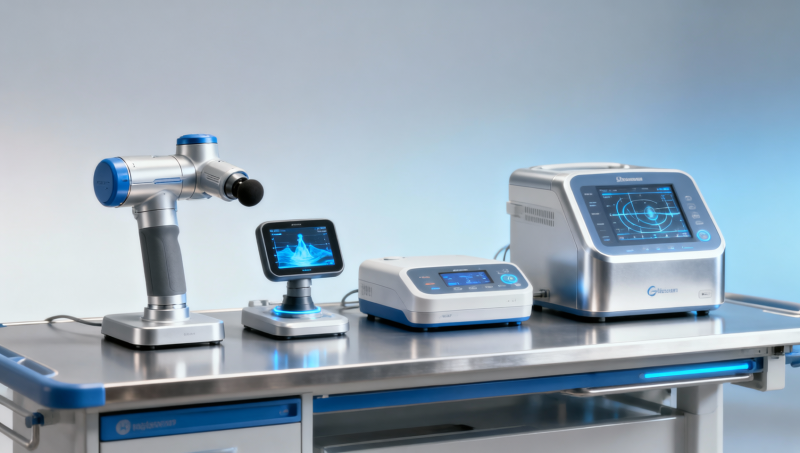
Choosing the right Physical Therapy Tech can make home recovery safer, faster, and more measurable. From smart motion tracking to Ultrasound Metrics, today’s best systems combine ease of use with healthcare compliance, medical device certification, and reliable performance standards. For users, buyers, and decision-makers, understanding which features truly support rehabilitation—not just marketing claims—is essential to selecting technology that delivers consistent outcomes.
Which Physical Therapy Tech features matter most in home recovery?
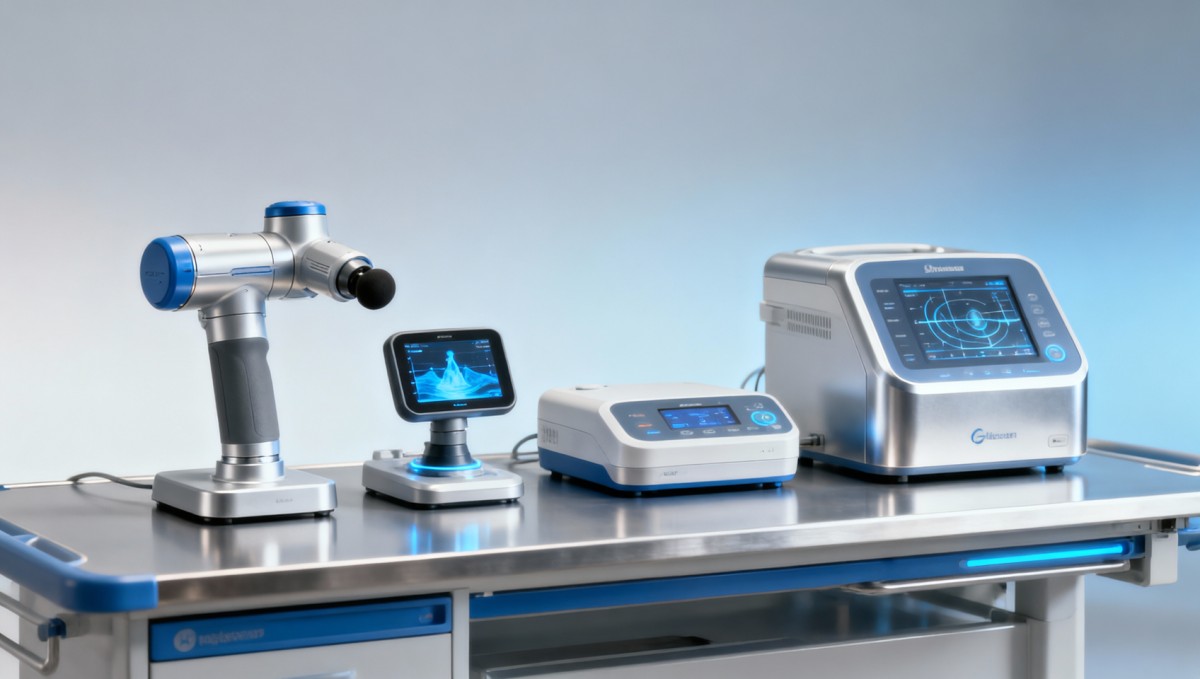
Home recovery technology is no longer limited to basic exercise videos or simple wearable trackers. In current rehabilitation pathways, Physical Therapy Tech often includes motion sensors, connected treatment devices, patient-facing apps, clinician dashboards, and data-sharing tools that support care over 2–12 weeks or longer. The real question is not whether the device looks advanced, but whether its features improve adherence, safety, and measurable recovery progress in a non-clinical setting.
For information researchers, the challenge is separating useful rehab functions from broad digital health claims. For operators and users, the issue is usability: can the system be set up in under 15–30 minutes, cleaned easily, and used consistently without technical frustration? For procurement teams and business decision-makers, the focus shifts to verification, repeatability, support burden, and long-term value rather than front-end marketing.
This is where VitalSync Metrics (VSM) adds practical value. In a market where many suppliers describe “smart rehabilitation” in vague terms, VSM evaluates technical integrity through measurable engineering and benchmarking logic. That means decision-makers can look beyond feature lists and ask whether signal quality, data stability, materials, and compliance documentation support real clinical-grade performance over repeated home use cycles.
In most home rehabilitation programs, 5 feature groups determine whether Physical Therapy Tech will help or hinder outcomes: tracking accuracy, patient usability, remote monitoring, safety controls, and compliance readiness. If one of these groups is weak, the system may still function, but its contribution to rehabilitation quality often drops sharply once it leaves the supervised clinic environment.
The five feature groups buyers should prioritize
- Accurate motion and treatment measurement, including range-of-motion tracking, session timing, repetition counts, and stable signal capture across daily use.
- Simple patient workflow, with low setup complexity, clear interface design, and guidance suitable for older adults or post-operative users.
- Remote visibility for clinicians or care teams, such as adherence data, symptom flags, and session summaries reviewed weekly or in real time.
- Built-in safety measures, including guided intensity limits, misuse alerts, data integrity checks, and device performance stability over repeated sessions.
- Regulatory and documentation readiness, especially when a solution is positioned close to medical device use and must align with MDR, IVDR-related procurement scrutiny, or internal quality review.
How do smart tracking, feedback, and Ultrasound Metrics improve outcomes?
The most valuable Physical Therapy Tech features are the ones that close the gap between prescribed rehabilitation and what actually happens at home. Smart motion tracking helps identify whether a patient completed 8 repetitions or 18, whether joint movement stayed within the intended angle range, and whether progress improved across 3–4 weekly sessions. Without this visibility, many home programs rely too heavily on self-reporting, which is often inconsistent.
Feedback systems also matter. A device or app that gives immediate prompts such as posture correction, hold-time confirmation, or pace control can improve exercise quality without requiring constant live supervision. In home settings, this type of guided feedback reduces the risk of undertraining and overcompensation. For users recovering from orthopedic procedures, neurological conditions, or chronic musculoskeletal pain, timely cues can be more valuable than adding extra complexity.
Ultrasound Metrics deserves specific attention when therapy systems include ultrasound-based assessment or treatment support. Buyers should ask what is actually being measured, how consistently the readings are captured, and under what use conditions performance remains stable. In technical review, the useful questions are not just “does it include ultrasound,” but whether signal interpretation, measurement repeatability, and calibration protocols are documented well enough for operational trust.
VSM’s engineering approach is highly relevant here. Instead of accepting a supplier’s claims at face value, VSM-style benchmarking translates device characteristics into comparable technical evidence. For wearable rehab tools, that may involve signal-to-noise considerations. For ultrasound-related features, it may involve measurement stability, interface reliability, and protocol consistency across repeated sessions. This level of scrutiny helps procurement teams distinguish consumer wellness features from functions suitable for healthcare-grade deployment.
Technical capabilities that usually drive better home rehabilitation
Before selecting a platform, buyers often need a structured way to compare feature impact. The table below summarizes which Physical Therapy Tech capabilities are most relevant in home recovery and what practical benefit each one offers across daily rehabilitation workflows.
The table shows a consistent pattern: the best home recovery systems do not rely on one “headline” feature. They combine sensing, guidance, and usable reporting. A platform with excellent tracking but weak usability may fail in practice. A platform with an attractive app but poor data quality may create false confidence. Strong procurement decisions balance all three dimensions.
When are advanced features actually necessary?
Advanced features are not required in every case. For a low-risk mobility maintenance program, a simpler guided system may be enough. But in post-surgical recovery, neuromuscular retraining, or distributed rehabilitation networks, more precise monitoring becomes valuable. In those situations, 3 criteria usually justify higher-spec technology: higher patient risk, lower supervision frequency, and greater need for objective progress verification.
This decision logic helps organizations avoid two common problems: overbuying complex systems that patients will not use, and underbuying basic tools that cannot generate dependable data. VSM’s benchmarking mindset supports this balance by turning broad feature claims into procurement-relevant evidence rather than generic innovation language.
What should procurement teams compare before choosing a Physical Therapy Tech platform?
Procurement teams often face a difficult mix of clinical expectations, IT concerns, budget limits, and implementation deadlines. A home rehabilitation platform may seem attractive during a demo, yet fail under real conditions because onboarding takes too long, support tickets increase after the first 30 days, or documentation does not meet internal quality review standards. Comparing vendors feature-by-feature is not enough; the selection process should follow a structured assessment model.
In practical terms, buyers should review at least 6 dimensions: performance verification, user workflow, regulatory position, data handling, maintenance burden, and scale readiness. These dimensions help align the needs of operators, rehab managers, procurement staff, and executive decision-makers. A system deployed to 20 pilot users may perform differently when extended to 200 home recovery patients across multiple sites.
VSM is particularly relevant for organizations that do not want procurement decisions based only on brochures or sales demonstrations. As an independent, data-driven benchmarking lab and think tank, VSM helps healthcare buyers ask more precise technical questions. That is especially useful when the market includes overlapping claims around “clinical-grade,” “AI-assisted,” “connected care,” or “medical-ready” rehabilitation tools.
The comparison matrix below can be used during sourcing, pilot review, or supplier shortlisting. It is designed for real-world procurement discussions rather than marketing evaluations.
A practical vendor comparison matrix
When comparing Physical Therapy Tech for home recovery, a table can make trade-offs easier to see across performance, compliance, and operational effort. The following framework supports a more disciplined review process.
Used correctly, this matrix reveals where hidden costs often appear. For example, a lower-cost system may require more manual monitoring, extra patient training, or additional replacement units. A better-documented platform may cost more initially but reduce re-evaluation time, deployment delays, and cross-team friction later in the procurement cycle.
A 4-step selection workflow for buyers
- Define the use case clearly: post-operative rehab, chronic pain management, neuromuscular training, or remote outpatient follow-up.
- Shortlist vendors by technical fit, not branding alone, and request documentation on measurement logic, device lifecycle, and support scope.
- Run a pilot with 10–30 users or another suitable evaluation group, measuring setup success, session completion, and data usability.
- Review findings with clinical, technical, procurement, and compliance stakeholders before scaling.
This process reduces the chance of choosing technology that performs well only in controlled demonstrations. It also creates a more defensible procurement record, which is especially important when decision-makers need to justify investment based on value, reliability, and implementation feasibility.
Why do compliance, certification, and engineering validation matter in home rehab?
Home recovery may look less formal than hospital care, but the procurement risk is still real. Devices used outside the clinic must tolerate repeated handling, variable environments, user error, and intermittent connectivity. That is why compliance and technical validation are not administrative extras. They are part of the feature set, especially when the technology influences therapy guidance, progress measurement, or treatment decisions.
For procurement professionals, the first task is to clarify whether the product is presented as a wellness aid, a rehabilitation support tool, or a regulated medical device. Each positioning changes the level of documentation required. In European procurement contexts, MDR review may be relevant. In laboratory-linked or diagnostic-adjacent contexts, IVDR scrutiny may enter the conversation. Even when a platform does not sit directly within those scopes, buyers still need evidence that the supplier understands quality management and technical file discipline.
For operators and end users, compliance also affects trust. A system that records recovery data but cannot explain how data integrity is maintained, how firmware updates are controlled, or how measurements remain stable after repeated use introduces operational uncertainty. Over a 6–12 month deployment period, those uncertainties can create support burdens and inconsistent outcomes.
VSM’s role is useful precisely because many buyers do not need more promotional language; they need a high-precision filter. By benchmarking engineering parameters and translating them into standardized technical insight, VSM helps organizations examine whether product claims are backed by repeatable performance logic. That is critical when selecting Physical Therapy Tech that must work reliably across many homes, users, and use conditions.
Key compliance and validation checkpoints
- Regulatory positioning is clearly stated, with no ambiguous mix of consumer language and clinical-grade claims.
- Technical documentation explains how measurements are generated, stored, and reviewed across routine use cycles.
- Materials and hardware tolerances are suitable for repeated home handling, charging, cleaning, and transport.
- Service and update procedures define what happens after software changes, replacement requests, or sensor performance drift.
Common procurement mistake
One common mistake is assuming that visible features prove technical maturity. A polished app, AI language, or attractive dashboard can hide weak validation discipline. Another is focusing only on the initial unit price instead of the total cost of adoption, including training, user support, replacement logistics, and internal review effort. In healthcare procurement, engineering clarity often saves more time than a lower quote.
The more critical the rehabilitation pathway, the more important it becomes to request evidence that the system can maintain functional reliability under routine home conditions. This is where independent benchmarking and whitepaper-style technical interpretation can provide a stronger basis for approval and scaling decisions.
FAQ: what do buyers and users ask most about home recovery technology?
How do I know whether a Physical Therapy Tech feature is clinically useful or just a marketing add-on?
Start with function, not appearance. Ask whether the feature changes patient behavior, measurement quality, or clinical decision support. For example, range-of-motion tracking, adherence alerts, and structured feedback usually have direct practical value. By contrast, broad “smart recovery” claims without defined measurement logic or workflow impact are harder to justify. A useful rule is to check whether the feature supports one of 3 measurable outcomes: better adherence, better visibility, or safer execution.
What setup and deployment timeline is typical for home rehab systems?
Timelines vary by complexity, but a practical rollout usually has 3 stages: technical review, pilot deployment, and scaling. A limited pilot may take 2–6 weeks depending on user onboarding and review cycles. Broader deployment can take longer if compliance review, integration checks, or multilingual patient support are required. Buyers should confirm training materials, replacement procedures, and user support flows before launch rather than after distribution begins.
Are Ultrasound Metrics necessary for all home recovery programs?
No. Ultrasound Metrics are most relevant when ultrasound-based assessment or treatment support is part of the rehabilitation model. If the goal is basic exercise adherence or mobility guidance, other features may matter more. However, when ultrasound is included, buyers should verify calibration, repeatability, interpretation workflow, and whether the output is meaningful to clinicians, operators, or the care pathway being managed.
What are the biggest risks in procurement?
The biggest risks are unclear regulatory positioning, inconsistent data quality, low patient usability, and hidden support burden. These risks often appear only after deployment. That is why structured pilots, documentation review, and engineering benchmarking are important. If a supplier cannot explain how performance is verified over repeated use, procurement teams should investigate further before committing to scale.
Why choose VSM when evaluating Physical Therapy Tech for home recovery?
VSM supports healthcare buyers, MedTech teams, and technical decision-makers who need more than promotional comparisons. In home rehabilitation technology, the difference between acceptable performance and dependable performance often comes down to evidence. VSM helps convert complex engineering characteristics into standardized, decision-ready insight so procurement teams can evaluate technical integrity, compliance readiness, and long-term operational reliability with greater confidence.
This matters across the full buying journey. Information researchers can use VSM analysis to understand what features actually drive outcomes. Operators can identify which tools are practical in daily home use. Procurement teams can compare vendors on measurable criteria. Executive decision-makers can assess whether a rehabilitation platform aligns with value-based procurement goals rather than short-term feature appeal.
If you are reviewing Physical Therapy Tech for home recovery, VSM can help you examine key areas such as parameter confirmation, product selection logic, typical delivery timelines, technical documentation quality, certification-related questions, and suitability for pilot testing or sample evaluation. This is especially valuable when the market includes overlapping claims and limited transparency around real device performance.
Contact VSM to discuss your specific use case, whether you need a benchmarking-based comparison, supplier screening support, a clearer view of compliance expectations, or a more disciplined way to evaluate smart rehab systems with motion tracking, remote monitoring, or Ultrasound Metrics. The right home recovery solution should not only look innovative. It should stand up to technical review, operational reality, and procurement scrutiny.
Recommended News
The VitalSync Intelligence Brief
Receive daily deep-dives into MedTech innovations and regulatory shifts.