
Physical therapy tech that improves home recovery
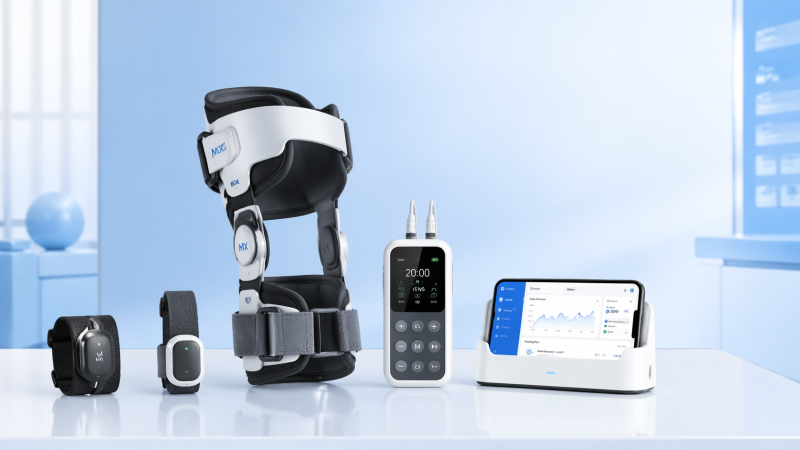
Home recovery is being reshaped by wearable healthcare technology, smarter medical equipment maintenance, and stricter medical equipment safety standards. For operators, buyers, and healthcare decision-makers, the real value of physical therapy tech lies not in hype but in measurable outcomes, healthcare compliance solutions, and long-term medical technology cost control. This guide explores how modern tools support safer, faster rehabilitation at home.
What physical therapy tech actually improves home recovery?
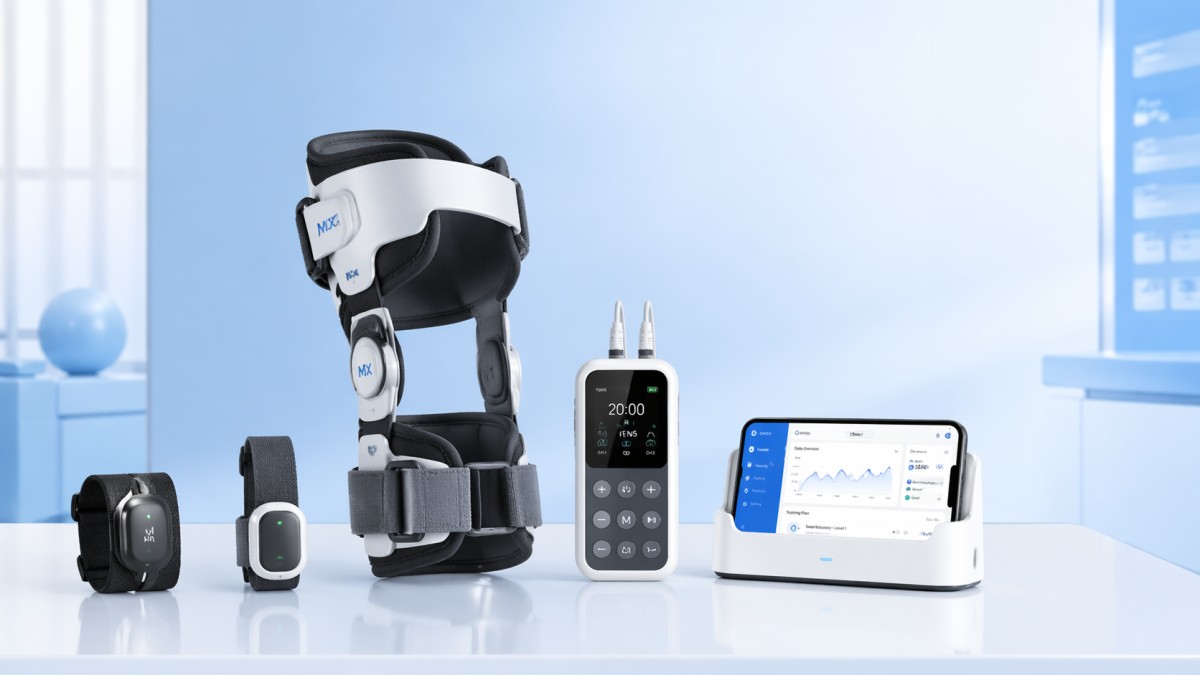
Physical therapy tech for home recovery includes connected wearables, motion-tracking rehabilitation tools, portable electrotherapy devices, smart braces, and remote monitoring platforms. In practical terms, these tools help patients follow prescribed exercises, help operators track adherence, and help procurement teams compare clinical usability against maintenance burden. The goal is not simply adding devices to a home program. The goal is creating a repeatable recovery process that can be monitored over 2–12 weeks, adjusted by clinicians, and documented for quality assurance.
For information researchers and enterprise decision-makers, the key distinction is between consumer wellness gadgets and clinically relevant rehabilitation technology. A device may look advanced, yet still fail in signal stability, battery durability, calibration consistency, or data transfer reliability. In home recovery, these gaps matter because patient use is less controlled than in a clinic. Small inaccuracies repeated daily can affect progression plans, safety checks, and the credibility of outcome reporting.
This is where technical benchmarking becomes essential. VitalSync Metrics focuses on engineering truth rather than promotional claims. For home rehabilitation technology, that means examining measurable factors such as sensor drift over repeated sessions, material fatigue under daily loading, recharge cycle expectations, and whether the product documentation supports MDR or IVDR-adjacent procurement review when relevant to the device category and data pathway.
In many procurement discussions, buyers ask one simple question: does the technology shorten the path to safer function at home? A useful answer usually requires 3 layers of evaluation: patient usability, technical performance, and long-term supportability. When one of these layers is missing, the apparent savings at purchase often turn into higher replacement cost, more operator retraining, or inconsistent patient compliance after the first 7–14 days.
Core categories used in home-based rehabilitation
- Wearable motion and activity sensors that measure step count, range of motion trends, exercise frequency, and session duration.
- Portable therapy devices such as TENS or muscle stimulation units that support symptom management when used under defined protocols.
- Smart supports and braces that add stabilization, loading feedback, or angle restriction during the recovery window.
- Remote monitoring platforms that connect patient-reported progress, device-generated data, and operator review workflows into one documented pathway.
The most effective home recovery systems are usually not the most complex. They are the ones that match the patient’s condition, the operator’s workflow, and the buyer’s service capacity. For a 4–6 week post-injury program, reliability and ease of use often matter more than feature depth. For a multi-site provider or digital care program, integration and data traceability may become the higher priority.
Which home recovery scenarios benefit most from modern rehabilitation technology?
Not every patient or program needs the same physical therapy tech. Scenario fit matters. A post-operative knee patient, an older adult recovering balance, and a worker with repetitive strain all place different demands on wearable healthcare technology and home-use medical equipment. For operators and buyers, the task is to align device selection with mobility risk, supervision level, expected recovery duration, and maintenance practicalities.
In lower-limb recovery, motion feedback and adherence tracking are often high-value because progress is gradual and easy to underestimate. A device that supports daily use for 20–40 minutes, captures movement quality, and flags missed sessions can help maintain continuity between clinic visits. In upper-limb rehabilitation, lighter wearables, shorter setup time, and comfort during repeated reaching or rotation exercises tend to matter more than high feature complexity.
For elderly home recovery, safety monitoring becomes a stronger decision factor. Fall risk, skin tolerance, battery handling, and visual simplicity often outweigh advanced app customization. For occupational rehabilitation or insurer-managed return-to-work programs, the emphasis may shift toward documentation, reproducible exercise logs, and the ability to compare baseline versus week-by-week recovery over 3 stages of care.
The table below helps distinguish where different types of physical therapy tech fit best in home recovery planning. It is particularly useful for procurement teams comparing application scenarios, service burden, and expected monitoring needs before issuing RFQs or pilot requests.
A scenario-based view prevents overbuying. It also reduces the common mismatch between advanced hardware and real home usage. In many programs, a device with moderate functionality but stronger reliability, simpler training, and lower service complexity delivers better home recovery outcomes than a feature-heavy system that patients abandon after week 1 or 2.
Questions operators and buyers should ask first
- Will the patient use the tool daily with no technician present, or only under intermittent supervision every 7–14 days?
- Does the recovery pathway require adherence data, motion data, symptom response, or all 3 together?
- Can the equipment be cleaned, charged, recalibrated, and reassigned without high turnaround time?
- Is the value proposition based on measurable recovery support, or only on app features and marketing language?
These questions reflect a broader procurement reality in healthcare technology: successful home recovery solutions are judged not only by patient appeal, but by technical integrity across the full care cycle.
How should buyers compare physical therapy tech beyond features?
Feature lists rarely tell the full story. In home recovery procurement, comparison analysis should include at least 5 dimensions: measurement reliability, user safety, maintenance workload, data handling, and service continuity. For example, two rehabilitation wearables may both advertise motion tracking, but one may drift after repeated use, while the other maintains more stable readings across a 30-day home program. That difference can affect therapy adjustments and trust in the data.
Operational teams also need to compare setup friction. If one device requires 8–10 minutes of placement, pairing, and app confirmation for each session, patient adherence may decline. A simpler device that starts in 1–3 minutes may outperform it in real-world home recovery even if it offers fewer secondary metrics. In the home, convenience is not cosmetic. It is part of clinical execution.
From a technical due diligence perspective, VitalSync Metrics helps organizations separate vendor storytelling from engineering evidence. That means reviewing bench-level performance indicators, repeatability expectations, hardware durability, and the quality of documentation that supports procurement validation. In an industry moving toward value-based sourcing, technical benchmarking is increasingly part of responsible purchasing, not an optional extra.
The comparison table below is designed for teams assessing physical therapy tech for home programs, pilot deployments, or integrated digital rehabilitation services. It focuses on measurable decision points rather than generic claims.
A good comparison framework prevents decisions driven by demos alone. It also helps enterprise leaders align physical therapy tech with cost control, quality assurance, and deployment reality. When evaluation criteria are defined before vendor selection, RFQ responses become easier to compare and internal approvals become faster.
A practical 4-step selection method
1. Define the recovery pathway
Clarify whether the technology is intended for pain modulation, mobility tracking, guided exercises, or multi-parameter monitoring. This avoids comparing tools built for different therapeutic goals.
2. Set measurable acceptance criteria
Examples include setup time under 5 minutes, battery support for several sessions between charges, and operator onboarding within 1–2 training sessions. Acceptance criteria should be documented before pilot launch.
3. Review documentation quality
Ask for technical files, maintenance instructions, risk labeling, data workflow descriptions, and any applicable compliance materials. Sparse documentation is often an early warning sign.
4. Pilot under real home-use conditions
A 2–4 week pilot usually reveals more than a showroom demonstration. It exposes recharge behavior, user drop-off, attachment wear, and support load across actual home routines.
What standards, safety, and compliance checks matter in home rehabilitation technology?
For physical therapy tech used in home recovery, compliance is not limited to a label on the box. Buyers should examine intended use wording, risk information, instructions for use, cleaning and maintenance guidance, and the clarity of technical documentation. Depending on market and product category, medical device regulations such as MDR or IVDR-adjacent documentation expectations can influence procurement review, especially where connected monitoring or clinical data handling is involved.
Medical equipment safety standards matter because home environments are variable. Devices may be used in warm bedrooms, shared living areas, or by patients with limited dexterity. Charging habits may be inconsistent. Accessories may be over-tightened, dropped, or reused across care cycles. That is why materials, connectors, enclosure durability, and maintenance instructions deserve scrutiny. Safety is not only a design issue. It is an operational issue across the full usage period.
Healthcare compliance solutions also need to consider data flow. If the rehabilitation technology records movement, symptoms, or adherence and sends them to a clinician platform, procurement teams should review role permissions, export methods, and data retention logic. For decision-makers, this is important not only for governance but for proving the system can support accountable care models and defensible reporting.
The table below summarizes a practical compliance checklist that organizations can use before approving home recovery devices, especially when comparing multiple vendors or evaluating pilot-to-scale transition.
When compliance review is built into the buying process, organizations reduce downstream delays. They also gain a clearer view of total operational risk. This is one reason VSM’s benchmarking approach matters: it helps technical, procurement, and executive teams work from the same evidence base instead of isolated claims.
Common mistakes that create hidden risk
- Approving a device based on app appearance without reviewing hardware durability over repeated home cycles.
- Ignoring cleaning instructions, charging limitations, or replacement intervals for patient-contact components.
- Assuming remote monitoring equals actionable data, even when export quality or audit visibility is weak.
- Treating compliance paperwork as a formality rather than part of technical risk verification.
For home rehabilitation programs expected to scale across clinics, payers, or distributed care networks, these mistakes can multiply quickly. Early diligence is less costly than corrective procurement later.
How can organizations control cost without compromising recovery quality?
Medical technology cost control in home recovery depends on lifecycle thinking. Purchase price is only one line item. Buyers also need to consider onboarding time, maintenance frequency, replacement components, firmware support, cleaning turnaround, and whether the device meaningfully reduces clinic revisits or improves program adherence. Over a 6–18 month period, a cheaper device can become more expensive if it creates repeated operator intervention or frequent hardware loss.
There are usually 3 practical cost strategies. First, standardize around a smaller number of device types for defined recovery pathways. Second, match specification level to patient segment instead of buying one premium configuration for all users. Third, validate durability and support model before scale-up. This reduces avoidable spending on over-engineered features, emergency replacement, and fragmented training processes.
Alternative models also deserve consideration. In some cases, remote monitoring software paired with simpler wearables is more sustainable than a high-cost all-in-one device. In other cases, reusable devices with a clear maintenance protocol may outperform disposable-heavy programs. The right choice depends on care volume, reassignment cycles, and whether the organization needs individual patient ownership or managed inventory rotation.
A useful financial review should cover at least 6 checkpoints before approval:
- Expected service life under repeated home use rather than ideal lab handling.
- Charging and battery replacement assumptions over monthly use cycles.
- Training load for operators, caregivers, and patients within the first 1–2 weeks.
- Consumables or accessories that must be replaced every session, weekly, or monthly.
- Software licensing logic for single-site versus multi-site deployment.
- Downtime risk if support response or spare parts are not clearly defined.
The best cost decision is not the lowest upfront bid. It is the option that preserves safe, usable home recovery while keeping technical and operational variability under control. Benchmarking helps quantify that choice before contracts are signed.
FAQ: what do researchers, operators, and procurement teams ask most often?
How do I know whether a home rehab device is clinical-grade or just consumer wellness tech?
Start with intended use, documentation depth, repeatability claims, and maintenance guidance. Clinical-grade evaluation usually involves clearer performance specifications, better risk instructions, and more robust technical records. Consumer devices may still be useful in limited contexts, but they often provide less support for procurement validation, operator workflows, and measurable home recovery programs.
What procurement criteria matter most for physical therapy tech used at home?
Focus on 5 criteria: usability, technical consistency, safety documentation, serviceability, and data handling. If your program runs across 20, 50, or more patients, even small weaknesses in battery life, setup time, or cleaning instructions can create significant cumulative workload. Good procurement criteria should therefore include both technical and operational acceptance points.
How long is a realistic evaluation period before wider rollout?
A 2–4 week pilot is often sufficient to identify major usability and support issues. For more complex digital rehabilitation pathways, 6–8 weeks may be better because it captures adherence drop-off, recharge routines, and repeat-use durability. The key is to test under real home conditions, not only in supervised demos.
What is the most common mistake in buying home recovery technology?
The most common mistake is overvaluing features and undervaluing technical integrity. Buyers often focus on dashboards, mobile apps, or broad claims of personalization while overlooking sensor stability, maintenance burden, and documentation quality. In real home recovery, those overlooked factors are often what determine sustained patient use and total program cost.
Why work with VitalSync Metrics when evaluating physical therapy tech?
VitalSync Metrics supports healthcare organizations that need more than product marketing. We help teams evaluate physical therapy tech and broader healthcare technology through an engineering-led lens: technical integrity, measurable performance, regulatory readiness, and long-term reliability. For hospital procurement leaders, MedTech startups, laboratory architects, and digital health buyers, this creates a clearer path from shortlist to defensible decision.
Our value is especially strong when the market looks crowded and claims sound similar. We can help you review wearable healthcare technology, compare home recovery device options, assess maintenance and material concerns, and identify documentation gaps before procurement risk becomes operational risk. This is particularly relevant when your team must balance safety, cost control, and implementation speed across multiple stakeholders.
If you are planning a pilot, tender, or product evaluation, we can support parameter confirmation, technical benchmarking, selection criteria design, and compliance-focused review. We can also help structure questions around delivery windows, sample assessment, maintenance expectations, and the evidence needed for internal procurement approval.
Contact VitalSync Metrics to discuss home recovery technology selection, wearable device benchmarking, technical whitepaper review, procurement comparison frameworks, or a tailored evaluation plan for your rehabilitation program. Clear decisions start with verifiable data, not assumptions.
- EMS
- ESS
- PPE
- healthcare technology
- rehabilitation tools
- remote monitoring
- EdTech
- procurement
- AR
- Cement
- material fatigue
- benchmarking
- medical technology
- technical integrity
- medical equipment
- hospital procurement
- technical benchmarking
- material fatigue
- long-term reliability
- engineering truth
- healthcare technology
- healthcare compliance
- Remote Monitoring
- Physical Therapy Tech
- medical technology cost
- medical equipment maintenance
- medical equipment safety standards
- wearable healthcare technology
- healthcare compliance solutions
Recommended News
- 2026.04.24Medical technology cost: where budgets go wrongDr. Alistair Thorne (Senior Biomedical Engineer)
- 2026.04.24Packaging choices that protect sterile instrumentsDr. Julian Rossi (RehabTech Specialist)
- 2026.04.24Mobility assist devices: which option fits bestSarah Jenkins (Laboratory Infrastructure Consultant)
The VitalSync Intelligence Brief
Receive daily deep-dives into MedTech innovations and regulatory shifts.