
Mobility assist devices: which option fits best
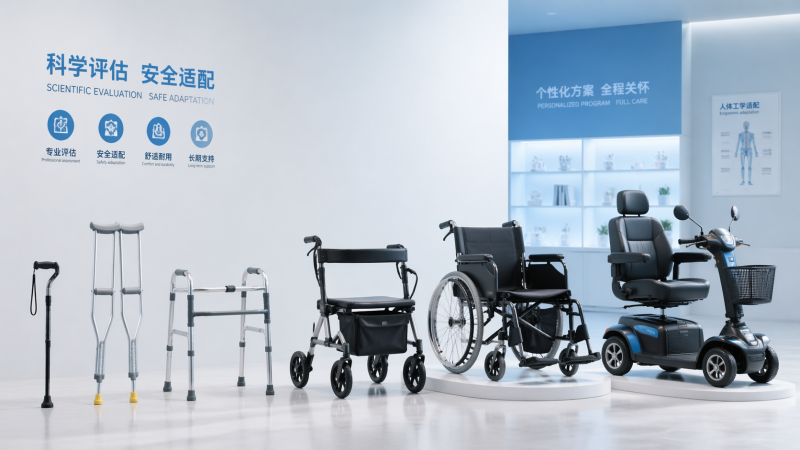
Choosing among mobility assist devices means balancing user comfort, safety, and long-term value. For researchers, operators, buyers, and decision-makers, the best option depends not only on function but also on wearable healthcare technology, medical equipment safety standards, and healthcare compliance solutions. In most cases, there is no single “best” device for everyone. The right choice depends on the user’s mobility level, environment of use, risk profile, maintenance capacity, and procurement priorities. A cane may be sufficient for mild balance support, while walkers, rollators, wheelchairs, powered mobility devices, or patient lift systems may be more appropriate when stability, fatigue reduction, or caregiver safety become critical.
For individual users and healthcare organizations alike, the most effective decision starts with one question: what problem must the device solve reliably every day? Once that is clear, selection becomes much easier. The comparison below focuses on practical use, safety, compliance, and lifecycle value rather than marketing language alone.
How do you decide which mobility assist device fits best?
The core search intent behind this topic is comparison with a clear decision outcome. Readers are typically not looking for a generic list of devices. They want to know which option is safest, most suitable, and most cost-effective for a specific person or care setting.
A useful way to decide is to evaluate five factors first:
- Mobility limitation: Is the issue mild balance loss, reduced endurance, lower-limb weakness, post-surgical recovery, or full non-ambulatory status?
- User environment: Will the device be used indoors, outdoors, on uneven surfaces, in clinics, hospitals, or long-term care facilities?
- Safety risk: Is fall prevention the main concern, or is there also a caregiver handling risk?
- User capability: Can the person grip, steer, transfer, and maintain posture safely?
- Lifecycle considerations: What are the maintenance demands, expected durability, cleaning requirements, and regulatory considerations?
For procurement teams and decision-makers, the best fit is rarely the cheapest upfront option. A low-cost device that causes more falls, replacement cycles, maintenance calls, or training gaps often becomes the more expensive choice over time. This is especially relevant in value-based procurement environments where operational reliability and measurable outcomes matter.
Which device is best for different mobility needs?
Different mobility assist devices serve different levels of support. Matching the device to the real functional need is more important than choosing the most advanced model.
Canes
Canes are best for users with mild balance issues or minor unilateral weakness. They are lightweight, affordable, and easy to store. However, they provide limited support and are not ideal where significant instability or fatigue is present.
Best for: mild support, early-stage mobility decline, short-distance assistance.
Limitations: limited weight-bearing support, lower stability than walkers.
Crutches
Crutches are useful when one leg must be partially or fully unloaded, often after injury or surgery. They require upper-body strength, coordination, and training.
Best for: temporary non-weight-bearing or partial-weight-bearing mobility.
Limitations: tiring for long-term use, not ideal for frail users or those with weak upper limbs.
Standard walkers
Walkers provide a high level of stability and are often suitable for users recovering from surgery or those with meaningful balance deficits. They can reduce fall risk but may slow movement and require lifting or repositioning with each step.
Best for: users needing strong support and controlled movement.
Limitations: slower mobility, less convenient outdoors.
Rollators
Rollators are wheeled walkers, typically equipped with brakes and a seat. They are useful for users who can walk but need balance support and rest breaks. They support smoother mobility than standard walkers but require better hand control and braking awareness.
Best for: moderate mobility impairment, endurance limitations, community use.
Limitations: less stable than fixed walkers if used incorrectly.
Manual wheelchairs
Manual wheelchairs suit users with limited walking ability but adequate upper-body function or caregiver support. They are common in healthcare settings because they are versatile and relatively easy to transport.
Best for: reduced walking tolerance, facility transport, mixed independent and assisted use.
Limitations: propulsion burden, pressure management concerns, transfer risks.
Powered wheelchairs and mobility scooters
These devices are designed for users with substantial mobility limitations who need independent travel with reduced physical strain. They can significantly improve autonomy, but they also introduce battery, charging, maintenance, training, and environmental access considerations.
Best for: long-term mobility impairment, energy conservation, greater independence.
Limitations: higher cost, more maintenance, storage and charging needs.
Patient lifts and transfer aids
These are not walking devices, but they are often the best option when safe transfer is the real issue. In hospitals, rehabilitation centers, and long-term care settings, transfer aids can reduce caregiver injury and improve patient handling safety.
Best for: non-ambulatory users, high-risk transfers, institutional care.
Limitations: training requirements, space demands, higher operational planning needs.
What matters most to users, operators, buyers, and decision-makers?
Although these reader groups have different roles, their concerns overlap more than they may expect. They all want a solution that performs reliably in real use.
For users and caregivers
- Comfort during daily use
- Confidence and stability
- Ease of movement in real environments
- Reduced fatigue
- Simple operation and adjustment
For operators and clinical staff
- Ease of training and proper fit
- Safe transfer and handling workflows
- Cleaning and maintenance practicality
- Reduced misuse risk
- Compatibility with clinical routines
For procurement teams
- Product consistency and supplier reliability
- Medical equipment safety standards
- Total cost of ownership, not just purchase price
- Replacement parts availability
- Service support and documentation quality
For business decision-makers
- Return on investment
- Fall reduction and injury prevention impact
- Operational efficiency
- Regulatory and compliance risk control
- Long-term scalability across sites or departments
This is why mobility device evaluation should not stop at the product brochure. Real decision quality comes from matching performance claims with user needs, safety data, and practical service conditions.
How should you compare safety, compliance, and long-term value?
For healthcare buyers and institutional stakeholders, this is often the most important section. A mobility assist device may appear similar across brands, yet differ greatly in technical integrity, cleaning resilience, component lifespan, braking reliability, load tolerance, and documentation quality.
When comparing options, assess the following:
- Structural safety: frame strength, stability, tipping resistance, weight capacity, fatigue durability.
- User safety features: handgrip ergonomics, brake responsiveness, anti-tip design, seat stability, locking mechanisms.
- Material performance: corrosion resistance, cleanability, wear resistance, suitability for repeated disinfection.
- Regulatory alignment: relevant device classification, labeling, traceability, MDR/IVDR relevance where applicable, and supporting technical files.
- Maintenance profile: service intervals, spare parts access, battery replacement requirements for powered models, failure points.
- Training burden: whether the device can be used safely with minimal onboarding or requires formal staff instruction.
Healthcare compliance solutions also matter because procurement is increasingly tied to documented quality systems and evidence-based sourcing. In higher-accountability environments, buyers benefit from independent benchmarking, especially where supplier claims are difficult to verify through standard sales materials alone.
Medical technology advancements are also changing this category. Some mobility solutions now integrate sensors, digital monitoring, or wearable healthcare technology features that help track use, detect movement patterns, or support rehabilitation planning. These capabilities can be valuable, but only when they solve a real operational or clinical need. Added technology should improve outcomes or workflow visibility, not simply increase complexity.
When is a simple device enough, and when is advanced equipment worth it?
A practical rule is this: choose the least complex device that still delivers safe, consistent function. Simpler devices usually cost less, require less training, and are easier to maintain. But if the user’s condition, environment, or safety risk exceeds what the device can handle, simplicity becomes a false economy.
A basic cane or walker is often enough when:
- The user has mild to moderate balance limitations
- Walking is still mostly independent
- The care environment is predictable
- Maintenance resources are limited
A rollator, wheelchair, or powered device is often justified when:
- Fatigue prevents functional daily mobility
- Fall risk remains high with lighter support
- The user must cover longer distances regularly
- Independence and participation are major goals
- Staff time or caregiver strain is increasing
Transfer equipment is often the better investment when:
- Walking is no longer safe
- Manual lifting creates injury risk
- Care settings require repeatable safe handling protocols
For enterprises and facilities, advanced equipment becomes worth the investment when it reduces downstream costs: falls, musculoskeletal injuries, emergency incidents, patient dissatisfaction, staff inefficiency, or accelerated replacement cycles.
What questions should you ask before making a final choice?
Before selecting any mobility assist device, individual buyers and institutional teams should ask:
- What exact mobility problem are we solving?
- Will the user be safer and more independent with this device in real daily conditions?
- Can the user or staff operate it correctly without excessive training burden?
- How will this device be cleaned, stored, maintained, and repaired?
- What standards, certifications, and technical documentation support its safety claims?
- What is the likely total cost over its usable life?
- Is there evidence beyond marketing that the device performs reliably?
These questions are especially important in healthcare procurement because errors in selection are rarely isolated. One poorly matched device can affect user safety, staff workload, incident rates, budget efficiency, and compliance exposure.
Conclusion
The best mobility assist device is the one that matches the user’s actual functional needs while meeting safety, maintenance, and long-term value requirements. For mild instability, a cane or walker may be enough. For endurance limitations or broader community mobility, a rollator or wheelchair may offer better daily performance. For severe impairment or institutional handling needs, powered devices and transfer aids may be the more responsible choice.
For researchers, operators, buyers, and decision-makers, the most reliable path is to compare mobility assist devices through a practical lens: user fit, risk reduction, medical equipment safety standards, maintenance demands, and validated performance. In a market shaped by rapid medical technology advancements, better choices come from evidence, not assumptions. When selection is grounded in function, compliance, and lifecycle thinking, mobility support becomes not just a purchase, but a measurable improvement in care quality and operational confidence.
- EMS
- ESS
- PPE
- healthcare technology
- wheelchairs
- procurement
- AR
- Cement
- benchmarking
- healthcare procurement
- value-based procurement
- medical technology
- technical integrity
- medical equipment
- healthcare technology
- healthcare compliance
- Mobility Assist
- medical technology advancements
- medical equipment safety standards
- wearable healthcare technology
- healthcare compliance solutions
Recommended News
- 2026.04.24Medical technology cost: where budgets go wrongDr. Alistair Thorne (Senior Biomedical Engineer)
- 2026.04.24Packaging choices that protect sterile instrumentsDr. Julian Rossi (RehabTech Specialist)
- 2026.04.24Mobility assist devices: which option fits bestSarah Jenkins (Laboratory Infrastructure Consultant)
The VitalSync Intelligence Brief
Receive daily deep-dives into MedTech innovations and regulatory shifts.