
Medical technology cost: where budgets go wrong
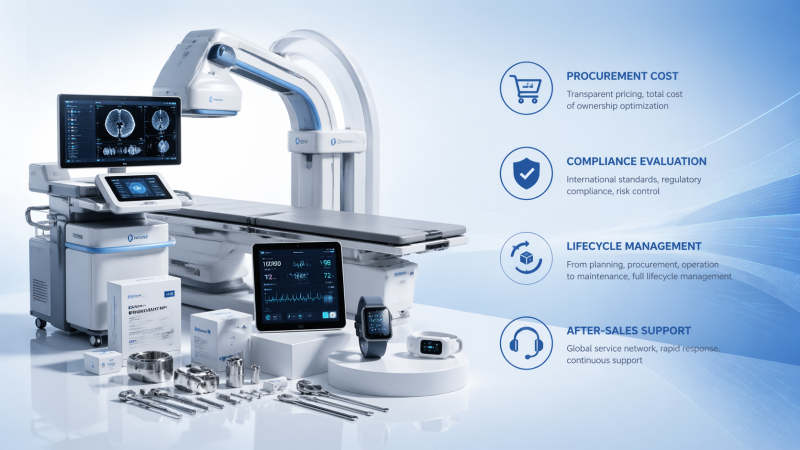
Medical technology cost often goes wrong when buyers focus on headline pricing instead of lifecycle performance, healthcare compliance solutions, and medical equipment safety standards. From wearable healthcare technology and Diagnostic Imaging software to orthopedic implants manufacturer selection and medical equipment maintenance, hidden expenses build fast. This article explains where budgets fail and how procurement teams, operators, and decision-makers can evaluate medical technology advancements with greater precision and long-term value.
Why medical technology budgets fail even before implementation
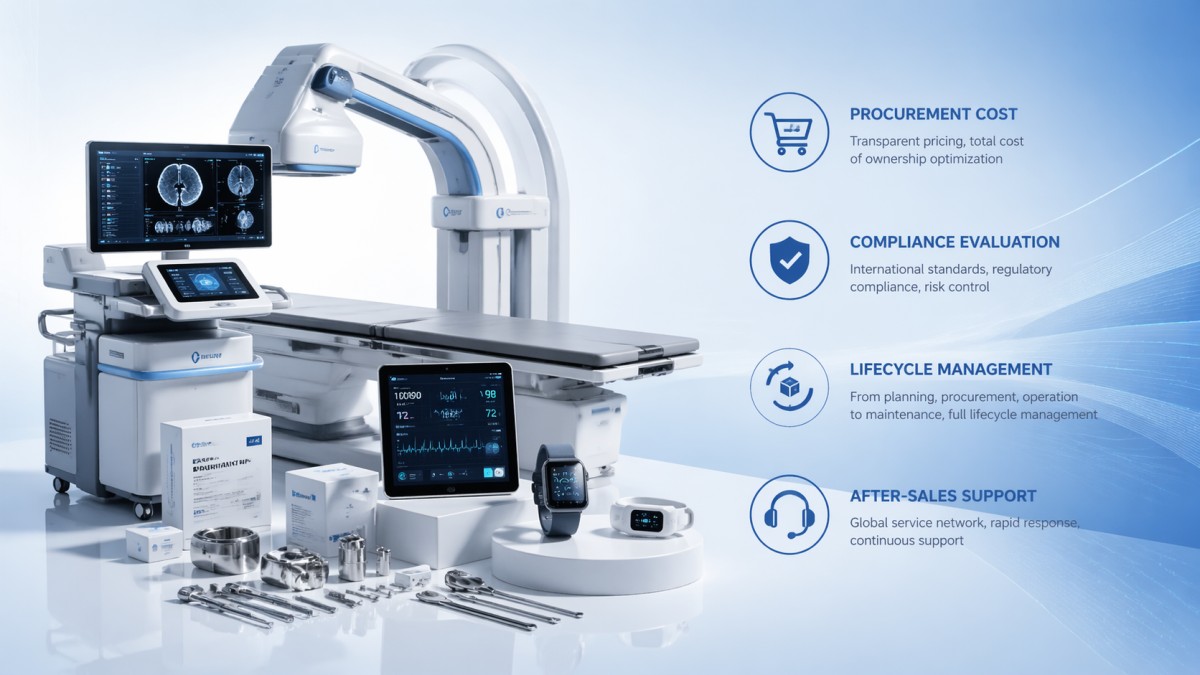
In many healthcare procurement cycles, the first error appears at the quotation stage. A device, software platform, or component may look competitively priced, yet the purchase decision is often made without a full view of installation demands, calibration intervals, operator training, spare part availability, software licensing renewals, and validation effort. In practice, the medical technology cost problem starts when procurement teams compare invoices instead of comparing total operational burden over 3–7 years.
This issue affects multiple stakeholders differently. Information researchers need trustworthy technical evidence, not promotional claims. Operators care about usability, downtime, alarm quality, and maintenance frequency. Procurement managers need predictable lifecycle expense. Business decision-makers want capital efficiency, compliance confidence, and lower replacement risk. When these viewpoints are not aligned in the first 2–4 weeks of evaluation, budgets drift quickly.
The risk is even higher as medical technology advancements become more software-driven and compliance-sensitive. A wearable monitoring platform may require recurring firmware support. Diagnostic Imaging software may need integration work with PACS, LIS, or hospital information systems. Orthopedic implant sourcing may involve traceability records, material documentation, and fatigue-related verification. Hidden cost rarely comes from one large mistake; it usually comes from 5–8 small omissions.
VitalSync Metrics (VSM) addresses this gap by translating engineering performance into procurement-grade evidence. Instead of accepting broad marketing language, buyers can benchmark measurable factors such as signal-to-noise ratio, material tolerance windows, reliability under repeated use, and documentation readiness for MDR/IVDR-related pathways. This changes budgeting from a price negotiation exercise into a structured technical decision.
The most common budget blind spots
- Underestimating validation time: even a straightforward deployment can need 7–15 business days for configuration checks, acceptance testing, and operator handover.
- Ignoring maintenance structure: devices with low purchase prices may require quarterly service visits, consumable replacement, or more frequent recalibration.
- Treating compliance as paperwork only: documentation gaps can create procurement delays, restricted market access, or added review costs late in the process.
- Skipping technical benchmarking: without comparative test data, buyers may pay less upfront but absorb higher failure rates, workflow interruptions, or replacement spending.
Where the real medical technology cost accumulates
Hidden cost becomes easier to control when it is divided into practical budget layers. For hospitals, laboratories, and MedTech teams, the spending pattern usually extends across acquisition, integration, operation, maintenance, compliance, and end-of-life replacement. A low headline price can become expensive if any of those layers are unstable. This is especially relevant for medical equipment safety standards and healthcare compliance solutions that require ongoing verification rather than one-time review.
Wearable healthcare technology is a clear example. Buyers may focus on sensor unit pricing while underestimating battery cycle decline, signal consistency during motion, enclosure durability, and software support. In the first 12–24 months, these factors can determine whether the platform scales smoothly or creates escalating service tickets. The same logic applies to Diagnostic Imaging software, where license structure and interoperability can matter as much as image processing capability.
For implants and high-value components, the risk profile changes. An orthopedic implants manufacturer may offer acceptable initial pricing, yet incomplete material data packages, weak fatigue documentation, or unclear lot traceability can create downstream cost in validation, audit preparation, and clinical risk review. Here, procurement cost is not just financial; it also includes time-to-approval and confidence in long-term use.
The table below breaks medical technology cost into budget categories that are frequently missed in early-stage comparison. It is intended for procurement personnel, technical evaluators, and business leaders who need a clearer total-cost view before contract finalization.
The key lesson is simple: the true medical technology cost is distributed over time. A purchasing decision made on base price alone can distort internal budgets for 12 months or more. Teams that map these layers early usually negotiate better terms, define clearer acceptance criteria, and reduce downstream surprises.
A practical cost-screening checklist
- Separate one-time and recurring costs across at least 5 categories: hardware, software, integration, service, and compliance support.
- Ask for maintenance intervals in measurable terms, such as monthly checks, quarterly preventive service, or annual replacement schedules.
- Define acceptance testing in 3 stages: incoming verification, installation qualification, and operational confirmation.
- Request documentation samples before award, not after award, especially for regulated product classes.
How procurement teams should compare options beyond price
A strong procurement process does not eliminate cost pressure; it makes cost visible. In medical technology purchasing, comparison should combine financial, technical, operational, and compliance dimensions. This is where many organizations need a more disciplined framework. When two offers appear similar, the better choice often becomes clear only after reviewing performance stability, maintenance workload, and implementation complexity.
VSM’s value in this stage is technical normalization. Benchmarking turns non-comparable supplier claims into comparable evidence. That may include sensor accuracy behavior under use conditions, signal quality under motion, material fatigue considerations for orthopedic components, software responsiveness, or environmental tolerance in typical healthcare settings. These details matter because they connect directly to downtime, replacement timing, and clinical reliability.
The comparison table below is designed for selection meetings involving users, procurement, and senior management. It shows how a lower upfront quote can still become the less efficient option once lifecycle factors are included.
The purpose of this comparison is not to justify a higher price by default. It is to identify which option produces the lowest operational risk across a realistic 3-year or 5-year horizon. In healthcare, budget efficiency depends on reliability, traceability, and manageable service demands, not just procurement timing.
Which evaluation questions should each stakeholder ask?
For operators and clinical users
Ask how the product behaves during routine use, not only in ideal demo conditions. For wearable healthcare technology, request data on motion influence, recharge intervals, cleaning tolerance, and alert fatigue. For software, ask about login steps, workflow clicks, and downtime contingencies. Small friction points repeated every day often have a bigger cost impact than expected.
For procurement managers
Focus on support structure, documentation completeness, and service response assumptions. Clarify whether quoted support covers remote diagnostics, on-site intervention, replacement components, and version updates. A 24–72 hour response window may be acceptable for some workflows, but not for high-dependency departments.
For executives and decision-makers
Review strategic fit. Does the technology support digital integration goals, value-based procurement objectives, and future compliance requirements? A solution that appears economical now but limits interoperability or raises audit burden later can weaken return on investment across multiple departments.
What standards, compliance, and maintenance should be budgeted from day one?
Compliance planning should not be postponed until contract signing. In regulated healthcare environments, buyers need to confirm what documentation is available, what testing has already been performed, and what local or regional requirements may apply. MDR/IVDR discussions are especially relevant when evaluating devices, diagnostics, and associated technical files for European market pathways. Even when a buyer is not the manufacturer, document readiness affects procurement speed and confidence.
Medical equipment safety standards also influence long-term cost. Safety is not only about a certificate on file; it affects preventive maintenance intervals, electrical checks, calibration routines, software update discipline, and training control. A budget that excludes these items may look lean at approval stage but become unstable within the first 6–12 months of use.
VSM supports more rigorous decision-making by converting technical and manufacturing parameters into standardized whitepapers. This gives procurement teams a practical basis for discussing performance claims, documentation depth, and engineering limitations before they commit. It is particularly useful when comparing complex products that are hard to assess through marketing materials alone.
Budget areas that should never be treated as optional
- Initial technical review: allocate time for engineering validation, document screening, and internal cross-functional review.
- Medical equipment maintenance: define preventive service frequency, spare part planning horizon, and escalation path before deployment.
- Operator readiness: set training sessions, competency checks, and refresher intervals, often every 6–12 months depending on complexity.
- Change control: include software updates, hardware revisions, and documentation revisions in supplier communication terms.
A simple 4-step budgeting model
- Map total cost by year 0, year 1, and years 2–3 instead of using one blended figure.
- Separate compliance-related expense from general overhead so approvals are not underfunded.
- Assign ownership for 3 categories: technical validation, operational support, and contract management.
- Review supplier evidence against intended clinical or laboratory use, not just against brochure language.
When these four steps are built into the buying process, medical technology cost becomes more controllable. Instead of reacting to failures, teams can plan around realistic service schedules, integration effort, and compliance demands.
FAQ: how to avoid costly mistakes in medical technology procurement
How should buyers evaluate medical technology cost if supplier quotes look similar?
Start with a side-by-side review of 5 core areas: technical evidence, integration effort, maintenance schedule, compliance documentation, and support scope. If two quotes are close, the deciding factor is usually not base price but cost predictability over 24–36 months. Ask for measurable inputs such as service intervals, update frequency, and acceptance criteria.
What is the biggest hidden cost in wearable healthcare technology?
In many cases, it is not the sensor itself but the combination of signal instability, battery lifecycle decline, software support, and user burden. If a wearable system requires frequent resets, charging interruptions, or excessive review of low-quality data, the operational cost can exceed the initial hardware savings. Buyers should ask for real-use performance characterization, not just lab snapshots.
What should procurement teams check when selecting an orthopedic implants manufacturer?
Review material traceability, fatigue-related evidence, manufacturing consistency, and documentation completeness. In higher-risk applications, missing technical records can create delays and added review workload. The right question is not only whether the unit price is competitive, but whether the supplier can support technical integrity throughout qualification and ongoing supply.
How much time should be reserved for implementation and validation?
It depends on complexity, but many projects require at least 2–4 weeks for coordinated review, installation readiness, user training, and acceptance testing. More integrated systems may take longer if workflow mapping or data interface work is involved. Budgeting zero buffer for this phase is one of the fastest ways to create delivery and cost overruns.
Why choose VSM when medical technology budgets need technical clarity?
VitalSync Metrics (VSM) is built for buyers and decision-makers who need more than marketing assurance. Our role is to help healthcare procurement directors, MedTech startups, laboratory architects, and operational teams verify technical integrity before budget errors scale. We benchmark performance variables that directly affect lifecycle cost, from wearable sensor signal quality to orthopedic material fatigue considerations and documentation readiness.
This approach is useful when your team is comparing multiple suppliers, preparing a regulated procurement file, validating engineering claims, or trying to understand why a low-cost offer may become expensive after deployment. Instead of relying on vague performance language, you gain structured inputs for product selection, risk review, and long-term budgeting.
You can contact VSM to discuss parameter confirmation, product selection logic, expected delivery and validation timelines, custom benchmarking scope, compliance documentation questions, sample evaluation support, and quotation review from a technical-risk perspective. If your current challenge involves healthcare compliance solutions, medical equipment maintenance planning, Diagnostic Imaging software assessment, or supplier screening for complex components, a benchmark-led review can make the next decision more defensible.
The most efficient budget is not the one with the lowest first invoice. It is the one that holds its value across year 1, year 2, and beyond. If you need a clearer path from technical data to procurement confidence, VSM can help turn uncertainty into a structured evaluation process.
- EMS
- ESS
- PPE
- healthcare technology
- orthopedic implants
- EdTech
- procurement
- cybersecurity
- AR
- procurement cost
- Cement
- material fatigue
- benchmarking
- healthcare procurement
- value-based procurement
- orthopedic implants
- medical technology
- technical integrity
- medical equipment
- technical benchmarking
- material fatigue
- signal-to-noise ratio
- digital integration
- manufacturing parameters
- healthcare technology
- healthcare compliance
- Diagnostic Imaging
- medical technology cost
- medical equipment maintenance
- Diagnostic Imaging software
- medical technology advancements
- medical equipment safety standards
- wearable healthcare technology
- healthcare compliance solutions
- orthopedic implants manufacturer
Recommended News
- 2026.04.24Medical technology cost: where budgets go wrongDr. Alistair Thorne (Senior Biomedical Engineer)
- 2026.04.24Packaging choices that protect sterile instrumentsDr. Julian Rossi (RehabTech Specialist)
- 2026.04.24Mobility assist devices: which option fits bestSarah Jenkins (Laboratory Infrastructure Consultant)
The VitalSync Intelligence Brief
Receive daily deep-dives into MedTech innovations and regulatory shifts.