
How to vet an industrial equipment supplier in Germany
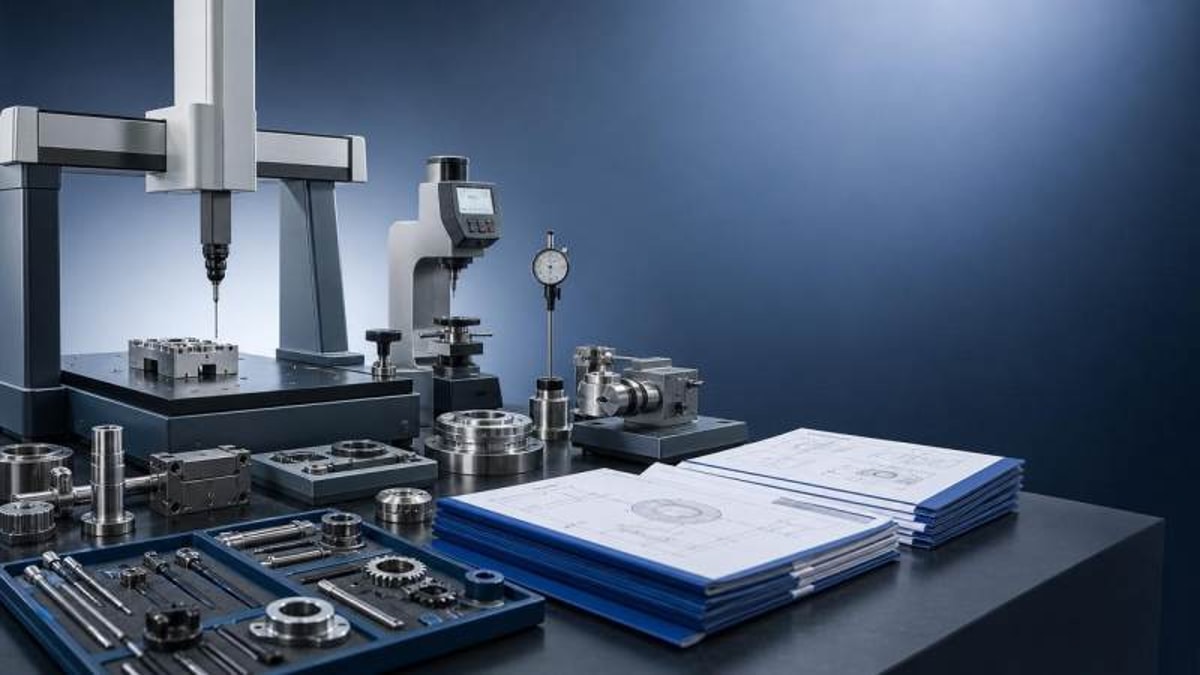
Choosing an Industrial & Manufacturing equipment supplier in Germany is no longer just about price or delivery speed. For procurement teams, the real challenge is validating engineering quality, compliance readiness, production consistency, and long-term support. This guide outlines how to assess suppliers with a practical, evidence-based approach so you can reduce sourcing risk and make more confident purchasing decisions.
For most buyers, the core search intent behind this topic is simple: how do you tell whether a German supplier is genuinely reliable before you commit budget, time, and operational risk? Procurement teams are not looking for generic country profiles. They want a vetting framework that helps them compare vendors, verify claims, and avoid expensive sourcing mistakes.
The most useful answer is therefore not a broad overview of German manufacturing. It is a decision-oriented process covering technical capability, regulatory compliance, production controls, documentation quality, delivery reliability, and after-sales support. That is what matters when supplier failure could disrupt operations, delay validation, or create downstream quality issues.
Start with the question that matters most: can this supplier consistently deliver what your operation actually needs?
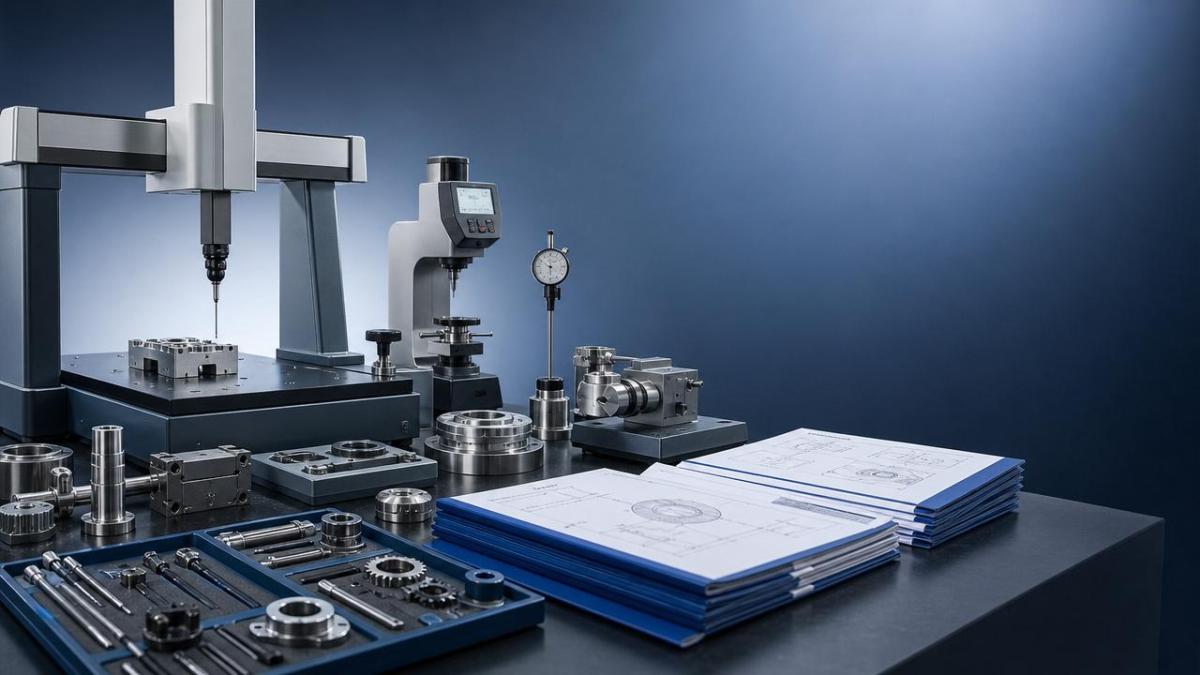
When evaluating an Industrial & Manufacturing equipment supplier in Germany, procurement should begin with operational fit rather than reputation alone. Germany has a strong global image in engineering, but that reputation should never replace evidence. A respected supplier can still be the wrong fit if its production model, documentation practices, or service structure do not align with your requirements.
Start by defining what “qualified” means for your purchase. Is this a standard machine, a precision subsystem, a regulated production component, or custom equipment that must integrate into an existing line? Your criteria should reflect the application. For healthcare, laboratory, and MedTech-adjacent procurement, this usually means evaluating not only performance, but also traceability, cleanliness standards, validation support, and change-control discipline.
At this stage, your internal checklist should cover six basics: technical specifications, quality system maturity, compliance readiness, manufacturing capacity, service capability, and total cost of ownership. If a supplier cannot provide clear, timely, and documented answers in these areas during prequalification, that is already useful data.
Check whether the supplier’s technical claims are supported by evidence, not just brochures
One of the biggest procurement mistakes is treating product literature as proof of capability. Marketing materials may describe precision, durability, efficiency, or compatibility, but vetting requires harder evidence. Ask for technical datasheets with measurable tolerances, test methods, environmental operating limits, maintenance intervals, and documented performance under real-world conditions.
For industrial and manufacturing equipment, request examples of factory acceptance testing, calibration records, inspection plans, sample quality reports, and performance validation data. If the equipment is used in controlled or regulated environments, ask whether the supplier can support IQ/OQ documentation, material certificates, software version control, and batch traceability where relevant.
A credible supplier should also be able to explain the engineering rationale behind its design choices. Why was a certain material selected? What are the expected wear points? What maintenance assumptions were built into lifecycle estimates? Which components are sourced externally, and how are those suppliers controlled? Good vendors answer these questions specifically. Weak ones retreat into vague assurances.
It is also worth asking for case-based proof. Request references from customers with similar use cases, production volumes, or compliance requirements. If possible, look for evidence that the supplier has supported installations where uptime, precision, and documentation quality were mission-critical, not just convenient.
Review quality systems in detail, because process discipline matters as much as product quality
Many procurement teams focus heavily on the final equipment specification while spending too little time on the processes that produce it. In practice, supplier risk often comes from process inconsistency rather than one obvious design defect. A supplier may build a strong prototype and still struggle with repeatability, revision control, or documentation once production scales.
That is why quality management deserves close review. ISO 9001 certification is a useful baseline, but it should not be the end of your assessment. Ask how nonconformities are recorded, how corrective actions are tracked, how engineering changes are approved, and how incoming materials are inspected. You want to know whether the supplier operates with controlled processes or with individual heroics.
Pay particular attention to document control. Procurement teams often underestimate how much operational friction comes from outdated drawings, unclear revision histories, or inconsistent bills of materials. Strong suppliers maintain formal version control, documented approvals, and clean communication across engineering, production, and service teams.
If the equipment may support healthcare, diagnostics, laboratory infrastructure, or other compliance-sensitive settings, the standard should be even higher. You should understand whether the supplier can maintain traceable records, support audits, and manage deviations without creating regulatory or validation gaps for your organization.
For regulated or compliance-sensitive applications, verify MDR, IVDR, CE, and supporting documentation readiness
Not every industrial purchase requires the same regulatory depth. However, if the equipment is connected to medical technology, laboratory operations, diagnostic manufacturing, or quality-critical environments, compliance readiness becomes a central procurement issue. In those contexts, supplier selection is not only a sourcing decision. It is also a risk management decision.
Ask early whether the supplier understands the applicable regulatory framework for your use case. Depending on the equipment and intended market, this may include CE conformity, machinery directives, electrical safety standards, EMC requirements, RoHS, REACH, or documentation practices relevant to MDR and IVDR support chains. The point is not to expect every supplier to be a legal expert. The point is to see whether they understand how compliance affects design, records, labeling, validation, and post-sale support.
A capable supplier should be able to provide declarations of conformity where applicable, risk assessment summaries, material declarations, technical files or extracts, and structured responses to customer qualification requests. If the answers are slow, fragmented, or clearly improvised, that signals future delays when your team needs audit support or change notifications.
Also assess change-control maturity. For regulated procurement, undocumented design or component changes can create serious downstream issues. Ask how customers are informed of part substitutions, firmware updates, material changes, or process revisions. A strong supplier does not simply react to changes; it governs them.
Evaluate production capacity and supply continuity, not just current lead time
Lead time is important, but it is only a surface indicator. What procurement really needs to know is whether the supplier can sustain output reliably over time. A vendor may quote an attractive delivery window for an initial order while lacking the capacity planning, supplier resilience, or inventory controls needed for repeat business.
Ask about production throughput, bottlenecks, subcontracting dependencies, and surge capacity. How much of the manufacturing process is done in-house? Which critical components are single-sourced? What is the contingency plan if a key raw material becomes unavailable? How are long-lead parts forecasted? These questions reveal whether continuity is engineered into the supply chain or left to chance.
For capital equipment and custom systems, also assess project management capability. Delays often result from poor coordination between engineering, procurement, assembly, testing, and logistics. Review how milestones are managed, how design freezes are handled, and how the supplier communicates schedule risk. A reliable manufacturer should be able to show structured planning, not only optimistic promises.
German suppliers are often associated with strong manufacturing discipline, but procurement should still verify lead-time consistency through historical performance data where possible. Ask for OTIF metrics, backlog visibility, and examples of how delivery performance was maintained during periods of market disruption.
Do not overlook service, spare parts, and lifecycle support
For many procurement teams, the real cost of a supplier becomes visible only after installation. Equipment that performs well at handover can still become a burden if spare parts are slow, service engineers are unavailable, or troubleshooting depends on one overextended technical contact. That is why after-sales capability should be part of supplier vetting from the start.
Ask what support model the supplier offers in your region. Is there local service coverage, remote diagnostics, preventive maintenance planning, and a documented escalation path? How quickly are critical spare parts shipped? What components are recommended as safety stock? Is training available for operators and maintenance personnel? These are not secondary questions. They directly affect uptime and total lifecycle value.
It is also useful to map expected support over the full equipment life. How long will the supplier maintain spare parts availability? What is the policy for obsolete components? How are software patches managed? Can upgrades be validated without major disruption? Strong lifecycle support is often what separates a dependable long-term partner from a vendor that is merely good at winning tenders.
Use site audits and structured supplier interviews to confirm what documents cannot show
Documentation is essential, but some of the most important supplier signals emerge only through direct observation. If the purchase value or risk profile justifies it, conduct a site audit or virtual audit with a structured checklist. The goal is not to inspect everything. It is to test whether the supplier’s actual operations match its claims.
During an audit, look for production flow, cleanliness, material handling discipline, calibration control, traceability practices, and how nonconforming items are segregated. Observe whether operators use current work instructions and whether engineering revisions are visible on the shop floor. Small inconsistencies often reveal larger control problems.
Use interviews to probe how teams think. Ask production leaders how they handle urgent design changes. Ask quality managers how recurring defects are escalated. Ask service teams what failures appear most often in the field. The quality of these answers often tells you more than a polished presentation ever will.
If an in-person audit is not feasible, request a live virtual walkthrough, sample records, and a meeting that includes engineering, quality, and operations together. Cross-functional consistency is a good sign. Contradictions between teams are not.
Compare suppliers using a weighted scorecard, not informal impressions
When several vendors appear technically acceptable, informal decision-making can lead procurement toward the wrong choice. A structured scorecard helps your team compare suppliers objectively and defend the final decision internally. It also reduces the risk that price dominates the evaluation when the true cost drivers are quality, delay, and support.
Your scorecard can include weighted categories such as technical fit, compliance readiness, documentation quality, production capacity, delivery performance, service capability, communication responsiveness, and total cost of ownership. For healthcare-related or validation-sensitive applications, you may assign greater weight to traceability, change control, and audit readiness.
It is important to define scoring rules in advance. For example, “good documentation” should mean more than a subjective impression. It might mean complete datasheets, current revision control, sample test reports, and timely responses to technical questionnaires. Clear criteria make supplier comparisons more credible and more useful.
Procurement should also distinguish between acceptable risk and preferred performance. A supplier may pass the minimum threshold but still require mitigation measures such as incoming inspection, staged ordering, or extra contractual controls. Vetting is not always about yes or no. Sometimes it is about understanding what protections are needed before approval.
Watch for red flags that usually predict sourcing problems later
Some warning signs appear early and should not be ignored. One of the most common is inconsistency between sales claims and technical responses. If the commercial team promises customization, documentation, or lead times that engineering later qualifies or retracts, treat that as a governance issue, not a communication accident.
Other red flags include incomplete traceability, reluctance to share quality records, unclear subcontractor use, missing revision histories, and vague answers about failure rates or service response. Procurement should also be cautious when suppliers resist discussing known limitations. Transparency about constraints usually indicates maturity. Evasion often indicates future surprises.
Another concern is weak post-award structure. If the supplier has no clear project owner, no implementation plan, or no documented escalation route before the order is even placed, the risk will not improve after the contract is signed. In many cases, pre-sales behavior is the best predictor of post-sales performance.
Final thought: the best supplier is the one you can verify, not the one that sounds most impressive
Vetting an Industrial & Manufacturing equipment supplier in Germany should be treated as a disciplined procurement exercise, not a branding exercise. Germany offers many capable manufacturers, but the right decision depends on evidence that the supplier can meet your technical, operational, and compliance requirements consistently over time.
For procurement teams, the most effective approach is to combine document review, technical questioning, quality-system assessment, capacity verification, and service evaluation into one structured process. This helps you move beyond assumptions and compare suppliers on what really matters: repeatable performance, controlled risk, and long-term support.
In short, do not ask only whether a supplier can deliver the equipment. Ask whether they can deliver confidence. That is the standard that protects budget, timelines, and operational continuity.
Recommended News
- 2026.05.02AI for semiconductor precision engineering: yield gains or hype?Dr. Hideo Tanaka (Imaging Systems Analyst)
- 2026.05.02When automation solutions fix bottlenecks and when they do notDr. Alistair Thorne (Senior Biomedical Engineer)
- 2026.05.02Energy-efficient manufacturing tech in 2026: what saves most?Sarah Jenkins (Laboratory Infrastructure Consultant)
The VitalSync Intelligence Brief
Receive daily deep-dives into MedTech innovations and regulatory shifts.