
AI in precision engineering: where accuracy gains break down
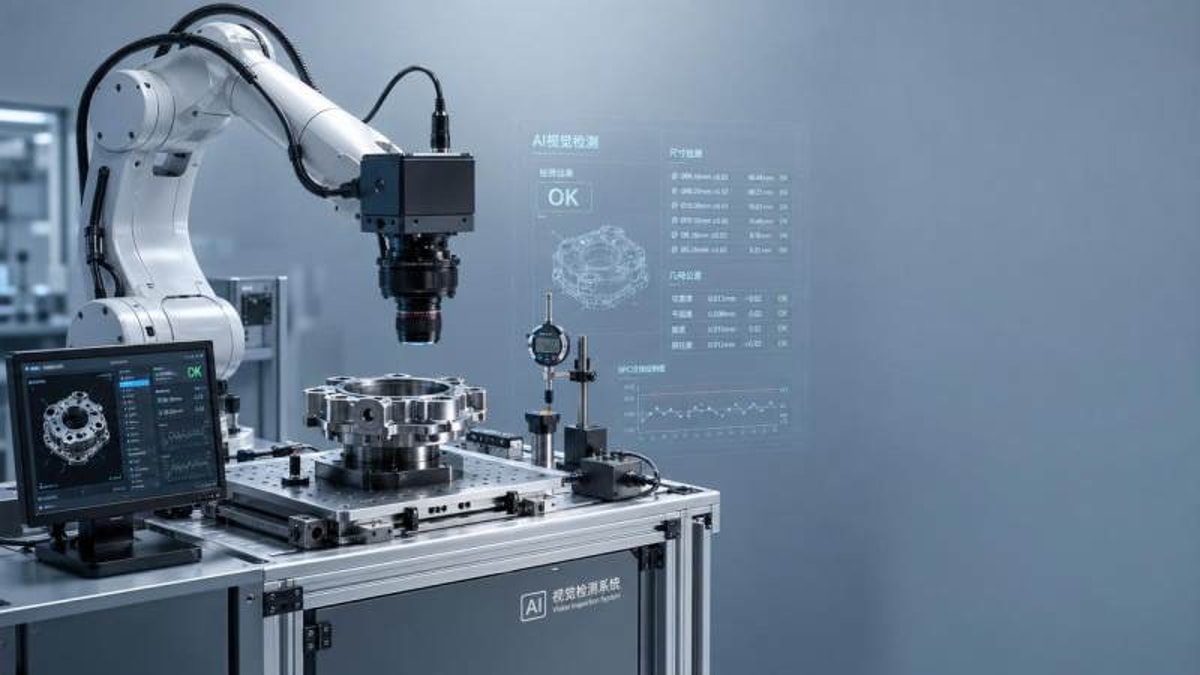
AI in precision engineering promises measurable gains, but in high accuracy systems, performance often breaks down at the edge of tolerance, validation, and real-world repeatability. For technical evaluators in MedTech and healthcare procurement, the real question is not whether AI improves output, but where its assumptions fail under regulatory scrutiny, material variability, and clinical-grade reliability requirements.
Why scenario differences matter more than headline accuracy
In many industrial discussions, AI in precision engineering is presented as a universal upgrade: faster inspection, tighter control loops, better predictive maintenance, and lower scrap rates. That framing is too broad for technical assessment. In high accuracy systems, the same model that performs well in a controlled pilot may become unreliable when transferred to regulated manufacturing, mixed suppliers, or long service intervals. What matters is not average improvement, but the exact operating context in which accuracy gains begin to erode.
For evaluators in healthcare, laboratory infrastructure, and advanced component sourcing, this distinction is critical. A vision model that classifies cosmetic defects on consumer hardware is not equivalent to an AI-assisted metrology pipeline used to verify implant surfaces, infusion pump assemblies, or sensor packaging. The closer a process moves toward clinical relevance, the less tolerance there is for drift, hidden bias, poorly documented retraining, or untraceable decision logic.
This is where organizations such as VitalSync Metrics (VSM) add value: by converting vendor claims into benchmarkable engineering evidence. In practice, AI in precision engineering high accuracy systems should be judged by scenario fitness, not presentation quality. The useful question is: under which conditions does AI remain reliable enough to support procurement, validation, and lifecycle quality management?
Where AI in precision engineering is commonly deployed
Technical evaluators usually encounter AI in precision engineering across several recurring use cases. Each looks similar at the surface, but the risk profile changes sharply depending on the tolerance stack, data quality, and regulatory burden attached to the process.
1. Inline quality inspection in component manufacturing
AI is often used to detect surface defects, dimensional anomalies, coating inconsistencies, or assembly deviations in real time. This scenario works best when features are visually stable, defect classes are well labeled, and the inspection result can be verified against a trusted reference system. It becomes risky when defects are rare, ambiguous, or linked to downstream performance rather than visible appearance.
2. Adaptive process control for machining or finishing
In high accuracy systems, AI may tune feed rate, pressure, temperature, vibration compensation, or tool replacement timing. The appeal is obvious: less waste and better consistency. The limitation is that process signals are often indirect proxies. A model may stabilize production data while missing subtle geometric or material effects that only appear later in metrology or functional testing.
3. Predictive maintenance in critical equipment chains
For laboratory automation, sterile packaging lines, and sensor calibration rigs, AI can estimate wear before failure. This is valuable where downtime is costly. However, predictive models can create false confidence if maintenance thresholds are shifted without demonstrating that precision, not just uptime, remains within specification.
4. Metrology data interpretation and anomaly ranking
Some teams use AI to prioritize measurements, cluster outliers, or interpret complex scan data. This can accelerate review, but only if traceability is retained. In regulated environments, it is rarely enough for a system to say which part is abnormal; assessors need to know which feature moved, by how much, under which measurement uncertainty, and whether the finding is reproducible across instruments.
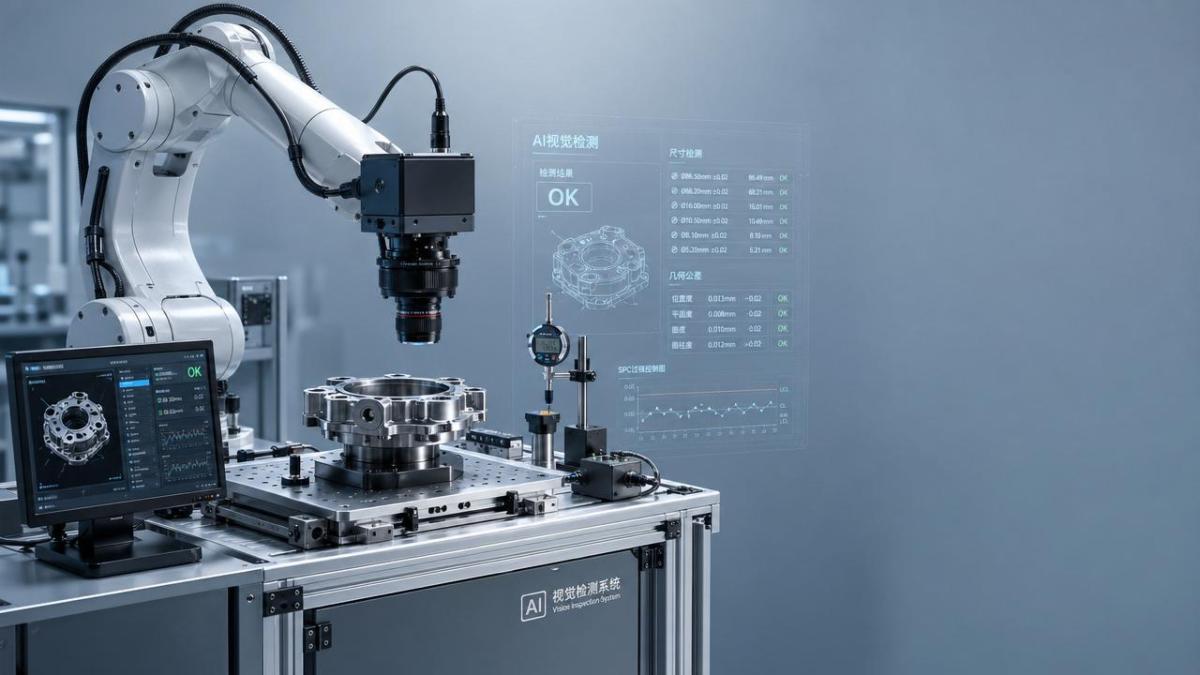
A scenario comparison: where gains hold and where they break down
The table below helps technical evaluators judge whether AI in precision engineering high accuracy systems is being applied in a low-risk optimization context or a high-risk validation context.
Different stakeholders judge the same system differently
An important reason AI in precision engineering generates confusion is that “success” changes by role. A plant engineer may value throughput stabilization. A procurement director may value supplier consistency across lots. A regulatory or quality reviewer may care most about documented change control and evidence that an algorithm cannot silently shift critical output behavior.
For MedTech startups, the temptation is to use AI as a force multiplier in early manufacturing, where teams lack mature process capability. That may be acceptable in noncritical optimization, but it becomes dangerous when the system starts compensating for root-cause instability instead of removing it. In other words, AI can make a weak process appear statistically calm while leaving structural weaknesses unresolved.
For hospital procurement and laboratory architects, the concern is different. They rarely need to inspect the model itself, but they do need assurance that the device or subsystem delivered by a supplier remains consistent under real operating loads, environmental shifts, service intervals, and maintenance events. The vendor should therefore provide not only performance claims, but a validation path linking AI behavior to final technical integrity.
Which scenarios are a better fit for AI in high accuracy systems
AI is generally a stronger fit when it supports decisions rather than replaces the reference truth source. In practical terms, technical evaluators should be more comfortable when AI ranks inspection priority, flags suspect units, estimates maintenance timing, or recommends process adjustments that are still bounded by deterministic acceptance criteria.
The fit is weaker when AI becomes the final authority on pass/fail outcomes in applications with narrow tolerances, patient-facing consequences, or strict MDR/IVDR implications. In those cases, every hidden assumption matters: training data coverage, lot-to-lot transferability, recalibration frequency, environmental robustness, and documentation discipline. AI in precision engineering high accuracy systems performs best as a supervised layer inside a validated control architecture, not as an unexamined replacement for it.
Good-fit scenarios
- Screening large volumes before confirmatory metrology
- Predicting maintenance windows while final calibration checks remain mandatory
- Improving process stability where deterministic engineering limits are already understood
- Detecting drift patterns across fleets, sites, or supplier lots
Use-with-caution scenarios
- Final release decisions for clinically sensitive assemblies
- Processes where ground truth labels are sparse or disputed
- Systems exposed to major material, operator, or environmental variation
- Applications where retraining may alter validated behavior without transparent controls
Common misjudgments in technical evaluation
A frequent mistake is to treat model accuracy as equivalent to system accuracy. In high accuracy systems, these are not the same. A model can achieve impressive test-set performance and still fail once optics age, operators change cleaning routines, incoming materials shift, or tolerances tighten on a redesigned component. Technical evaluators should ask whether AI performance has been tested against the operational envelope, not only the development dataset.
Another misjudgment is assuming that more data automatically solves uncertainty. If the wrong variables are collected, or if the dataset overrepresents normal production and underrepresents edge failures, the model may become more confident without becoming more trustworthy. For regulated sectors, confidence without interpretability is often a warning sign rather than a strength.
A third issue is ignoring the cost of maintaining validity. AI in precision engineering high accuracy systems is not a one-time installation. It requires version control, drift monitoring, reference checks, retraining governance, and clear escalation rules when output confidence drops. If a vendor cannot explain this lifecycle clearly, the promised accuracy gain may be fragile by design.
A practical evaluation framework for procurement and validation teams
Before accepting any AI-enabled precision solution, teams should structure the review around scenario evidence rather than generic capability claims. A useful framework includes five checks.
- Define the engineering consequence of error. Is the AI output advisory, operational, or release-critical?
- Map the true variability sources. Include materials, environment, operator behavior, service intervals, and supplier changes.
- Demand traceable validation evidence. Ask for repeatability, reproducibility, false negative exposure, and boundary-condition testing.
- Review governance, not just performance. Versioning, retraining approval, and fallback procedures matter as much as the model score.
- Connect AI output to final product integrity. Show how the algorithm’s decisions correlate with metrology, reliability, and field performance.
This approach is especially relevant for organizations working with VSM-style benchmarking, where supplier statements must be translated into engineering facts. In that environment, AI in precision engineering should be measured by evidence continuity: from raw process signal to validated outcome to long-term repeatability.
FAQ for technical evaluators
Does AI always improve precision?
No. It often improves efficiency, screening speed, or process consistency, but not always final precision. In high accuracy systems, precision may still be limited by sensor quality, fixture stability, thermal effects, material behavior, or calibration uncertainty.
What is the biggest risk in AI in precision engineering high accuracy systems?
The biggest risk is silent mismatch between validated conditions and real-world operating conditions. When the context shifts and the model still appears confident, error can propagate without immediate visibility.
How should buyers compare suppliers using AI-enabled precision claims?
Compare them on validation scope, boundary testing, traceability, governance, and demonstrated correlation with final technical outcomes. Marketing language about intelligence or automation is far less useful than documented repeatability under realistic loads and tolerances.
Closing guidance for scenario-based decision making
The real value of AI in precision engineering is not universal accuracy uplift, but selective advantage in the right scenario. For technical evaluators, the decision should start with context: what is being measured, what happens when the system is wrong, and how much operational variation the model must survive. In low-risk support roles, AI can deliver meaningful gains. In high accuracy systems tied to compliance, patient safety, or long-lifecycle reliability, it must earn trust through transparent validation and repeatable evidence.
If your team is assessing AI-enabled manufacturing, metrology, or inspection solutions, the next step is to translate claims into a scenario-specific checklist: tolerance boundaries, failure modes, retraining controls, and proof of correlation with clinical-grade or engineering-grade performance. That is the point where procurement becomes technical due diligence—and where sound decisions begin.
Recommended News
- 2026.05.01New Maritime Code Tightens Liability for Ultra-Low-Temp Bio-Sample TransportDr. Hideo Tanaka (Imaging Systems Analyst)
- 2026.05.01CAICT Releases Zero Trust White Paper for Remote Monitoring DevicesLydia Vancini (Regulatory Compliance Lead)
- 2026.05.01Gulf Green Packaging Agreement Takes Effect May 1, 2026Dr. Julian Rossi (RehabTech Specialist)
The VitalSync Intelligence Brief
Receive daily deep-dives into MedTech innovations and regulatory shifts.