
When automation solutions cut labor but raise maintenance risk
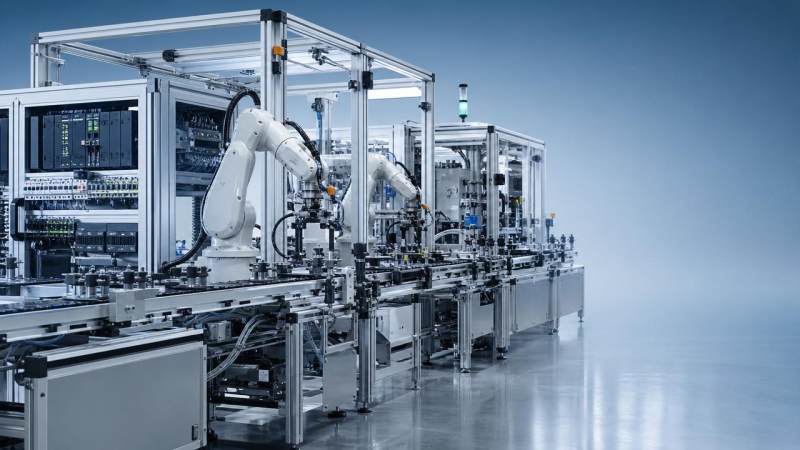
Industrial & Manufacturing automation solutions can reduce labor dependency and improve throughput, but for after-sales maintenance teams, every gain may introduce new failure points, higher service complexity, and stricter uptime demands. In healthcare-linked operations where reliability, compliance, and traceable performance matter, understanding this trade-off is essential to preventing costly downtime and protecting long-term system value.
Understanding the trade-off behind automation performance
Industrial & Manufacturing automation solutions are often discussed in terms of speed, labor savings, and standardization. Those benefits are real. Automated assembly cells, sensor-rich inspection systems, robotic handling units, and digitally connected production lines can stabilize output, reduce operator variability, and support traceable workflows. In sectors linked to healthcare manufacturing, diagnostics, laboratory infrastructure, and medical device supply chains, these outcomes are especially attractive because quality consistency and documented performance are not optional.
However, after-sales maintenance personnel see a second reality. Every added actuator, PLC, vision module, servo drive, software layer, and network interface creates another potential failure point. A line that once depended on mechanical skill may now depend on firmware compatibility, data integrity, calibration schedules, spare board availability, and cybersecurity hygiene. The result is not that automation is risky by default, but that its risk profile changes. Labor exposure goes down while maintenance intensity can rise.
For organizations operating in regulated or healthcare-adjacent environments, this shift matters even more. A brief stoppage may delay delivery, but an undetected drift in sensor accuracy or environmental control can also affect compliance, validation status, and product confidence. That is why Industrial & Manufacturing automation solutions should be evaluated not only by installation cost and throughput improvement, but also by maintainability, evidence quality, service access, and long-term engineering resilience.
Why this issue is receiving more attention across industry
Several industry shifts explain the growing focus on maintenance risk. First, many manufacturers have automated faster than they have upgraded their service capability. Capital projects often prioritize operational efficiency, while maintenance documentation, diagnostic standardization, and spare-part strategy are handled later. Second, digital integration has expanded the service boundary. A machine is no longer only a machine; it is also a data node, a software platform, and a compliance asset.
Third, healthcare procurement and quality teams increasingly demand proof rather than promises. This is where an engineering-led perspective becomes valuable. VitalSync Metrics (VSM), as an independent technical benchmarking and analysis platform for MedTech and Life Sciences supply chains, reflects a broader market need: buyers, operators, and maintenance teams want measurable reliability, not marketing language. They need to know how a system performs over time, under load, after calibration drift, and across service cycles.
Finally, skilled maintenance labor is also under pressure. While Industrial & Manufacturing automation solutions may reduce frontline manual labor, they often increase dependence on scarce multidisciplinary technicians who understand mechanics, controls, software, networks, and regulated documentation. In practice, this means downtime risk can become more concentrated even as labor intensity appears to decline.
What changes for after-sales maintenance teams
For after-sales maintenance personnel, automation changes both the nature and the timing of service work. Traditional reactive repair remains important, but preventive, predictive, and evidence-based interventions become much more significant. Service teams are expected to restore function quickly while also preserving validated settings, traceability records, and regulatory alignment.
The practical shift usually includes four dimensions. First, diagnosis becomes more data-driven. Instead of only inspecting wear, teams must interpret alarms, trend logs, communication faults, and software events. Second, service windows become tighter because automated lines are often built around high-utilization planning. Third, root causes become more layered, with one issue potentially involving hardware, environment, operator behavior, and integration logic at the same time. Fourth, documentation becomes part of the repair outcome, especially where audit trails and validated operating ranges are required.
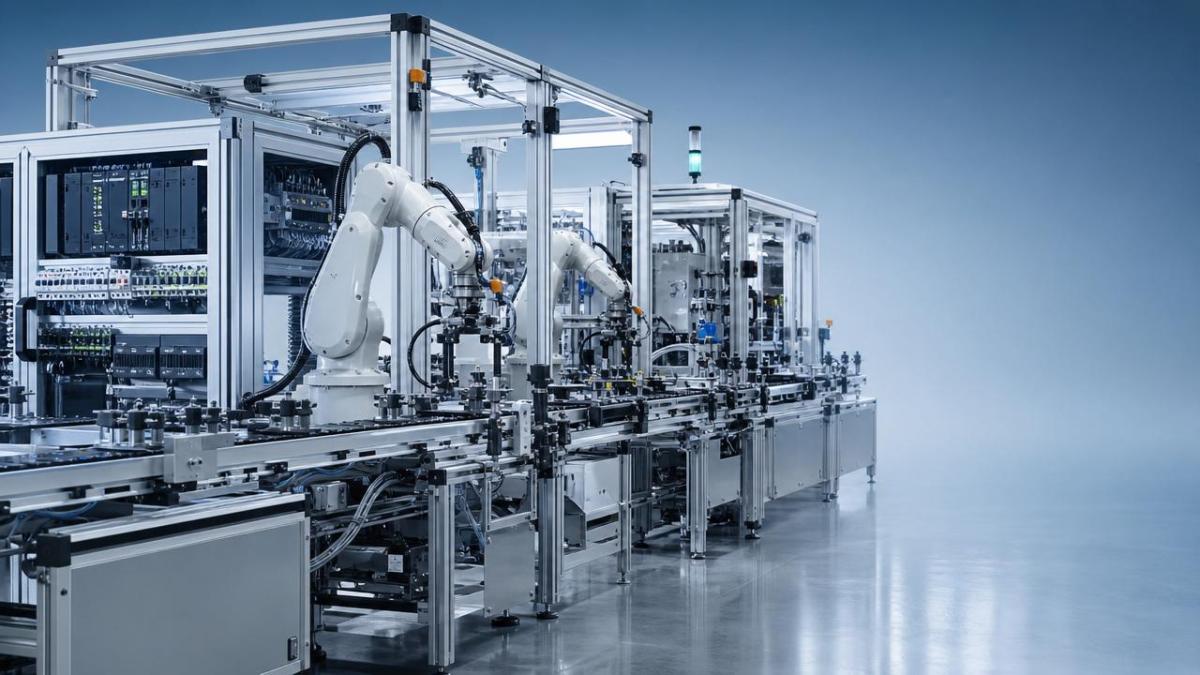
A practical overview of benefits and maintenance exposure
The value of Industrial & Manufacturing automation solutions is still substantial, but the service burden must be understood as part of the same business case.
Where Industrial & Manufacturing automation solutions create the most service complexity
Not all automation creates the same maintenance burden. Some systems are mechanically straightforward but software-sensitive. Others are robust in logic but vulnerable to contamination, vibration, temperature drift, or operator misuse. For after-sales teams, it helps to classify exposure by system type rather than treating all automation as one category.
Why healthcare-linked operations need a stricter view of reliability
In general industry, maintenance is often judged by uptime and cost. In healthcare-linked operations, those two measures remain important, but they are incomplete. A maintenance event may also affect validated process windows, documented performance baselines, and confidence in product quality. When automation supports production of diagnostic components, medical packaging, wearable electronics, sterile consumables, or laboratory systems, repair quality must be judged against technical integrity as well as speed.
This is why independent benchmarking has strategic value. VSM’s focus on turning engineering parameters into standardized whitepapers speaks directly to a maintenance reality: service decisions are stronger when reliability limits, fatigue behavior, sensor stability, and performance tolerance are measured objectively. For after-sales teams, this kind of evidence helps prioritize what must be monitored closely, what can be serviced on interval, and what requires redesign or supplier escalation.
Industrial & Manufacturing automation solutions in these settings should therefore be viewed as lifecycle systems. Installation success is only the beginning. Sustained value depends on calibration discipline, controlled change management, spare-part quality, and the ability to prove that the system still performs within its intended engineering envelope after intervention.
Practical evaluation points before maintenance risk grows
A useful way to control risk is to evaluate automation with service reality in mind from the start. After-sales maintenance teams should be involved earlier in line design reviews, acceptance testing, and change control. Their perspective often reveals hidden exposure that does not appear in a throughput model.
Key points to evaluate include diagnostic transparency, spare-part commonality, access to service ports, software backup procedures, sensor calibration intervals, alarm logic quality, and vendor responsiveness. A machine that is highly productive but impossible to troubleshoot quickly can become a long-term liability. Likewise, a connected platform with excellent dashboards but weak version control may create chronic instability.
Maintenance teams should also separate visible failures from silent degradation. Visible failures stop the line. Silent degradation may allow the line to run while quality, accuracy, or compliance slowly drifts. In healthcare-adjacent manufacturing, the second type is often more dangerous because it can remain hidden until audit findings, field complaints, or batch investigations emerge.
Recommended practices for after-sales maintenance personnel
To support Industrial & Manufacturing automation solutions without being overwhelmed by their complexity, after-sales teams can adopt a disciplined service framework.
- Build asset hierarchies that separate critical control elements, wear items, calibration-sensitive components, and software dependencies.
- Standardize failure coding so recurring issues can be trended across sites, customers, and equipment families.
- Use condition indicators where possible, including vibration, thermal load, cycle count, signal quality, and communication stability.
- Maintain validated backup images, parameter archives, and post-service verification routines before restarting production.
- Align service documentation with quality and regulatory expectations, especially when changes affect traceable performance.
- Escalate chronic design weaknesses with evidence, not anecdote, so supplier and engineering teams can act on measurable facts.
These practices improve more than repair speed. They create organizational memory, which is essential when automated systems outlive original project teams and become core infrastructure.
Turning automation from a labor saver into a durable asset
The strongest Industrial & Manufacturing automation solutions are not the ones with the most features. They are the ones that combine productivity with maintainability, traceability, and stable lifecycle performance. For after-sales maintenance personnel, this means success should be defined by a balanced score: uptime, repeatable repair quality, serviceability, compliance support, and evidence-backed reliability.
Organizations that depend on automation in healthcare-linked environments should resist purely promotional evaluation. They should ask harder questions about technical integrity, service access, component fatigue limits, calibration behavior, and long-term supportability. That mindset aligns with the role VSM plays in the market: helping decision-makers look beyond claims and focus on engineering truth.
If your service team is dealing with rising complexity, recurring faults, or unclear performance drift, the next step is not simply more automation. It is better visibility into how your automation actually behaves over time. With structured maintenance data, independent benchmarking, and lifecycle-focused service planning, labor-saving systems can remain high-value assets instead of becoming hidden reliability risks.
Recommended News
- 2026.05.09GMEA Unveils First Green Certifications for Methanol Fuel CellsDr. Hideo Tanaka (Imaging Systems Analyst)
- 2026.05.09IEC Publishes IEC 60601-2-57:2026 for Ultrasound MetricsLydia Vancini (Regulatory Compliance Lead)
- 2026.05.09CMEF Shenzhen 2026 Closes with $1.27B Robotics DealsDr. Alistair Thorne (Senior Biomedical Engineer)
The VitalSync Intelligence Brief
Receive daily deep-dives into MedTech innovations and regulatory shifts.