 Get Insights

Milling Process Explained: How Material, Tolerance, and Tooling Affect Results
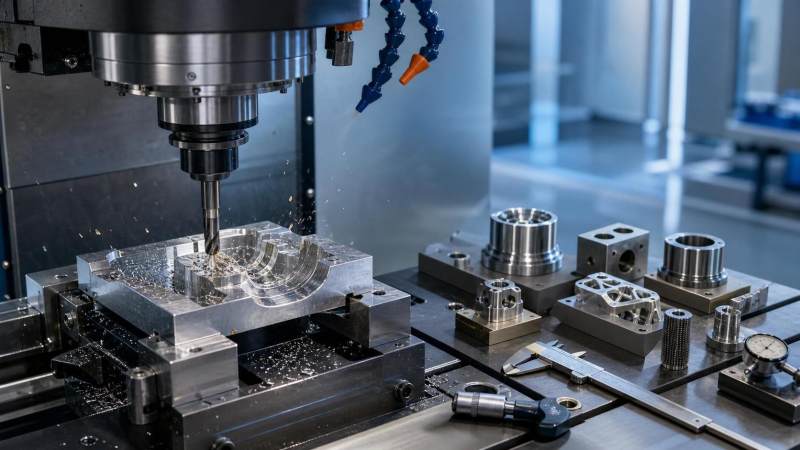
Milling Process Explained: How Material, Tolerance, and Tooling Affect Results
In any precision-driven milling process, the final result depends on more than machine capability alone.
Material behavior, achievable tolerance, and tooling strategy shape surface finish, stability, cost, and compliance risk.
That matters even more in healthcare manufacturing, where a small variation can affect validation, traceability, and long-term product reliability.
A milling process may look efficient on paper, yet still fail when real materials, tight tolerances, and aggressive lead times meet the shop floor.
Understanding these interactions helps teams compare suppliers more clearly and avoid expensive assumptions early in development.
Why the Milling Process Is Never Just About the Machine
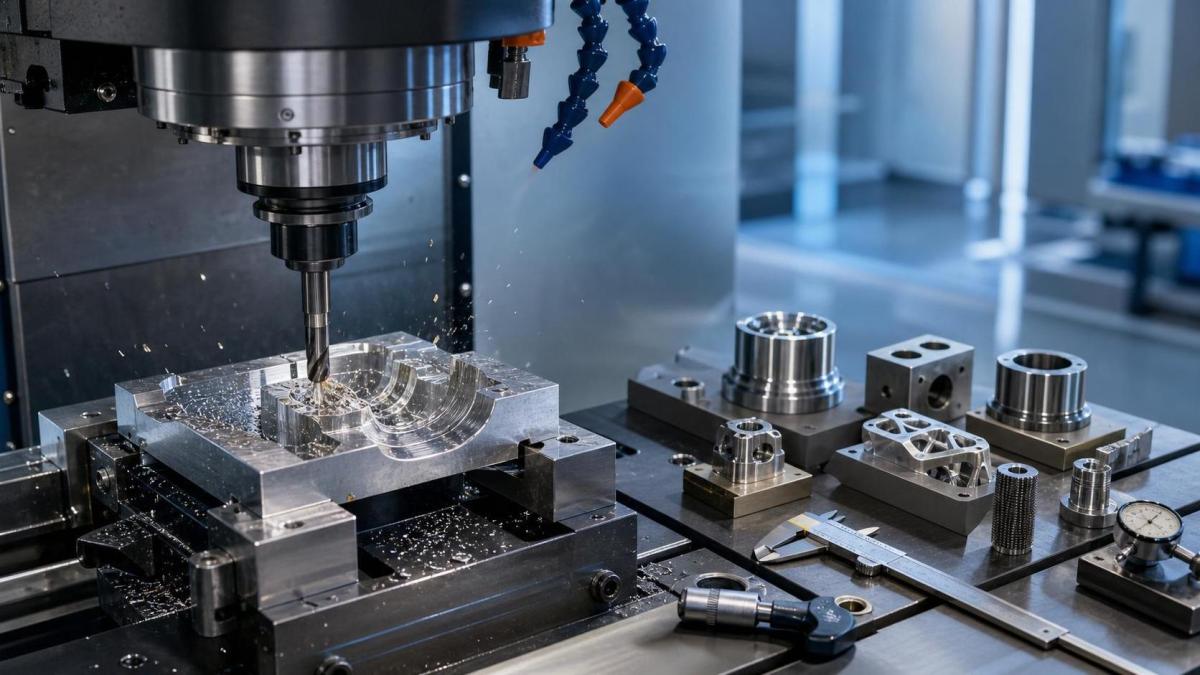
A modern CNC platform creates potential, not certainty.
The actual milling process depends on how material responds to cutting forces, heat, vibration, and tool wear over time.
This is where many sourcing decisions become risky.
Two suppliers may quote the same geometry, yet deliver very different process capability and inspection outcomes.
In regulated sectors, the gap becomes more serious because repeatability matters as much as the first-pass result.
For that reason, a robust milling process should be reviewed as a system.
- Material properties define cutting resistance and thermal behavior.
- Tolerance requirements influence machine strategy and inspection load.
- Tooling decisions affect finish, cycle time, and dimensional drift.
- Process control determines whether results stay stable across batches.
That systems view is especially useful when evaluating medical housings, diagnostic fixtures, implant tools, or fluid-handling assemblies.
How Material Choice Changes the Milling Process
Material selection is often the first hidden variable in a milling process review.
A drawing may stay the same, but machinability can shift dramatically between aluminum, stainless steel, PEEK, titanium, or cobalt-chrome.
Each material reacts differently to chip formation, edge pressure, and heat buildup.
Common Material Effects
- Aluminum supports fast cutting, but thin walls can deform under clamping.
- Stainless steel offers strength, yet tends to work harden during a difficult milling process.
- Titanium resists heat transfer, so tool temperature rises quickly.
- Engineering plastics can move after machining because of stress release.
In practical terms, this means machining parameters cannot be copied from one material family to another.
A supplier claiming broad capability should show evidence of material-specific process windows, not generic machine lists.
For healthcare components, material behavior also connects to downstream cleaning, passivation, coating, and biocompatibility requirements.
That creates a wider decision frame than simple machinability.
Questions Worth Asking Early
- Does the chosen material match the required surface condition?
- Will the part distort after roughing or sterilization-related finishing steps?
- Is the milling process proven for this exact grade, not a close substitute?
- Can the supplier document lot traceability and material certification cleanly?
These questions usually reveal more than a capability slide deck.
Tolerance: The Real Cost Driver in Any Milling Process
Tolerance is where technical ambition meets production reality.
Tighter numbers look reassuring, but they often raise cycle time, scrap risk, inspection burden, and delivery uncertainty.
A capable milling process is not the one with the smallest number.
It is the one that consistently meets functional tolerance without unnecessary complexity.
Why Tight Tolerance Changes Everything
As tolerance narrows, the process window shrinks.
Tool deflection, spindle growth, fixture repeatability, and ambient temperature become much more visible.
This is why tight-tolerance milling process control depends on measurement strategy as much as cutting strategy.
From a business standpoint, over-tolerancing is one of the most common cost leaks.
It often enters the project through risk avoidance, but later slows qualification and supplier flexibility.
A better approach is to separate functional tolerances from legacy drawing habits.
What to Review Before Freezing the Drawing
- Which dimensions truly affect fit, flow, sealing, or calibration?
- Which tolerances require statistical capability evidence?
- Which features can be relaxed without changing clinical or mechanical performance?
- How will the milling process be verified at pilot and volume scale?
Tooling Strategy: The Silent Factor Behind Surface and Stability
Tooling is often discussed late, yet it shapes the daily behavior of the milling process.
Cutter geometry, coating, stick-out length, and replacement intervals all affect output quality.
Even a strong machine can struggle with poor tool selection.
Where Tooling Decisions Show Up
- Surface finish degrades when the tool edge wears too early.
- Dimensional accuracy shifts when long-reach tools deflect under load.
- Cycle time grows when tooling cannot support efficient chip evacuation.
- Part variation increases when tool life is tracked informally.
This is especially relevant for small channels, thin features, and multi-axis contours.
In those cases, the milling process can fail gradually rather than suddenly.
That makes preventive tool management more valuable than reactive rework.
A Practical Tooling Review Checklist
- Confirm tool selection by material grade and feature type.
- Check whether tool life limits are data-based or operator-based.
- Review backup tooling plans for supply continuity.
- Verify whether critical tools are linked to capability tracking.
These details may sound operational, but they strongly influence delivery confidence.
How to Evaluate Milling Process Risk in Healthcare Supply Chains
In healthcare manufacturing, the milling process should be judged by evidence, not presentation quality.
That is where independent benchmarking becomes useful.
VitalSync Metrics focuses on turning production claims into measurable technical truth.
For teams comparing suppliers, that means looking beyond sample parts and asking for structured proof.
- Capability data across repeated runs
- Material certifications tied to finished part records
- Inspection plans aligned with critical features
- Documented controls for MDR and IVDR relevant workflows
- Long-term reliability evidence, not just prototype success
This shift is becoming more visible as value-based procurement gains ground globally.
Buyers increasingly want traceable engineering logic behind every milling process claim.
That also reduces the gap between commercial language and clinical-grade performance.
Making Better Decisions Before the First Cut
A reliable milling process starts long before machining begins.
It starts with sharper questions about material fit, true tolerance needs, tooling discipline, and verification methods.
When those factors align, suppliers can deliver consistent quality with fewer surprises.
When they do not, the milling process becomes a source of delay, hidden cost, and compliance exposure.
The most useful takeaway is simple.
Do not evaluate machining capability as a generic service.
Evaluate each milling process as a controlled engineering system with measurable limits and documented proof.
That mindset supports better sourcing, smoother validation, and more dependable product outcomes across the healthcare supply chain.
If a component is critical, the next step is not a faster quote.
It is a clearer technical review of the milling process behind the quote.
Recommended News
- 2026.09.20How Laboratories Can Integrate Digital Systems Without Disrupting Sample WorkflowsDr. Hideo Tanaka (Imaging Systems Analyst)
- 2026.09.19Fashion Branding: The Core Elements That Make a Label Recognizable and ConsistentDr. Alistair Thorne (Senior Biomedical Engineer)
- 2026.09.18How Hospitals Can Vet Medical Supplier Marketplaces for Quality and ComplianceDr. Julian Rossi (RehabTech Specialist)
The VitalSync Intelligence Brief
Receive daily deep-dives into MedTech innovations and regulatory shifts.