 Get Insights

Choosing Medical Device Certification Services: Scope, Accreditation and Costs
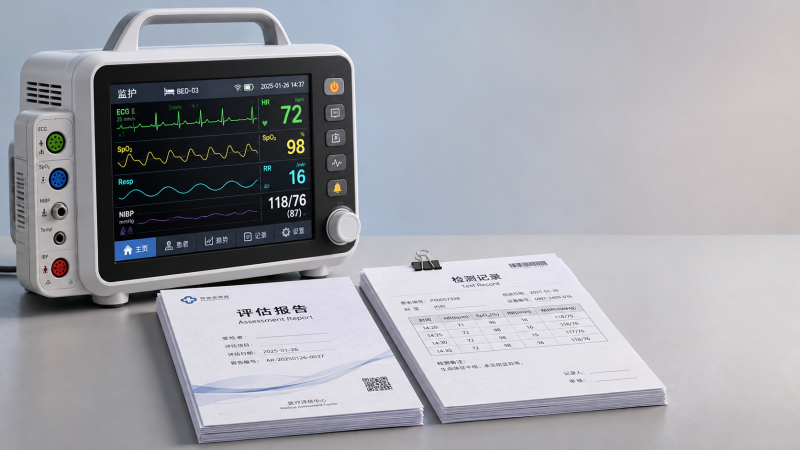
Choosing medical device certification services requires more than comparing quotes. Procurement teams need to understand the scope of assessment, verify accreditation and authorization, and anticipate costs throughout the product lifecycle. A provider’s capabilities must also align with the device’s classification and target markets, including applicable MDR or IVDR requirements. The cheapest initial assessment may become expensive if testing must be repeated, the wrong conformity assessment route was assumed, or ongoing surveillance was excluded from the proposal.
The decision also depends on what is being purchased. A manufacturer may be commissioning an assessment for its own device, while a hospital may be evaluating evidence supplied by a vendor. In either case, the procurement question is the same: does the evidence cover the actual device, intended use, configuration and market?
Define the assessment before requesting prices
“Certification” is often used as shorthand for several different activities. A laboratory may test electrical safety or biocompatibility. A certification body may audit a quality management system against ISO 13485. A notified body may conduct conformity assessment under the EU Medical Device Regulation (MDR) or In Vitro Diagnostic Medical Devices Regulation (IVDR), where its involvement is required. These outputs are not interchangeable.
For example, an ISO 13485 certificate concerns a quality management system within its stated scope; it does not, by itself, establish that every product made by the certificate holder meets MDR requirements. Likewise, a test report can support a conformity assessment without constituting market authorization or a CE certificate.
Before issuing a request for quotation, assemble a brief that includes the device description, intended purpose, classification rationale, target markets and manufacturing sites. Identify variants, accessories, software versions and critical materials. For an in vitro diagnostic device, include the specimen type, analyte or condition being assessed, and intended user where relevant. If any of those details remain undecided, say so: a provider can price only the assumptions it knows about.
Existing evidence belongs in the brief too. Provide an inventory of available test reports, clinical or performance evidence, risk management documentation and quality system certificates. Ask bidders to identify what they can use, what they expect to review and what may need to be repeated. The objective is not to secure an early promise of acceptance, but to expose assumptions before they become change orders.
Check authority and scope, not just the logo
Accreditation, regulatory designation and technical capability answer different questions. Accreditation generally concerns a body’s competence to perform activities within a defined scope. Regulatory designation or recognition determines whether an organization is authorized for a particular role under the relevant rules. A provider may be credible and accredited for one activity but not authorized to perform the assessment a particular device requires.
For EU assessments involving a notified body, verify its designation against the relevant regulation and device scope using the European Commission’s NANDO database. Ask the provider to explain how the device’s technology and intended purpose fit that scope. Being designated under MDR does not automatically mean a body is designated under IVDR, or that it covers every device category under either regulation.
For testing, request the laboratory’s current accreditation certificate and detailed scope. ISO/IEC 17025 accreditation can be relevant to testing competence, but the scope matters: check the applicable methods, standards, locations and activities rather than assuming all tests offered by the laboratory are accredited. If a test will be subcontracted, identify who will perform it and whether that activity is covered.
Then check the deliverable itself. A certificate or report should identify its holder, issuing body, scope, status and relevant dates. For purchased equipment, compare those details with the legal manufacturer, model and configuration being offered. A document for a related product or an earlier configuration is not automatically sufficient evidence for the item in the tender.
Make quotations comparable
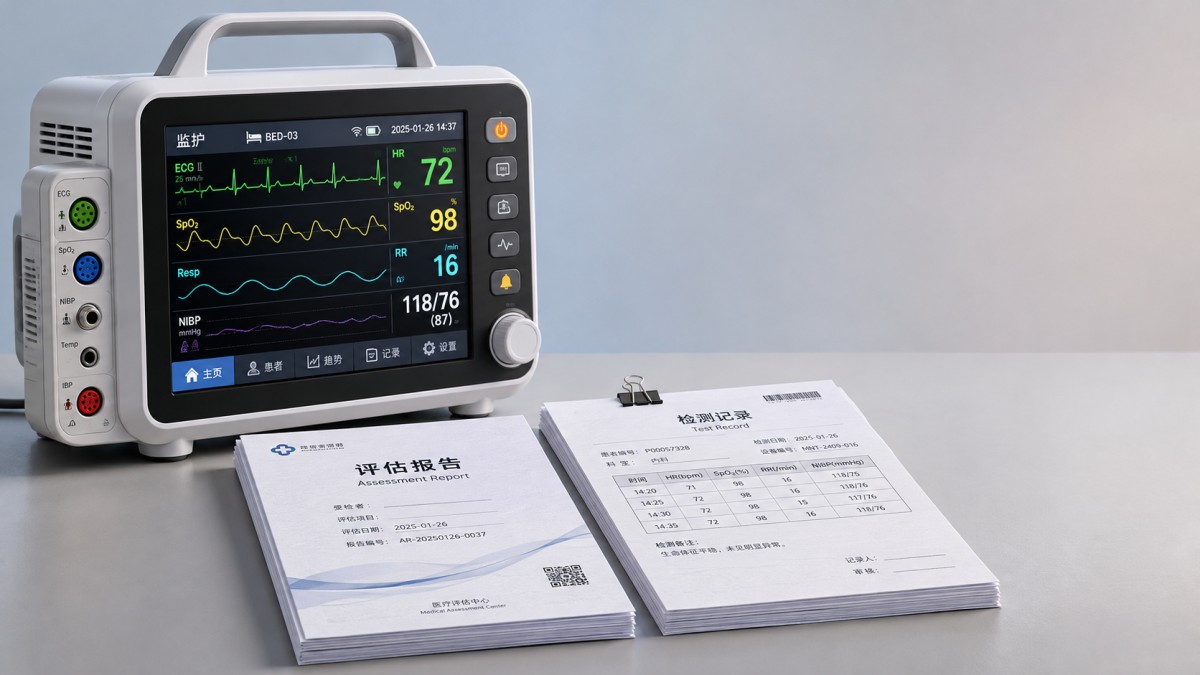
A single headline fee hides the difference between a narrow review and a complete assessment program. Ask each provider to separate activities, assumptions and exclusions. This makes it easier to distinguish an efficient proposal from one that simply leaves more work unpriced.
Also ask for rates or pricing principles for work that cannot yet be fixed. A device family with multiple models may require a sampling rationale; a software update may trigger a change review; a failed test may require investigation, new samples and retesting. These are not necessarily provider errors, but they can materially change the budget.
Separate assessment fees from the manufacturer’s internal costs. Preparing technical documentation, conducting clinical or performance work, remediating findings and maintaining the quality system may require substantial resources outside the certification contract. A low provider quote cannot compensate for an incomplete evidence package.
Treat the schedule as a dependency map
A promised completion date is useful only when its starting point and conditions are clear. Does the clock start when the contract is signed, when samples arrive, or when the provider accepts a complete application? Can testing, documentation review and audit scheduling run in parallel? What happens to the reserved slot if the evidence package is incomplete?
Ask for milestones rather than a single end date: application acceptance, assessment start, expected findings, manufacturer response, decision and issue of the relevant report or certificate. The provider should distinguish the time under its control from the time needed for the manufacturer to respond. Where third-party testing is involved, confirm the handoff and who checks whether the resulting report is suitable for its intended use.
Capacity deserves particular attention. A provider may have the right scope but no near-term availability for a specialized review. Conversely, rapid availability is not a substitute for the required authorization or expertise. Procurement should establish both before committing to a launch or equipment delivery date.
Consider the market and the full product lifecycle
There is no universal medical device certificate that settles every market requirement. EU conformity assessment under MDR or IVDR is distinct from requirements in other jurisdictions. A U.S. Food and Drug Administration clearance, approval or other applicable pathway is not the same thing as an EU notified body certificate. The relevant route depends on the product and jurisdiction, so ask providers to state precisely which markets their proposal addresses and which activities remain the manufacturer’s responsibility.
The initial decision is only one point in the lifecycle. Changes to a device, manufacturing process, supplier or quality system may require evaluation and, depending on the applicable rules and circumstances, notification or further assessment. Request the provider’s change-submission process, expected information and fee basis. For a hospital contract lasting several years, ask the supplier how it will communicate changes that affect the purchased configuration or its supporting documentation.
Where independent technical benchmarking is part of supplier evaluation, keep its purpose distinct from regulatory certification. VitalSync Metrics (VSM), for example, focuses on technical benchmarking and standardized engineering evidence. Measurements such as wearable sensor signal quality or implant material fatigue can help frame performance questions, but a benchmark should not be presented as a notified body decision or as proof of compliance on its own. Confirm the test method, sample configuration and relevance to the intended use before relying on any comparison.
Before signing, resolve the evidence gaps
A useful final review brings procurement, regulatory, engineering and quality teams around the same set of documents. Confirm that the selected provider’s scope covers the work, that the quotation reflects the intended device family and sites, and that the timeline allows for the manufacturer’s response to findings. Record unresolved classification, testing and market questions as explicit assumptions, with an owner and a decision date.
For a hospital buying a finished device, request current, applicable evidence from the supplier and check it against the offered model and jurisdiction. For a manufacturer commissioning an assessment, retain a clear plan for ongoing surveillance and changes as well as the initial decision. In both situations, the strongest procurement decision is not the one with the most certificates attached; it is the one that can explain what each document proves, what it does not, and what it will cost to keep the evidence current.
Recommended News
- 2026.11.12Home-Care Medical Device Quality Assurance: Testing for Real-World UseDr. Alistair Thorne (Senior Biomedical Engineer)
- 2026.11.11Experts Warn Wellness Claims May Not Shield IVD Tests From FDA OversightDr. Hideo Tanaka (Imaging Systems Analyst)
- 2026.11.11RoHS Compliance for Biosignal Sensors: Scope and Evidence RequirementsLydia Vancini (Regulatory Compliance Lead)
The VitalSync Intelligence Brief
Receive daily deep-dives into MedTech innovations and regulatory shifts.