 Get Insights

Medical Imaging Performance Testing: What ISO 13485 Requires
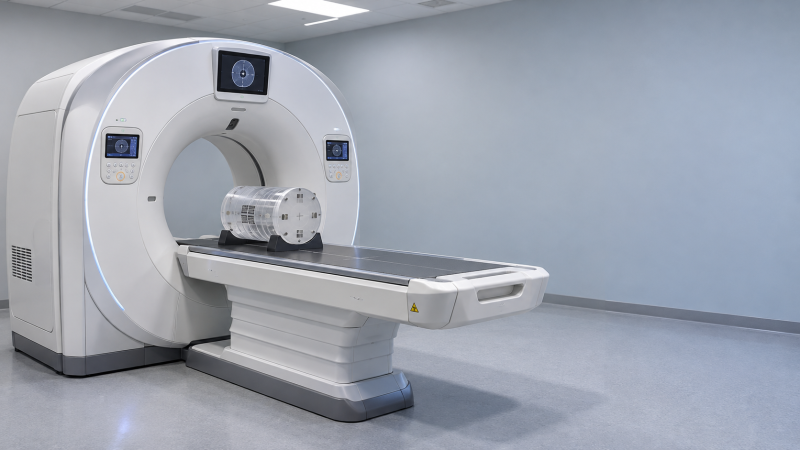
How can technical evaluators distinguish a reliable medical imaging system from one backed by unverified performance claims? Medical imaging performance testing ISO 13485 considerations begin with a quality management system that supports documented verification, validation, traceability, and control of measuring equipment. The more difficult task is determining whether that system has produced evidence relevant to the actual device, its intended use, and the way it will be operated.
A sharp phantom image or an impressive specification sheet is not enough on its own. The useful question is whether the manufacturer can show how a performance claim was defined, tested, reviewed, and maintained as the product changed.
What ISO 13485 does—and does not—require
ISO 13485:2016 specifies requirements for a medical device quality management system. It addresses processes across the device lifecycle, including design and development, purchasing, production, monitoring, measurement, and corrective action. For an imaging manufacturer, those processes provide the framework in which performance testing is planned and controlled.
The standard does not prescribe a universal image-quality threshold, a single phantom, or one test protocol for every CT, MRI, ultrasound, or digital radiography system. Nor does an ISO 13485 certificate establish that a particular model meets its advertised spatial resolution, dose, or diagnostic performance. Those questions require device-specific evidence and, where applicable, additional standards and regulatory assessment.
Certificate scope also matters. A manufacturer’s quality management system certification is not a product certification, and the certified activities and sites should be checked against the work that produced the device. If software development, critical manufacturing, or testing is outsourced, evaluators should understand how the manufacturer controls those suppliers rather than assuming every activity is covered by the same certificate.
Follow the claim back to the design input
The strongest assessment starts with a specific claim. “High image quality” is too broad to test. A useful claim identifies the relevant performance characteristic, the operating conditions, and the intended configuration. Depending on the modality, that characteristic might concern spatial resolution, contrast performance, geometric accuracy, uniformity, artifacts, or another property tied to clinical use.
Under ISO 13485 design and development controls, inputs need to be documented and reviewed, and verification must establish that design outputs meet input requirements. For an evaluator, this creates a practical evidence trail: intended use and risk considerations inform requirements; requirements lead to a test method and acceptance criteria; the results are reviewed against those criteria.
Ask to see the links, not just the endpoint. A passing result is difficult to interpret if the requirement is missing, the acceptance limit appeared only after testing, or the tested software build cannot be connected to the released product. In a mature file, a reviewer should be able to identify which requirement a test addresses and what happened when results fell outside the expected range.
Risk management belongs in that conversation. A test plan should reflect the ways inadequate performance could affect safety or intended use: for example, an artifact that obscures a feature of interest or a measurement error that affects a clinical decision. ISO 14971 is commonly used alongside ISO 13485 to structure medical device risk management, but citing it is not a substitute for showing how the identified risks influenced test coverage and acceptance decisions.
Verification and validation answer different questions
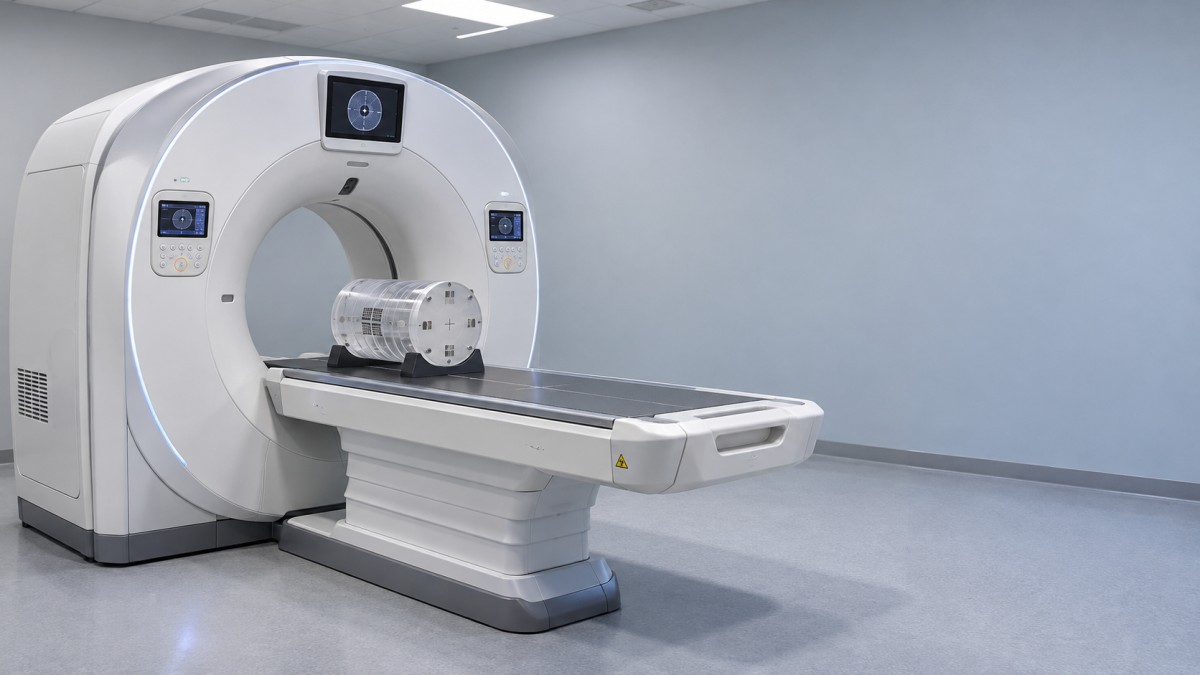
Verification asks whether the design output meets the specified input. A controlled phantom test can support that question: does the imaging system achieve the specified performance under the stated conditions? The protocol, equipment, analysis method, acceptance criteria, deviations, and result all matter.
Validation asks whether the resulting device is capable of meeting requirements for its specified application or intended use. ISO 13485 requires validation under defined operating conditions, on representative product, with the rationale for the chosen product recorded. Where applicable, validation includes clinical evaluation or evaluation of performance in accordance with applicable regulatory requirements.
The distinction matters when a system passes a bench test but the claim concerns clinical use. A phantom may be excellent for repeatable comparison, yet it cannot automatically represent patient motion, anatomical variation, operator choices, or the full clinical workflow. Conversely, a clinical evaluation does not make a poorly controlled engineering measurement reliable. The evidence package may need both, with each method used for the question it can actually answer.
When reviewing a report, check whether the validation conditions resemble the intended environment: the relevant users, accessories, display or workstation, software settings, and interfaces. If a system is intended for multiple patient groups or applications, a single favorable configuration may not support every claim. The manufacturer should explain the selection and any limits on extrapolation.
A performance number needs its test conditions
Imaging specifications are unusually sensitive to context. A resolution result obtained with a particular acquisition protocol, reconstruction algorithm, phantom, and analysis technique should not be compared directly with another result unless the methods are compatible. The same caution applies to contrast or noise measurements: a favorable number can come with settings that change acquisition time, dose, or other aspects of the examination.
That trade-off is especially important in ionizing imaging. An image-quality claim should be considered alongside the exposure conditions used to obtain it and the intended clinical task. ISO 13485 does not itself define an acceptable dose for a particular examination; applicable product standards, regulatory requirements, and clinical context must be considered separately.
For a meaningful comparison, request the details that would allow another competent team to understand or reproduce the measurement:
- The device model, hardware configuration, software version, accessories, and any post-processing used.
- The test object or phantom, its condition, positioning, and the relevant acquisition and environmental settings.
- The measurement definition, analysis procedure, acceptance criteria, and justification for those criteria.
- The number and selection of tested units or runs, including the rationale for the sample where appropriate.
- Recorded deviations, measurement uncertainty where relevant, and results close to an acceptance boundary.
A report that omits unfavorable runs is not necessarily fraudulent, but it is incomplete evidence until exclusions are explained. Equally, a single passing unit does not establish production consistency. Ask whether the report supports a design claim, a production release decision, or routine field performance; those are different uses of test data.
Check the measurement system, not only the imaging system
ISO 13485 requires organizations to determine the monitoring and measurement needed and to provide evidence that it is undertaken consistently with requirements. Where necessary to ensure valid results, measuring equipment must be calibrated or verified at specified intervals or before use against standards traceable to international or national measurement standards; when such standards do not exist, the basis used must be recorded.
For an imaging assessment, this may involve dosimeters, electrical instruments, positioning tools, or other equipment used to establish test conditions. Phantom identity and condition matter too, even though the appropriate control depends on the item and its role. A calibration certificate for an instrument does not, by itself, validate the entire method or the software used to analyze images.
A particularly useful question is what happened when equipment was found out of calibration. ISO 13485 requires assessment and recording of the validity of previous measurement results when equipment is found not to conform to requirements, together with appropriate action on the equipment and affected product. A well-maintained record makes it possible to determine whether an earlier imaging test needs reassessment.
Software and lifecycle changes can invalidate an old result
An imaging system may retain its model name while its reconstruction software, detector, image-processing pipeline, or network integration changes. The original performance report may still be relevant, but only if the manufacturer has assessed the change and can justify which evidence remains applicable.
ISO 13485 requires design and development changes to be documented, reviewed, verified, and validated as appropriate, and approved before implementation. The review considers the effect on constituent parts and product already delivered or in use, among other factors. In practice, evaluators should look for a change-impact rationale and targeted regression testing—not merely a statement that the update was minor.
Post-market information can also alter the picture. Complaints about intermittent artifacts, unexpected behavior after an upgrade, or inconsistent field calibration may reveal a gap that a pre-release test did not capture. Ask how relevant complaints, nonconformities, and corrective actions feed back into risk management and testing. A closed complaint count alone does not show whether the underlying technical issue was understood.
Where product standards and regulation fit
ISO 13485 provides the quality system framework; it does not replace the technical standards applicable to a device. The IEC 60601 series contains general and particular requirements for medical electrical equipment, while the IEC 61223 series addresses evaluation and routine testing for certain medical imaging equipment. Which documents, editions, and test methods apply depends on the modality, device, claims, and intended market.
For the European Union, the Medical Device Regulation, Regulation (EU) 2017/745, establishes regulatory requirements for devices within its scope. An imaging product’s classification, conformity assessment route, and evidence obligations depend on its characteristics and intended purpose. The In Vitro Diagnostic Medical Devices Regulation applies to products within its own scope; it should not be assumed to govern a general imaging system simply because the system is used in healthcare.
Check the applicable requirements and recognized or harmonized status of standards for the relevant market and date. A manufacturer’s declaration that a standard was “followed” is a starting point; the useful evidence includes the edition, applicable clauses, any exclusions or deviations, and how conformity was established.
Turn the evidence into a defensible comparison
For a technical benchmarking exercise, separate three questions: Is the quality system scope relevant? Does the test method support the claim? Does the tested configuration match the device being considered? A positive answer to one does not settle the others.
An independent, data-driven approach of the kind described by VitalSync Metrics (VSM) is most useful when it makes assumptions visible: normalized test conditions where feasible, documented differences where they are not, and no stronger conclusion than the evidence supports. If two systems were tested using incompatible protocols, the responsible result may be “not directly comparable,” rather than a forced ranking.
Before accepting a performance claim, request the relevant requirement, test report, configuration record, and change history together. If those documents cannot be connected, the unresolved traceability is itself a finding—even when the published specification looks convincing.
Recommended News
- 2026.11.12Home-Care Medical Device Quality Assurance: Testing for Real-World UseDr. Alistair Thorne (Senior Biomedical Engineer)
- 2026.11.11Experts Warn Wellness Claims May Not Shield IVD Tests From FDA OversightDr. Hideo Tanaka (Imaging Systems Analyst)
- 2026.11.11RoHS Compliance for Biosignal Sensors: Scope and Evidence RequirementsLydia Vancini (Regulatory Compliance Lead)
The VitalSync Intelligence Brief
Receive daily deep-dives into MedTech innovations and regulatory shifts.