 Get Insights

Biocompatibility testing standards: when material history is not enough
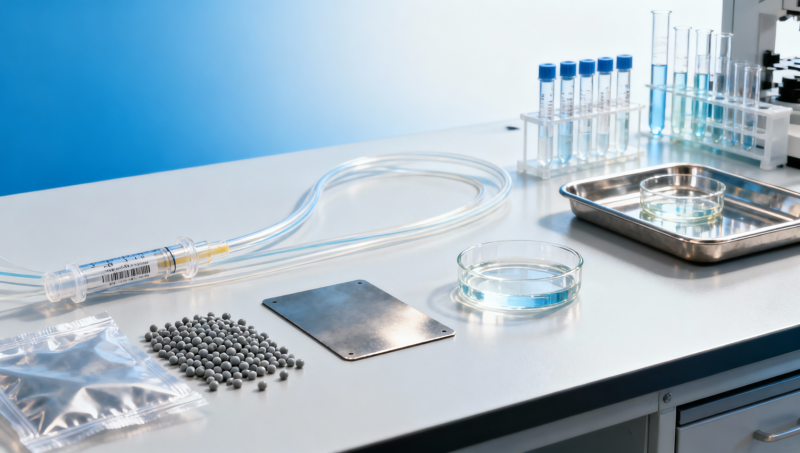
In medical device development, relying on legacy material data alone can create serious blind spots. Modern biocompatibility testing standards demand evidence that reflects real manufacturing changes, sterilization methods, and clinical use conditions. For procurement teams, engineers, and regulatory leaders, understanding where historical material knowledge ends—and where current risk-based testing begins—is essential to ensuring compliance, patient safety, and long-term product reliability.
That shift matters because the same polymer, alloy, adhesive, coating, or colorant can behave differently after a process change, a supplier transfer, a sterilization update, or extended patient contact. In practice, many nonconformities are not caused by the base material itself, but by what happens to it during extrusion, molding, machining, cleaning, packaging, transport, and end-use exposure.
For B2B buyers and technical evaluators, biocompatibility testing standards are no longer a narrow regulatory topic. They affect supplier approval, design freeze timing, total validation cost, launch schedules, complaint risk, and post-market surveillance. A strong evidence package can shorten technical reviews by 2–6 weeks, while an incomplete one can trigger retesting, file gaps, or tender delays.
Why material history alone no longer supports defensible biocompatibility decisions
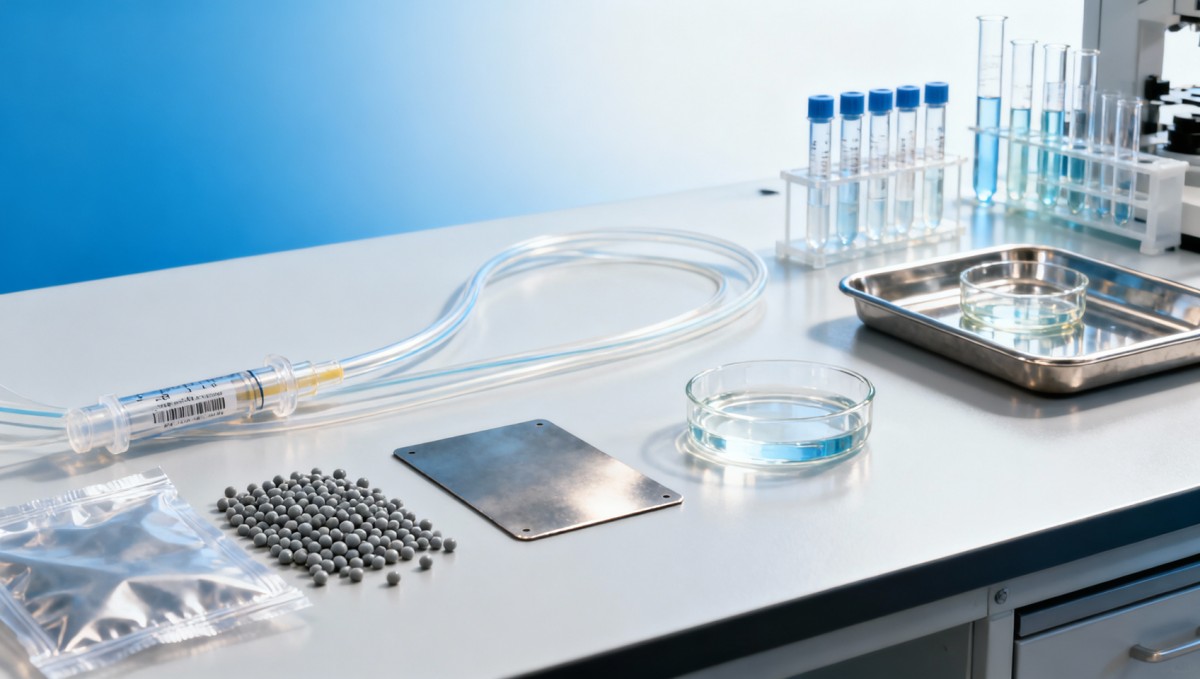
Historically, manufacturers often relied on “safe use” arguments when a material had already been used in another device. That approach still has value, but current biocompatibility testing standards expect a much tighter link between evidence and the finished medical device. The focus has moved from generic material familiarity to product-specific biological risk management.
A resin grade used 10 years ago in a Class II device may no longer be enough as stand-alone justification if the new product has a different contact duration, tissue pathway, sterilization method, or manufacturing residue profile. Even a 1-step process change—such as switching from EtO to gamma sterilization—can alter extractables, surface chemistry, or degradation behavior in ways that invalidate older assumptions.
This is especially relevant for wearables, invasive disposables, implant-adjacent accessories, and fluid-path systems. Devices with contact times below 24 hours, between 24 hours and 30 days, and above 30 days face different biological endpoints. Procurement teams comparing suppliers should therefore ask not only “What material is used?” but also “What has changed since the original evidence was generated?”
For organizations operating under MDR or IVDR expectations, the technical file must show a coherent rationale. That rationale usually combines chemical characterization, toxicological assessment, manufacturing review, and endpoint-based testing where needed. A material history statement without current process context is increasingly seen as incomplete rather than efficient.
Common triggers that make legacy evidence insufficient
The most common gap is assuming equivalence where no true equivalence exists. Two devices may share the same base polymer but differ in additives, lubricant use, curing profile, regrind percentage, or sterilization dose. In many cases, 3–5 seemingly minor variables can create a new biological risk picture.
- Supplier change: different raw material source, additive package, or impurity profile.
- Process change: altered molding temperature, machining coolant, wash chemistry, or drying time.
- Sterilization change: EtO, gamma, e-beam, or steam can create different residuals and degradation products.
- Clinical use change: skin contact, blood path contact, mucosal contact, or implanted duration may move the device into a different endpoint set.
When any of these variables shift, the right question is not whether all testing must be repeated, but whether the existing evidence still maps to the finished device with enough scientific confidence to support release and submission.
How current biocompatibility testing standards evaluate the finished device
Modern evaluation frameworks are built around risk, exposure, and intended use. In practical terms, that means biological assessment starts with the finished device or a fully representative sample, not just the incoming material certificate. The goal is to understand what a patient is actually exposed to over a defined duration and route.
A complete strategy often combines document review with targeted testing. Typical inputs include bill of materials, manufacturing flow, cleaning agents, packaging interactions, sterilization records, and shelf-life assumptions. For many devices, chemical characterization and toxicological risk assessment can reduce unnecessary animal testing while improving scientific specificity.
The table below summarizes how evidence expectations typically change depending on contact type, duration, and process variability. It is not a substitute for a formal biological evaluation plan, but it is useful for procurement and engineering reviews during supplier qualification.
The key conclusion is straightforward: current biocompatibility testing standards prioritize representativeness. If your sample, process, and use condition are not representative, older data may still be informative, but it is rarely sufficient by itself.
What technical reviewers usually look for
Technical reviewers generally want to see four linked elements: device characterization, endpoint justification, change assessment, and scientific rationale for any testing omitted. A biological evaluation that clearly explains why 2 endpoints were tested, 3 were addressed through chemistry and toxicology, and 1 was ruled out by lack of relevant exposure is often stronger than a generic test bundle ordered without risk logic.
Minimum evidence questions during review
- Is the tested article representative of final manufacturing and final sterilization?
- Have all patient-contacting materials and indirect-contact pathways been identified?
- Were process residuals, leachables, and degradation products considered?
- Has any supplier or site change occurred within the last 12–24 months?
Where procurement, engineering, and regulatory teams most often miss risk
In supplier selection, biocompatibility risk is often treated as a document availability issue rather than an evidence quality issue. A supplier may provide declarations, historical reports, and material data sheets, yet still fail to demonstrate that the current manufacturing state matches the tested state. This gap is especially common when products move from prototype scale to commercial volume.
One frequent blind spot is process drift. At pilot stage, a part may be hand-cleaned, packed within 24 hours, and sterilized in small batches. At production stage, the same part may sit for 5–7 days before packaging, run through automated washing, and be sterilized in larger load densities. Those differences can change residuals, aging behavior, and extractable profiles even if the drawing remains unchanged.
Another blind spot appears in outsourced manufacturing. Contract manufacturers may change coolant brands, mold-release agents, or subcomponent suppliers during normal operational optimization. Unless purchasing controls and change-notification clauses are specific, these updates may surface only after a complaint, an audit finding, or a submission question.
For operators and lab architects, sample handling can also distort outcomes. If test articles are not conditioned, packaged, or sterilized in a way that mirrors commercial product, the generated data may have limited value. This is why independent benchmarking and document traceability are increasingly important in technical procurement decisions.
Red flags during supplier due diligence
Before approving a component or finished device supplier, teams should verify whether the evidence package answers practical change-control questions. The table below can be used as a screening tool during RFQ, supplier audit, or design transfer review.
If a supplier cannot answer these questions clearly within 5–10 business days, procurement risk increases. The problem is not only regulatory exposure; it is the downstream cost of engineering holds, retesting, and delayed commercialization.
Operational consequences of weak evidence
- Delayed technical approval and supplier onboarding.
- Repeat extraction or cytotoxicity studies adding 2–8 weeks.
- Regulatory questions during submission review or notified body audit.
- Higher post-market surveillance burden if complaints point to material-process interactions.
A practical risk-based framework for selecting testing and evidence depth
A robust strategy does not mean testing everything every time. The most effective programs use a staged framework that matches evidence depth to actual biological risk. For many organizations, a 4-step model helps align engineering, quality, procurement, and regulatory teams before test budgets are committed.
Step 1: Define patient contact and exposure profile
Start with the contact matrix: skin, mucosal membrane, breached surface, blood path, tissue, bone, or indirect fluid pathway. Then define duration bands such as under 24 hours, 24 hours to 30 days, or over 30 days. These two variables drive the endpoint logic more than material name alone.
Step 2: Map manufacturing and sterilization variables
List every process with potential biological relevance: mixing, curing, machining, washing, assembly, packaging, sterilization, and aging. Identify whether there are 0, 1, or multiple recent changes. If there is a process transfer, new packaging adhesive, or altered sterilization dose, assume that a formal gap review is needed.
Step 3: Build the evidence bridge
This is where legacy data can still help. Prior reports, literature, supplier chemistry information, and comparable device data may support parts of the rationale. However, they should be bridged to the current product using equivalence logic, change records, and chemical risk assessment. Unsupported “same material” arguments are usually too weak on their own.
Step 4: Test only where uncertainty remains
If residual uncertainty remains after chemistry and toxicology review, targeted testing closes the gap. Depending on use category, this may include cytotoxicity, sensitization, irritation, systemic toxicity, hemocompatibility, implantation-related endpoints, or other justified studies. The aim is fit-for-purpose evidence, not a checklist ordered without context.
Recommended internal decision criteria
- Representativeness score: does the tested sample match final device configuration at least 90% in material, process, and sterilization relevance?
- Change severity: is the modification cosmetic, process-related, or exposure-relevant?
- Submission impact: will missing evidence delay regulatory review by more than 2 weeks?
- Commercial impact: does retesting affect launch, tender participation, or customer qualification timing?
For buyers working with independent benchmark partners such as VitalSync Metrics, the value lies in translating these technical variables into comparable decision inputs. That makes it easier to compare suppliers on engineering integrity rather than brochure claims.
What buyers should request from suppliers before approval or tender submission
For procurement leaders, the goal is not to become a toxicologist. The goal is to ask for the right evidence package at the right stage. A well-structured request can prevent late-cycle surprises and reduce dependency on vague conformity claims. In most cases, 6 document categories are enough to identify whether a supplier’s biocompatibility position is robust or fragile.
These categories typically include material disclosure, manufacturing flow summary, sterilization information, change-control history, biological evaluation rationale, and representative test summaries. If one or more of these is missing, the organization should assess whether approval can proceed conditionally or whether technical release should be held.
The table below provides a practical procurement checklist that can be integrated into supplier qualification, quality agreements, or technical tender reviews.
The strongest suppliers are usually not the ones with the most certificates, but the ones that can connect raw material data, manufacturing reality, and clinical use into one coherent evidence chain. That clarity improves both procurement confidence and downstream regulatory resilience.
FAQ for technical buyers and project teams
How often should biocompatibility be reassessed after a process change?
There is no universal calendar trigger, but any exposure-relevant change should prompt a documented review immediately. Typical triggers include sterilization changes, new cleaning agents, new additives, packaging changes, or site transfer. Many teams perform a formal review within 30 days of change approval.
Can a supplier’s old test report be reused for a new device?
Sometimes, but only if the new device is genuinely comparable in contact type, duration, manufacturing profile, sterilization condition, and packaging state. Reuse is strongest when equivalence is well documented and weakest when the evidence relies only on shared material trade names.
What is the usual timeline for gap assessment and targeted retesting?
A focused gap review may take 1–3 weeks if documentation is complete. Targeted laboratory testing can add 2–8 weeks depending on endpoint scope, sample availability, and whether chemistry data must be generated first. Delays are often caused more by poor sample representativeness than by lab capacity.
Why does independent benchmarking matter in supplier selection?
Independent review helps convert vendor claims into comparable technical evidence. For healthcare procurement, that means assessing not just whether a report exists, but whether it remains valid for the current product state, intended use, and regulatory pathway.
Biocompatibility testing standards now demand a product-specific, risk-based view of safety. Material history still matters, but it is only one layer of evidence. The decisive factors are representativeness, process control, sterilization impact, exposure profile, and the quality of the scientific bridge between old data and current device reality.
For hospitals, MedTech developers, laboratory planners, and sourcing teams, this is where disciplined technical benchmarking creates real value. VitalSync Metrics helps decision-makers separate familiar material narratives from verifiable engineering truth, so approvals, tenders, and development gates are based on evidence that holds up under review.
If you need support evaluating supplier evidence, benchmarking biocompatibility risk, or building a stronger technical procurement framework, contact VitalSync Metrics to get a tailored assessment and explore more decision-ready MedTech validation solutions.
Recommended News
- 2026.10.15Medical Packaging Heat Seal Testing: Seal Strength vs. Seal Integrity TestsDr. Julian Rossi (RehabTech Specialist)
- 2026.10.14Clinic Supplier Comparison: Evaluating Cost, Delivery Reliability, and SupportDr. Alistair Thorne (Senior Biomedical Engineer)
- 2026.10.13Engineering Performance Testing Services: Evaluating Test Methods and AccuracyDr. Alistair Thorne (Senior Biomedical Engineer)
The VitalSync Intelligence Brief
Receive daily deep-dives into MedTech innovations and regulatory shifts.