 Get Insights

Medical grade plastic certificates do not always prove biocompatibility
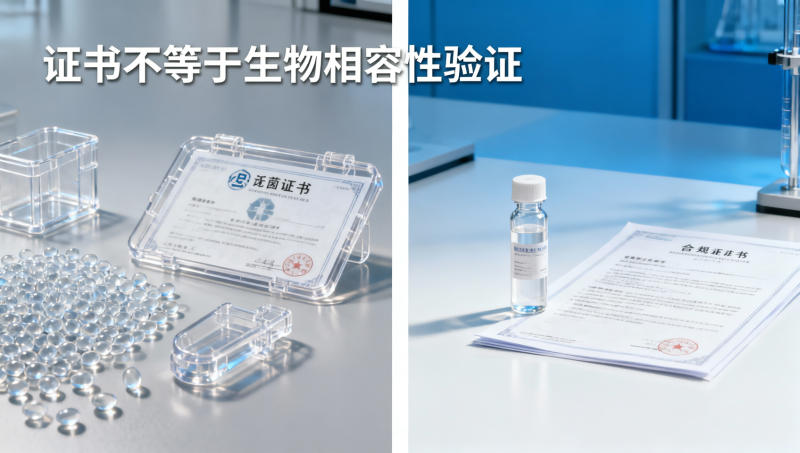
Medical grade plastic certificates may look reassuring, but they do not automatically confirm real-world biocompatibility. For procurement teams, engineers, and healthcare decision-makers, understanding the gap between medical grade plastic certificates and biocompatibility testing standards is essential to avoid costly compliance and performance risks. This article explains what certificates truly mean, where they fall short, and how to verify materials with confidence.
In healthcare manufacturing and sourcing, the phrase “medical grade plastic” is often used as a shorthand for quality, safety, and regulatory readiness. Yet in practice, a resin datasheet, a supplier declaration, or even a material certificate usually confirms only part of the story. It may describe polymer composition, traceability, or prior test history, but it does not prove that a finished component, processed under your conditions, will be biologically safe in the intended clinical environment.
That distinction matters across the MedTech and Life Sciences supply chain. A hospital procurement director evaluating single-use devices, a startup scaling a wearable sensor housing, and a laboratory architect selecting fluid-contact components all face the same risk: relying on paperwork when application-specific evidence is required. For organizations working under MDR, IVDR, ISO 10993 expectations, and internal supplier qualification rules, this is a technical and commercial issue, not just a documentation issue.
VitalSync Metrics (VSM) approaches this challenge from an engineering verification perspective. Instead of accepting broad marketing claims, decision-makers need a structured method to separate resin-level claims from part-level performance, and certificate language from biocompatibility evidence. The sections below outline how to read certificates correctly, where hidden risk enters the process, and what a defensible verification pathway looks like.
What a medical grade plastic certificate actually confirms
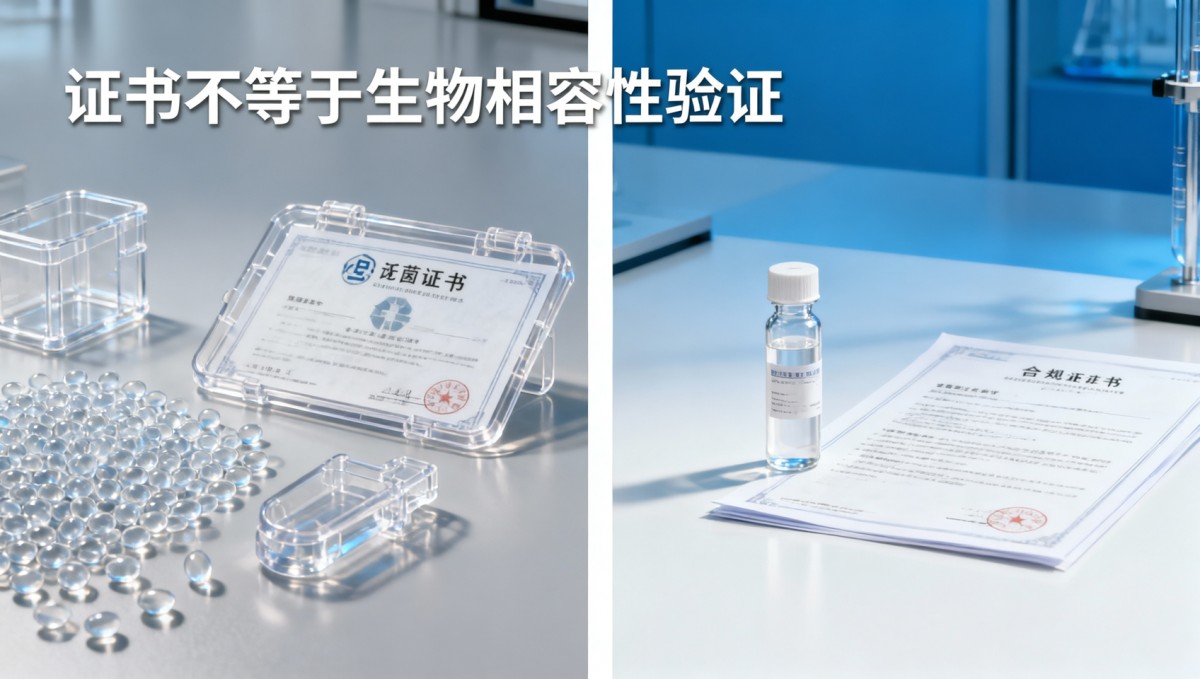
A medical grade plastic certificate usually refers to documentation from the resin manufacturer or an authorized distributor. It may include a certificate of analysis, declaration of compliance, lot traceability, or a statement that the resin has been formulated for medical applications. In some cases, it also references prior testing such as USP Class VI, ISO 10993 screening, or compliance with selected chemical regulations. These are useful inputs, but they are not the same as a final biocompatibility conclusion for your device.
The first limitation is scope. Many certificates apply to the raw polymer pellet, not to the molded, extruded, printed, bonded, sterilized, colored, or assembled component. A resin may have a clean baseline profile, yet processing at 240–320°C, exposure to mold release agents, or the addition of 1–3% colorants can change extractables, surface chemistry, and biological response. In other words, the certificate often covers the starting material, while the clinical risk sits in the finished article.
The second limitation is intended use. “Medical grade” does not automatically define contact duration, tissue type, or route of exposure. A polymer used safely in external equipment housings may not be suitable for 24-hour skin contact, mucosal contact, blood path exposure, or implantable use. Biocompatibility requirements differ significantly between short-term contact below 24 hours, prolonged exposure of 24 hours to 30 days, and long-term exposure beyond 30 days.
Common documents buyers receive
Procurement and quality teams often receive several document types during sourcing. Each has value, but each answers a different question. Confusing them is one of the most common causes of weak supplier qualification files and delayed technical approvals.
- Certificate of Analysis: confirms measured lot properties such as melt flow, moisture, or mechanical values within a stated range.
- Declaration of Compliance: states alignment with named regulations or customer requirements, often with limitations and exclusions.
- Biocompatibility Summary: may reference prior testing, but often only for standard plaques or historical formulations.
- Change Notification Policy: indicates how much notice, such as 6–12 months, the supplier gives before formulation or manufacturing changes.
The table below shows the difference between common certificate language and what it really means in technical qualification.
For buyers, the key conclusion is simple: certificates are evidence, but they are not the endpoint. They support screening, supplier comparison, and initial risk reduction. They do not replace an application-specific biological evaluation plan, especially when the component contacts the patient, clinician, sample fluid, or sterile field.
Why biocompatibility depends on the finished device, not just the polymer
Biocompatibility is a system outcome. It depends on the base material, but also on additives, process residues, geometry, cleaning steps, packaging, sterilization method, and actual clinical use. Two components made from the same nominal resin can produce different biological results if one is injection molded with standard tooling and the other is overmolded, laser marked, adhesive-bonded, and sterilized using gamma or EtO. The chemistry presented to the body is what matters, not the marketing label on the original resin bag.
Processing changes are one major source of variation. Elevated melt temperatures, long residence time, excessive shear, or repeated regrind cycles can degrade polymers and create low-molecular-weight byproducts. In many medical manufacturing environments, even a 10–20°C temperature shift or an unvalidated drying cycle can affect extractables. That is why robust biocompatibility assessment considers the worst-case finished article or representative family sample, not a theoretical ideal state.
Sterilization introduces another layer of risk. EtO residues must be controlled and aeration verified. Gamma and e-beam can alter polymer chains, color stability, or brittleness in certain materials. Steam sterilization at 121–134°C may distort or stress some thermoplastics. A resin with acceptable baseline data can still fail the intended use case after 1 sterilization cycle, or after repeated cycles if the product is reusable.
Application variables that change biocompatibility outcomes
Engineering and procurement teams should map at least 6 variables before accepting material claims. Missing even one can create a gap between supplier documentation and regulatory expectations.
- Type of body contact: skin, mucosal membrane, circulating blood, tissue, or indirect fluid path.
- Contact duration: limited, prolonged, or long-term, often grouped as <24 hours, 24 hours to 30 days, and >30 days.
- Manufacturing route: molding, machining, additive manufacturing, extrusion, or multilayer assembly.
- Secondary operations: printing, coating, welding, adhesive bonding, lubrication, or passivation.
- Sterilization method: EtO, gamma, e-beam, steam, or non-sterile use with disinfection protocols.
- Packaging and storage: shelf life targets such as 12, 24, or 36 months, and environmental exposure conditions.
The table below highlights how identical resin names can lead to very different qualification needs once the real use environment is defined.
For decision-makers, this means the purchasing conversation must move beyond “Is this a medical grade plastic?” to “Has the finished part been evaluated for this exact use profile?” That change in question reduces both compliance risk and late-stage redesign risk.
How to verify materials with a defensible qualification workflow
A practical qualification workflow should connect supplier documentation, engineering controls, and biological evaluation into one decision path. For most MedTech teams, the objective is not to test everything blindly. It is to identify the minimum evidence set needed to support safe use, regulatory review, and repeatable procurement. A disciplined 5-step workflow is usually more effective than collecting dozens of disconnected certificates.
A 5-step verification process
- Define the clinical contact profile, including body contact type, duration, reprocessing, and sterile barrier assumptions.
- Collect resin-level evidence, such as formulation declarations, lot traceability, prior biological summaries, and change notification terms.
- Map processing variables for the finished part, including molding window, additives, secondary operations, cleaning chemistry, and sterilization route.
- Perform a biological evaluation strategy aligned with ISO 10993 logic, using risk assessment and testing where justified.
- Lock supplier and process controls, then establish ongoing change monitoring, incoming review, and periodic reassessment.
In a sourcing program with 3 to 10 candidate materials, this workflow helps teams narrow options quickly. A resin with strong paperwork but weak change control may be less suitable than a material with fewer marketing claims but better formulation stability, cleaner processing history, and stronger support for extractables or finished-part testing.
What procurement should request before approval
Procurement should request more than a one-page compliance letter. At minimum, buyers should ask for the latest technical data sheet, regulatory declarations, a description of intended healthcare use boundaries, and supplier change notification timing. For critical patient-contact applications, it is also reasonable to request support on formulation consistency, additive disclosure at a practical level, and known sterilization compatibility.
High-value document checklist
- Lot-level certificate and traceability path from resin producer to converter.
- Statement of whether the biological data applies to resin plaques, molded specimens, or final parts.
- Sterilization compatibility guidance covering at least 1 intended method and known limitations.
- Disclosure of colorants, lubricants, release agents, coatings, or adhesives added during conversion.
- Change notification policy, ideally with 6–12 months notice for material or process changes where feasible.
For organizations managing multiple suppliers across regions, independent benchmarking adds another layer of protection. VSM’s value in this context is not to replace internal quality systems, but to convert scattered manufacturing and materials claims into comparable technical evidence. That allows global sourcing teams to compare materials on risk, not just price or brand familiarity.
Common sourcing mistakes that create compliance and performance risk
One frequent mistake is assuming that a “medical grade” label means universal fitness for any medical use. In reality, suitability depends on the exact application. A polymer acceptable for a diagnostic instrument cover may not be appropriate for a catheter hub, a skin-worn patch backing, or a sample-contact manifold. When teams skip this distinction, they often discover the gap during validation, toxicological review, or customer audit, which can push projects back by 4–12 weeks.
A second mistake is qualifying only the resin supplier and not the converting process. Contract manufacturers may use approved base materials while introducing unreviewed mold release agents, cleaning solvents, inks, or packaging materials. These additions can alter the final extractables profile. In regulated environments, the final assembled article, not just the incoming pellet, drives patient and user exposure.
A third mistake is weak change control. Even stable polymer platforms can shift over time due to manufacturing site changes, additive adjustments, or supply disruptions. Without formal review gates, a “same material” assumption can persist while the actual chemistry or process window changes. For long-life programs, especially those targeting 24–36 month product continuity, this is a major supply chain risk.
Risk indicators procurement teams should flag
Buyers and decision-makers should escalate review if any of the following indicators appear during supplier qualification.
- The supplier provides only a marketing brochure but no lot-specific or revision-controlled technical documents.
- Biocompatibility claims do not state whether they apply to raw resin, molded plaques, or the finished device.
- Secondary process chemicals are not disclosed, or sterilization compatibility is described in vague terms.
- There is no defined change notification period, or the supplier reserves broad formulation flexibility.
- Testing history is old, non-comparable, or based on an exposure route different from the intended use.
The following matrix can help align technical, quality, and sourcing teams around realistic approval decisions.
This kind of matrix is particularly useful in cross-functional reviews, where engineering may focus on tensile strength or dimensional stability while procurement focuses on lead time and price. Both matter, but if biocompatibility assumptions are weak, cost savings can disappear quickly through requalification work, scrap, or delayed market access.
Practical guidance for hospitals, MedTech firms, and lab projects
Different stakeholders need different decision rules. Hospitals often evaluate finished devices from multiple manufacturers and may not control the plastic conversion step directly. Their focus should be on supplier evidence quality, intended use statements, sterilization status, and post-market consistency. MedTech manufacturers need deeper control, because they are responsible for design history, risk management, and ongoing material change review. Laboratory projects sit somewhere in between, especially when sample contact, cleaning chemistry, and operator exposure all intersect.
Selection advice by audience type
For information researchers, the best approach is to compare not just material names but evidence depth. Look for whether biological data is current, how closely the test article matches the actual product, and whether sterilization or aging was considered. For operators and users, surface durability, cleaning compatibility, and repeat exposure safety often matter more than marketing-grade terminology.
For procurement professionals, a 4-part screen works well: document integrity, process transparency, supplier responsiveness, and change control maturity. For enterprise decision-makers, the question is strategic: can this supplier support stable compliance across 2–3 years of product life, region-specific regulation, and future design changes without forcing requalification every time a minor supply adjustment occurs?
Implementation checklist for real projects
- Define the exact contact scenario before issuing RFQs or approving engineering samples.
- Request evidence tied to the final component or a justified equivalent, not only the raw resin.
- Review sterilization, cleaning, and aging conditions over the expected service or shelf life.
- Set change notification and requalification triggers in supplier agreements.
- Use independent benchmarking when claims between vendors are difficult to compare.
This is where VSM’s benchmarking model is especially relevant. By translating manufacturing parameters and material performance data into standardized technical comparisons, organizations can move from assumption-based procurement to evidence-based procurement. That supports more reliable supplier selection for wearables, diagnostic plastics, fluid-contact assemblies, and other healthcare components where certificate language alone is not enough.
FAQ
Is USP Class VI enough to prove biocompatibility?
Not by itself. It can be a useful historical indicator, but it does not automatically cover the intended device configuration, exposure route, processing changes, or sterilization effects. For many patient-contact products, a broader ISO 10993-based biological evaluation strategy is more relevant.
How long does a robust material qualification review usually take?
A desktop review of supplier documentation may take 1–2 weeks. If gaps require laboratory testing, toxicological assessment, or finished-part extractables work, timelines often extend to 4–10 weeks depending on complexity, test scope, and sample readiness.
Should procurement reject all materials without extensive test packages?
Not necessarily. The right decision depends on risk class, exposure profile, and how the component is used. Low-contact, non-patient-facing parts may justify a lighter evidence set. Higher-risk applications require a stronger package and clearer linkage between resin data and finished-device performance.
Medical grade plastic certificates are valuable starting points, but they do not automatically prove biocompatibility for a finished healthcare product. The real decision must account for contact type, duration, processing conditions, additives, sterilization, and supplier change control. For procurement teams and technical leaders, the goal is to replace assumption with structured verification and evidence that matches the real use case.
VitalSync Metrics (VSM) helps healthcare and life sciences organizations evaluate materials and components with greater technical clarity, turning fragmented claims into decision-ready benchmarking. If your team needs support comparing supplier evidence, reviewing risk in medical plastics, or building a stronger qualification pathway, contact VSM to discuss your application, request a tailored assessment, or explore broader sourcing and compliance solutions.
Recommended News
- 2026.10.15Medical Packaging Heat Seal Testing: Seal Strength vs. Seal Integrity TestsDr. Julian Rossi (RehabTech Specialist)
- 2026.10.14Clinic Supplier Comparison: Evaluating Cost, Delivery Reliability, and SupportDr. Alistair Thorne (Senior Biomedical Engineer)
- 2026.10.13Engineering Performance Testing Services: Evaluating Test Methods and AccuracyDr. Alistair Thorne (Senior Biomedical Engineer)
The VitalSync Intelligence Brief
Receive daily deep-dives into MedTech innovations and regulatory shifts.