 Get Insights

How to judge a reliable machinery parts exporter
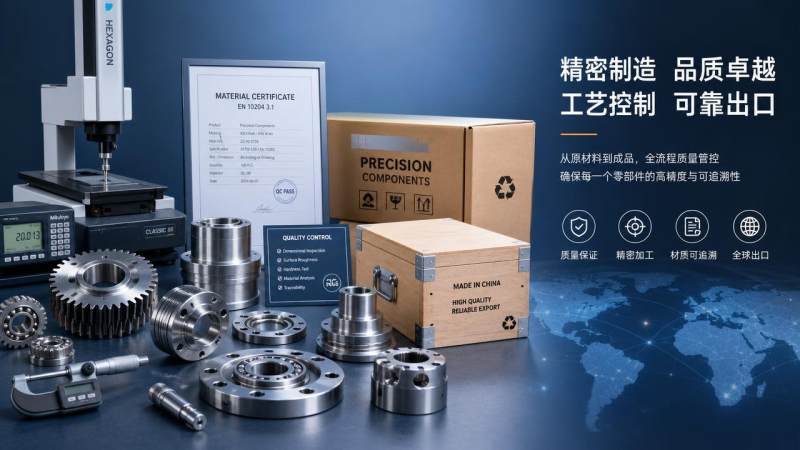
Choosing a reliable Industrial & Manufacturing machinery parts exporter is no longer a simple sourcing task. It has become a technical judgment shaped by traceability, compliance, process discipline, and long-term performance stability.
Across industrial supply chains, buyers face a growing gap between polished sales claims and measurable engineering capability. That gap creates hidden risk in uptime, safety, maintenance cost, and cross-border continuity.
A dependable Industrial & Manufacturing machinery parts exporter should therefore be assessed through evidence. The focus must shift from promises to data, from catalogs to capability, and from low quote to lifecycle confidence.
Why reliability standards for exporters are rising across industrial markets
Global manufacturing is changing fast. Equipment is becoming more integrated, tolerances are tighter, and downtime is more expensive than before.
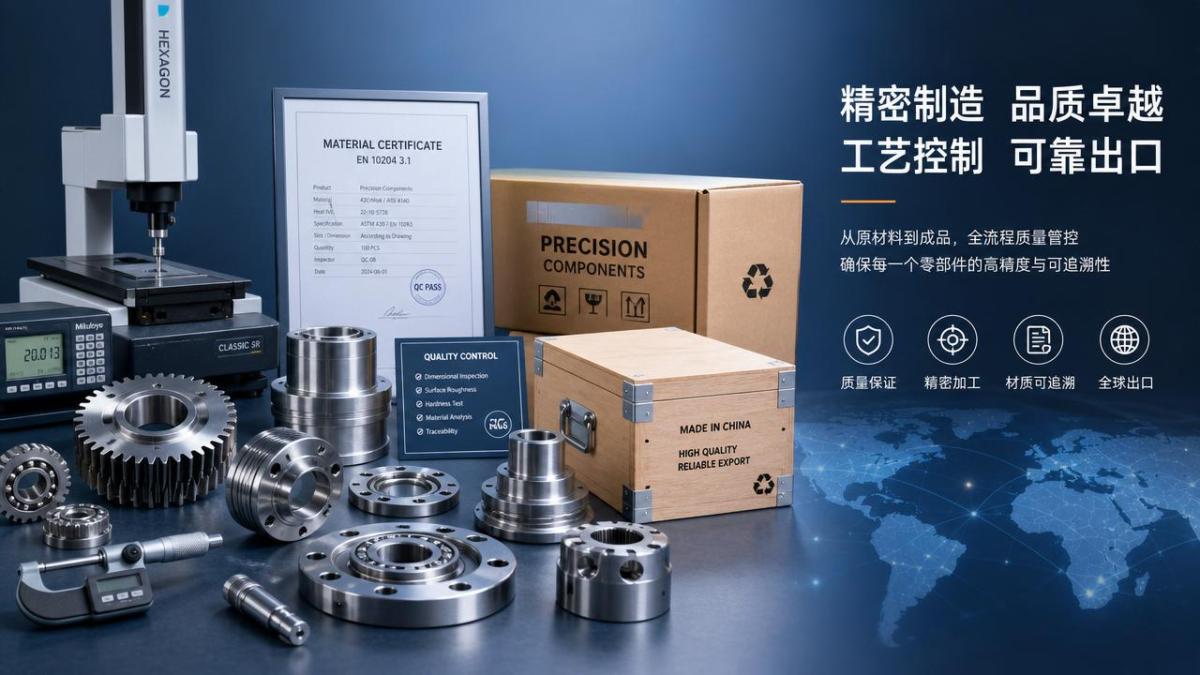
At the same time, multi-country sourcing has expanded exposure to inconsistent metallurgy, unstable subcontracting, and weak inspection systems. These issues often remain invisible until parts fail in service.
This is why the phrase Industrial & Manufacturing machinery parts exporter now implies more than shipping capacity. It signals the need for auditable production control, repeatable quality output, and resilient supply planning.
Digital procurement also raises the bar. Technical teams can compare exporters faster, but they can also detect inconsistency faster. Missing test reports, vague tolerances, or unclear process routes immediately reduce trust.
The strongest trend signals point to evidence-based exporter evaluation
Several clear signals show how exporter selection is evolving. The market increasingly rewards proven control rather than broad product claims.
- More RFQs request dimensional reports, PPAP-style documentation, and batch traceability.
- End users expect stable quality across repeat orders, not just approved first samples.
- Buyers ask for material certificates, heat-treatment records, and coating validation more often.
- Supply continuity is assessed alongside unit price, especially for critical replacement parts.
- Exporters with engineering support are favored over traders with limited process visibility.
These signals matter because industrial parts now serve higher-performance systems. A single mismatch in hardness, concentricity, or surface finish can damage the full machine assembly.
What is driving the shift from price comparison to technical verification
The move toward stricter evaluation is not random. It is driven by operational, technical, and regulatory pressure across sectors.
A reliable Industrial & Manufacturing machinery parts exporter is therefore expected to operate like a controlled engineering partner, not only a shipment source.
How weak exporter selection affects quality, maintenance, and supply continuity
The consequences of poor exporter judgment often emerge gradually. Initial samples may pass, while later batches drift because subcontractors changed, tools wore out, or inspection frequency declined.
This creates direct impact in several business areas. Quality issues move downstream into assembly, field service, and warranty exposure.
- Dimensional variation increases fitting time and scrap rates.
- Unverified materials reduce fatigue strength and corrosion resistance.
- Inconsistent coatings accelerate wear in abrasive or humid environments.
- Poor packaging causes transit damage to precision-machined parts.
- Weak export coordination extends lead times and customs delays.
For sectors with critical equipment, the cost is rarely limited to one defective part. The true cost includes interrupted output, urgent freight, service intervention, and damaged confidence in the supplier base.
That is why selecting an Industrial & Manufacturing machinery parts exporter should include operational resilience, not only manufacturing competence.
The most reliable indicators are measurable, documented, and repeatable
When judging exporter reliability, the most useful signs are objective. They reveal whether quality is built into the process or inspected only at the end.
1. Process visibility
Ask for the production route. A strong exporter can explain machining stages, heat treatment, finishing, inspection points, and outsourced operations clearly.
2. Material traceability
Reliable exporters keep heat numbers, mill certificates, and lot mapping records. Without this chain, quality claims are difficult to verify after shipment.
3. Metrology discipline
Inspection capability should match part complexity. Calibrated gauges, CMM reports, surface roughness data, and measurement system control indicate maturity.
4. Change management
A capable Industrial & Manufacturing machinery parts exporter documents tool changes, supplier substitutions, drawing revisions, and process updates before shipment.
5. Corrective action quality
Problems can occur anywhere. What matters is whether the exporter provides root-cause analysis, containment action, and prevention evidence instead of excuses.
What deserves the closest attention before approving any exporter relationship
The following checkpoints help filter strong candidates from risky ones. They are especially useful when comparing multiple quotes with similar specifications.
- Verify whether drawings are reviewed by engineering, not only sales staff.
- Confirm tolerance capability using actual batch data, not generic statements.
- Check if certificates match the supplied lot and shipment records.
- Review surface treatment controls for adhesion, thickness, and environment resistance.
- Assess packaging standards for corrosion protection and part separation.
- Examine lead-time history and on-time delivery consistency.
- Look for evidence of continuous improvement and recurring defect reduction.
These factors reveal whether an Industrial & Manufacturing machinery parts exporter can support repeatability over time, which matters more than a successful first order.
A practical framework for comparing exporters with less uncertainty
A structured comparison model improves decision quality. It reduces the influence of presentation style and keeps the review focused on evidence.
This framework makes it easier to identify a reliable Industrial & Manufacturing machinery parts exporter with sustainable control, not just attractive pricing.
The smartest next step is a small trial with strict validation rules
Before scaling volume, start with a controlled trial order. Use it to validate communication speed, documentation accuracy, dimensional consistency, packaging quality, and shipment execution.
Define success criteria in advance. Include inspection thresholds, certificate requirements, approved materials, and response time expectations for any nonconformance.
If the exporter performs well across these practical checkpoints, confidence rises on real evidence. That is the strongest basis for approving a long-term Industrial & Manufacturing machinery parts exporter.
In a market shaped by tighter tolerances and higher operational risk, the most reliable choice is the exporter that can prove capability repeatedly. Data, traceability, and disciplined execution remain the clearest signals of trust.
Recommended News
- 2026.10.15Medical Packaging Heat Seal Testing: Seal Strength vs. Seal Integrity TestsDr. Julian Rossi (RehabTech Specialist)
- 2026.10.14Clinic Supplier Comparison: Evaluating Cost, Delivery Reliability, and SupportDr. Alistair Thorne (Senior Biomedical Engineer)
- 2026.10.13Engineering Performance Testing Services: Evaluating Test Methods and AccuracyDr. Alistair Thorne (Senior Biomedical Engineer)
The VitalSync Intelligence Brief
Receive daily deep-dives into MedTech innovations and regulatory shifts.