 Get Insights

How to compare machinery parts exporters without risk
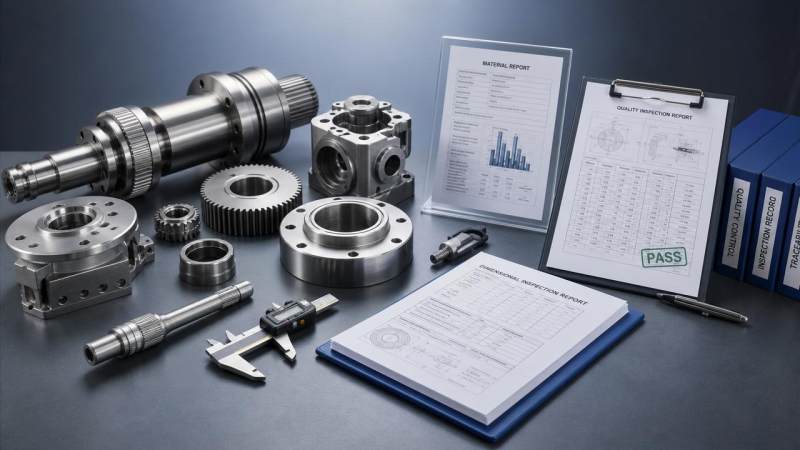
Choosing an Industrial & Manufacturing machinery parts exporter should never rely on price sheets or sales claims alone. For quality control and safety managers, the real task is reducing supply risk through verifiable standards, traceable processes, and proven reliability. This guide explains how to compare exporters with confidence, using practical checks that help you identify compliant partners before hidden defects, delays, or performance failures impact operations.
Why a checklist is essential when comparing exporters
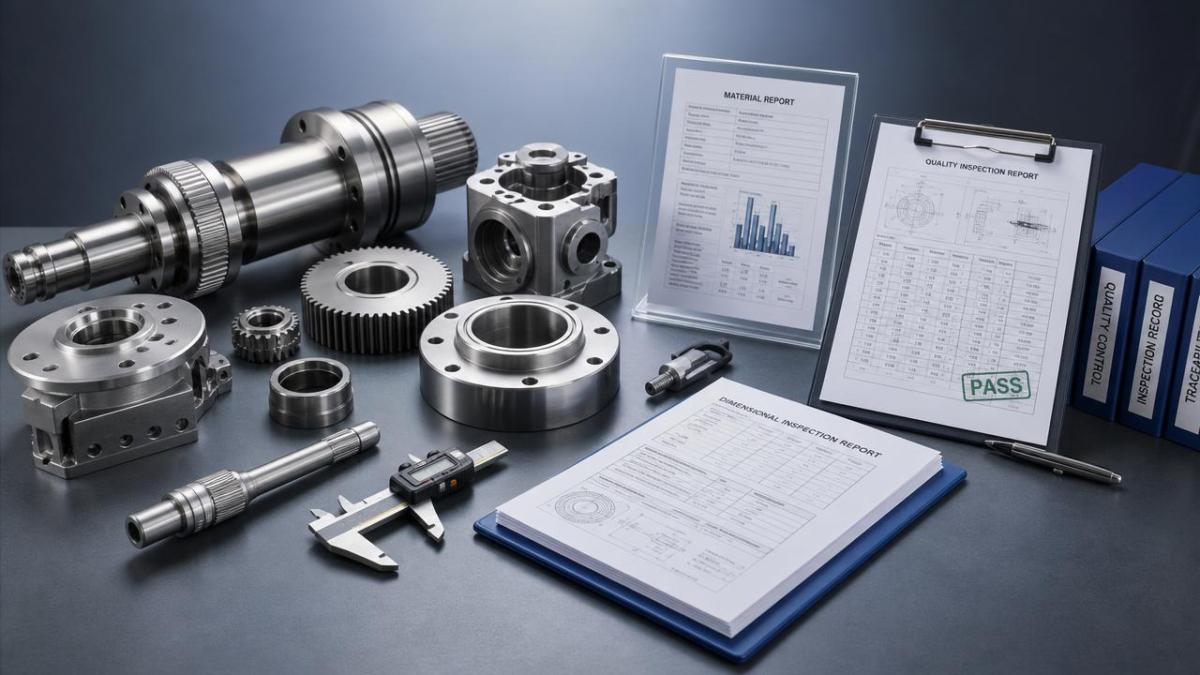
An Industrial & Manufacturing machinery parts exporter affects uptime, safety, warranty exposure, and maintenance cost. A weak comparison process often misses the difference between documented capability and polished presentation.
Checklist-based evaluation creates repeatable decisions. It turns supplier selection into a technical review built on records, controls, and measurable performance rather than assumptions.
This matters across industries. Precision components, cast parts, machined shafts, seals, housings, and fabricated assemblies all carry risk if process discipline is poor or compliance evidence is incomplete.
Core checklist for evaluating an Industrial & Manufacturing machinery parts exporter
- Verify legal identity, export history, and factory relationship before reviewing prices, because trading layers can hide accountability, production changes, or unresolved quality claims.
- Request process flow documents, control plans, and inspection checkpoints to confirm how raw material becomes finished parts under controlled and repeatable conditions.
- Check certification scope carefully, including ISO 9001, sector-specific approvals, and whether the certified site actually produces the quoted machinery components.
- Review traceability methods for heat numbers, batch codes, machining lots, coatings, and final inspections so root-cause analysis remains possible after delivery.
- Demand material evidence such as mill test certificates, hardness reports, dimensional records, and surface treatment data matched to each production lot.
- Compare metrology capability by asking about CMM use, gauge calibration, measurement system analysis, and tolerance verification for critical dimensions.
- Audit change-control discipline to ensure tooling updates, substitute materials, revised drawings, and outsourced operations cannot shift without formal approval.
- Assess defect response speed by reviewing CAPA examples, containment actions, 8D reports, and evidence that recurring failures were permanently eliminated.
- Examine production resilience through capacity data, machine redundancy, maintenance schedules, and contingency plans for power loss, labor gaps, or logistics disruption.
- Test communication discipline using sample RFQs, drawing clarifications, and technical feedback, because vague answers often predict future production deviations.
- Inspect packaging standards, corrosion protection, labeling accuracy, and export documentation to reduce transit damage, customs delays, and stock identification errors.
- Score total landed risk, not only unit price, by including rework cost, inspection burden, downtime exposure, claim handling, and supply continuity.
How to compare evidence instead of promises
A reliable Industrial & Manufacturing machinery parts exporter can show linked evidence. Drawings should connect to process sheets, inspection plans, material records, and shipment labels without gaps.
Independent benchmarking also improves confidence. VSM-style technical review helps translate quality claims into engineering facts, especially when precision, durability, or regulatory alignment matters.
Scenario-based checks that change the comparison outcome
For custom machined parts
Custom parts require close attention to drawing interpretation. Compare how each exporter handles GD&T, revision control, first article inspection, and approval before mass production begins.
Ask for sample dimensional reports from similar projects. A capable Industrial & Manufacturing machinery parts exporter should present organized data rather than broad verbal assurances.
For safety-critical or high-load components
Failure risk rises when parts carry load, pressure, vibration, or thermal cycling. In these cases, compare fatigue knowledge, NDT capability, and process validation depth.
Request evidence for weld integrity, heat treatment consistency, or coating adhesion where relevant. The right exporter treats these as controlled characteristics, not optional checks.
For regulated or documentation-heavy sectors
Some sectors need stronger documentation discipline than others. Medical-adjacent, laboratory, and controlled manufacturing environments often require higher traceability and cleaner document management.
Here, an Industrial & Manufacturing machinery parts exporter should demonstrate structured records, deviation logs, retained samples, and document retention practices that support audits later.
For multi-country supply chains
Global sourcing adds freight, customs, and geopolitical risk. Compare Incoterms understanding, export packaging validation, and backup routing options before final selection.
A low-cost source may become expensive when lead-time variation, port congestion, or paperwork errors stop installation schedules or spare-parts availability.
Commonly overlooked risks when selecting an exporter
- Ignoring subcontracting exposure. Some exporters quote using one facility but shift machining, plating, or heat treatment to uncontrolled vendors after order confirmation.
- Accepting generic certificates. A document may be valid yet irrelevant if it covers another site, another product family, or expired quality scope.
- Overlooking drawing ambiguity. Small wording gaps on tolerance, finish, or material grade can produce compliant-looking parts that still fail in service.
- Missing packaging risk. Good parts can arrive damaged, mixed, or corroded if preservation methods do not match storage and transit conditions.
- Failing to test responsiveness. Delayed technical answers during quotation usually become slower corrective action after a shipment problem appears.
A practical comparison method you can apply immediately
Start with a weighted scorecard. Rank each Industrial & Manufacturing machinery parts exporter across quality systems, traceability, process capability, documentation, delivery stability, and corrective action quality.
Then run a document challenge. Ask each candidate for the same package: certificate scope, sample inspection report, material trace record, CAPA sample, and packaging specification.
Next, issue one controlled trial order or pilot batch. Evaluate dimensional consistency, report accuracy, labeling discipline, and response speed to nonconformance findings.
If risk remains high, commission an independent technical benchmark. External review can reveal hidden process weaknesses before a full production agreement is signed.
Suggested scorecard categories
Conclusion and next action
Comparing an Industrial & Manufacturing machinery parts exporter without risk means replacing impression-based buying with evidence-based verification. The best choice is rarely the lowest quote on the first page.
Use a checklist, request matched technical records, test communication quality, and validate traceability before scaling orders. That approach protects quality, continuity, and long-term cost control.
If the application involves tight tolerances, high consequences of failure, or regulated environments, add independent benchmarking early. Measured facts reduce uncertainty faster than any sales presentation.
Recommended News
- 2026.10.15Medical Packaging Heat Seal Testing: Seal Strength vs. Seal Integrity TestsDr. Julian Rossi (RehabTech Specialist)
- 2026.10.14Clinic Supplier Comparison: Evaluating Cost, Delivery Reliability, and SupportDr. Alistair Thorne (Senior Biomedical Engineer)
- 2026.10.13Engineering Performance Testing Services: Evaluating Test Methods and AccuracyDr. Alistair Thorne (Senior Biomedical Engineer)
The VitalSync Intelligence Brief
Receive daily deep-dives into MedTech innovations and regulatory shifts.