 Get Insights

What mining equipment buyers should check before ordering
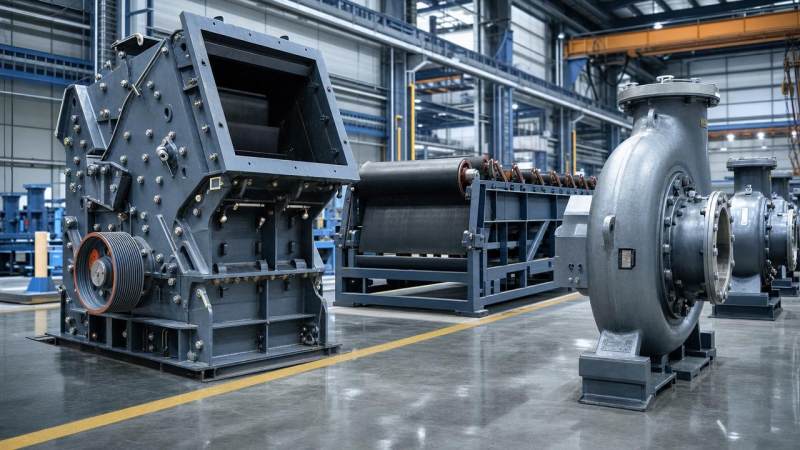
Before placing an order, buyers of Industrial & Manufacturing equipment for mining industry should look beyond nameplate data and quoted price. Equipment used in blasting zones, haul roads, crushing lines, and underground workings must survive shock loads, abrasive dust, vibration, moisture, and irregular maintenance windows. A disciplined pre-order review reduces downtime, avoids safety incidents, and improves lifecycle value.
That review also protects against a common market problem: polished brochures that hide weak metallurgy, incomplete certification, poor spare parts support, or limited traceability. In any heavy-duty procurement process, a checklist creates repeatable technical screening and helps compare suppliers on evidence rather than claims.
Why a checklist matters before ordering mining equipment
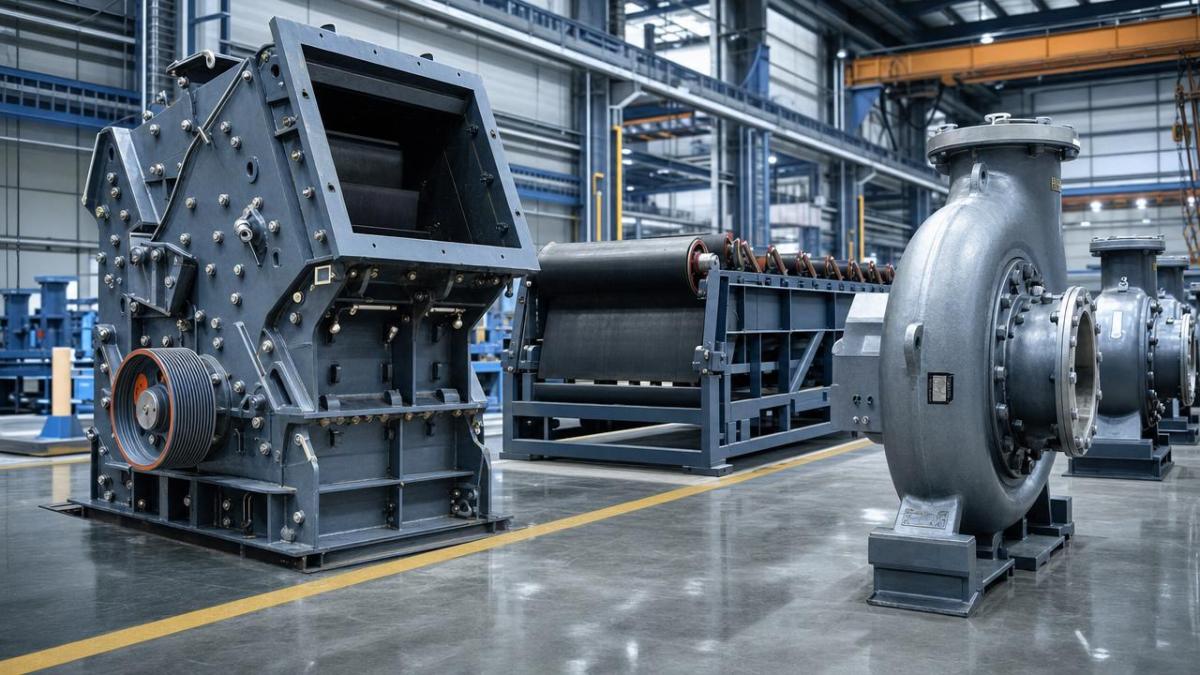
Mining operations place unusual stress on loaders, pumps, conveyors, crushers, screens, drilling systems, ventilation units, and electrical assemblies. Small design weaknesses often stay hidden during factory demonstrations but appear quickly under duty cycles involving impact, contamination, and continuous loading.
A checklist supports consistent decisions across technical, safety, commercial, and maintenance criteria. It also helps validate whether Industrial & Manufacturing equipment for mining industry matches the real site environment, not just laboratory conditions or standard catalog assumptions.
Core pre-order checklist for Industrial & Manufacturing equipment for mining industry
- Verify duty conditions against the actual mine profile, including ore type, abrasiveness, altitude, ambient temperature, humidity, and expected operating hours per shift.
- Check structural materials and wear components, then request grade certificates, hardness data, weld procedures, and corrosion protection details for exposed assemblies.
- Confirm compliance documents, including CE-related files where relevant, electrical safety records, pressure certifications, explosion protection ratings, and regional mining safety approvals.
- Review drivetrain, hydraulic, and power system margins, then compare rated capacity with peak loads, start-stop frequency, and overload scenarios at site.
- Inspect traceability from raw material to finished unit, including serial mapping, batch records, key component origin, and change-control documentation.
- Request test evidence from full-load, endurance, vibration, sealing, and ingress trials instead of accepting only factory acceptance summaries.
- Assess maintainability by checking access points, lifting provisions, lubrication intervals, tool requirements, and mean time to replace high-wear parts.
- Validate spare parts coverage, warehouse locations, critical lead times, and whether equivalent consumables can be sourced without voiding warranty.
- Examine control systems, sensor robustness, and communication compatibility with existing SCADA, fleet management, or predictive maintenance platforms.
- Review supplier service capability, including commissioning support, field troubleshooting response, technician training, and documented escalation procedures.
- Calculate total cost of ownership using energy draw, wear rate, expected rebuild cycles, downtime risk, and disposal or refurbishment options.
- Inspect warranty language closely, then identify exclusions related to dust, misuse definitions, consumables, third-party parts, and delayed service reporting.
Documents worth requesting before release of purchase order
- General arrangement drawings, foundation loads, utility requirements, and interface dimensions.
- Bill of materials for critical assemblies and approved sub-supplier list.
- Inspection and test plans with hold points and acceptance criteria.
- Maintenance manuals, lubrication charts, and recommended spare parts lists.
- Failure history or field performance references from similar operating conditions.
How the checklist changes by application
Open-pit mobile equipment
For haulage and loading systems, frame fatigue, tire compatibility, braking performance, and suspension durability deserve extra attention. Dust sealing and cooling efficiency matter because wide thermal swings and long travel distances amplify wear.
When evaluating Industrial & Manufacturing equipment for mining industry in open-pit settings, compare fuel or power efficiency under partial and peak loads, not only at nominal rating. Also confirm field access for service trucks and safe lockout points.
Underground mining systems
Underground installations add stricter constraints. Equipment footprint, turning radius, emissions profile, heat rejection, flameproof design, and emergency shutdown logic can be more important than top-end output.
Cable routing, visibility, operator guarding, and ventilation impact should be reviewed early. If the unit depends on complex electronics, verify moisture resistance, connector protection, and diagnostic access in confined areas.
Processing plant equipment
Crushers, feeders, pumps, and conveyors require close review of liner life, alignment tolerances, shaft sealing, bearing selection, and vibration baselines. Minor design shortcuts in these areas often create recurring shutdowns.
For processing lines, the best Industrial & Manufacturing equipment for mining industry is not simply the heaviest model. It is the one that integrates predictably with upstream feed variability and downstream maintenance schedules.
Commonly overlooked risk points
Unclear wear-life assumptions
Published wear life may assume ideal ore characteristics or controlled feed conditions. Ask how abrasive index, moisture, contamination, and oversize material affect replacement intervals.
Weak sub-supplier control
A strong brand does not guarantee consistent component quality. Motors, seals, hoses, castings, and electronic modules may come from changing sources unless supplier approval and revision control are documented.
Incomplete site readiness checks
Many delays come from mismatched foundations, power quality, water supply, lifting access, or control interfaces. Technical review should include installation prerequisites before equipment leaves the factory.
Overreliance on warranty language
Warranty terms may look generous but fail in practice if root-cause analysis is slow or spare parts are unavailable. Response time, field authority, and parts availability often matter more than headline duration.
Practical execution steps before final approval
- Build a weighted review sheet covering technical fitness, safety, maintainability, documentation quality, and commercial risk.
- Use the same evidence request package for every bidder to keep comparisons consistent.
- Set mandatory pass-fail gates for certification, traceability, and spare parts support.
- Run a pre-award technical clarification meeting and record every agreed deviation.
- Link payment milestones to inspection points, document delivery, and performance verification.
This method creates a more defensible selection process for Industrial & Manufacturing equipment for mining industry. It also aligns well with evidence-based evaluation models used in other high-risk technical sectors, where performance claims must be verified through data, traceability, and structured review.
Independent benchmarking principles can add value here. A data-driven assessment of material limits, sealing performance, signal reliability, and lifecycle durability helps separate genuine engineering quality from sales positioning.
Conclusion and next-step action
Before ordering Industrial & Manufacturing equipment for mining industry, validate more than capacity and price. Check material integrity, compliance records, traceability, endurance evidence, maintainability, and service readiness with the same discipline used for any mission-critical industrial asset.
Start with a documented checklist, request proof for every critical claim, and compare suppliers on lifecycle risk instead of brochure strength. That approach supports safer operation, steadier uptime, and a purchase decision that remains sound long after installation.
Recommended News
- 2026.10.15Medical Packaging Heat Seal Testing: Seal Strength vs. Seal Integrity TestsDr. Julian Rossi (RehabTech Specialist)
- 2026.10.14Clinic Supplier Comparison: Evaluating Cost, Delivery Reliability, and SupportDr. Alistair Thorne (Senior Biomedical Engineer)
- 2026.10.13Engineering Performance Testing Services: Evaluating Test Methods and AccuracyDr. Alistair Thorne (Senior Biomedical Engineer)
The VitalSync Intelligence Brief
Receive daily deep-dives into MedTech innovations and regulatory shifts.