
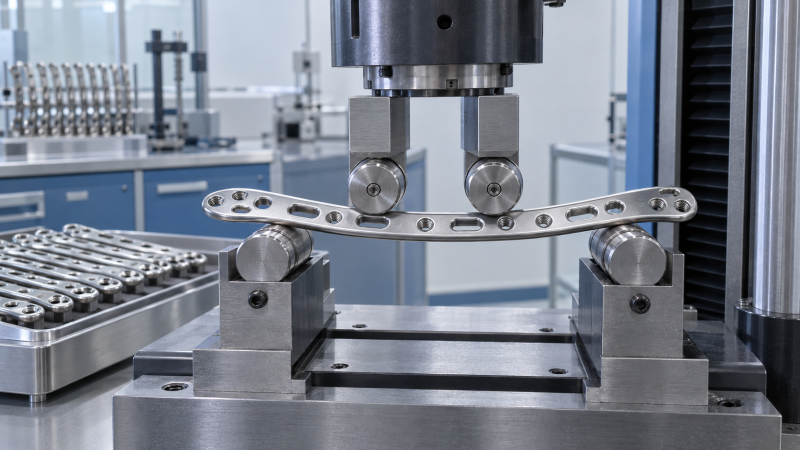
Before buying orthopedic implants, request device-specific fatigue reports identifying tested configurations, loading conditions, specimen selection, cycle counts, failure criteria, individual results, and relevance to intended use.
A supplier’s durability claim or summary certificate cannot establish whether the implant you purchase matches the tested device or withstands the loading conditions evaluated.
For hospital procurement teams and MedTech buyers, credible evidence connects laboratory methods with implant design, manufacturing controls, regulatory documentation, and clearly stated limits of interpretation.
This guide applies VitalSync Metrics’ data-driven benchmarking approach to help buyers compare suppliers, challenge incomplete reports, and distinguish demonstrated mechanical performance from unsupported clinical promises.
What Should You Request in the Initial Evidence Package?
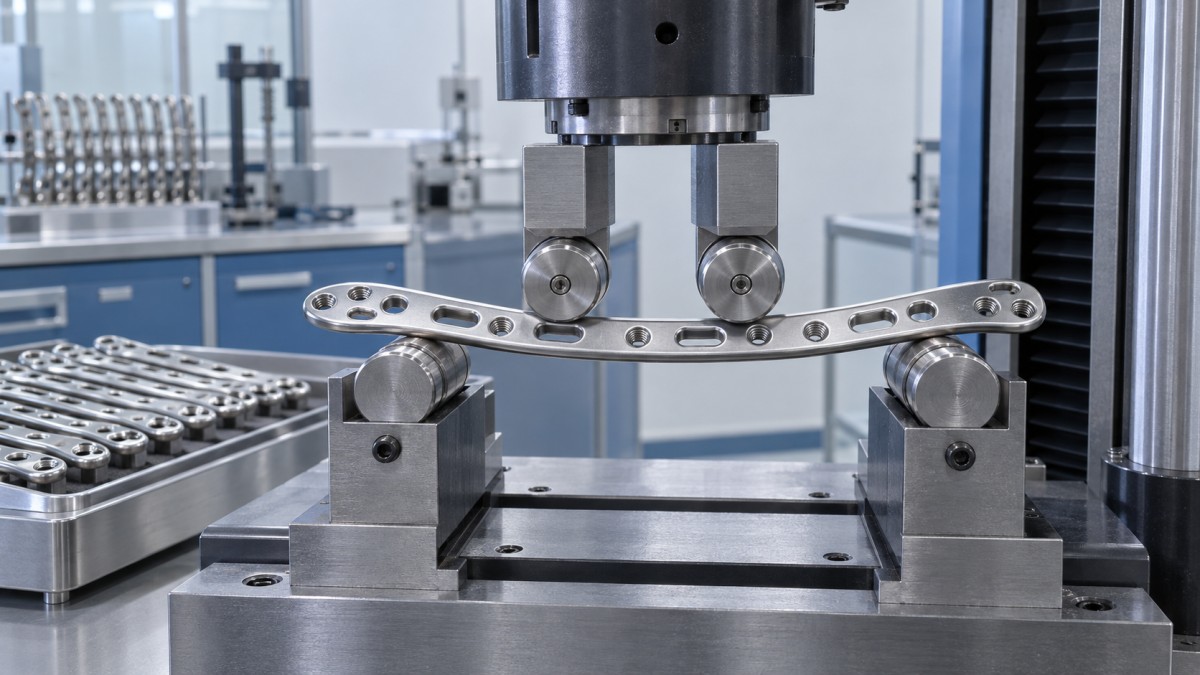
The core purchasing question is straightforward: what fatigue test evidence should we request before buying orthopedic implants? Start with complete reports, supported by configuration and traceability records.
Ask for the approved report covering the offered product family, together with an explanation of how tested specimens represent the exact models under consideration.
Each report should identify the test standard and edition, laboratory, equipment, fixture arrangement, loading parameters, specimen count, acceptance criteria, deviations, and responsible technical reviewer.
Request specimen-level outcomes rather than averages alone. You need to see failures, completed tests, interrupted tests, and any exclusions that changed the reported conclusion.
Include photographs or drawings of the setup and failure locations. These often reveal whether loading reproduced the intended mechanism or introduced fixture-related damage instead.
If proprietary information requires controlled access, accept an appropriate confidentiality arrangement. However, commercial sensitivity should not prevent qualified reviewers from examining evidence essential to purchasing decisions.
Define these deliverables before comparing quotations. Otherwise, a supplier offering minimal documentation can appear cheaper while transferring substantial verification work to your procurement team.
Does the Test Method Match the Implant You Are Buying?
Orthopedic implants do not share one universal fatigue test. Relevant methods depend on device type, construction, fixation strategy, and the mechanical failure modes being investigated.
Require the supplier to identify applicable standards and explain their selection. Referencing a recognized standard establishes a method, but does not automatically establish clinical suitability.
These examples are starting points, not a complete compliance checklist. Confirm the edition used and whether it fits the device’s design and regulatory pathway.
Ask whether testing followed the method completely or introduced modifications. Modified fixtures, specimen dimensions, or loading conditions can materially change comparisons between competing products.
Fatigue evidence also answers a different question from wear, corrosion, fixation, or subsidence testing. For example, spinal cage subsidence assessment may require separate evidence.
Likewise, hip and knee wear evaluations may reference ISO 14242 or ISO 14243. Their results cannot replace fatigue evidence for mechanically critical implant components.
Are the Loads and Cycle Counts Relevant to Intended Use?
A report stating that an implant survived several million cycles is incomplete without the applied load. Cycle count and loading severity must be interpreted together.
Request maximum and minimum force or moment, loading direction, waveform, frequency, and load ratio. Ask whether loads remained constant or changed during the test.
Also examine fixture geometry, lever arms, support conditions, and environmental conditions. Identical applied forces can produce different stresses when the implant’s orientation or support changes.
Test frequency matters when heating, fluid exposure, or time-dependent material behavior affects results. Accelerated testing needs an explanation of why acceleration preserves the relevant failure mechanism.
Ask suppliers to explain how loading assumptions relate to intended patients, anatomical placement, activity expectations, and any restrictions stated in the instructions for use.
For fixation devices, healing progression and load sharing can influence clinical demands. A laboratory setup may intentionally simplify these conditions to produce repeatable comparisons.
Do not convert laboratory cycles directly into years of service. Patient loading varies, and standardized tests generally do not establish a guaranteed clinical lifespan.
Were the Right Sizes, Configurations, and Finished Devices Tested?
Evidence is most useful when it covers the purchased configuration. Product families can contain substantial differences in dimensions, offsets, connection geometry, and manufacturing routes.
Request a documented rationale for selecting the most mechanically demanding configuration. The smallest or largest device is not automatically the most demanding in every test.
For modular implants, identify the exact mating components, connection sizes, assembly procedure, and tightening conditions. Interface behavior can dominate performance even when individual components appear robust.
For plates and nails, inspect features such as holes, transitions, and cross-sections. These can concentrate stress and determine which configuration provides meaningful family coverage.
Ask whether specimens represent final production devices, including relevant surface treatments, coatings, cleaning, and sterilization. Any difference requires a justification addressing its potential effect.
Additive manufacturing deserves particular scrutiny of build orientation, post-processing, surface condition, and material consistency. Fatigue results from one production route may not transfer to another.
Request sample counts and manufacturing-lot coverage, with their rationale. A small study from one lot may support characterization while leaving production variability insufficiently explored.
Material certificates support identification and quality control, but they do not substitute for finished-device fatigue testing. Geometry, processing, and surface condition affect component performance.
What Do Failures, Runouts, and Acceptance Criteria Actually Show?
A runout means a specimen reached the defined stopping point without meeting the failure criterion. It does not demonstrate unlimited durability beyond that point.
Request the stopping rule and failure definition before interpreting results. Failure may include fracture, crack initiation, excessive deformation, loosening, or another predefined loss of function.
Acceptance criteria should be established before testing and supported by a technical rationale. A threshold chosen after seeing results provides a weaker basis for qualification.
Review individual cycle counts and failure locations alongside summary statistics. Averages can obscure an early failure that deserves investigation, especially when specimen numbers are limited.
Ask how interrupted tests and invalid specimens were handled. Equipment faults may justify exclusions, but exclusions require documented reasons and visibility in the final report.
Where suppliers claim a fatigue strength or endurance level, request the analysis method. Load-life curves, staircase approaches, and fixed-load demonstrations support different kinds of conclusions.
Statistical confidence requires more than a percentage claim. Request sample size, assumptions, treatment of runouts, and the calculation supporting any reliability or confidence statement.
Investigated failures can provide useful evidence when causes and corrective actions are clear. Unexplained failures, repeated retesting, or missing specimen records should delay technical acceptance.
Can You Trace the Report to Current Production and Regulatory Records?
The strongest report loses purchasing value if it describes an obsolete design. Match report identifiers to current drawings, revision levels, product codes, and manufacturing specifications.
Request a change history covering modifications since testing. Relevant changes may include suppliers, materials, heat treatment, machining, polishing, coatings, sterilization, or modular interface dimensions.
Not every change requires new fatigue testing. However, the manufacturer should provide a documented assessment explaining whether existing evidence remains applicable to the revised product.
Confirm laboratory competence and the scope of any accreditation. ISO/IEC 17025 accreditation is useful when its scope covers the relevant testing, but needs careful verification.
Accreditation alone does not prove that every test was appropriate or every conclusion justified. Review method suitability, equipment calibration, deviations, and technical approval together.
For EU purchases, examine how mechanical evidence supports the device’s MDR documentation and intended purpose. Fatigue reports alone do not demonstrate complete regulatory conformity.
Ask for consistency across labeling, regulatory documentation, and marketing claims. A durability statement should remain within the population, configurations, and conditions supported by available evidence.
How Can Buyers Compare Suppliers Without Misreading the Numbers?
Compare results only after checking method, configuration, loading, environment, specimen count, and failure criteria. Matching cycle totals alone can create a misleading supplier ranking.
A higher reported load may reflect different support conditions or lever arms. Ask technical reviewers to establish comparability before treating numerical differences as performance advantages.
Use a purchasing matrix that records evidence completeness, product relevance, methodological comparability, production traceability, and unresolved issues. Keep price visible alongside these technical factors.
For example, one supplier may report five million cycles at a lower force, while another reports fewer cycles under a substantially greater bending moment.
Those claims cannot establish a winner without examining the complete setups and endpoints. Request comparable supporting data instead of selecting the larger cycle number.
Evidence gaps also have business consequences: engineering review time, qualification delays, restricted product selection, and uncertainty when investigating failures or managing subsequent design changes.
Procurement teams should involve orthopedic specialists, biomedical engineers, quality personnel, and regulatory reviewers where appropriate. Each contributes context that purchasing documents alone may miss.
Which Findings Should Change Your Purchasing Decision?
Proceed when evidence covers the offered devices, uses justified methods, meets predefined criteria, and remains applicable to current production. Record the scope of that acceptance.
Request clarification when reports omit loading details, configuration coverage, deviations, or statistical assumptions. Set specific closure requirements so suppliers can resolve gaps efficiently and transparently.
Escalate unresolved early failures, unsupported family coverage, unexplained production changes, or refusal to provide reviewable documentation. These issues undermine the basis for a confident purchase.
Additional testing may be appropriate when a configuration lacks coverage or a manufacturing change affects fatigue behavior. Define the question before commissioning another laboratory study.
Make documentation deliverables part of purchasing requirements, including revision identification and notification of relevant changes. This supports continued confidence after the initial supplier qualification process.
For a final review, confirm that each critical claim has identifiable evidence, a clear interpretation, and an accountable reviewer. Close material uncertainties before purchasing approval.
A Strong Purchase Decision Starts With Evidence You Can Examine
Orthopedic implant buyers should request more than proof that a specimen survived cycling. They need a traceable explanation of what was tested and why.
The decisive evidence connects appropriate methods, demanding configurations, relevant loads, transparent outcomes, and current manufacturing controls. Together, these elements make supplier claims assessable and comparable.
Fatigue testing informs mechanical qualification; clinical performance also depends on implantation, patient factors, biological response, and other device characteristics. Keep those boundaries explicit during procurement.
VitalSync Metrics’ benchmarking perspective centers on that discipline: evaluate the underlying engineering evidence, identify unresolved questions, and purchase within the limits the data can support.