 Get Insights

Are lightweight panels worth using in greener builds?
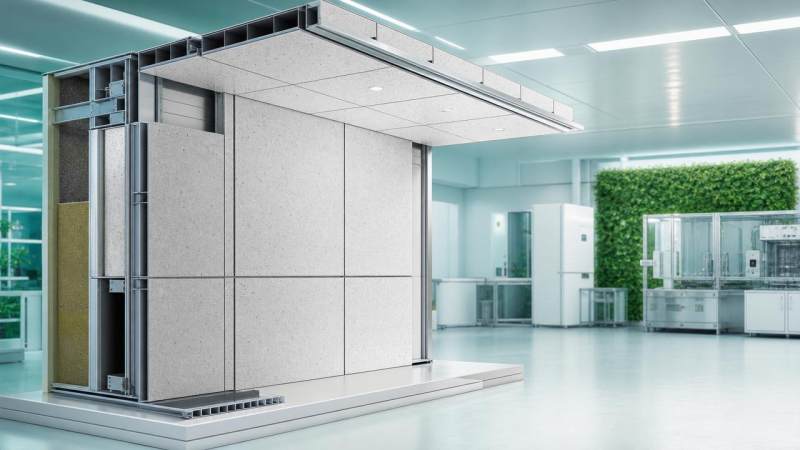
For business decision-makers evaluating greener construction strategies, a key question remains: are Eco-friendly building materials lightweight panels truly worth the investment? Beyond sustainability claims, their real value lies in measurable performance, lifecycle efficiency, and long-term cost control. Understanding how lightweight panels balance structural demands, compliance, and environmental goals is essential for making smarter, future-ready building decisions.
What makes lightweight panels relevant in greener builds for healthcare and technical facilities?
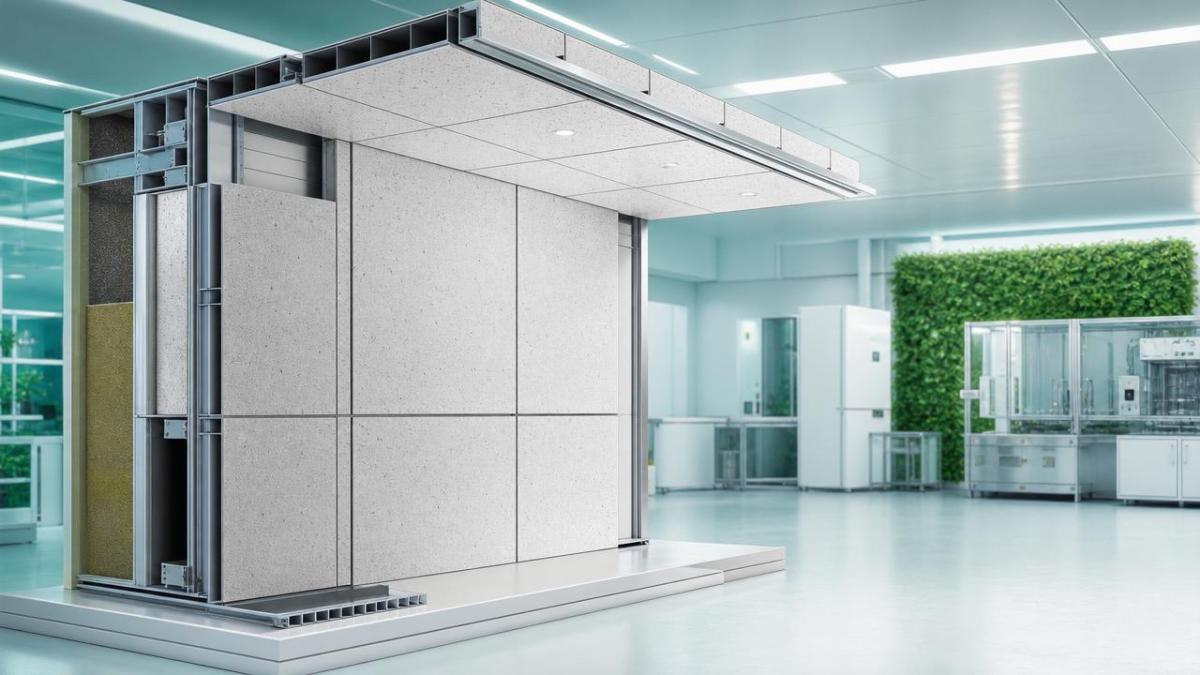
In many projects, Eco-friendly building materials lightweight panels are discussed as a sustainability upgrade. For decision-makers in hospitals, labs, clean-adjacent spaces, and MedTech infrastructure, the issue is more practical: can these materials support compliance, durability, and predictable operating cost?
Lightweight panels typically refer to engineered wall, ceiling, partition, or enclosure systems designed to reduce dead load while maintaining functional performance. Depending on specification, they may support insulation, cleanability, modular installation, acoustic control, moisture resistance, or fire-rated assemblies.
In healthcare-related environments, greener design choices cannot be separated from engineering truth. A panel that looks sustainable on a brochure but fails under cleaning chemicals, humidity cycles, or impact loads can create operational risk. That is why performance validation matters more than marketing language.
Why procurement teams are paying closer attention
- Lower structural load can reduce supporting frame requirements, speed transport, and simplify retrofits in occupied facilities.
- Prefabricated panel systems often improve installation consistency, which matters when project downtime affects clinical operations.
- Some lightweight panel systems use recycled content or lower-emission manufacturing processes, helping support sustainability targets without automatically compromising utility.
- Panels selected with verified data can support lifecycle planning, maintenance forecasting, and more disciplined capital allocation.
For organizations under value-based procurement models, the right question is not whether lightweight panels are trendy. It is whether they deliver measurable value in the specific building envelope, interior fit-out, or technical room environment being planned.
Are Eco-friendly building materials lightweight panels actually worth the cost?
The answer depends on where cost sits in your project model. If the evaluation is limited to unit price per panel, some options may appear less attractive than conventional heavy materials. If the analysis includes logistics, installation speed, structural savings, maintenance intervals, and facility disruption, the economics often shift.
This comparison table helps procurement leaders assess where lightweight panels create value and where caution is needed.
For greener builds, cost-worthiness usually improves when lightweight panels are integrated early in the design and procurement process. They are less effective when inserted late, after structural assumptions, MEP coordination, and compliance documentation have already been fixed around another material strategy.
Where hidden savings often appear
- Reduced installation downtime in active healthcare environments where access windows are narrow.
- Less need for structural reinforcement during renovations or laboratory conversions.
- Lower waste generation when panelized systems arrive cut-to-plan or factory-finished.
- Simplified future reconfiguration in spaces expected to change function over time.
Which technical performance criteria should decision-makers verify first?
Not all Eco-friendly building materials lightweight panels are suitable for healthcare, life sciences, or technical infrastructure. Procurement teams should start with performance data tied to the intended use case, not broad sustainability claims.
The table below outlines critical evaluation points when comparing lightweight panel options for controlled, semi-controlled, or high-utilization facilities.
A major procurement mistake is evaluating panels only at material level. Real performance depends on the full assembly: panel core, skin, joint design, sealants, substructure, fastening method, and the conditions of use. Benchmarking should reflect the system, not just a sample sheet.
Why VSM’s approach matters here
VitalSync Metrics (VSM) applies a data-driven mindset that healthcare procurement leaders already need in MedTech sourcing. The same discipline used to examine technical integrity, standardized parameters, and long-term reliability can also improve material selection for healthcare-adjacent construction and fit-out decisions.
When marketing claims and field performance diverge, independent benchmarking becomes valuable. Decision-makers need traceable documentation, not assumptions, especially where building materials interact with regulated healthcare operations or critical laboratory workflows.
Which application scenarios justify lightweight panels the most?
Eco-friendly building materials lightweight panels are not equally valuable in every part of a facility. Their business case strengthens when speed, hygiene, modularity, and future change are important.
High-value scenarios
- Hospital renovations in active wings where shorter installation windows reduce disruption to patient services.
- Laboratory support spaces requiring cleanable surfaces, controlled partitioning, and predictable service integration.
- MedTech manufacturing or pilot facilities where layouts may change as processes mature.
- Diagnostic or outpatient expansions where fast-track delivery is essential and structural loading must stay controlled.
Scenarios where caution is needed
- Locations with unusually high impact exposure unless reinforced panel assemblies are specified.
- Areas with aggressive chemical cleaning where surface compatibility has not been verified.
- Projects with vague performance specifications, where suppliers may quote non-equivalent systems.
This is where scenario-based evaluation becomes more useful than generic “green material” language. A lighter product is not automatically a better procurement choice. It becomes worthwhile when its properties align with operational reality.
How should procurement teams compare lightweight panels with other eco-conscious options?
Many organizations compare lightweight panels with masonry, gypsum-based systems, metal composite solutions, or timber-derived assemblies. The right comparison framework must include sustainability, but also infection-control suitability, documentation quality, and replacement complexity.
Use the following decision structure to avoid specification errors.
- Define the space by operational risk, not by architectural category alone. A corridor in a hospital behaves differently from a corridor in a commercial office.
- Compare installed-system performance instead of brochure claims about raw material sustainability.
- Map expected cleaning, impact, humidity, thermal cycling, and service access requirements over the panel lifespan.
- Quantify disruption cost. In healthcare environments, one extra week of noisy remedial work may outweigh a lower initial material price.
- Ask whether the supplier can provide consistent technical documents, declared tolerances, and evidence of stable manufacturing quality.
This kind of comparison is closely aligned with VSM’s core philosophy: convert variable claims into standardized evaluation logic. In both MedTech procurement and building material selection, confidence comes from comparability, not persuasion.
What standards, compliance points, and documentation should you check?
For enterprise buyers, compliance is not a paperwork afterthought. It directly affects project approval, insurance, facility validation, and long-term asset risk. Even when lightweight panels are not regulated like medical devices, the procurement discipline should be similarly rigorous.
Documentation checklist for greener panel selection
- Fire test and classification documents relevant to the actual assembly configuration being procured.
- Environmental product declarations or equivalent sustainability disclosures when available and applicable.
- Indoor air quality or low-emission documentation for patient, staff, or lab-adjacent spaces.
- Cleaning and chemical resistance guidance consistent with the facility’s sanitation protocol.
- Dimensional tolerance, installation method, substrate requirements, and repairability instructions.
In healthcare infrastructure projects, indirect compliance matters too. Materials that complicate validation, cleaning procedures, or records management can create downstream cost. Procurement leaders should treat documentation readiness as part of functional performance, not a separate administrative issue.
Common misconceptions about Eco-friendly building materials lightweight panels
Misunderstandings often lead to poor specifications or unrealistic savings assumptions. These are the most common ones seen in green building discussions.
“Lightweight means weak.”
Not necessarily. Strength depends on engineering design, core structure, skins, fixings, and intended loading. Some lightweight systems perform very well in partitioning and enclosure roles, while others are unsuitable for impact-heavy zones. The issue is fitness for purpose, not simple mass.
“Green materials always cost more.”
Initial purchase price can be higher, but installed cost and lifecycle cost may be lower. Faster construction, lower waste, and easier reconfiguration often improve total project economics.
“Any panel with recycled content is suitable for healthcare environments.”
Recycled content is only one variable. Surface durability, cleanability, moisture behavior, emissions profile, and fire performance remain critical. Sustainability attributes do not replace technical verification.
FAQ: what do buyers ask before specifying lightweight panels?
How do I know whether lightweight panels fit a hospital or lab project?
Start with the use condition: hygiene demands, impact exposure, cleaning chemicals, humidity range, fire requirements, and acoustic expectations. Then request system-level data, not just product leaflets. If documentation does not match the real assembly, risk remains unresolved.
What should matter more: sustainability claims or technical performance?
For enterprise procurement, technical performance comes first because it protects operational continuity. Sustainability claims gain value when they are attached to verified durability, service life, emissions control, and reduced rework. The strongest option usually balances both.
Are Eco-friendly building materials lightweight panels good for retrofits?
Often yes, especially where floor loading, access constraints, and occupied-site logistics are major concerns. Retrofits benefit from lighter handling and faster installation, but only if the panel system is compatible with the existing substrate, services coordination, and local code requirements.
What are the biggest procurement risks?
The main risks are non-equivalent quotations, missing assembly data, overreliance on sustainability marketing, and failure to account for maintenance needs. Another common mistake is choosing a panel before defining the facility’s cleaning protocol and impact exposure profile.
Why choose us when evaluating greener materials for healthcare-linked projects?
VitalSync Metrics (VSM) helps decision-makers move from claims to evidence. Our strength is not generic promotion. It is disciplined technical interpretation for buyers working in complex healthcare and life sciences environments where procurement errors can become operational liabilities.
If you are assessing Eco-friendly building materials lightweight panels for hospitals, MedTech facilities, laboratories, or other high-accountability spaces, we can help clarify the factors that matter before a specification becomes a costly commitment.
What you can consult us about
- Parameter confirmation for fire behavior, cleanability, moisture resistance, emissions profile, and durability expectations.
- Material selection logic for retrofit projects, modular healthcare spaces, and laboratory support environments.
- Documentation review to identify gaps between supplier claims and usable procurement evidence.
- Comparative assessment frameworks for competing panel systems, alternatives, and lifecycle cost implications.
- Discussion support around delivery timing, sample evaluation criteria, compliance expectations, and quotation alignment.
For business leaders, lightweight panels are worth using in greener builds when they are selected as engineered solutions, not as sustainability shortcuts. If you need a more reliable basis for specification, supplier comparison, or technical due diligence, VSM can help structure the decision with the level of rigor your project demands.
Recommended News
- 2026.10.15Medical Packaging Heat Seal Testing: Seal Strength vs. Seal Integrity TestsDr. Julian Rossi (RehabTech Specialist)
- 2026.10.14Clinic Supplier Comparison: Evaluating Cost, Delivery Reliability, and SupportDr. Alistair Thorne (Senior Biomedical Engineer)
- 2026.10.13Engineering Performance Testing Services: Evaluating Test Methods and AccuracyDr. Alistair Thorne (Senior Biomedical Engineer)
The VitalSync Intelligence Brief
Receive daily deep-dives into MedTech innovations and regulatory shifts.