 Get Insights

How Indian machinery exporters compete on cost and lead time
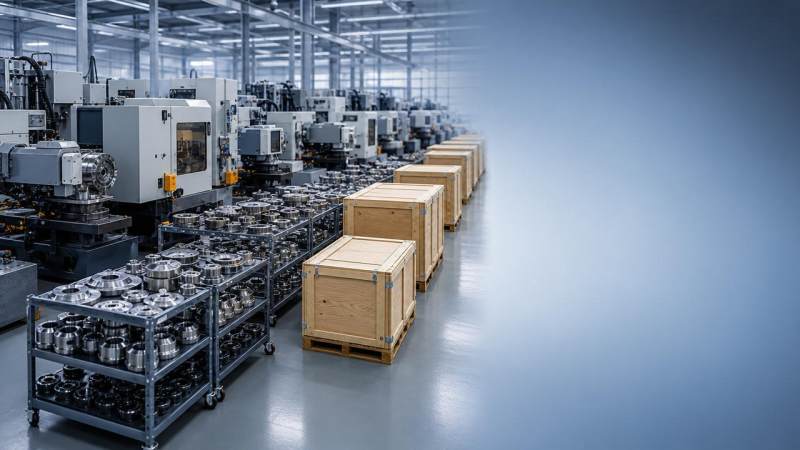
For every Industrial & Manufacturing machinery exporter in India, competing on cost and lead time is no longer just about cheaper labor or faster shipping. Business evaluators now look deeper—into process discipline, supplier resilience, engineering consistency, and delivery accuracy. This article examines how Indian exporters strengthen price competitiveness while shortening lead times, and what procurement teams should verify before treating speed and savings as true operational value.
What business evaluators are really searching for
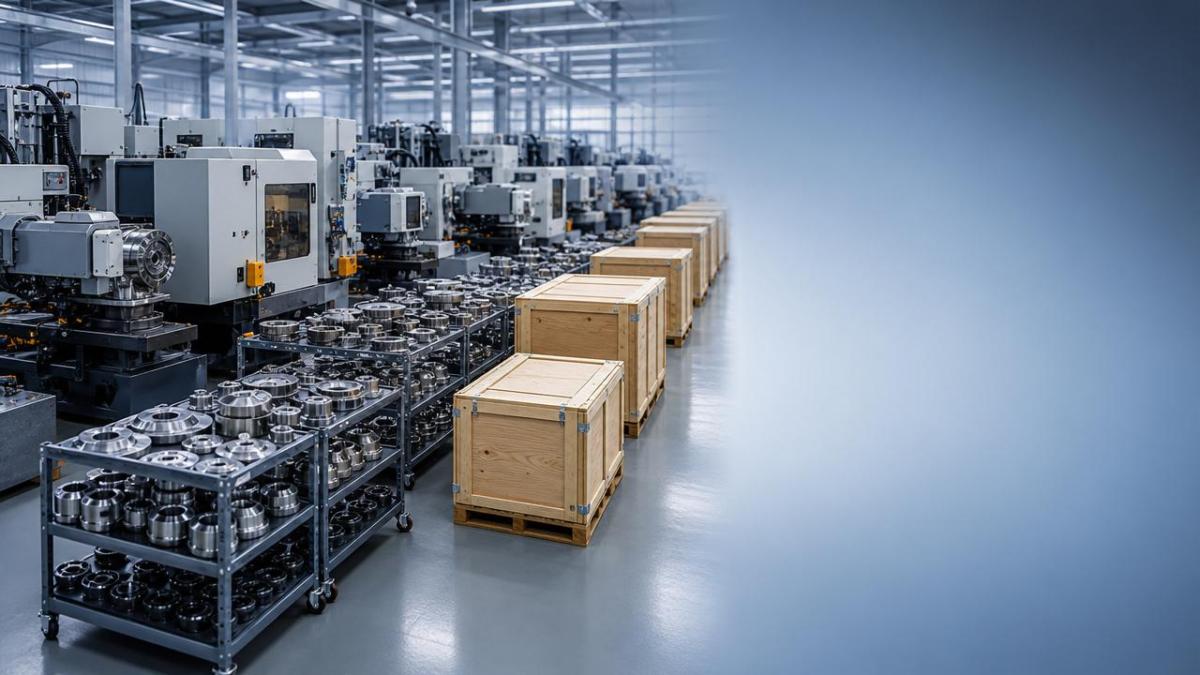
When buyers search how Indian machinery exporters compete, they usually are not asking a simple trade question. They want to know whether lower prices and faster deliveries are structurally credible.
For a business evaluator, the core issue is not headline cost. It is whether an Industrial & Manufacturing machinery exporter in India can deliver stable commercial performance without creating quality risk.
That means the real search intent combines supplier assessment, sourcing strategy, and risk control. Readers want practical criteria for judging if cost advantage comes from efficiency or from hidden compromises.
This distinction matters because aggressive quotes often look attractive during tender review, but lifecycle cost rises quickly when engineering rework, spare part delays, or compliance gaps appear after shipment.
Why India remains competitive on machinery cost
India’s machinery export advantage still starts with economics, but labor arbitrage alone no longer explains it. Stronger exporters are improving competitiveness through better production architecture and sourcing discipline.
One major factor is the depth of India’s engineering labor pool. Exporters can access machinists, mechanical engineers, control specialists, and fabrication teams at lower cost than many Western competitors.
However, evaluators should focus less on wage cost and more on engineering productivity. A lower hourly rate matters only when drawings, tolerances, documentation, and inspection systems convert labor into repeatable output.
Indian exporters that compete well on price usually standardize modules, reuse proven subassemblies, and minimize non-value engineering changes. This reduces design hours, scrap, and procurement complexity across orders.
Domestic supplier ecosystems also support cost control. In major industrial clusters, exporters can source castings, sheet metal, motors, fasteners, control panels, and precision components without excessive import dependence.
That local density shortens procurement loops and lowers inventory carrying pressure. It also gives exporters flexibility to compare vendors, renegotiate material buys, and substitute approved sources when disruptions occur.
Energy, land, and operating costs can also be favorable in certain manufacturing zones. Yet these benefits only become commercially meaningful when plant layout, preventive maintenance, and production planning are disciplined.
From an evaluator’s perspective, the best signal is not the lowest quote. It is a quote supported by clear cost structure logic, realistic assumptions, and evidence of process maturity.
How Indian exporters reduce lead times without sacrificing control
Lead time competitiveness is increasingly won before production begins. Strong exporters shorten delivery by controlling design freeze timing, material planning, supplier commitments, and production scheduling in a coordinated way.
Many experienced exporters now maintain semi-finished inventory for common frames, housings, wiring kits, and standard control components. This allows them to compress build cycles for configurable machinery platforms.
Others reduce delays by designing around components with stable local availability. Instead of relying on a single imported brand, they qualify multiple equivalent sources for non-critical assemblies where possible.
Digital coordination is another advantage. Exporters using ERP, production tracking, and supplier visibility tools can identify bottlenecks earlier and update customers before slippage becomes unmanageable.
For business evaluators, this is critical. Short lead time claims should be linked to material readiness, capacity reservation, and inspection sequencing, not just optimistic promises from sales teams.
Production cell design also matters. Plants organized for flow, with parallel fabrication, machining, electrical integration, and final assembly stages, can reduce idle time between departments and improve dispatch predictability.
Some exporters further improve turnaround by pre-validating documentation packages. Drawings, manuals, test protocols, and packing specifications are prepared in parallel rather than left until the final shipment week.
In practical terms, a credible lead time is one supported by visible planning logic. A risky lead time is one that depends on everything going perfectly across an unstable supplier base.
What separates efficient exporters from risky low-cost suppliers
Not every low-cost exporter creates value. Some reduce price by underinvesting in inspection, documentation, training, or supplier qualification. The result may still ship on time, but performance risk shifts to the buyer.
Business evaluators should therefore ask how cost is achieved. Is the exporter saving through modular design, local sourcing, process automation, and lean planning, or through thinner quality safeguards?
One revealing indicator is tolerance discipline. Exporters with mature operations can explain critical dimensions, process controls, calibration practices, and acceptance criteria instead of offering generic quality assurances.
Another signal is change management. Machinery orders often evolve during engineering review. Strong suppliers document revisions carefully and quantify schedule, cost, and performance impact before execution.
After-sales readiness also deserves attention. A supplier may win on ex-works price and quoted delivery, yet lose value if spare parts, remote diagnostics, commissioning support, or service documentation are weak.
For sectors linked to healthcare, laboratory operations, or regulated environments, this becomes even more important. Mechanical performance alone is insufficient if traceability, validation support, or documentation quality is inconsistent.
At VitalSync Metrics, we often see buyers overestimate visible savings and underestimate operational friction. True competitiveness comes from engineering truth: repeatability, transparency, and field reliability over time.
Questions procurement teams should ask before trusting cost and lead time claims
A good evaluation process does not require perfect supplier certainty, but it does require better questions. The goal is to distinguish scalable capability from commercial storytelling.
First, ask what percentage of the machine is based on standard modules versus custom design. Higher modularity often improves both cost stability and delivery predictability.
Second, ask which components have the longest procurement cycle and whether approved alternate vendors exist. This quickly exposes dependence on fragile supply chains.
Third, request evidence of on-time delivery performance by machine category, not just company-level averages. Exporters may perform well in one product family and poorly in another.
Fourth, review the inspection plan. Confirm whether incoming material checks, in-process inspections, functional testing, and pre-dispatch acceptance are formally documented and customer-accessible.
Fifth, examine engineering bandwidth. A supplier with strong fabrication capacity but weak design review resources may create hidden lead time risk during approval cycles and revisions.
Sixth, ask how packaging, export compliance, and shipment coordination are managed. Delays often happen after the machine is built, especially when documentation and logistics ownership are unclear.
Seventh, verify post-shipment support capability. Fast delivery loses value if installation issues, replacement parts, or software adjustments take weeks to resolve across time zones.
These questions help evaluators move from price comparison to operational due diligence. That is where smarter sourcing decisions are usually made.
Where cost advantage can disappear after the purchase order
Many sourcing teams compare suppliers using unit price and promised dispatch date, but a significant share of total cost emerges after order placement and delivery.
Engineering clarification cycles can consume weeks when quotations are based on incomplete assumptions. If the supplier has not fully understood load conditions, utilities, interfaces, or validation needs, delays follow.
Quality escapes can be even more expensive. Rework, replacement parts, field modifications, and service visits erode any initial savings, especially for machinery integrated into larger production or laboratory systems.
There is also the cost of internal coordination. Buyers spend more management time when documents are inconsistent, communication is slow, or progress reporting lacks technical specificity.
For global procurement teams, customs readiness and packing quality should not be ignored. Transit damage, missing certificates, or incorrect export paperwork can undermine a supplier that otherwise performed well in manufacturing.
This is why experienced evaluators model total acquisition impact, not just invoice value. They assess downtime exposure, startup risk, support burden, and supplier responsiveness under real operating conditions.
An Industrial & Manufacturing machinery exporter in India becomes truly competitive when lower cost survives this broader analysis. If it does not, the apparent saving was never strategic value.
How evaluators can build a more reliable comparison framework
To compare exporters fairly, procurement teams should move beyond broad impressions and use a weighted scorecard tied to business outcomes. This improves alignment between sourcing, engineering, and operations stakeholders.
Useful scoring categories include quoted price realism, lead time credibility, critical component sourcing, engineering responsiveness, documentation quality, inspection maturity, and after-sales capability.
Each category should be evidence-based. For example, lead time should be scored using production schedules, material availability plans, and historical delivery data rather than sales commitments alone.
Quality should likewise be judged through process documentation, calibration records, FAT protocols, nonconformance handling, and root cause discipline, not generic certificates without operational context.
When possible, evaluators should also compare suppliers through pilot orders, staged approvals, or reference checks within similar application environments. Small tests often reveal more than polished presentations.
For organizations operating in healthcare-adjacent or regulated technical environments, technical benchmarking adds even more value. Data-backed comparison reduces the risk of overbuying on claims and underbuying on substance.
That is the broader lesson for global buyers. Competitive sourcing is no longer about finding the cheapest capable vendor. It is about identifying the most reliable converter of engineering inputs into business outcomes.
Final assessment: what makes Indian exporters worth serious consideration
Indian machinery exporters can compete effectively on both cost and lead time, but the strongest advantage comes from operational discipline rather than low-cost positioning alone.
The best suppliers combine modular engineering, local sourcing depth, structured production planning, and transparent communication. That combination creates savings buyers can actually retain after installation and startup.
For business evaluators, the right question is not whether India is low cost. It is whether a specific exporter’s cost structure and lead time promise are supported by repeatable systems.
When that proof exists, an Industrial & Manufacturing machinery exporter in India may offer strong commercial value, resilient supply performance, and attractive total acquisition economics.
When that proof is missing, low pricing and fast promises should be treated cautiously. In machinery sourcing, credibility is the real competitive advantage.
Recommended News
- 2026.10.15Medical Packaging Heat Seal Testing: Seal Strength vs. Seal Integrity TestsDr. Julian Rossi (RehabTech Specialist)
- 2026.10.14Clinic Supplier Comparison: Evaluating Cost, Delivery Reliability, and SupportDr. Alistair Thorne (Senior Biomedical Engineer)
- 2026.10.13Engineering Performance Testing Services: Evaluating Test Methods and AccuracyDr. Alistair Thorne (Senior Biomedical Engineer)
The VitalSync Intelligence Brief
Receive daily deep-dives into MedTech innovations and regulatory shifts.