 Get Insights

Why more buyers source equipment suppliers in Germany
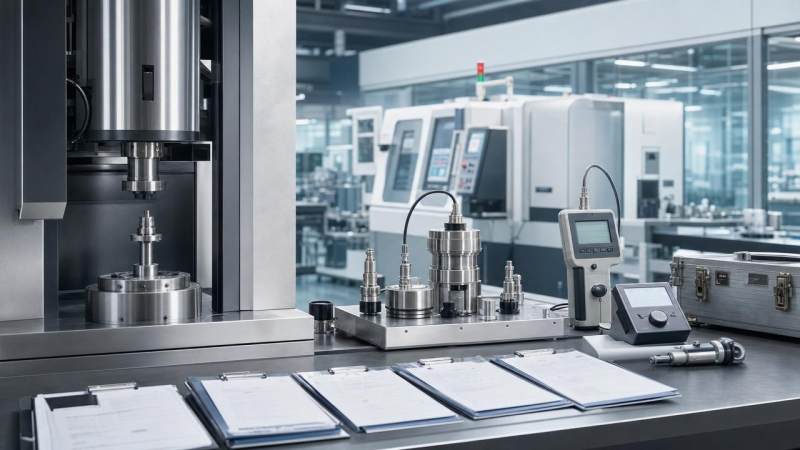
For procurement professionals facing tighter compliance demands, technical verification, and long-term performance risks, choosing the right Industrial & Manufacturing equipment supplier in Germany has become a strategic decision. Germany’s reputation for engineering precision, regulatory discipline, and manufacturing consistency is attracting more global buyers who need dependable partners, transparent specifications, and proven quality beyond marketing claims.
This shift is especially visible in healthcare, laboratory development, MedTech manufacturing, and regulated industrial environments where equipment failure can delay validation, disrupt production, or increase compliance exposure. For buyers who must evaluate suppliers beyond brochures and sales claims, Germany offers a sourcing ecosystem built around process control, repeatability, and documentation depth.
For organizations working with VitalSync Metrics (VSM), the issue is not simply where equipment is made. The real question is whether a supplier can demonstrate engineering integrity across material selection, calibration stability, testing methods, and lifecycle support. That is why more global buyers are prioritizing an Industrial & Manufacturing equipment supplier in Germany when procurement decisions involve regulated performance and long-term operational risk.
Why Germany continues to stand out in industrial and manufacturing procurement
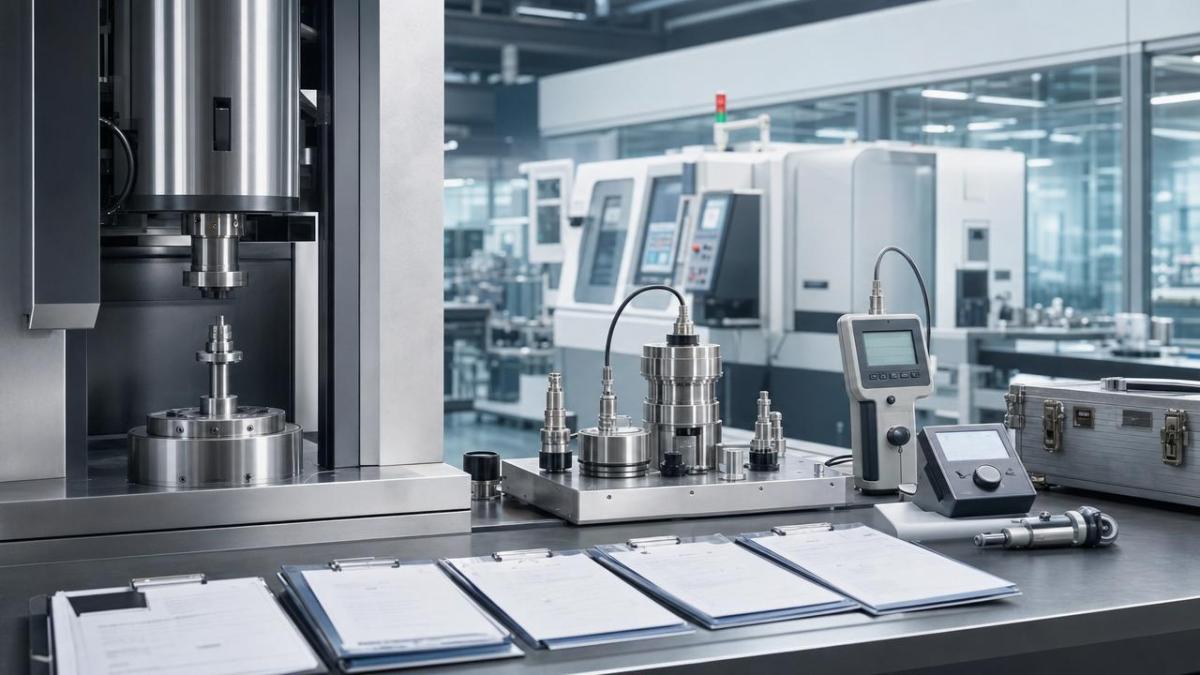
Germany has built a supplier reputation on measurable consistency. In many industrial categories, buyers expect dimensional tolerances, documented test procedures, and stable production batches rather than broad quality statements. For procurement teams managing 3-year to 7-year asset plans, that consistency lowers qualification time and reduces the chance of costly supplier changes after installation.
This matters even more in healthcare-adjacent manufacturing. Equipment used in laboratory build-outs, sterile packaging, sensor assembly, or precision machining often needs traceable materials, calibration intervals, and maintenance records. A capable Industrial & Manufacturing equipment supplier in Germany is often prepared to support these requirements with technical files, validation references, and process transparency.
Engineering culture is translated into procurement value
Buyers are not paying for reputation alone. They are paying for fewer hidden variables across the procurement cycle. In practical terms, that can mean tighter assembly tolerance ranges such as ±0.02 mm to ±0.10 mm for precision components, more consistent surface finishes, and documented operating parameters for pressure, temperature, or cycle duration.
When equipment is integrated into medical production or life sciences workflows, even a small deviation can have downstream effects. A vibration level outside the accepted range, a poorly controlled thermal profile, or inconsistent electrical shielding can affect product quality, testing repeatability, or device reliability. German suppliers are often selected because they can explain not just performance results, but how those results were achieved.
Common buyer priorities behind this preference
- Documented specifications instead of generalized performance claims
- Stable lead-time planning, often within 6–14 weeks for standard industrial builds
- Traceability for components, materials, and inspection steps
- Support for regulated industries that require verification before acceptance
- Lower probability of rework, field failure, or post-installation redesign
The table below summarizes why sourcing teams increasingly compare Germany-based suppliers against lower-cost options, especially when total lifecycle risk matters more than initial unit price.
The key takeaway is that Germany is often chosen not because every quote is lower, but because technical uncertainty is lower. For procurement teams responsible for uptime, validation, and supplier accountability, that difference can outweigh a 5% to 15% price gap at the quotation stage.
Why procurement teams in healthcare and life sciences look beyond price
In healthcare-linked procurement, cost remains important, but technical failure is usually more expensive than a higher purchase price. A delayed installation can push a laboratory launch back by 4–8 weeks. A non-repeatable sensor assembly line can trigger revalidation. A poorly documented component change can create audit questions that spread across multiple departments.
This is where VSM’s perspective becomes relevant. Buyers in MedTech and Life Sciences increasingly need benchmarked engineering evidence, not marketing language. When selecting an Industrial & Manufacturing equipment supplier in Germany, procurement teams often want to verify signal integrity, materials behavior, fatigue limits, process repeatability, and maintenance exposure before signing a long-term agreement.
The hidden cost of weak technical verification
A supplier can meet headline performance claims and still fail in real operating conditions. For example, a system may function during a short demo but drift after 500 hours, lose calibration after repeated sterilization cycles, or require service visits every 90 days instead of every 6 months. These are procurement risks, not just engineering details.
In many regulated settings, buyers evaluate equipment across at least 4 dimensions: performance, compliance readiness, maintainability, and documentation quality. Germany-based suppliers often perform well because they are used to customers asking for factory acceptance criteria, material certificates, service manuals, and measurable failure thresholds.
Typical risk categories buyers assess
- Performance drift over time
- Insufficient traceability of parts or subassemblies
- Gaps in operating or maintenance documentation
- Long spare-parts replacement cycles beyond 21–30 days
- Weak post-installation support during the first 12 months
The table below outlines practical evaluation points that procurement teams can use when comparing suppliers for healthcare-related industrial applications.
Using a structured checklist like this helps procurement teams convert technical claims into reviewable evidence. It also makes supplier comparisons more objective, especially when multiple departments, from engineering to quality assurance, are involved in approval.
What buyers should verify before selecting an Industrial & Manufacturing equipment supplier in Germany
A strong supplier evaluation process should move from broad qualification to application-specific verification. That is particularly important when the equipment will support medical production, diagnostics workflows, clean environments, or high-precision assembly. In these cases, a supplier’s ability to explain limits is often as important as its ability to quote capabilities.
1. Review process capability, not just catalog specifications
Catalog values are useful, but they rarely explain performance under real operating load. Buyers should ask how output changes under continuous operation, temperature variation, or high-cycle usage. For instance, if a system runs 16 hours per day across 5 days per week, can the supplier show stable output and acceptable wear behavior over time?
2. Confirm documentation needed for internal approval
Procurement delays often come from missing files rather than missing features. Before issuing a purchase order, ask whether the supplier can provide specification sheets, maintenance instructions, parts lists, inspection results, and change notification procedures. In regulated settings, these 5 document categories can determine whether deployment is smooth or stalled.
3. Evaluate service model and spare-parts strategy
An Industrial & Manufacturing equipment supplier in Germany may offer excellent manufacturing quality, but the support model still needs review. Ask about average response time, remote diagnostics, spare-parts stock logic, and whether critical wear items can be shipped within 48–72 hours. This is especially important for facilities with limited maintenance redundancy.
A practical 6-point procurement checklist
- Defined tolerance or output range under actual operating conditions
- Clear maintenance frequency and consumable replacement schedule
- Material and component traceability where required
- Technical support availability during commissioning and validation
- Documented change control for future revisions
- Total cost visibility across purchase, service, downtime, and parts
Buyers who complete these checks are usually in a stronger position to compare suppliers fairly. They can also avoid a common procurement mistake: selecting a lower-quote vendor whose undocumented limitations later create compliance work, production loss, or expensive retrofits.
How VSM helps buyers make more defensible sourcing decisions
VitalSync Metrics operates from the premise that procurement quality depends on engineering clarity. In sectors where healthcare, manufacturing, and laboratory infrastructure overlap, decision-makers need a way to convert technical complexity into comparable sourcing criteria. That is where independent benchmarking becomes useful.
Instead of relying only on supplier narratives, buyers can use standardized evaluation frameworks to review performance variables such as signal-to-noise ratio, fatigue behavior, thermal stability, repeatability, and maintenance burden. For a procurement team reviewing 3 to 6 suppliers, that approach can narrow uncertainty faster than a conventional quote comparison.
Where benchmarking adds the most value
Benchmarking is particularly valuable when the purchased equipment supports sensitive workflows. Examples include wearable sensor assembly, implant-related materials processing, precision laboratory fixtures, and automation platforms integrated into quality-controlled production. In these cases, one undocumented variable can affect output integrity across hundreds or thousands of cycles.
Typical VSM-oriented review areas
- Verification of measurable performance versus marketing claims
- Comparison of engineering parameters across shortlisted suppliers
- Translation of technical findings into procurement-ready whitepapers
- Identification of long-term reliability or maintenance risks before purchase
For global buyers, this matters because sourcing decisions are increasingly cross-functional. Procurement, engineering, regulatory, and operations teams may all influence the final approval. When a Germany-based supplier is being considered for technically sensitive equipment, a structured review helps each department assess the same evidence from its own perspective.
More importantly, this approach supports value-based procurement. Instead of focusing only on unit price, buyers can compare which supplier is most likely to meet technical targets, maintain performance over 12–36 months, and reduce downstream correction costs. That is often the deciding factor in complex B2B sourcing.
Common sourcing mistakes and how to avoid them
Even experienced buyers can make avoidable errors when technical urgency is high. One common mistake is approving a supplier based on a successful demonstration without confirming repeatability under actual duty conditions. Another is accepting broad compliance language without clarifying what documents will be delivered before FAT, at shipment, and after installation.
Mistake 1: Treating all German suppliers as equally suitable
Germany has a strong industrial base, but supplier quality still varies by niche, process maturity, and application knowledge. Buyers should assess whether the supplier understands healthcare-related manufacturing requirements, not just industrial production in general. The relevant question is application fit, not country label alone.
Mistake 2: Focusing too late on lifecycle support
Service planning should begin before purchase approval. Ask how training is delivered, whether remote troubleshooting is available, and what the expected spare-parts horizon looks like over 24 months. Delaying these questions can expose the site to long downtime after a predictable wear issue.
Mistake 3: Underestimating documentation as a procurement deliverable
Technical documentation is often treated as an engineering concern, but it is equally a commercial and compliance requirement. Missing records can delay payment milestones, postpone qualification, or trigger internal review loops. For many buyers, document completeness is now a top-tier selection factor alongside price and performance.
As more organizations seek an Industrial & Manufacturing equipment supplier in Germany, the best results usually come from disciplined evaluation. Buyers should combine cost analysis with specification review, service planning, and evidence-based verification. That is especially important in healthcare and life sciences supply chains, where technical gaps become operational risks very quickly.
VSM supports this decision process by turning complex engineering data into practical procurement insight. If your team is comparing suppliers, validating technical claims, or preparing for a regulated equipment purchase, now is the right time to get a more defensible sourcing framework. Contact us to discuss your application, request a tailored evaluation approach, or learn more about solutions that help you source with greater confidence.
Recommended News
- 2026.10.15Medical Packaging Heat Seal Testing: Seal Strength vs. Seal Integrity TestsDr. Julian Rossi (RehabTech Specialist)
- 2026.10.14Clinic Supplier Comparison: Evaluating Cost, Delivery Reliability, and SupportDr. Alistair Thorne (Senior Biomedical Engineer)
- 2026.10.13Engineering Performance Testing Services: Evaluating Test Methods and AccuracyDr. Alistair Thorne (Senior Biomedical Engineer)
The VitalSync Intelligence Brief
Receive daily deep-dives into MedTech innovations and regulatory shifts.