 Get Insights

How to vet an industrial supplier in Germany
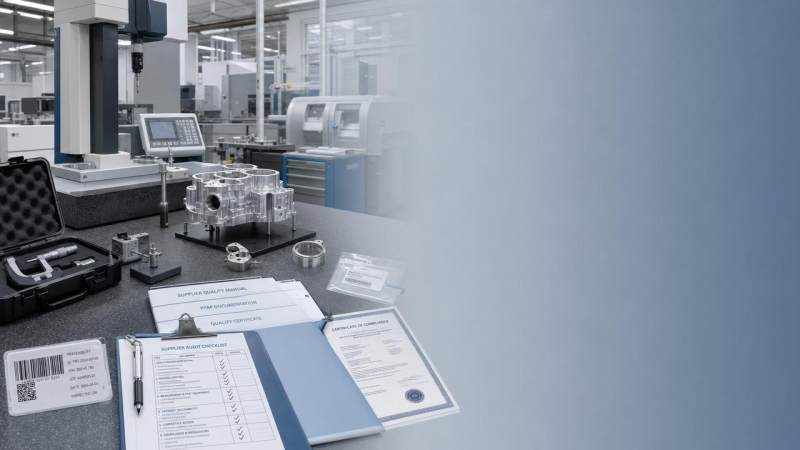
Choosing among industrial suppliers in Germany requires more than comparing prices or delivery times. For technical sourcing, supplier approval depends on evidence, not presentation.
In healthcare, life sciences, automation, and precision manufacturing, weak vendor validation can trigger compliance gaps, unstable quality, delayed launches, and costly redesigns.
A structured review helps separate capable partners from attractive but unproven offers. This is especially important when evaluating industrial suppliers in Germany.
Germany has a strong reputation for engineering depth, process discipline, and export quality. Still, reputation alone does not confirm fit for a regulated or high-risk application.
The best approach is to test technical integrity, regulatory readiness, operational resilience, and documentation quality through a repeatable framework.
Understanding what “qualified” means for industrial suppliers in Germany
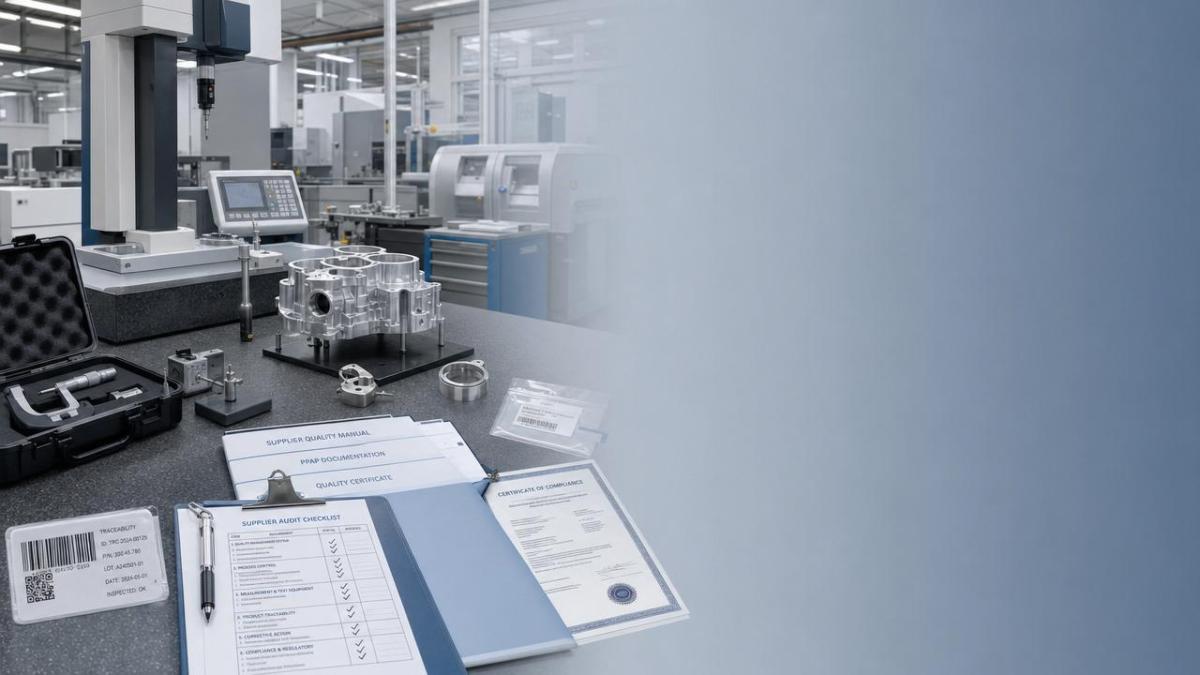
Not every capable factory is a qualified supplier. Qualification depends on product category, intended use, process risk, and documentation maturity.
For standard industrial parts, supplier review may focus on lead time, consistency, and cost control. For medical or laboratory systems, the threshold is higher.
In those cases, industrial suppliers in Germany should demonstrate traceability, change control, validated processes, and familiarity with MDR, IVDR, or ISO-based systems.
A reliable assessment starts by defining the risk profile of the sourced item. Criticality drives the level of technical and commercial verification.
Core qualification dimensions
- Engineering capability and process control
- Regulatory and quality system alignment
- Material, component, and batch traceability
- Capacity stability and supply continuity
- Responsiveness to deviations and change requests
Industry signals shaping supplier review in Germany
Supplier vetting standards are changing across Europe. Buyers increasingly request proof of process reliability, not only certificates or reference lists.
For industrial suppliers in Germany, scrutiny often reflects wider trends in digital manufacturing, regulated product development, and supply chain resilience.
These signals matter because many industrial suppliers in Germany serve multiple sectors. A strong automotive background does not automatically translate into medical compliance discipline.
Technical and compliance checks that reduce sourcing risk
The most important step is moving from brochure claims to measurable proof. Ask for documents, records, samples, and process evidence tied to your exact application.
Technical review areas
- Machine capability, tolerances, and repeatability data
- Material specifications, certificates, and approved substitutes
- Validation reports for cleaning, sterilization, bonding, or calibration
- Failure rates, rework trends, and incoming inspection methods
- Engineering support during NPI and design transfer
Compliance review areas
- ISO 9001 or ISO 13485 scope and validity
- Document control and revision history
- Nonconformance handling and CAPA closure quality
- Supplier management for sub-tier sources
- Audit trail support for regulated submissions
When reviewing industrial suppliers in Germany, request examples from similar products, not just similar industries. Application relevance often reveals the real maturity level.
Independent benchmarking can also help. VSM-style evaluation methods compare production claims with measurable engineering performance and documentation strength.
Business value of a deeper supplier assessment
A careful review creates value far beyond risk avoidance. It improves forecast accuracy, strengthens launch planning, and reduces hidden cost across the product lifecycle.
Industrial suppliers in Germany are often selected for precision and reliability. A deeper assessment confirms whether that value is sustainable at operational scale.
The strongest suppliers usually show disciplined communication, stable change management, realistic timelines, and transparent limits. Those traits support better long-term planning.
Practical benefits of thorough vetting
- Lower probability of quality escapes and field failures
- Faster root cause analysis when deviations occur
- Better support for audits and technical documentation
- Improved resilience during demand spikes or component shortages
- More accurate total cost of ownership decisions
Common supplier types and how review priorities differ
Not all industrial suppliers in Germany should be evaluated in the same way. Review priorities change by process complexity and product impact.
This classification helps narrow questions. It also makes comparisons between industrial suppliers in Germany more consistent and evidence based.
A practical vetting framework for industrial suppliers in Germany
A useful framework combines desk research, document review, technical interviews, sample assessment, and ongoing monitoring after approval.
Step-by-step process
- Define product criticality, performance requirements, and compliance scope.
- Screen industrial suppliers in Germany using capability fit and sector relevance.
- Request certificates, process maps, sample records, and change procedures.
- Interview technical staff, not only sales contacts.
- Review samples against specifications and real use conditions.
- Audit traceability, nonconformance handling, and sub-supplier controls.
- Approve conditionally with performance KPIs and review milestones.
Warning signs
- Certificates without clear process scope
- Frequent material substitutions without notification rules
- Weak responses to deviation history questions
- No defined escalation path for urgent quality events
- Heavy dependence on one unverified subcontractor
Next steps for confident supplier selection
The most effective sourcing decisions combine technical proof, compliance evidence, and operational realism. That is the right standard for industrial suppliers in Germany.
Start with a risk-ranked checklist. Then compare suppliers using the same criteria, records, and sample expectations. Consistency improves both speed and decision quality.
Where requirements are regulated or highly engineered, independent benchmarking adds useful clarity. It helps confirm whether supplier claims match repeatable performance.
A disciplined evaluation process turns industrial suppliers in Germany from possible vendors into verified partners. That shift protects compliance, continuity, and long-term product confidence.
Recommended News
- 2026.10.15Medical Packaging Heat Seal Testing: Seal Strength vs. Seal Integrity TestsDr. Julian Rossi (RehabTech Specialist)
- 2026.10.14Clinic Supplier Comparison: Evaluating Cost, Delivery Reliability, and SupportDr. Alistair Thorne (Senior Biomedical Engineer)
- 2026.10.13Engineering Performance Testing Services: Evaluating Test Methods and AccuracyDr. Alistair Thorne (Senior Biomedical Engineer)
The VitalSync Intelligence Brief
Receive daily deep-dives into MedTech innovations and regulatory shifts.