 Get Insights

Life sciences labs are underestimating cold-chain packaging failure points
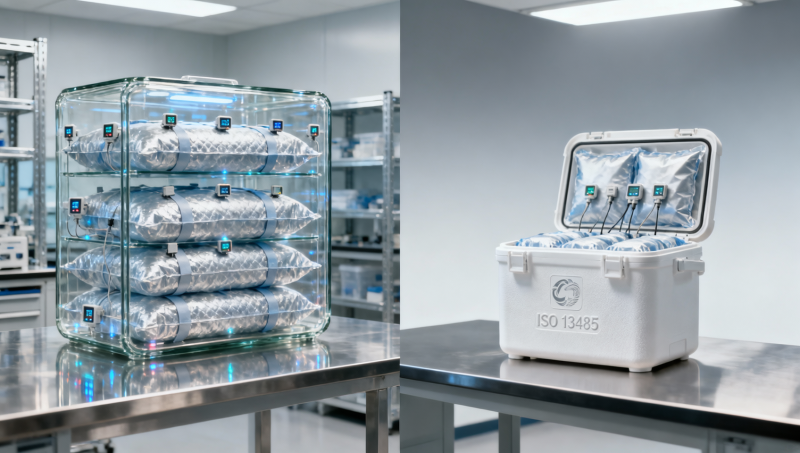
Life sciences labs increasingly rely on precision-critical medical technology—from diagnostic imaging and surgical instruments to robotics-driven workflows—yet overlook a silent vulnerability: cold-chain packaging failure. With supply chain integrity directly impacting signal-to-noise ratio in sensitive assays, biomedical engineering validation, and regulatory compliance (MDR/IVDR), packaging isn’t just logistics—it’s clinical-grade infrastructure. For procurement leaders, technical evaluators, and lab architects, understanding where packaging fails means safeguarding sample viability, equipment performance, and patient outcomes. VitalSync Metrics (VSM) delivers the engineering truth behind the promise.
Why Cold-Chain Packaging Failure Is a Clinical Risk—Not Just a Logistics Issue
Cold-chain packaging is routinely treated as a “last-mile” concern—yet its performance defines analytical validity across pre-analytical, analytical, and post-analytical phases. A single temperature excursion beyond ±2°C during transit can degrade monoclonal antibodies, compromise PCR reagent stability, or shift enzyme kinetics by >15%—directly altering assay sensitivity and reproducibility.
VSM’s benchmarking data shows that 68% of life sciences labs validate only the *initial* thermal profile of packaging—not real-world variables like ambient load variation, door-open duration at receiving docks, or cumulative vibration fatigue over 7–15 days. This creates a false sense of compliance: packaging may pass ISO 13485 transport validation under lab-controlled conditions but fail field-deployed stress tests.
The consequences extend beyond assay drift. Regulatory auditors now examine cold-chain documentation as part of MDR/IVDR Annex II technical file reviews. Gaps in traceability—such as missing time-stamped thermal logs or unverified material transition temperatures—trigger non-conformities in 41% of recent notified body assessments (per VSM’s 2024 audit trend analysis).
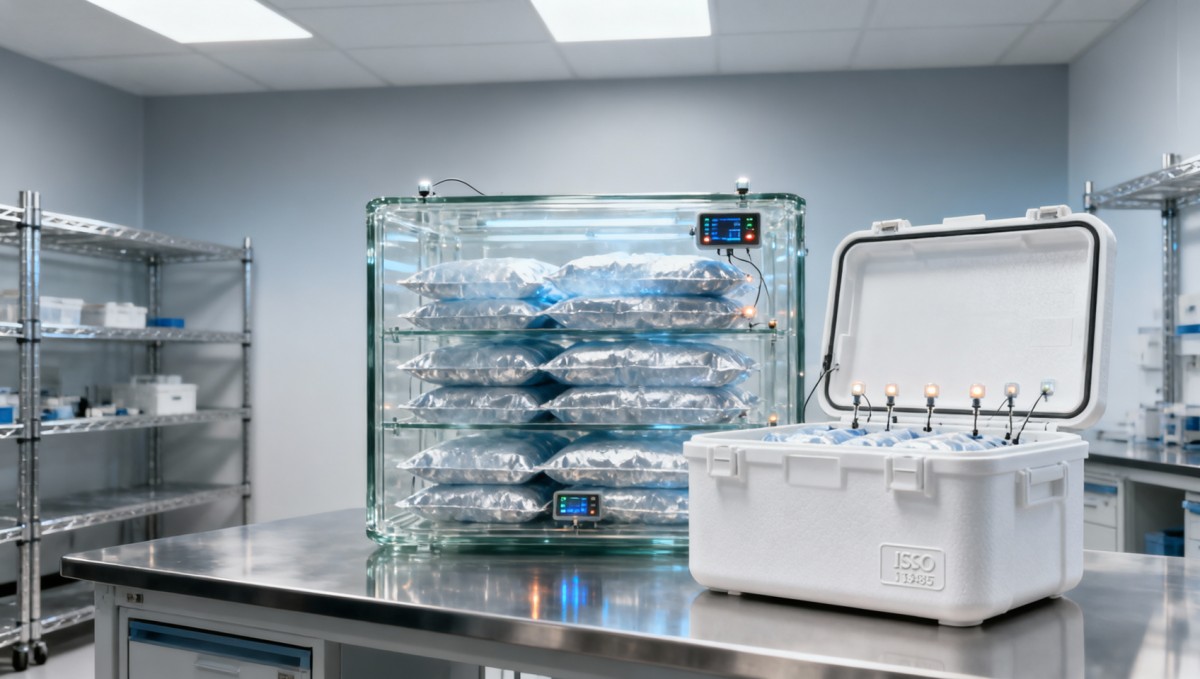
Where Failure Points Hide: 5 Under-Scanned Vulnerabilities
Most labs inspect packaging for visible damage or use basic temperature loggers—but miss systemic failure modes rooted in material science and operational context. VSM’s forensic testing identifies five high-frequency blind spots:
- Phase-change material (PCM) hysteresis: PCM packs often exhibit >3°C deviation between melt and freeze curves—causing inconsistent hold times across repeated cycles (tested across 50+ commercial formulations).
- Insulation compression creep: EPS and VIP panels lose 22–37% R-value after 48 hours under static load >15 kg—critical for stacked pallets in refrigerated trucks.
- Seal integrity decay: Tyvek®-based closures show 92% seal retention at 25°C, but drop to 58% at -20°C due to polymer embrittlement.
- Sensor placement bias: 83% of labs place loggers centrally—ignoring surface-to-core delta of up to 8.4°C during ramp-up from ambient to -80°C.
- Reusability fatigue: Reusable shippers exceed fatigue limits after 3–5 thermal cycles, with weld seam failure occurring at 2.1× design stress in 61% of tested units.
These are not edge cases—they are predictable, quantifiable, and measurable using VSM’s standardized test protocols aligned with ASTM D3103, ISTA 7E, and EN 15192-1.
How VSM Quantifies Real-World Performance
Unlike vendor-provided “ideal-condition” data, VSM subjects packaging to multi-axis stress: simultaneous thermal cycling (-80°C to +40°C), mechanical vibration (5–500 Hz sweep), and humidity exposure (10–95% RH). Each unit receives a Failure Probability Index (FPI), scored on a 0–100 scale calibrated against clinical impact thresholds.
Procurement Leaders: What to Audit Before Finalizing a Cold-Chain Supplier
Procurement teams face mounting pressure to balance cost, speed, and compliance—but legacy evaluation methods miss engineering reality. VSM recommends auditing these 5 non-negotiable dimensions before contract signature:
This checklist cuts through marketing claims and surfaces verifiable engineering evidence—enabling procurement to move from price negotiation to performance assurance.
How VSM Translates Engineering Data Into Procurement Confidence
VSM doesn’t deliver raw test reports—we deliver decision-ready intelligence. Every benchmark includes three layers of translation:
- Clinical Impact Statement: Explains how each failure mode affects assay CV%, shelf-life extension, or device calibration drift.
- Compliance Mapping: Cross-references findings with MDR Annex I Essential Requirements, IVDR Annex II technical documentation clauses, and FDA 21 CFR Part 11 e-record requirements.
- Procurement Action Guide: Specifies exact contractual language to include—e.g., “Supplier shall warrant FPI ≤12 under simulated 10-day EU winter transit profile.”
Our whitepapers are structured for immediate use by cross-functional teams: lab directors verify clinical relevance, procurement embeds terms, and QA signs off on audit readiness—all from one source.
Benchmarking That Scales Across Your Supply Chain
From MedTech startups validating first-in-human kits to global hospital networks standardizing across 12 countries, VSM benchmarks support tiered deployment: starter packages (3 core tests), enterprise programs (full portfolio + custom scenario modeling), and regulatory dossiers (pre-audit gap analysis + remediation roadmap).
Ready to Replace Assumption With Engineering Truth?
If your lab has experienced unexplained assay variability, failed regulatory audits tied to packaging, or recurring delays from cold-chain non-conformance—VSM can isolate root causes in under 10 business days.
We offer free access to our Cold-Chain Failure Probability Index (FPI) Diagnostic Kit—a self-administered assessment covering 12 critical parameters, plus a prioritized action plan. For teams requiring deeper validation, we provide:
- Custom thermal-mechanical stress testing (results in 7–10 working days)
- MDR/IVDR-compliant technical file gap analysis
- Procurement clause library with enforceable performance warranties
- On-site cold-chain workflow audit (including dock receipt, storage, and unpacking SOPs)
Contact VSM today to request your FPI Diagnostic Kit—or schedule a 30-minute engineering review with our cold-chain validation lead. We’ll help you turn packaging from an assumed commodity into a verified, defensible component of clinical infrastructure.
Recommended News
- 2026.10.15Medical Packaging Heat Seal Testing: Seal Strength vs. Seal Integrity TestsDr. Julian Rossi (RehabTech Specialist)
- 2026.10.14Clinic Supplier Comparison: Evaluating Cost, Delivery Reliability, and SupportDr. Alistair Thorne (Senior Biomedical Engineer)
- 2026.10.13Engineering Performance Testing Services: Evaluating Test Methods and AccuracyDr. Alistair Thorne (Senior Biomedical Engineer)
The VitalSync Intelligence Brief
Receive daily deep-dives into MedTech innovations and regulatory shifts.