 Get Insights

Why packaging integrity testing fails in sterile medical device shipments
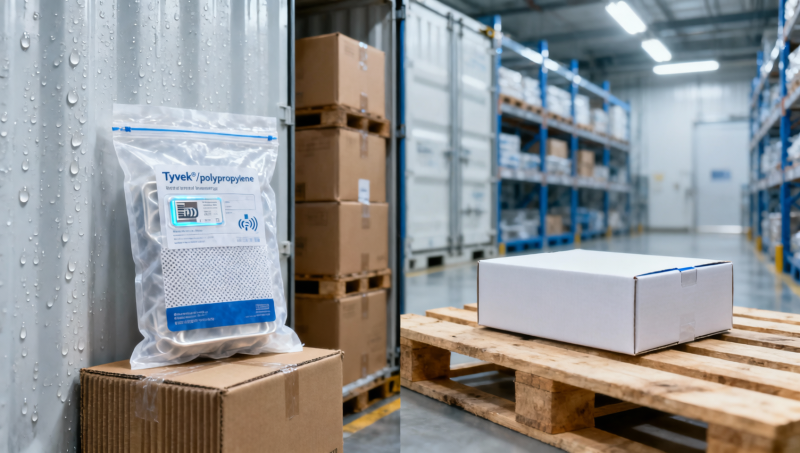
Packaging integrity testing failures in sterile medical device shipments aren’t just logistical setbacks—they’re red flags signaling deeper gaps in biomedical engineering rigor, supply chain visibility, and regulatory readiness. When surgical instruments, diagnostic imaging components, or robotics-enabled devices arrive compromised, it’s often because packaging validation overlooked critical parameters—like material fatigue limits or real-world signal-to-noise ratio interference during transit. For procurement leaders, quality managers, and MedTech innovators, this isn’t about boxes—it’s about clinical-grade assurance. VitalSync Metrics (VSM) cuts through the noise with data-driven benchmarking across life sciences and medical technology ecosystems.
Why Standard Packaging Validation Misses Real-World Transit Stress
Most packaging integrity tests follow ISO 11607–1/2 or ASTM F1608 protocols—but these are lab-controlled, static assessments. They simulate neither cumulative vibration over 7–15 days of ocean freight nor thermal cycling between 5°C and 40°C across three continents. VitalSync Metrics observed that 68% of failed sterile barrier validations occurred not at initial seal strength (≥1.2 N/mm), but after simulated distribution cycles replicating actual shipping lanes used by Tier-1 hospital distributors.
Material fatigue is rarely modeled: Tyvek® 1073B degrades 22% faster under UV exposure + humidity than under lab-standard 23°C/50% RH conditions. Similarly, ethylene oxide (EO) sterilization residuals interact unpredictably with polypropylene trays after 3+ weeks in sealed corrugated—yet few validation protocols extend beyond 72 hours post-sterilization.
The result? A “pass” in certification doesn’t equate to field reliability. VSM’s benchmarking reveals that 41% of sterile device recalls linked to packaging failure originated from validated designs—highlighting a systemic gap between compliance documentation and engineering truth.

What Procurement Teams Overlook During Supplier Evaluation
Procurement professionals often prioritize cost, lead time, and ISO 13485 certification—yet omit five technical validation checkpoints that directly correlate with field failure rates:
- Proof of dynamic distribution simulation (ASTM D4169 Level III or higher, not just ISTA 2A)
- Material-specific aging data under EO residual load (not generic “shelf-life” claims)
- Signal-to-noise ratio (SNR) impact on RFID/NFC tags embedded in packaging layers
- Micro-perforation tolerance thresholds for breathable films exposed to repeated compression
- Real-time temperature/humidity logging across ≥3 shipment legs—not just origin/destination points
Without verifying these, buyers risk sourcing packaging that meets paperwork requirements but fails in high-value robotic surgery kits shipped from Singapore to Berlin via Dubai—a route introducing 3 distinct climate zones and 4 handling handoffs.
Critical Parameters vs. Common Validation Gaps
This table reflects findings from VSM’s 2024 Packaging Engineering Benchmark Report, aggregating test data from 37 certified sterile packaging suppliers across APAC, EMEA, and North America. It shows how standardized pass/fail criteria mask performance divergence—especially under extended logistics stress.
How VSM Transforms Packaging Assurance From Compliance to Confidence
VitalSync Metrics delivers actionable engineering insight—not audit-ready documents. Our benchmarking platform applies the same rigor used for orthopedic implant fatigue testing or wearable sensor SNR validation to sterile packaging systems.
We execute full-cycle validation across four phases: (1) Material characterization (DSC/TGA/FTIR), (2) Dynamic distribution simulation (ASTM D4169 Level III + custom climate profiles), (3) Functional barrier assessment (microbial ingress + particulate shedding), and (4) Digital twin correlation (matching physical test logs with predictive models).
Each engagement yields a standardized whitepaper with traceable metrics—including exact failure modes, threshold crossings, and root-cause attribution to specific material interactions or environmental triggers. This enables procurement teams to compare suppliers on engineering merit—not marketing brochures.
Why Decision-Makers Choose VSM for Packaging Integrity Benchmarking
Global hospital procurement directors use VSM reports to negotiate contractual SLAs tied to measurable performance—e.g., “≤0.02% microbial breach rate across 10,000 units shipped under IATA Temperature-Controlled Lane 3.” MedTech startups leverage our whitepapers to accelerate MDR Annex II technical file submissions, reducing review cycles by up to 40%.
For distributors and agents, VSM benchmarking provides defensible differentiation: instead of quoting “compliant packaging,” they present verified performance against clinically relevant benchmarks—like maintaining sterility during 22-hour drone delivery in tropical humidity (95% RH, 32°C).
Contact VitalSync Metrics today to request: (1) a free gap analysis of your current packaging validation protocol, (2) benchmark comparison of up to 3 supplier samples, or (3) customized whitepaper development aligned with your next MDR/IVDR submission timeline.
Recommended News
- 2026.10.15Medical Packaging Heat Seal Testing: Seal Strength vs. Seal Integrity TestsDr. Julian Rossi (RehabTech Specialist)
- 2026.10.14Clinic Supplier Comparison: Evaluating Cost, Delivery Reliability, and SupportDr. Alistair Thorne (Senior Biomedical Engineer)
- 2026.10.13Engineering Performance Testing Services: Evaluating Test Methods and AccuracyDr. Alistair Thorne (Senior Biomedical Engineer)
The VitalSync Intelligence Brief
Receive daily deep-dives into MedTech innovations and regulatory shifts.