 Get Insights

MDR IVDR questions still delaying packaging validation
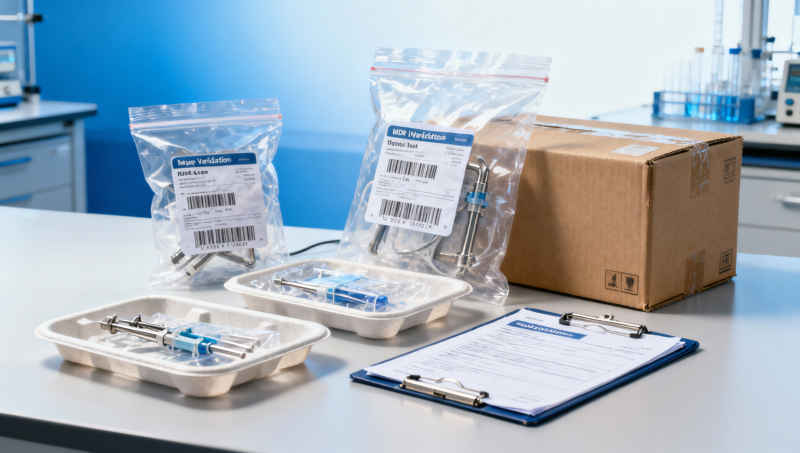
MDR IVDR questions continue to delay packaging validation across the MedTech supply chain, creating risk for procurement teams, engineers, and global decision-makers. As medical device testing, medical device evaluation, and laboratory equipment validation become more critical, organizations need clearer evidence of medical technology compliance, medical equipment standards, and long-term medical device reliability. This article explores why unresolved MDR IVDR issues still slow approvals and what they mean for healthcare benchmarking and clinical device certification.
For hospital buyers, laboratory planners, quality teams, and MedTech manufacturers, packaging is no longer a final-stage checkbox. Under MDR and IVDR, packaging validation is tightly linked to sterility maintenance, transport performance, labeling accuracy, shelf-life claims, and post-market traceability. When questions remain open, even a technically strong device can face weeks or months of delay before release, tender approval, or cross-border distribution.
This matters in practical terms. A 2–6 week delay in packaging validation can disrupt launch schedules, freeze inventory, and force procurement teams to postpone framework agreements. For organizations operating across 3 or more markets, the burden grows quickly because the same packaging file must often satisfy engineering, regulatory, quality, and logistics stakeholders at the same time.
From the perspective of VitalSync Metrics (VSM), the issue is not only regulatory complexity. The larger problem is the gap between marketing-level compliance statements and engineering-grade evidence. Decision-makers need test logic, parameter consistency, and traceable validation data that can withstand scrutiny from notified bodies, auditors, and procurement review panels.
Why MDR and IVDR questions still slow packaging validation
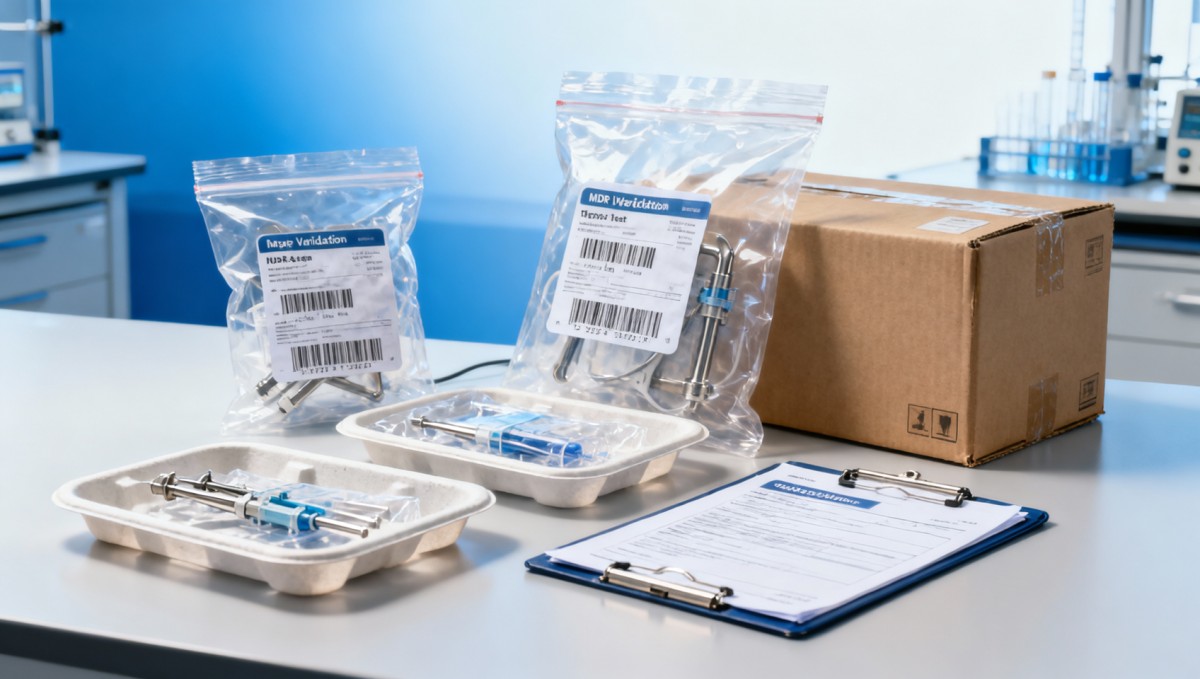
Packaging validation is delayed when requirements are interpreted too late or too loosely. In many projects, teams finalize pouch materials, trays, labels, or transport cartons before confirming the exact regulatory claims attached to the device. Once the intended use, sterile barrier expectations, or shelf-life statements are questioned, validation protocols often need to be repeated, extending timelines by 14–45 days.
Another common cause is weak alignment between departments. Engineering may focus on seal strength and transit protection, while regulatory teams focus on technical documentation and labeling obligations. Procurement often enters later, asking whether the selected packaging format can scale across suppliers, regions, and storage conditions. If these functions are not aligned in the first 2 project phases, rework becomes likely.
Under MDR and IVDR, packaging evidence is rarely evaluated in isolation. Auditors and reviewers may connect it to biocompatibility assumptions, sterilization compatibility, transport simulation, usability, and device integrity after aging. That means a single unresolved question about seal consistency or label durability can affect multiple parts of the technical file, not just the packaging section.
For global supply chains, language and market variation add another layer. A device sold into 4–8 countries may require different labeling layouts, storage declarations, and importer information. If a packaging validation plan does not account for these regional variables from the start, the final documentation package can become fragmented and difficult to defend.
The most frequent unresolved questions
In practice, delays often come from a short list of recurring issues rather than from obscure technical failures. Teams should prioritize early resolution of the following points:
- Whether the sterile barrier system matches the claimed shelf life, typically 1, 2, or 3 years.
- Whether transport simulation reflects actual distribution routes, including vibration, compression, and temperature variation.
- Whether label adhesion, print permanence, and UDI readability remain acceptable after aging and handling.
- Whether packaging materials are compatible with the validated sterilization method, such as EO, gamma, or steam where applicable.
- Whether worst-case configurations were clearly defined for family-based validation.
The table below summarizes where these questions typically arise and how they affect review speed.
The key takeaway is that packaging validation delays are usually systemic. They often signal an upstream failure to define claims, worst-case conditions, and documentation ownership early enough, rather than a single failure at the testing bench.
How packaging validation affects procurement, operations, and market access
For procurement teams, unresolved MDR and IVDR questions create uncertainty in supplier qualification. A packaging configuration that appears acceptable during sourcing may later require design changes, new verification data, or relabeling. This can alter landed cost by 5%–15%, especially when alternate substrates, additional test cycles, or secondary packaging changes are introduced after purchase orders are already planned.
For operators and laboratory users, the issue is operational reliability. Packaging is the first interface between the product and the real-world environment. If a device reaches the point of use with compromised seals, damaged trays, illegible instructions, or unstable calibration accessories, the problem quickly becomes a clinical or workflow risk rather than a regulatory abstraction.
For business leaders, market access timing is often the highest-cost variable. A launch delay of 30–60 days can affect distributor confidence, tender participation, and production planning. If multiple SKUs are bundled into one submission strategy, one unresolved packaging validation question may hold back an entire product family, multiplying the commercial impact.
This is why healthcare benchmarking matters. Independent technical review helps separate a packaging file that merely looks complete from one that is structurally defendable. Procurement decisions become stronger when they are supported by measurable data such as seal strength consistency, transport simulation coverage, accelerated aging rationale, and print durability under expected storage conditions.
Decision impact by stakeholder group
Different functions see the same delay through different lenses. Mapping these viewpoints early can prevent internal conflict and speed approvals.
The table shows why packaging validation is a cross-functional decision issue. A compliant file that does not support procurement resilience or user handling can still become a weak commercial choice, even if it passes a narrow technical review.
Three procurement risks that are often underestimated
- Single-source packaging materials with lead times above 8–12 weeks can become a bottleneck if retesting is required.
- Poorly defined change notification clauses can leave buyers exposed when suppliers alter adhesives, films, or print methods.
- Packaging validation data that covers only one SKU may not protect multi-size or multi-configuration portfolios.
These risks are manageable, but only when buyers evaluate validation readiness before final sourcing decisions, not after contract signature.
What evidence should be reviewed before approving packaging validation
A strong packaging validation package should show more than a pass result. Reviewers need to see how the test conditions were chosen, how worst-case samples were defined, and whether the evidence supports the intended clinical and commercial use. In many cases, the difference between a robust file and a vulnerable one is the logic chain rather than the test count.
At minimum, teams should look at 4 evidence layers: material suitability, process consistency, distribution resilience, and labeling performance. Each layer answers a different question. Material data addresses compatibility, process data addresses repeatability, transport data addresses handling stress, and labeling data addresses identification and compliance over time.
The review should also distinguish between initial development tests and release-supporting validation. A bench result produced during prototype selection may be useful, but it is not automatically sufficient for a final regulated submission. That distinction is especially important when packaging formats changed during pilot runs or when sealing parameters shifted between one line and another.
Where possible, buyers and technical assessors should request a concise evidence map. This should show the relationship between claim, test method, acceptance criterion, sample condition, and resulting limitation. A 1-page matrix can often reduce weeks of back-and-forth clarification.
Core evidence checklist
The following checklist is useful for engineering review, supplier qualification, and technical procurement screening.
- Seal integrity and seal strength data across defined process windows, not just one nominal setting.
- Accelerated and, where available, real-time aging rationale linked to the claimed shelf life.
- Transport or distribution simulation reflecting expected shipment modes and stacking conditions.
- Label and print durability results after abrasion, storage, and handling exposure.
- A documented change control process covering materials, tooling, sealing parameters, and artwork updates.
Practical review thresholds
Not every project needs the same depth, but practical thresholds help teams screen readiness. For example, a packaging line that shows only one successful validation lot may require deeper scrutiny than one supported by 3 consecutive lots. Likewise, aging claims beyond 24 months generally deserve more careful linkage between material behavior, barrier performance, and label stability than shorter claims do.
When testing is outsourced, ask whether the sample selection captured the largest, heaviest, or most seal-sensitive configuration. Family-based validation can save time, but only if worst-case logic is clear. If that logic is weak, the cost saved in the lab may be lost later through submission delays or SKU-by-SKU rework.
A practical framework to reduce validation delays across the MedTech supply chain
Organizations can reduce packaging validation delays by moving from reactive testing to staged evidence planning. In most MedTech programs, a 4-step framework works well: define regulatory claims, map packaging risk, verify test coverage, and lock change control before launch. This approach is useful for startups preparing first submissions as well as larger manufacturers managing multiple product families.
Step 1 is claim definition. Teams should confirm intended use, sterile status, shelf life, storage conditions, transport pathway, and labeling obligations before finalizing materials. Even a 30-minute misalignment on one claim can trigger a 3-week retest later. Step 2 is risk mapping, where the highest-risk interfaces are identified, such as seal peel behavior, tray cracking, or barcode degradation after humidity exposure.
Step 3 is coverage verification. Here, teams compare the planned tests against actual distribution, storage, and use conditions. Step 4 is change control readiness. This includes defining who approves material changes, when revalidation is triggered, and how evidence is updated across the technical file. Without this final step, even a well-validated pack can become vulnerable after a routine supplier adjustment.
Independent benchmarking adds value across all 4 steps. A neutral technical review can detect whether validation data is merely complete on paper or genuinely robust under realistic field conditions. That distinction supports better sourcing, better audit preparation, and more credible commercial claims.
Suggested implementation timeline
The timeline below shows a practical sequence for reducing validation uncertainty without slowing development unnecessarily.
This timeline is not a guarantee, but it gives teams a realistic planning structure. The main benefit is visibility. When responsibilities, assumptions, and evidence gates are defined early, packaging validation becomes more predictable and less vulnerable to last-minute interpretation disputes.
Common implementation mistakes
- Treating packaging as a downstream artwork task instead of a regulated performance system.
- Assuming supplier declarations alone are enough without reviewing test rationale and process boundaries.
- Using validation evidence from pilot tooling after production tooling has materially changed.
- Failing to align procurement contracts with revalidation and change notification expectations.
Each of these mistakes is avoidable, but only when packaging validation is managed as a strategic quality function rather than a documentation formality.
FAQ: common packaging validation questions under MDR and IVDR
How long does packaging validation usually take?
For a straightforward device and stable packaging format, planning and initial execution may take 3–8 weeks. If accelerated aging, transport simulation, artwork revision, or multi-market labeling issues are involved, the total cycle can extend to 8–16 weeks. The biggest delays usually come from unclear claims or incomplete sample strategy rather than from the lab work itself.
What should procurement teams ask suppliers before approval?
Buyers should ask 4 direct questions: What claims does the packaging support, what tests back those claims, what changes trigger revalidation, and how long are material lead times? They should also ask whether the evidence covers the exact SKU family being sourced. These questions reduce the risk of hidden post-award validation costs.
Are packaging validation and device validation separate?
They are related but not identical. Packaging validation focuses on protection, integrity, identification, and maintenance of claims through storage and transport. Device validation focuses on intended performance and safety. Under MDR and IVDR, however, reviewers often examine the connection between the two, especially when packaging directly affects sterility, usability, or traceability.
When is independent benchmarking most useful?
Independent benchmarking is most useful in 3 situations: before a major submission, during supplier selection, and after a packaging change. In each case, external review helps confirm whether evidence is technically coherent, not just administratively complete. That is especially valuable for organizations managing complex portfolios or entering new markets.
MDR and IVDR questions will continue to delay packaging validation wherever claims, test logic, and documentation ownership remain loosely defined. The strongest response is not more paperwork, but better engineering visibility: clear worst-case assumptions, aligned evidence, disciplined change control, and independent technical benchmarking that procurement and regulatory teams can both trust.
VitalSync Metrics (VSM) supports this need by translating technical performance into decision-ready benchmarking and structured whitepapers for the MedTech and Life Sciences supply chain. If your team needs clearer packaging validation review criteria, stronger supplier comparisons, or a more defensible path to medical technology compliance, now is the right time to act.
Contact VSM to discuss a tailored benchmarking approach, request deeper evaluation criteria, or explore practical solutions for clinical device certification, laboratory equipment validation, and procurement-grade technical due diligence.
- laboratory equipment validation
- MedTech supply chain
- medical equipment standards
- medical device reliability
- medical technology compliance
- clinical device certification
- medical technology
- medical equipment
- MedTech supply
- MDR IVDR
- technical benchmarking
- life sciences
- supply chain
- global decision-makers
- healthcare benchmarking
- medical device evaluation
- medical device testing
- Packaging
Recommended News
- 2026.10.15Medical Packaging Heat Seal Testing: Seal Strength vs. Seal Integrity TestsDr. Julian Rossi (RehabTech Specialist)
- 2026.10.14Clinic Supplier Comparison: Evaluating Cost, Delivery Reliability, and SupportDr. Alistair Thorne (Senior Biomedical Engineer)
- 2026.10.13Engineering Performance Testing Services: Evaluating Test Methods and AccuracyDr. Alistair Thorne (Senior Biomedical Engineer)
The VitalSync Intelligence Brief
Receive daily deep-dives into MedTech innovations and regulatory shifts.