 Get Insights

Medical regulatory compliance challenges in device packaging
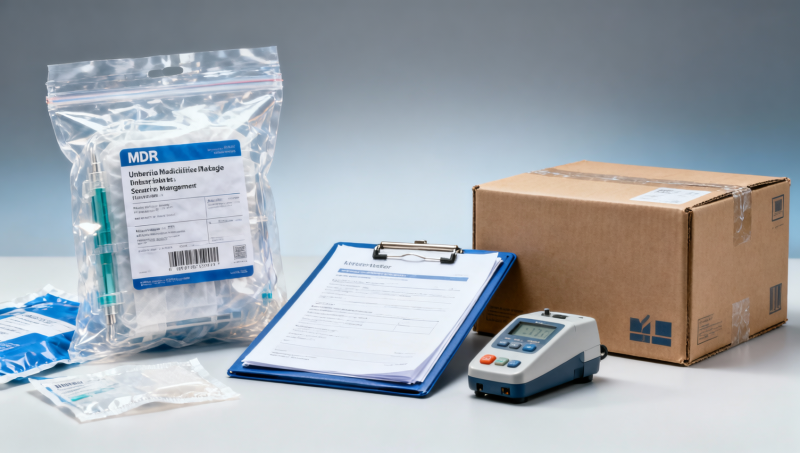
In an era of healthcare digital integration, medical regulatory compliance in device packaging has become a critical factor in medical device evaluation and procurement. From MDR IVDR alignment to medical equipment compliance and clinical device certification, global decision-makers need more than supplier claims—they need data-backed proof of safety, reliability, and standards to support confident sourcing.
Why is medical regulatory compliance in device packaging now a board-level issue?
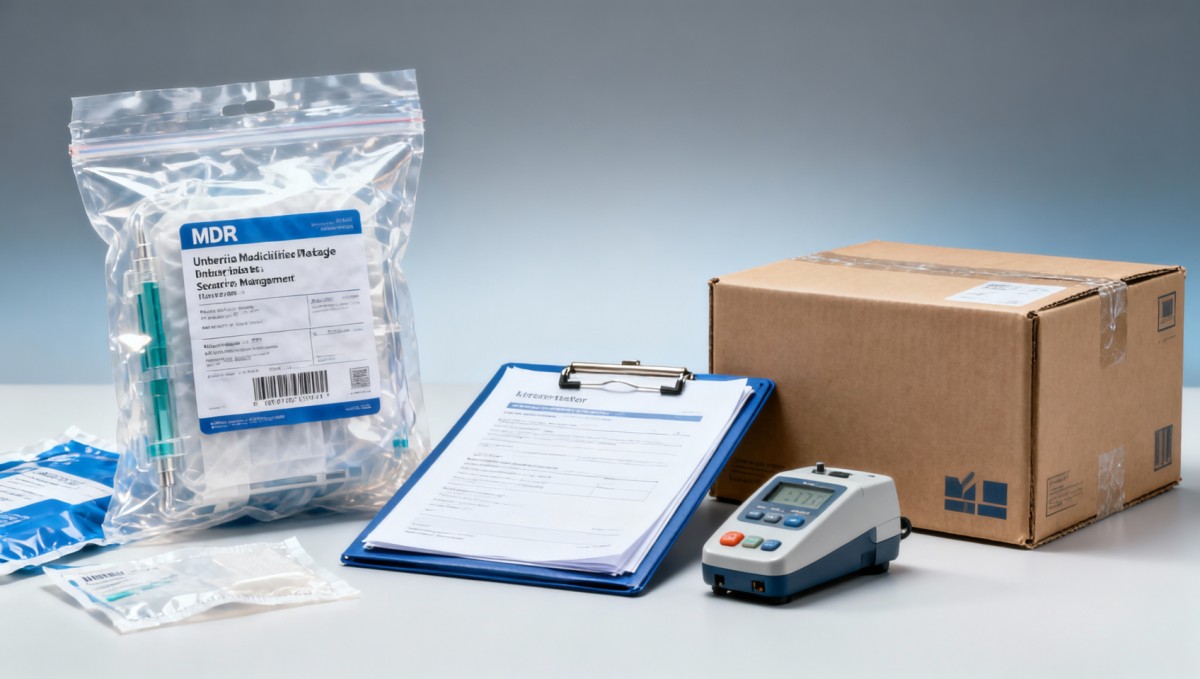
Medical device packaging is no longer a secondary engineering task handled at the end of product development. For hospitals, OEM buyers, laboratory planners, and MedTech founders, packaging compliance now affects market access, storage risk, sterilization integrity, transport durability, and post-market traceability. Under MDR and IVDR-driven expectations, the package is part of the regulated system, not just a shipping shell.
That shift matters because packaging failure can invalidate otherwise strong device performance. A sensor may meet electrical specifications, and an implant may meet fatigue requirements, but if barrier materials degrade after 6–12 months of storage, label information becomes unreadable after disinfection exposure, or seal strength drifts outside validated ranges, compliance risk appears immediately. Procurement teams increasingly treat packaging review as a supplier qualification checkpoint.
For information researchers and operators, the challenge is often interpretation. Terms such as sterile barrier system, transport validation, shelf-life study, and labeling conformity sound familiar, yet they are rarely presented in a way that supports real purchasing decisions. For enterprise decision-makers, the core question is practical: can the supplier demonstrate repeatable compliance across pilot batches, scale-up production, and international shipment conditions?
VitalSync Metrics (VSM) addresses this gap by converting technical packaging variables into benchmarkable evidence. Instead of relying on promotional language, buyers can examine structured data such as material compatibility, sealing window consistency, environmental conditioning performance, and documentation maturity across 3 stages: design input, validation, and ongoing control. This evidence-first approach helps reduce sourcing uncertainty before commercial commitment.
What decision-makers should review first
- Whether packaging is validated for the actual device risk class, intended use, and transport route rather than for a generic sample format.
- Whether technical files include seal validation, aging rationale, labeling control, and material traceability in a reviewable form.
- Whether operators can maintain the packaging condition during storage, handling, and point-of-use workflows without adding hidden process burdens.
- Whether the supplier can explain deviations, CAPA paths, and change-control timelines in less than 2–4 weeks when packaging updates occur.
In practice, medical regulatory compliance challenges in device packaging emerge at the intersection of engineering, quality, logistics, and procurement. Organizations that review only certificate headlines often miss the operational details that later delay approvals, trigger nonconformities, or increase total cost of ownership.
Which packaging compliance challenges are most frequently underestimated?
The most common mistake is assuming that package conformity equals material conformity. A packaging substrate may be technically suitable, yet the final package can still fail because seal parameters, sterilization exposure, barrier design, or transit stress were not validated as an integrated system. In regulated healthcare supply chains, isolated component approval does not replace system-level evidence.
A second challenge is documentation fragmentation. Engineering may hold material data, quality may hold validation summaries, and procurement may hold supplier declarations, but buyers often cannot see a connected record. When this happens, supplier assessment slows down, especially for international tenders where review cycles can stretch from 2 weeks to 8 weeks depending on language, risk level, and documentation completeness.
A third issue is mismatch between intended distribution and tested conditions. Devices shipped within a local network may face mild handling, while cross-border distribution can involve temperature fluctuation, vibration, compression, humidity exposure, and extended customs dwell time. A package tested under limited assumptions may not support global commercialization even if laboratory results initially appear acceptable.
The final underestimated area is label and information durability. Device packaging is often evaluated for physical protection, but compliance also depends on UDI readability, symbol correctness, language control, adhesive durability, and resistance to routine handling. If critical information degrades after repeated contact, condensation, or disinfectant exposure, operational risk increases for users and auditors alike.
High-impact risk areas in regulated medical packaging
The following table helps procurement teams compare major medical regulatory compliance challenges in device packaging and the kind of evidence that should be requested before approval.
This comparison shows why device packaging compliance should be reviewed as a multi-variable system. Buyers who request only declarations often miss whether evidence is current, route-specific, and applicable to the device format they actually plan to source.
Where VSM adds value
VSM helps translate fragmented supplier claims into benchmark-ready technical assessments. That includes checking whether validation scope matches real-use conditions, whether packaging data remains consistent from pilot to commercial scale, and whether documentation supports procurement review without forcing internal teams to reconstruct the evidence chain from scratch.
For decision-makers managing multiple vendors, this reduces comparison noise. Instead of debating broad claims such as “compliant” or “validated,” teams can compare 5 key checkpoints: packaging architecture, process control, labeling discipline, distribution readiness, and change management maturity.
How should buyers evaluate MDR, IVDR, and broader medical equipment compliance in packaging?
Buyers should begin by treating packaging as part of the product’s regulated performance envelope. That means reviewing not only whether the device claims MDR or IVDR alignment, but whether the package supports safety, information integrity, sterile maintenance where applicable, and usability through the intended storage and delivery lifecycle. A package that passes internal inspection but lacks evidence continuity is still a procurement risk.
For practical procurement, the evaluation should be organized into 4 layers. First, confirm intended use and risk profile. Second, check packaging design inputs and material rationale. Third, review validation and verification outputs. Fourth, assess ongoing controls such as change management, supplier qualification, and complaint feedback loops. This layered approach gives both procurement and quality teams a common review structure.
Operators and end users should also be included earlier than many organizations expect. If a package is difficult to open aseptically, too fragile for routine ward handling, or vulnerable during internal transportation, compliance may exist on paper but fail in workflow reality. Good device packaging compliance balances regulatory control with actual use conditions over repeated handling events, often across 10–50 units per shift in busy environments.
VSM’s role in this stage is to provide an engineering-based filter. By benchmarking technical evidence across suppliers, VSM helps procurement teams identify whether differences are meaningful or cosmetic. This is especially useful when multiple vendors present similar declarations but differ substantially in material robustness, validation depth, or document traceability.
A practical packaging compliance review matrix
The table below can support clinical device certification review, supplier shortlisting, and medical equipment compliance screening during RFI or tender preparation.
Used correctly, this matrix helps separate compliant-looking proposals from procurement-ready proposals. The difference is important: the first may satisfy marketing review, while the second supports audit readiness, operational stability, and long-term sourcing confidence.
Four questions that reveal evidence quality fast
- What exact package configuration was validated, and does it match the quoted product version?
- Which storage and distribution conditions were covered, such as humidity range, vibration exposure, or extended hold time?
- How are packaging changes communicated, and what is the usual customer notification period?
- Can the supplier present linked records from material specification through final release documentation within 3–5 working days?
These questions improve cross-functional alignment because they convert packaging compliance into verifiable procurement checkpoints rather than abstract quality discussions.
What should procurement teams compare before approving a supplier?
A strong procurement decision balances compliance evidence, operational fit, and lifecycle cost. The lowest quote can become the most expensive option if it requires repeated relabeling, secondary protective packaging, accelerated resupply, or corrective actions after nonconformity findings. For this reason, buyers should compare at least 3 categories: compliance maturity, packaging performance stability, and service responsiveness.
For operators, one packaging format may look acceptable during evaluation yet slow down deployment in live use. Tear initiation, pack orientation, carton organization, and barcode readability all affect handling efficiency. In laboratory or hospital settings, even a 5–10 second delay per unit can become meaningful when repeated across weekly receiving or clinical preparation workflows.
For enterprise decision-makers, another key factor is scalability. Some suppliers validate packaging well at pilot volume but struggle with sealing consistency, print control, or material continuity at larger output levels. Reviewing scale transition capability can prevent future disruptions, especially when procurement volumes move from low hundreds to several thousand units per quarter.
VSM supports this stage by benchmarking vendors against common technical criteria rather than brand familiarity. That is valuable in a market where multiple proposals may sound similar but differ in test discipline, packaging repeatability, and readiness for global distribution.
A 6-point supplier selection checklist
- Check whether package validation reflects the final commercial format, not only engineering samples or a nearest equivalent.
- Review whether labeling controls cover UDI, symbols, revision history, and print durability under routine handling.
- Confirm whether transport and storage validation reflects regional distribution reality, including prolonged dwell periods where relevant.
- Assess the supplier’s change-control notification process and expected response time, ideally within 5–10 working days for material-impacting updates.
- Ask whether packaging-related deviations are trended and whether CAPA records can be shared in a redacted but meaningful format.
- Compare not just unit price but hidden cost drivers such as repacking, damage claims, audit preparation effort, and internal review time.
Common comparison mistakes
A frequent mistake is comparing suppliers only by certification language. Another is assuming that similar materials produce similar performance. In reality, process windows, equipment stability, packaging geometry, and document control can create very different compliance outcomes even when two vendors use visually similar packaging formats.
A second mistake is separating procurement from quality review too late. When sourcing teams shortlist vendors before confirming packaging evidence completeness, they often spend an extra 1–3 review cycles resolving preventable gaps. Early technical benchmarking shortens this loop and improves negotiation quality because requirements are clearer from the start.
FAQ: how do real buyers and users handle packaging compliance questions?
The questions below reflect common search intent from information researchers, end users, sourcing teams, and strategic decision-makers who need practical guidance on medical regulatory compliance challenges in device packaging.
How should we judge whether a packaging validation package is complete enough for procurement review?
Look for connected evidence, not isolated files. A usable review package usually includes the packaging configuration definition, material rationale, process validation summary, transport or handling validation scope, label control records, and change-management references. If these elements arrive as disconnected statements, procurement risk remains high even when individual documents look acceptable.
As a rule, your team should be able to trace at least 4 links without ambiguity: device version, package version, validation scope, and release control. If one of those links is unclear, approval may be premature.
Are MDR and IVDR packaging expectations the same for every device type?
No. The exact packaging evidence expected depends on device function, sterility needs, sensitivity to environment, intended users, and distribution model. A diagnostic component, a wearable sensor, and a sterile procedural device can each require different validation emphasis. That is why generic compliance language is not enough for cross-category sourcing.
Buyers should therefore compare relevance, not just completeness. A short but device-specific validation package may be stronger than a larger file set built around assumptions that do not match the actual product use case.
What delivery and review timelines are typical when packaging evidence must be assessed?
For standard document screening, internal review may take 5–10 working days if evidence is organized and the product risk is moderate. If translation, quality clarification, route-specific validation, or cross-functional signoff is needed, the timeline can extend to 2–4 weeks. For new market entry or high-risk device categories, review can take longer because packaging, labeling, and regulatory interpretation often move together.
This is one reason VSM’s standardized benchmarking approach matters: it shortens the time teams spend normalizing inconsistent supplier submissions before they can even start meaningful evaluation.
What are the most common misconceptions in device packaging compliance?
One misconception is that packaging matters only for sterile devices. In reality, non-sterile products still depend on packaging for labeling accuracy, environmental protection, transport stability, and traceability. Another misconception is that supplier declarations alone are enough. In regulated procurement, declarations without aligned technical evidence rarely support confident long-term sourcing.
A third misconception is that packaging changes are minor. Material substitutions, adhesive changes, print process updates, or geometry adjustments may all trigger meaningful review needs. Treating these changes as administrative details can create avoidable compliance and supply risks.
Why choose VSM when packaging compliance evidence needs to be verified, not assumed?
VitalSync Metrics (VSM) is built for organizations that need engineering truth rather than marketing reassurance. In medical device packaging, that means translating complex supplier claims into technical comparisons that procurement teams, quality leaders, operators, and executives can actually use. Instead of asking buyers to trust broad compliance statements, VSM helps verify the details that affect approval, performance continuity, and sourcing confidence.
Our strength is independent, data-driven benchmarking across the MedTech and Life Sciences supply chain. We examine the variables that often decide whether a packaging system is practically reliable: evidence consistency, validation scope, material suitability, handling realism, and documentation readiness. This approach is especially useful when evaluating multiple vendors, entering new regions, or preparing for high-stakes procurement reviews.
You can contact VSM for support with 6 concrete areas: packaging parameter confirmation, supplier comparison, MDR/IVDR-related evidence review, delivery and change-control discussions, customized benchmarking scope, and quotation communication for technical assessment projects. If you are screening a new supplier, preparing a tender, or questioning whether current packaging evidence is strong enough for long-term use, VSM can help turn uncertainty into a structured decision path.
The result is not just better documentation. It is better procurement judgment. When device packaging compliance is assessed with engineering rigor, organizations reduce rework, shorten review cycles, and make sourcing decisions with clearer visibility into safety, reliability, and lifecycle risk.
- medical regulatory compliance
- clinical device certification
- medical equipment compliance
- regulatory compliance
- medical equipment
- MDR IVDR
- technical benchmarking
- digital integration
- life sciences
- supply chain
- engineering truth
- global decision-makers
- sourcing confidence
- data-driven
- healthcare digital integration
- medical device evaluation
- healthcare supply chain
- Packaging
Recommended News
- 2026.10.15Medical Packaging Heat Seal Testing: Seal Strength vs. Seal Integrity TestsDr. Julian Rossi (RehabTech Specialist)
- 2026.10.14Clinic Supplier Comparison: Evaluating Cost, Delivery Reliability, and SupportDr. Alistair Thorne (Senior Biomedical Engineer)
- 2026.10.13Engineering Performance Testing Services: Evaluating Test Methods and AccuracyDr. Alistair Thorne (Senior Biomedical Engineer)
The VitalSync Intelligence Brief
Receive daily deep-dives into MedTech innovations and regulatory shifts.