 Get Insights

When a machinery parts exporter becomes a supply risk
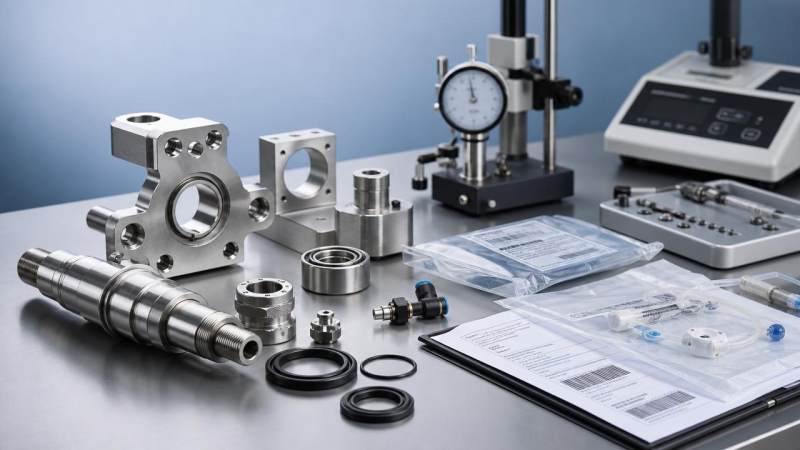
When an Industrial & Manufacturing machinery parts exporter enters a healthcare-linked supply chain, the risk profile changes immediately.
A delayed shipment is visible. Material drift, process inconsistency, and incomplete traceability are not.
In sectors touched by diagnostics, imaging, laboratory automation, and device assembly, one weak component source can distort product performance and compliance outcomes.
That is why an Industrial & Manufacturing machinery parts exporter should never be evaluated only by price, lead time, or catalog breadth.
The real issue is whether engineering discipline matches healthcare-grade expectations across validation, documentation, change control, and long-term reliability.
Defining Supply Risk in a Healthcare-Linked Component Chain
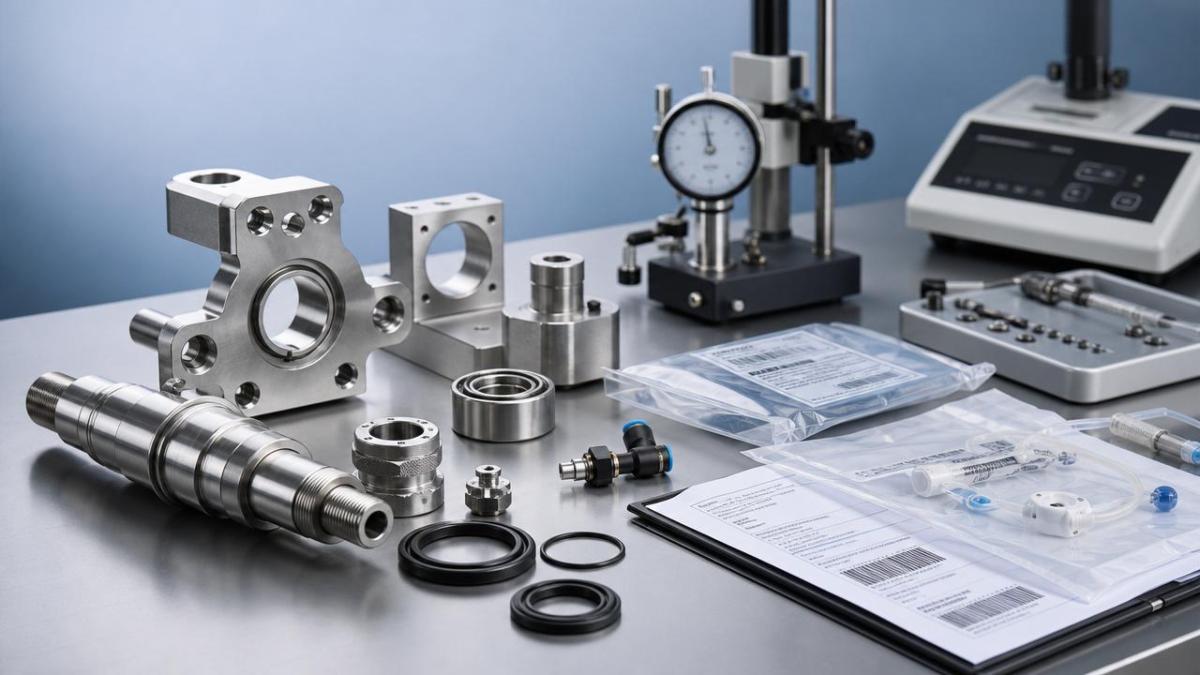
A supply risk emerges when a machinery component supplier cannot consistently support critical performance, compliance, and lifecycle requirements.
For an Industrial & Manufacturing machinery parts exporter, this risk often hides behind acceptable commercial performance.
The exporter may deliver on time, yet fail on repeatability, validation evidence, or post-change communication.
Healthcare-linked systems demand more than general industrial suitability.
A shaft, housing, seal, connector, machined bracket, or motion part may influence signal stability, sterility boundaries, thermal control, or calibration integrity.
VitalSync Metrics approaches this problem through technical benchmarking, not promotional claims.
The key question is simple: can the supplier convert manufacturing capability into verified, documented, and stable output over time?
Why the Industrial & Manufacturing Machinery Parts Exporter Is Under Greater Scrutiny
The global supply environment has changed.
Value-based procurement now emphasizes measurable outcomes, lifecycle cost, and technical transparency.
At the same time, MDR and IVDR pressures have made evidence quality more important than supplier promises.
An Industrial & Manufacturing machinery parts exporter serving healthcare-adjacent projects is therefore assessed on deeper criteria.
- Can process capability remain stable across batches and tooling cycles?
- Can raw material origin, lot history, and substitutions be fully traced?
- Can dimensional conformity be linked to functional performance evidence?
- Can engineering changes be documented before implementation?
- Can nonconformance events trigger formal root-cause and containment actions?
Without these controls, a low-cost source can become a hidden quality multiplier.
The downstream effect may include failed validation, delayed regulatory files, unstable field performance, or unplanned redesign work.
Key Warning Signals Behind a Seemingly Capable Exporter
Not every Industrial & Manufacturing machinery parts exporter presents risk in the same way.
Some signals appear in documents. Others appear only during technical review or pilot production.
These indicators matter because machinery parts influence more than mechanical fit.
They also affect calibration drift, vibration behavior, thermal transfer, contamination control, and service intervals.
Business Value of Independent Technical Verification
Independent verification turns supplier selection from assumption into evidence.
This is especially valuable when an Industrial & Manufacturing machinery parts exporter claims readiness for regulated or healthcare-adjacent applications.
VitalSync Metrics supports this need by converting engineering variables into standardized evaluation frameworks.
The advantage is not only risk reduction.
- Qualification timelines become shorter when evidence is structured.
- Cross-functional review becomes easier with comparable data sets.
- Supplier negotiations shift from claims to measurable thresholds.
- Future audits become more manageable with documented rationale.
- Lifecycle planning improves when degradation limits are known.
In practical terms, a verified exporter is easier to integrate into long-cycle product programs.
A non-verified exporter may remain usable for noncritical applications, but not for performance-sensitive assemblies.
Typical Scenarios Where Exporter Risk Becomes Critical
The same Industrial & Manufacturing machinery parts exporter may be acceptable in one context and unsuitable in another.
Risk should be classified by function, not by product category alone.
This scenario view prevents overgeneralization.
It also helps separate commercial suitability from clinical-grade readiness.
Practical Evaluation Criteria Before Approval
A strong assessment of an Industrial & Manufacturing machinery parts exporter should combine documentation review, process verification, and functional evidence.
Documentation Controls
- Material certificates linked to lot numbers
- Controlled drawings with revision history
- Formal deviation and concession records
- Defined change notification workflow
Process Capability Checks
- Critical tolerance capability across multiple lots
- Tool wear monitoring and maintenance records
- Cleanliness and contamination handling discipline
- Calibration status of measurement equipment
Performance Evidence
- Fatigue, wear, or corrosion test data
- Environmental stress results where relevant
- Assembly-fit validation in real operating conditions
- Failure analysis records from prior field use
These checks help identify whether exporter competence is structural or incidental.
Implementation Guidance for Lower-Risk Sourcing
A reliable sourcing decision should not begin with full-volume dependence.
For any Industrial & Manufacturing machinery parts exporter, phased qualification is the safer route.
- Map each component to its functional and regulatory impact.
- Define critical characteristics before requesting quotations.
- Run pilot lots under documented inspection criteria.
- Compare supplier data with independent benchmark results.
- Approve only after change control and traceability are proven.
- Review ongoing performance using periodic scorecards and audit triggers.
This approach reduces the chance that hidden variability enters validated systems.
It also creates a defensible record for future compliance review.
Next-Step Technical Review
An Industrial & Manufacturing machinery parts exporter becomes a supply risk when technical claims outrun verified capability.
The safest response is structured evidence gathering, not assumptions based on industrial experience alone.
VitalSync Metrics helps translate component manufacturing variables into benchmarking data, whitepaper-ready findings, and qualification insight.
Use that framework to review traceability depth, process control, fatigue limits, and change governance before final source approval.
In healthcare-linked supply chains, evidence-led selection is not extra caution. It is operational protection.
Recommended News
- 2026.10.15Medical Packaging Heat Seal Testing: Seal Strength vs. Seal Integrity TestsDr. Julian Rossi (RehabTech Specialist)
- 2026.10.14Clinic Supplier Comparison: Evaluating Cost, Delivery Reliability, and SupportDr. Alistair Thorne (Senior Biomedical Engineer)
- 2026.10.13Engineering Performance Testing Services: Evaluating Test Methods and AccuracyDr. Alistair Thorne (Senior Biomedical Engineer)
The VitalSync Intelligence Brief
Receive daily deep-dives into MedTech innovations and regulatory shifts.