 Get Insights

What affects machinery export lead times from India
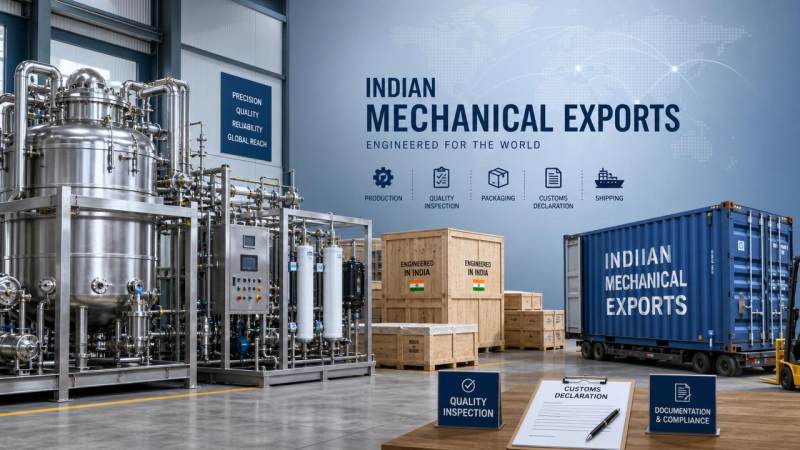
For procurement and evaluation teams, understanding what affects machinery export lead times from India is essential to reducing sourcing risk and protecting project timelines.
Working with an Industrial & Manufacturing machinery exporter in India involves more than comparing prices.
It requires reviewing production capacity, part availability, engineering controls, export documents, logistics coordination, and compliance readiness.
For technical buyers in healthcare, laboratory, and industrial settings, delivery speed matters only when it is supported by traceable quality.
That is especially relevant to VitalSync Metrics, where engineering truth, verification discipline, and long-term reliability shape sourcing confidence.
Lead time fundamentals in machinery exports from India
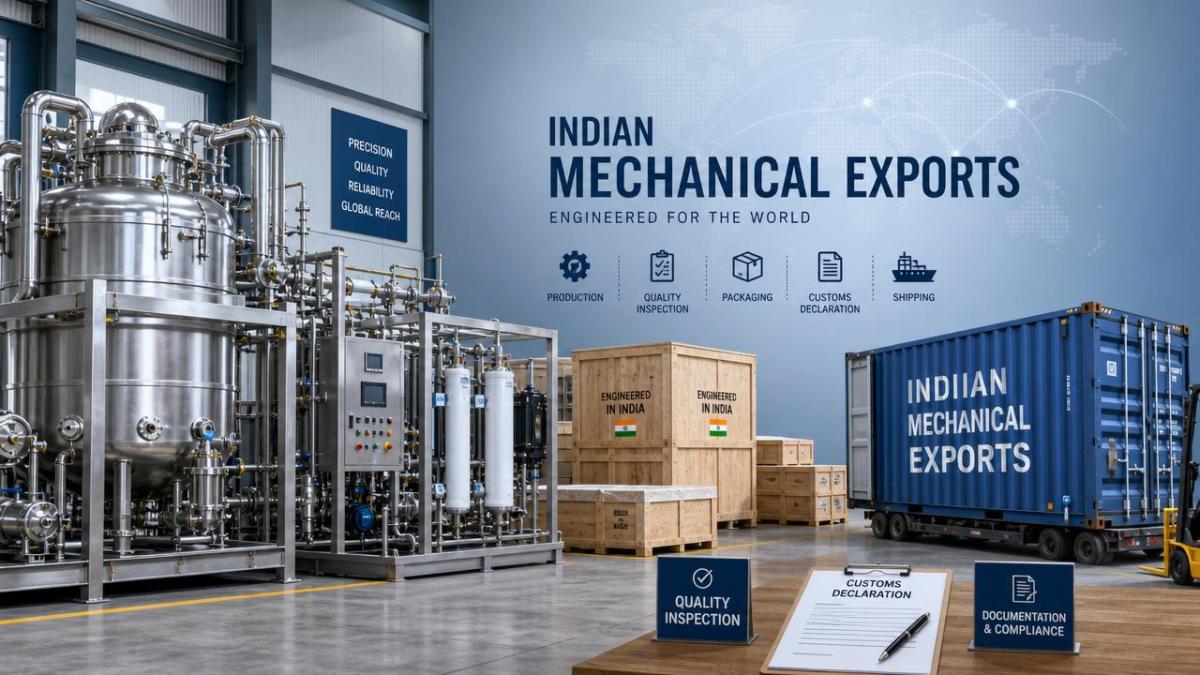
Export lead time is the total period between confirmed order release and final shipment readiness.
For an Industrial & Manufacturing machinery exporter in India, this timeline often combines engineering, sourcing, fabrication, inspection, packing, and customs preparation.
Standard equipment usually moves faster than configured or semi-custom machinery.
Projects involving stainless steel fabrication, automation modules, pressure systems, or precision assemblies generally require longer schedules.
Lead times also vary by plant load, subcontractor reliability, and shipping lane conditions.
A realistic assessment must separate factory production time from external transport and port handling time.
Core timeline components
- Order review, drawing approval, and bill of materials validation
- Raw material procurement and bought-out component sourcing
- Machining, fabrication, assembly, and electrical integration
- Testing, inspection, calibration, and documentation closure
- Export packing, inland movement, customs filing, and vessel booking
Key factors that affect delivery schedules
The biggest delays usually come from upstream constraints rather than final shipping alone.
An Industrial & Manufacturing machinery exporter in India may quote an attractive schedule, but the true lead time depends on operational depth.
1. Production capacity and factory loading
Capacity utilization is a leading indicator of timing reliability.
When a plant runs near saturation, queue time increases before fabrication even begins.
Multi-project workshops often face bottlenecks in CNC machining, welding bays, painting lines, or FAT scheduling.
2. Component and raw material availability
Imported motors, drives, sensors, PLCs, valves, bearings, and specialty alloys can extend schedules significantly.
If one critical item has a long replenishment cycle, the entire shipment may wait.
This risk is higher for machinery with medical, laboratory, or clean-process interfaces.
3. Engineering clarity and design freeze
Late drawing revisions are among the most avoidable causes of delay.
Unclear scope on utilities, materials, dimensions, controls, or validation standards creates rework.
A disciplined Industrial & Manufacturing machinery exporter in India will insist on technical closure before production release.
4. Quality checks and compliance documentation
Inspection readiness influences lead time more than many buyers expect.
Material certificates, weld records, calibration reports, FAT protocols, and export declarations must align before dispatch.
For healthcare-adjacent equipment, traceability expectations are often stricter.
5. Port logistics and customs execution
Even after production finishes, transport to port can be affected by container availability, road permits, and terminal congestion.
Errors in HS classification, packing lists, or certificates may trigger clearance delays.
Current industry signals shaping export timing
The Indian machinery export environment is increasingly capable, but timelines are shaped by global supply chain volatility.
An Industrial & Manufacturing machinery exporter in India now operates inside a more demanding ecosystem of compliance, digitization, and schedule visibility.
These signals matter because shorter quoted lead times do not always mean better project outcomes.
Reliable timing comes from process maturity, not sales optimism.
Business value of accurate lead time evaluation
A sound lead time review reduces both schedule risk and technical risk.
That is especially important when equipment supports regulated production, diagnostics infrastructure, laboratory construction, or hospital facility upgrades.
Choosing an Industrial & Manufacturing machinery exporter in India with transparent controls can improve planning across installation, validation, and commissioning phases.
- Reduces idle labor and delayed site readiness
- Improves sequencing for utilities, civil works, and commissioning
- Lowers emergency freight or expediting costs
- Supports better risk allocation in contracts
- Strengthens confidence in supplier technical discipline
For organizations influenced by MDR, IVDR, or internal validation frameworks, documentation timing is part of delivery timing.
A machine without complete records may be physically delivered but not operationally usable.
Typical machinery categories and timeline differences
Not all exported machinery follows the same schedule pattern.
The table below shows how timeline expectations can differ by equipment type and complexity.
This is why comparing quotes without comparing scope often creates false expectations.
A capable Industrial & Manufacturing machinery exporter in India should explain timeline assumptions line by line.
Practical steps to assess supplier timing reliability
Lead time evaluation should be evidence-based.
The following checks help verify whether a promised shipment date is achievable.
- Request a milestone schedule with engineering, procurement, fabrication, FAT, and dispatch dates.
- Ask which components are imported and what their current supply windows are.
- Confirm the latest design freeze date and change-control procedure.
- Review sample documentation packs from previous exports.
- Check whether testing slots, inspection resources, and packing capacity are in-house.
- Verify port routing strategy and contingency options for shipping disruption.
These questions reveal whether the exporter manages time as a controlled engineering outcome.
That distinction is important when selecting an Industrial & Manufacturing machinery exporter in India for critical installations.
Action path for lower-risk machinery sourcing
The most effective next step is to convert lead time discussions into a documented verification process.
Start with technical scope closure, then map dependencies across materials, controls, testing, compliance records, and export logistics.
When reviewing an Industrial & Manufacturing machinery exporter in India, prioritize evidence of schedule control over headline speed.
For healthcare-linked and laboratory-oriented projects, benchmarked documentation quality should carry equal weight with manufacturing output.
That approach supports better delivery predictability, stronger compliance readiness, and more dependable long-term operating performance.
Recommended News
- 2026.10.15Medical Packaging Heat Seal Testing: Seal Strength vs. Seal Integrity TestsDr. Julian Rossi (RehabTech Specialist)
- 2026.10.14Clinic Supplier Comparison: Evaluating Cost, Delivery Reliability, and SupportDr. Alistair Thorne (Senior Biomedical Engineer)
- 2026.10.13Engineering Performance Testing Services: Evaluating Test Methods and AccuracyDr. Alistair Thorne (Senior Biomedical Engineer)
The VitalSync Intelligence Brief
Receive daily deep-dives into MedTech innovations and regulatory shifts.