 Get Insights

Medical technology compliance risks in connected orthotics
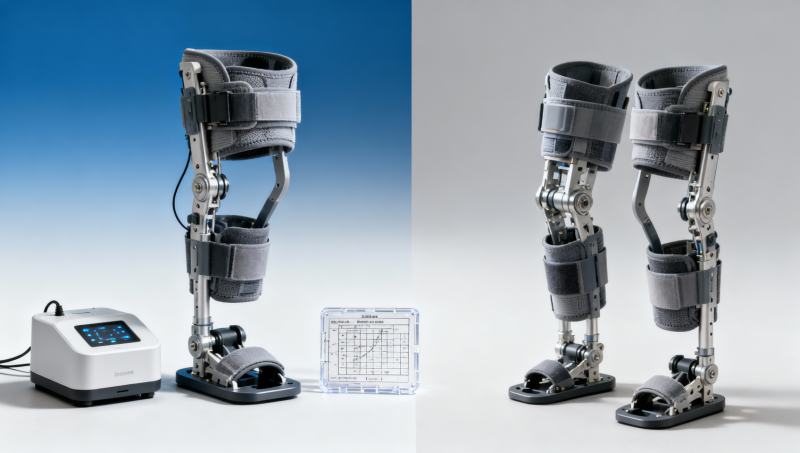
Connected orthotics are reshaping care delivery, but medical technology compliance now sits at the center of adoption risk. For global decision-makers, procurement teams, and clinical operators, effective medical technology evaluation must go beyond claims to verify MDR IVDR alignment, medical equipment compliance, and medical device reliability. This article explores how medical device testing, healthcare benchmarking, and medical regulatory compliance reveal hidden failure points before they disrupt patient outcomes or purchasing decisions.
Why connected orthotics create a new class of compliance risk
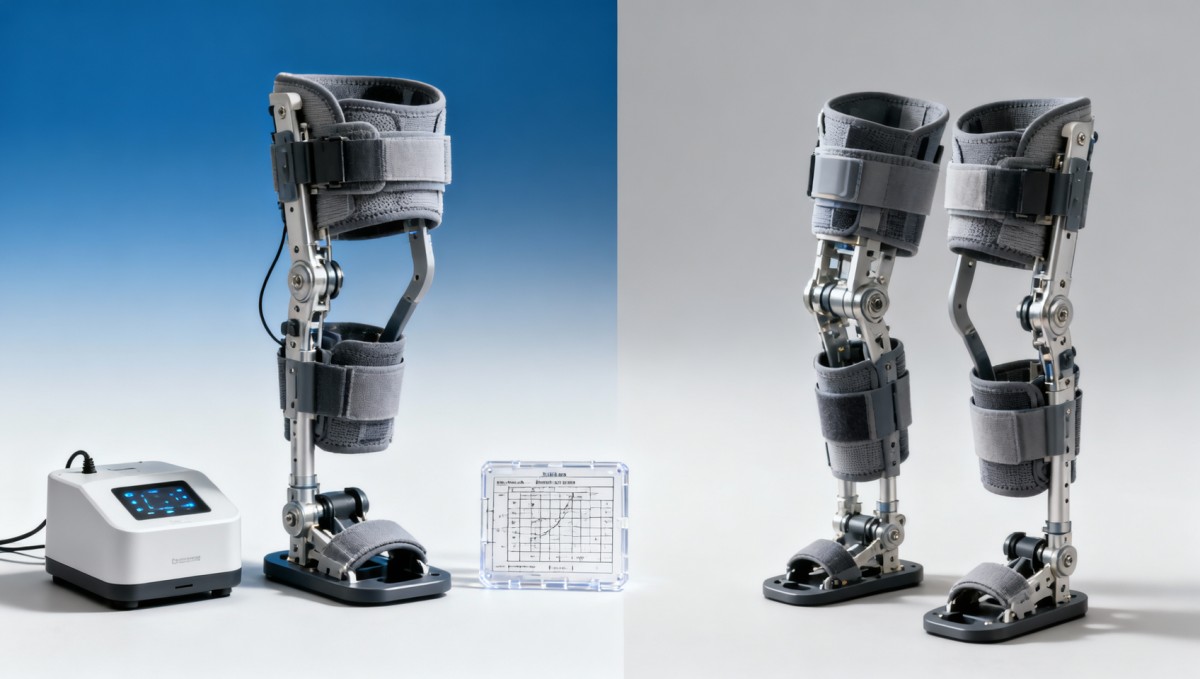
Connected orthotics no longer function as simple mechanical supports. They may include embedded sensors, mobile apps, cloud dashboards, firmware updates, and data transmission layers that influence clinical follow-up and product performance. This shift means the compliance review must cover not only material safety and biomechanical durability, but also software behavior, traceability, cybersecurity exposure, and post-market monitoring over a typical 3–5 year product lifecycle.
For procurement teams, the practical challenge is clear. A device that appears acceptable in a catalog may still fail under hospital onboarding because its technical file lacks sufficient verification detail, its wireless module is poorly documented, or its supplier cannot explain how design changes are controlled after release. In connected orthotics, medical technology compliance is often weakened not by a single dramatic defect, but by 4–6 small gaps across design, software, labeling, testing, and field support.
For operators and clinical users, reliability risk appears in everyday scenarios. Data loss during gait monitoring, inconsistent battery duration, unstable sensor calibration after cleaning cycles, or unclear alarm logic can all reduce clinical confidence. A connected orthotic may still be wearable, yet become operationally unsafe if performance drifts outside expected tolerances after repeated use, transport vibration, or routine firmware revision within a 6–12 month service interval.
This is why independent medical device testing and healthcare benchmarking matter. They translate supplier claims into measurable engineering evidence. VitalSync Metrics (VSM) addresses this gap by benchmarking signal quality, fatigue limits, design consistency, and documentation maturity so that buyers can compare vendors on technical integrity rather than presentation quality.
Where hidden failure points usually appear
In early-stage sourcing, many teams focus on visible product features and overlook system dependencies. Yet connected orthotics are affected by interaction between materials, electronics, software, patient variability, and maintenance routines. A device can pass a narrow bench test and still perform poorly in daily care if environmental assumptions are unrealistic.
- Mechanical structure risk: hinge fatigue, fastening loosening, or shell deformation after repetitive loading cycles.
- Sensing risk: signal drift, poor noise rejection, or unstable calibration across temperature and humidity changes.
- Software risk: undocumented algorithm changes, version mismatch, or incomplete validation after updates.
- Operational risk: unclear cleaning limits, charging procedures, user training scope, and replacement-part availability.
When these risks are reviewed as one system rather than isolated checkboxes, procurement decisions become more defensible. That approach is especially important for hospital groups, rehabilitation networks, and MedTech partners who need repeatable procurement logic across multiple sites or regions.
Which compliance checks matter most before procurement approval?
A practical procurement review should combine regulatory alignment, engineering evidence, and implementation readiness. In connected orthotics, three categories usually drive the outcome: intended use clarity, technical verification depth, and lifecycle control. If one category is weak, downstream cost and risk usually increase within the first 90–180 days of deployment.
The table below outlines a procurement-oriented medical equipment compliance framework. It is not a substitute for legal review, but it helps buyers and technical teams structure medical regulatory compliance discussions before issuing purchase orders or framework agreements.
The key insight is that compliance is not only about a certificate. Buyers need evidence that the device can maintain consistent performance after transport, fitting, use, cleaning, charging, and software maintenance. In connected orthotics, medical device reliability should be checked as a lifecycle property, not a launch-day promise.
How MDR and IVDR discussions apply in practice
MDR relevance is more direct for connected orthotics because it affects medical device design, risk management, clinical evaluation, labeling, and post-market obligations. IVDR may become relevant when orthotic data connects to diagnostic workflows, software interpretation layers, or broader digital ecosystems that influence laboratory or diagnostic decisions. Procurement teams do not need to overextend legal classification, but they do need clarity on boundaries and intended use.
For example, if a connected orthotic simply logs motion data for rehabilitation visibility, the review emphasis differs from a system that claims to guide clinical decision thresholds. In the second case, software validation, data integrity, and user instruction quality become much more significant. This is where supplier narratives should be tested against documented evidence rather than accepted at face value.
A five-point pre-award checklist
- Confirm intended use wording and whether digital features create additional regulatory obligations.
- Request verification summaries for mechanical endurance, electronics stability, and software revision control.
- Review cleaning, charging, storage, and transport constraints, including any temperature or humidity ranges.
- Check complaint response process, field update communication, and replacement-part lead time.
- Compare supplier claims against independent healthcare benchmarking when available.
This five-point structure is especially useful when comparing 2–4 shortlisted suppliers under tight tender timelines. It keeps the review focused on measurable compliance and operational risk rather than presentation style.
How should teams compare connected orthotics beyond marketing claims?
Comparison analysis should move from feature counting to evidence weighting. A device with more app functions is not automatically safer or more procurement-ready. In many cases, the lower-risk option is the product with narrower claims, cleaner documentation, more stable test repeatability, and better field support over a 12–24 month operating period.
The comparison table below helps procurement personnel, operators, and enterprise decision-makers evaluate connected orthotics through an engineering and compliance lens. It is designed for shortlist discussions, technical due diligence, and supplier clarification meetings.
This type of structured comparison prevents a common procurement mistake: treating connected orthotics like standard commodity braces. Once data capture, software logic, and long-term service enter the picture, the decision should be weighted more like a medical technology platform evaluation than a simple accessory purchase.
What operators should test during pilot use
A pilot should be short enough to stay practical and long enough to reveal drift. In many settings, a 2–4 week structured pilot can identify the most important usability and reliability issues. Operators should test not only first-day setup, but also repeated donning, charging, syncing, cleaning, and patient movement variability.
- Record whether sensor output remains stable after repeated wear cycles and routine cleaning.
- Check whether battery behavior matches stated daily use assumptions, especially across full-shift or home-use scenarios.
- Review data export clarity, user permissions, and whether the dashboard supports actual clinical workflows.
- Observe fitting consistency across different operators to identify training dependency.
These pilot observations often carry more procurement value than a polished demonstration. They reveal whether a connected orthotic can function reliably in real workflows, not just under ideal vendor-led conditions.
What should buyers ask about testing, service, and total adoption cost?
Budget pressure often pushes teams to compare unit price first. That is understandable, but connected orthotics create hidden costs when technical support, consumables, software maintenance, replacement parts, and retraining are not reviewed in advance. A lower purchase price can become a higher 12-month ownership burden if field failures or workflow disruptions are frequent.
The table below focuses on selection and cost-related questions that should be answered before final approval. It is useful for RFI preparation, tender scoring, and supplier clarification rounds, especially when teams need to balance budget, compliance, and operational continuity.
A strong cost review does not mean choosing the cheapest route. It means understanding where costs arise: implementation labor, support responsiveness, reliability drift, documentation quality, and the effort needed to keep the device compliant over time. In connected orthotics, procurement value is usually highest when technical transparency is high.
A practical 4-step evaluation flow
When internal teams include sourcing, clinicians, engineers, and IT, decisions can stall unless the process is simplified. A 4-step evaluation flow helps keep the review structured and reduces the chance that critical medical equipment compliance questions surface too late.
- Screen documentation: intended use, core test evidence, labeling, update policy, and service scope.
- Run technical due diligence: compare durability, data stability, and change-control maturity.
- Conduct pilot use: evaluate fitting consistency, workflow impact, and support responsiveness over 2–4 weeks.
- Finalize commercial review: confirm lead times, replacement logic, training effort, and escalation routes.
This sequence supports faster, clearer decisions for both large procurement programs and smaller innovation pilots. It also creates an auditable record of why one supplier was selected over another.
Common misconceptions, FAQ, and the role of independent benchmarking
Many adoption failures begin with assumptions that sound reasonable but do not hold in practice. Buyers may assume that CE-related paperwork alone proves field readiness, or that a successful demo guarantees routine reliability. Operators may assume that digital monitoring automatically improves outcomes. In reality, connected orthotics succeed when engineering evidence, compliance discipline, and workflow fit are all verified together.
Independent benchmarking helps close this gap. VSM converts manufacturing and performance variables into structured whitepapers that allow stakeholders to compare technical integrity across suppliers. That is particularly useful when procurement teams need an objective filter between marketing claims and clinical-grade performance.
For information researchers, this reduces time spent sorting inconsistent vendor language. For procurement officers, it strengthens tender logic. For operators, it clarifies what to expect during implementation. For enterprise decision-makers, it supports lower-risk capital allocation and more credible vendor selection.
FAQ: what buyers and users ask most often
How should connected orthotics be evaluated during supplier comparison?
Start with 3 categories: regulatory fit, performance evidence, and lifecycle support. Then compare 5 practical factors: claim boundaries, test documentation, update control, training demand, and replacement-part access. This gives a better picture than feature lists alone and helps expose hidden medical technology compliance risk early.
What is a realistic pilot period before procurement?
A 2–4 week pilot is often enough to identify major workflow, charging, sensor stability, and support-response issues. Very short demonstrations may miss drift or usability problems, while very long pilots can delay decisions without adding proportionate value. The pilot should include repeat use, cleaning, syncing, and operator variation.
Does certification alone prove medical device reliability?
No. Certification and regulatory documentation are important, but they do not replace context-specific medical device testing, service review, and healthcare benchmarking. Reliability should be assessed across actual use conditions, maintenance expectations, and revision control practices over time.
What do procurement teams most often overlook?
They often overlook post-delivery factors: software change notices, spare-part lead time, retraining burden, and the difference between claimed and documented performance. These issues may not affect day one, but they often become visible within the first 6–12 months and drive higher ownership cost.
Why work with VSM when compliance certainty matters?
VitalSync Metrics (VSM) supports organizations that cannot afford procurement decisions based on incomplete technical visibility. As an independent, data-driven think tank and technical benchmarking laboratory for MedTech and Life Sciences supply chains, VSM helps buyers evaluate connected orthotics using engineering truth rather than promotional abstraction. That includes structured review of signal quality, material fatigue considerations, documentation maturity, and long-term reliability indicators.
If your team is comparing suppliers, validating medical regulatory compliance assumptions, or preparing a connected orthotics sourcing program, VSM can support parameter confirmation, product selection logic, testing review, delivery-cycle discussion, and benchmark-based risk screening. This is especially useful when internal stakeholders need a common evidence framework across procurement, technical, and executive functions.
You can engage VSM to clarify 4 high-value topics before commitment: which performance parameters truly matter, how compliance evidence should be interpreted, which supplier claims need deeper verification, and what implementation risks may appear after deployment. These discussions help reduce uncertainty before sample requests, quotation alignment, or multi-site rollout planning.
For teams seeking a clearer path forward, the next step is specific and practical: discuss your target application, expected delivery timeline, documentation concerns, sample evaluation plan, and certification questions. With a benchmark-driven review, procurement decisions become easier to justify, operational adoption becomes more predictable, and connected orthotics can be assessed with the level of rigor modern healthcare demands.
- medical regulatory compliance
- medical device reliability
- medical technology compliance
- medical equipment compliance
- regulatory compliance
- medical technology
- technical integrity
- medical equipment
- MDR IVDR
- technical benchmarking
- material fatigue
- life sciences
- supply chain
- long-term reliability
- engineering truth
- global decision-makers
- data-driven
- technical verification
- medical technology evaluation
- healthcare benchmarking
- medical device testing
Recommended News
- 2026.10.15Medical Packaging Heat Seal Testing: Seal Strength vs. Seal Integrity TestsDr. Julian Rossi (RehabTech Specialist)
- 2026.10.14Clinic Supplier Comparison: Evaluating Cost, Delivery Reliability, and SupportDr. Alistair Thorne (Senior Biomedical Engineer)
- 2026.10.13Engineering Performance Testing Services: Evaluating Test Methods and AccuracyDr. Alistair Thorne (Senior Biomedical Engineer)
The VitalSync Intelligence Brief
Receive daily deep-dives into MedTech innovations and regulatory shifts.